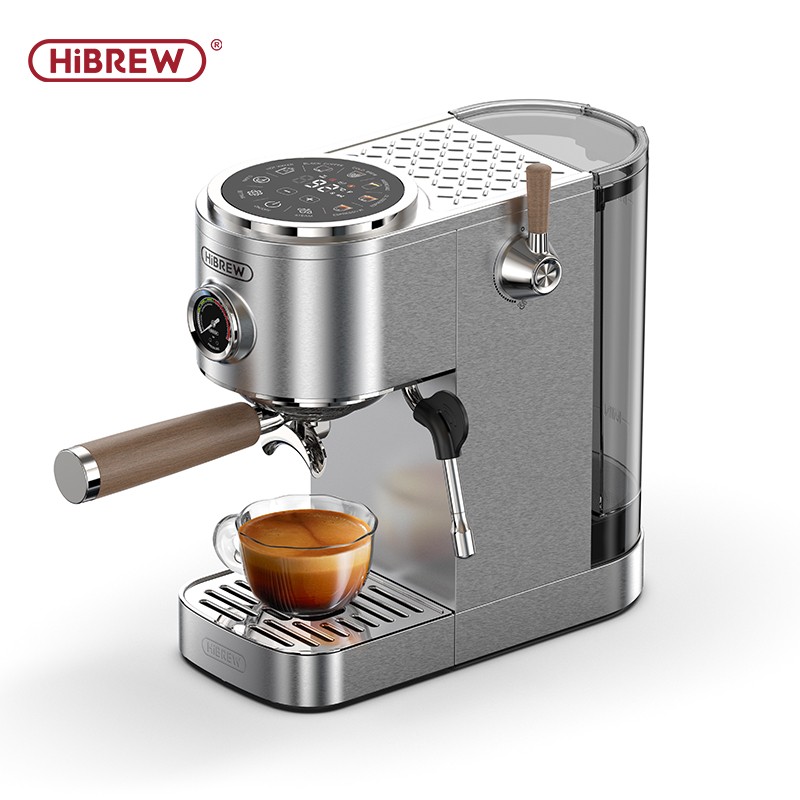

Photos from current listings. Actual item, color, and included accessories may vary.
Dual Boiler Espresso Machine Buying Guide
A dual boiler espresso machine uses two independent heating circuits—one for brew, one for steam—so you can pull shots and steam milk simultaneously without temperature recovery delays. The core trade-off is boiler material and control architecture: saturated brass/steel groups with PID and dual pressure gauges deliver café-grade stability, while aluminum thermoblocks and single PID loops compromise back-to-back milk drinks. Buy a true dual-boiler with independent PID when you regularly make two or more milk drinks; skip it if you drink straight espresso alone.
Key takeaways
- True dual boilers have separate brew and steam PIDs; single-boiler heat-exchangers only approximate this with a shared element and temperature surfing.
- Brew boiler volume of 0.5–0.75 L supports consecutive shots; steam boilers of 1.0–2.0 L sustain 8–12 oz of milk without pressure drop.
- Stainless steel and brass boilers resist scale and corrosion; aluminum thermoblocks are lighter but lose temperature stability after 2–3 shots.
At a glance
- Category
- Coffee Makers & Espresso
- Last updated
- Nov 28, 2026
Current offers
Highlights
- True dual boilers have separate brew and steam PIDs; single-boiler heat-exchangers only approximate this with a shared element and temperature surfing.
- Brew boiler volume of 0.5–0.75 L supports consecutive shots; steam boilers of 1.0–2.0 L sustain 8–12 oz of milk without pressure drop.
- Stainless steel and brass boilers resist scale and corrosion; aluminum thermoblocks are lighter but lose temperature stability after 2–3 shots.
- Models like the Breville BES920XL use dual stainless boilers with PID and a heated group head; the HiBREW units pair dual boilers with 20-bar pumps and touchscreen control.
Best use cases
- Best fit: households making 2–4 milk-based drinks daily—choose a dual boiler with independent PID and at least 1.0 L steam boiler for simultaneous brewing and steaming.
- Best fit: espresso-only drinkers who want temperature stability—a dual boiler with PID is ideal, but a quality single boiler with PID is sufficient and cheaper.
- Wrong fit: buyers with a 15-amp kitchen circuit shared with other appliances—dual boilers draw 1,400–1,800 W and need a dedicated outlet to avoid breaker trips.
- Skip: if you only make one drink at a time and rarely steam, a heat-exchanger or single-boiler PID machine delivers 80% of the result at lower cost and counter footprint.
Buying tips
- Match boiler material: brass or stainless steel for longevity and scale resistance; avoid aluminum thermoblocks if you want 5+ year service life.
- Check steam boiler capacity—1.0 L minimum supports continuous steaming; 0.5 L or smaller forces waiting between pitchers.
- Confirm PID on both boilers, not just brew—dual PID lets you set steam pressure independently (typically 1.0–1.5 bar).
- Verify electrical: dual boilers typically draw 1,400–1,800 W at 120 V; ensure a dedicated 15 A circuit and don't share with high-draw appliances.
Specs
| Boiler Architecture | Dual independent brew + steam |
|---|---|
| Brew Boiler Volume | 0.5–0.75 L |
| Steam Boiler Volume | 1.0–2.0 L |
| Temperature Control | Dual PID (brew + steam) |
Related searches
What to check before buying
- Measure counter depth and height clearance: dual boilers are typically 15–18 in wide and 16–18 in tall; confirm space under cabinets and above the drip tray.
- Check water hardness: if above 150 ppm, plan for a softener or use low-mineral water to protect boilers and avoid descaling downtime.
- Confirm plug and voltage: North American models are 120 V/15 A; European/UK units are 230 V—never use a converter on a heating appliance.
- Account for companion parts: a 58 mm tamper, scale, and pitcher are standard; verify portafilter size (58 mm vs 54 mm) before buying accessories.
FAQ
Data sources: eBay / Amazon listings and product attribute feeds. Updated Nov 28, 2026.
Some links on this page are affiliate links. If you buy after clicking one, we may earn a commission at no extra cost to you. This does not change which products appear here or their order. Affiliate disclosure.