
Photos from current listings. Actual item, color, and included accessories may vary.
Electric Coffee Pot Buying Guide
An electric coffee pot is a standalone countertop brewer—most commonly a percolator or urn—that heats water and circulates it through grounds without a separate carafe-and-hotplate drip system. The defining trade-off is brew temperature control versus durability: percolators cycle near boiling and can over-extract, while thermostat-controlled urns hold a preset temperature for larger batches. Choose a stainless-steel percolator for fast small-to-mid batches, and a thermostatic urn when you need to hold volume for a crowd.
Median $109.99
Key takeaways
- Percolator architecture: a central pump tube lifts near-boiling water and sprays it over the grounds basket continuously, so brew strength is set by grind coarseness and cycle length rather than a calibrated drip showerhead.
- 12-cup capacity class yields roughly 12 x 5-oz cups (about 60 fl oz) and maps to a typical 1.5–1.8 L reservoir; a 30-cup urn is the volume tier above it.
- 304 stainless steel (18/8) is the corrosion-resistant food-grade interior standard; aluminum and enameled-steel bodies conduct faster but pit and discolor with acidic coffee over time.
At a glance
- Category
- Coffee Makers & Espresso
- Last updated
- Nov 27, 2026
Current offers
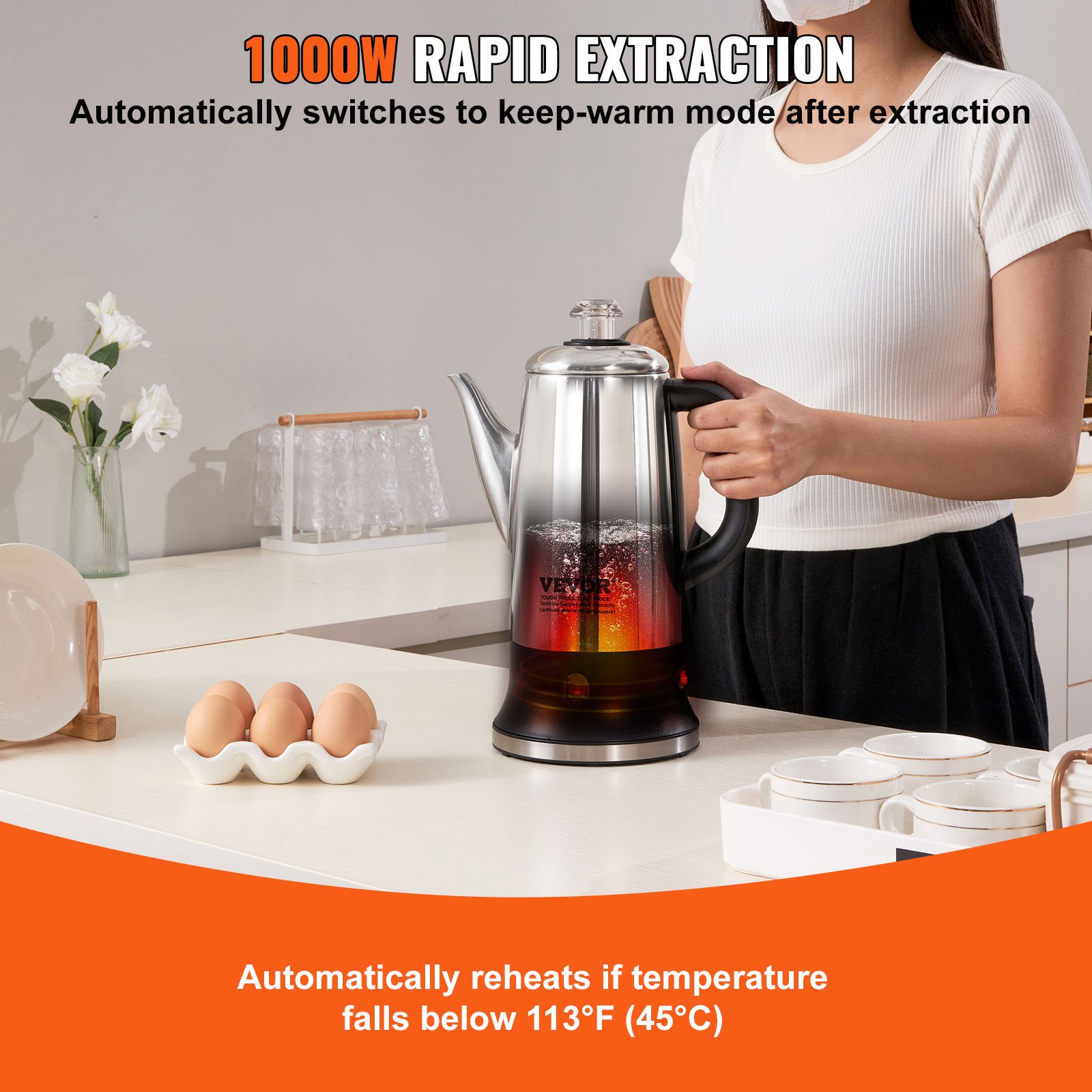 12-Cup Electric Percolator Coffee Pot, 304 Stainless Steel With Keep Warm Function & Heat-Resistant Handle, Classic Maker, Quick Brew & Easy-Pour Spout, Silver$50.99View on Mallflare
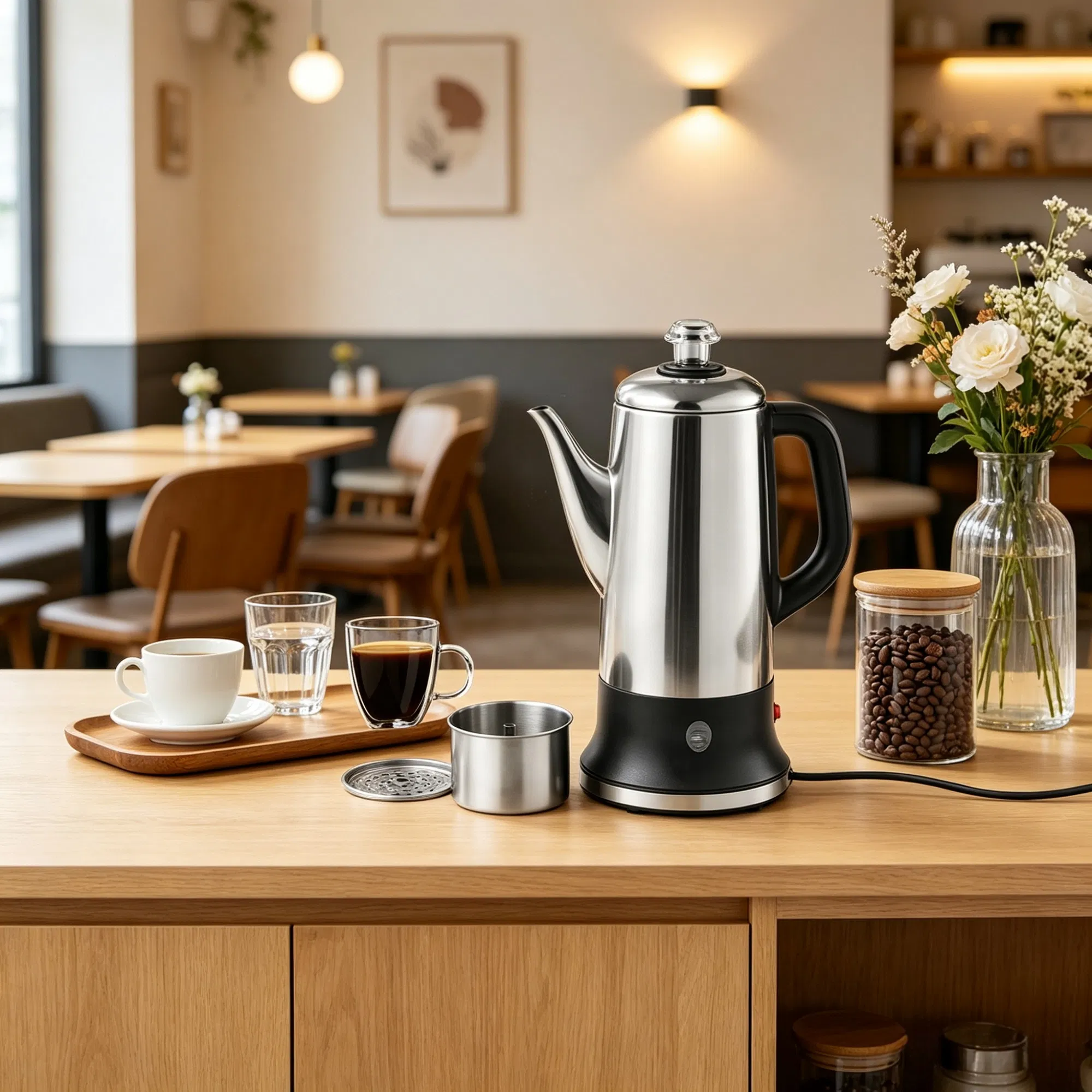 12-Cup Electric Percolator Coffee Pot, Maker with Keep Warm Function & Heat-Resistant Handle, Silver$109.99View on Mallflare
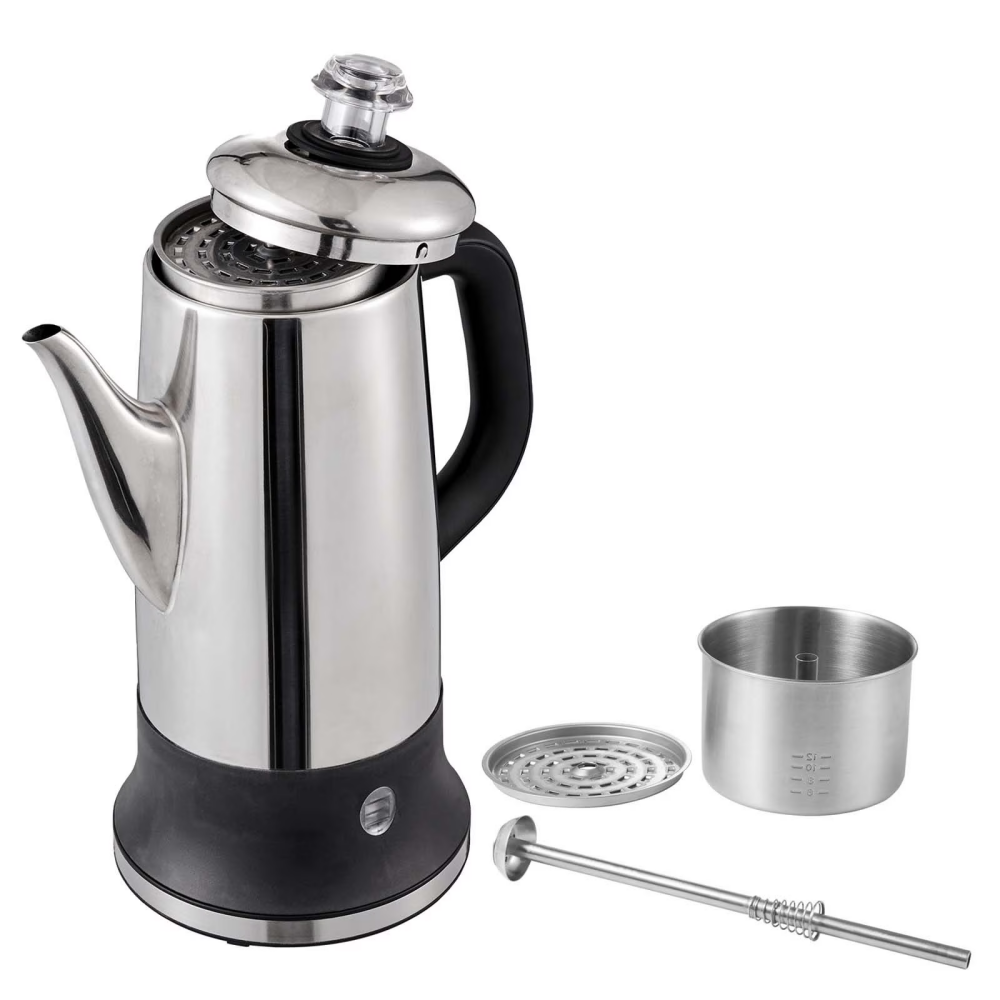 12-Cup Electric Percolator Coffee Pot Stainless Steel Maker Silver$123.99View on Mallflare
Highlights
- Percolator architecture: a central pump tube lifts near-boiling water and sprays it over the grounds basket continuously, so brew strength is set by grind coarseness and cycle length rather than a calibrated drip showerhead.
- 12-cup capacity class yields roughly 12 x 5-oz cups (about 60 fl oz) and maps to a typical 1.5–1.8 L reservoir; a 30-cup urn is the volume tier above it.
- 304 stainless steel (18/8) is the corrosion-resistant food-grade interior standard; aluminum and enameled-steel bodies conduct faster but pit and discolor with acidic coffee over time.
- Keep-warm circuits hold contents near 175–185°F; percolator bases that cycle back to a rolling boil will keep extracting and turn coffee bitter after the brew cycle ends.
Best use cases
- Best fit: a 12-cup stainless percolator for 4–10 daily drinkers who want one fast pot and a simple keep-warm base—skip it for single-cup demand or anyone sensitive to bitterness.
- Best fit: a thermostatic urn with a preset hold temperature for offices, meetings, and large-family gatherings where coffee must stay drinkable for hours—skip it if you brew fewer than 20 cups at a time.
- Best fit: a drip-style electric pot with a glass or thermal carafe when you want repeatable, calibrated extraction and programmable timing—skip percolators entirely if flavor clarity is the priority.
- Wrong fit: any electric pot as a sole espresso or milk-drink solution—these brewers make filter-strength coffee only and cannot generate the 9-bar pressure espresso requires.
Buying tips
- Match capacity to your pour: a 12-cup percolator realistically serves 6–8 mugs once grounds displacement and headspace are accounted for; size up only if you regularly host.
- Insist on 304 stainless for the basket and pump tube, not just the exterior shell—the interior parts sit in hot acidic coffee longest and drive both flavor and lifespan.
- Pick a keep-warm design with a thermostat or timed shutoff rather than continuous high heat; a pot that holds near 175°F preserves flavor while one that re-boils does not.
- For urns, check the wattage tier against your circuit: large-capacity models draw high current and should run on a dedicated 15–20 A kitchen circuit, not a shared outlet strip.
Specs
| Brewer Type | Percolator / Urn / Drip pot |
|---|---|
| Capacity Class | 12-cup (~60 fl oz) / 30-cup urn |
| Interior Material | 304 stainless / aluminum / glass |
| Keep-Warm Control | Thermostat hold / timed shutoff / re-boil |
Related searches
What to check before buying
- Measure your cabinet clearance and counter footprint: percolators are tall (often 13–15 in) and need headroom to lift the lid and remove the basket.
- Confirm your electrical standard: North American models are 120 V/60 Hz; UK/EU/AU buyers need the 220–240 V variant with the correct plug, not a plug adapter on a 120 V unit.
- Account for companion parts—permanent metal mesh filters or paper basket liners, plus a spare glass or carafe if the model uses one—before committing to the tier.
- Check your water hardness: if you are on hard water, plan for descaling with citric acid or vinegar, and favor models with accessible, removable pump tubes and baskets.
FAQ
Data sources: eBay / Amazon listings and product attribute feeds. Updated Nov 27, 2026.
Some links on this page are affiliate links. If you buy after clicking one, we may earn a commission at no extra cost to you. This does not change which products appear here or their order. Affiliate disclosure.