
Photos from current listings. Actual item, color, and included accessories may vary.
Espresso Maker With Grinder Buying Guide
An espresso maker with grinder is a combined system where the grinder and brew group are engineered to work as one, eliminating the freshness gap and dose inconsistency of separate machines. The core trade-off is integrated burr quality and brew-temperature stability versus the flexibility and upgrade path of separate components. The clear decision rule: buy an integrated unit only when the grinder is a conical or flat steel burr (not a blade) and the brew group is actively heated — otherwise separate machines deliver better espresso for the same budget.
Median $96.99 · New & pre-owned listings
Key takeaways
- Burr type decides flavor clarity: conical steel burrs (e.g., Baratza Sette, Breville Smart Grinder Pro) give a uniform particle distribution; blade 'grinders' pulverize unevenly and produce muddy, bitter shots.
- Brew-temperature control separates real espresso from faux-espresso: PID-controlled thermoblocks or dual boilers hold ±1–2°C, while cheap aluminum thermoblocks swing 10°C+ and scorch light roasts.
- Integrated steam and grind on the same circuit means recovery time matters: single thermoblock units need 30–60 seconds between shots; dual-boiler or heat-exchanger designs brew and steam simultaneously.
At a glance
- Category
- Coffee Makers & Espresso
- Last updated
- Nov 27, 2026
Current offers
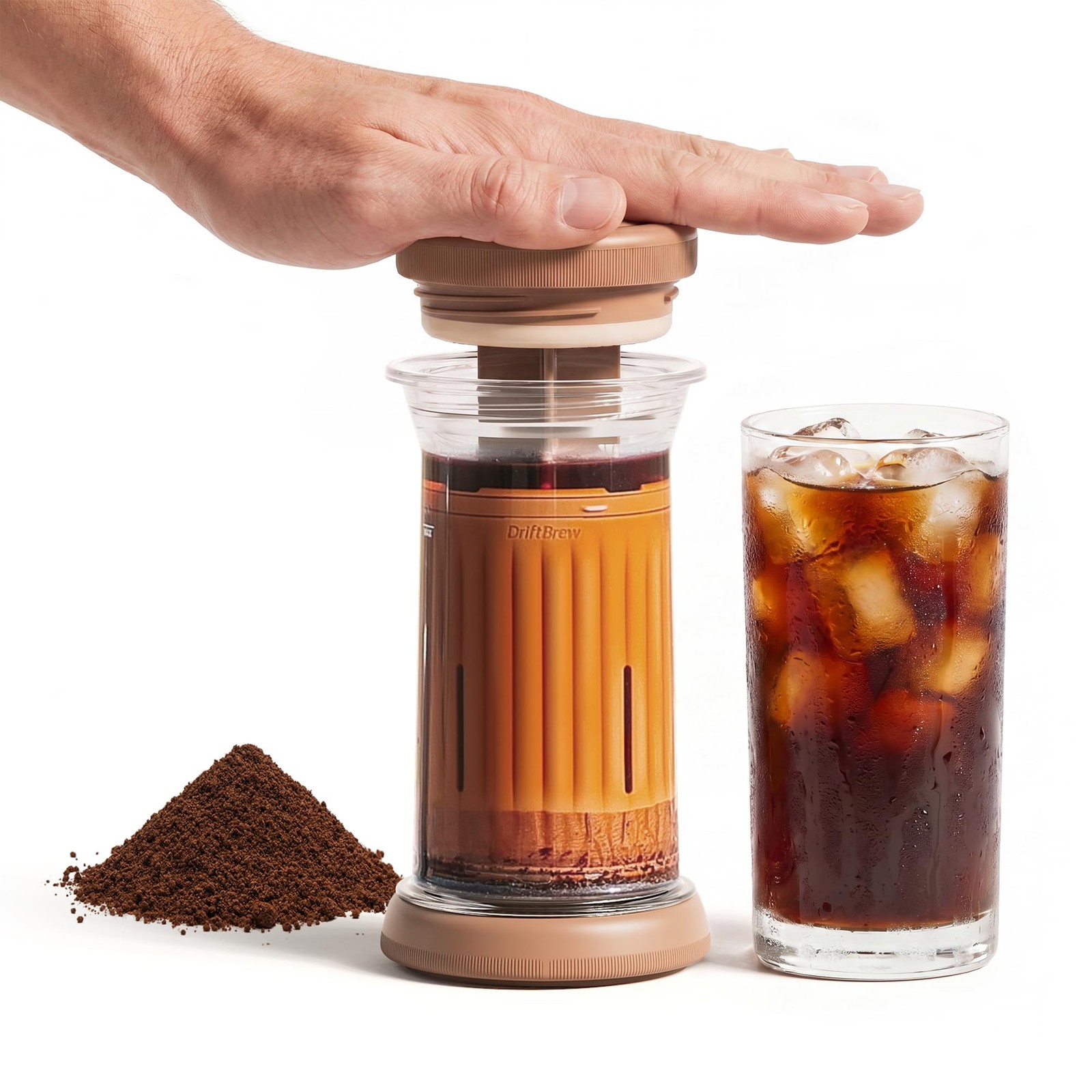 Camping Coffee Maker 8oz Portable Cold Brew & Espresso - Travel Brewing Gear$31.99View on eBay
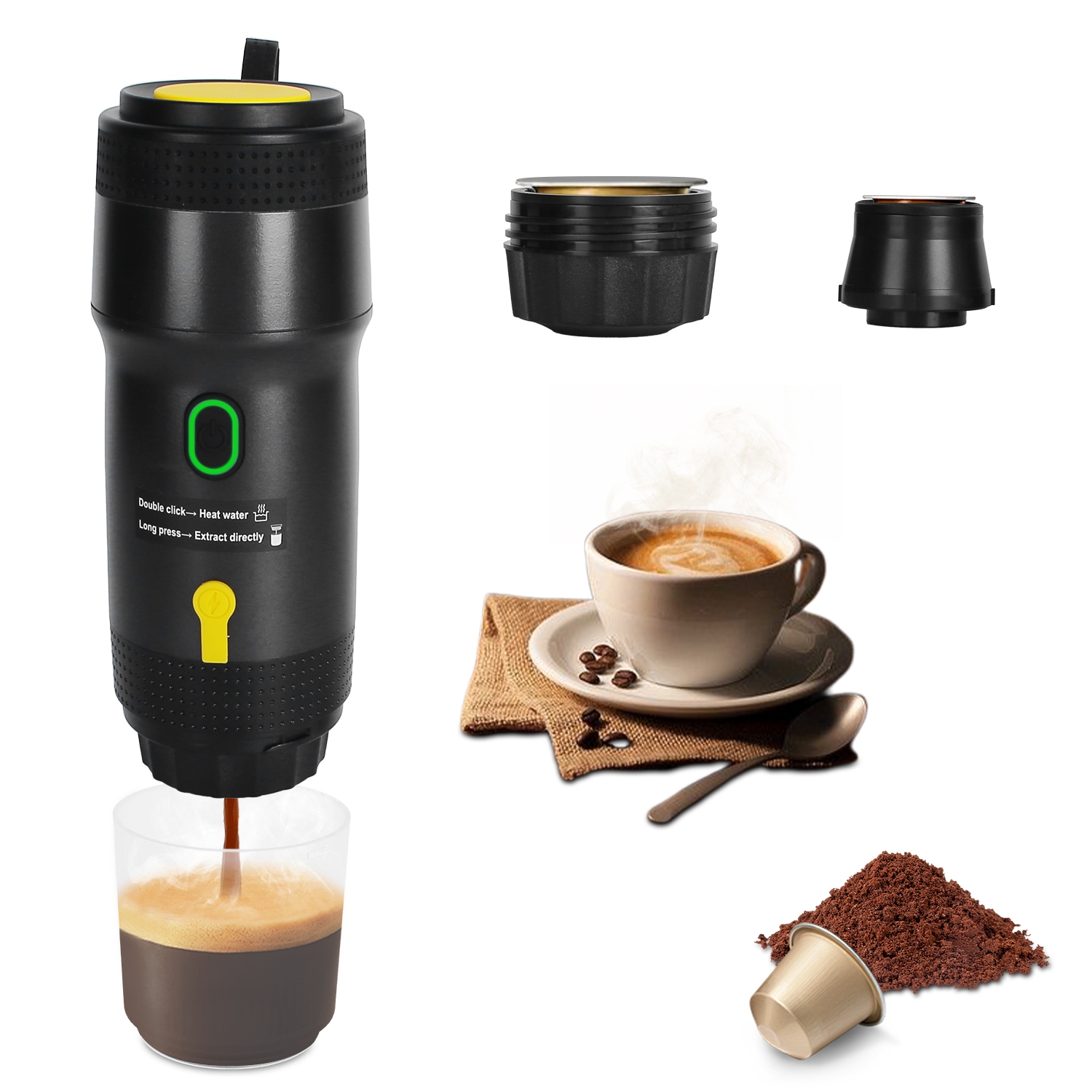 1Pc Portable Electric Espresso Machine Cordless Coffee Maker Self Heating Car With Anti Dry Burn Fit For Ground NS DG Capsules For Car Camping Hiking RV Home Office$55.99View on Mallflare
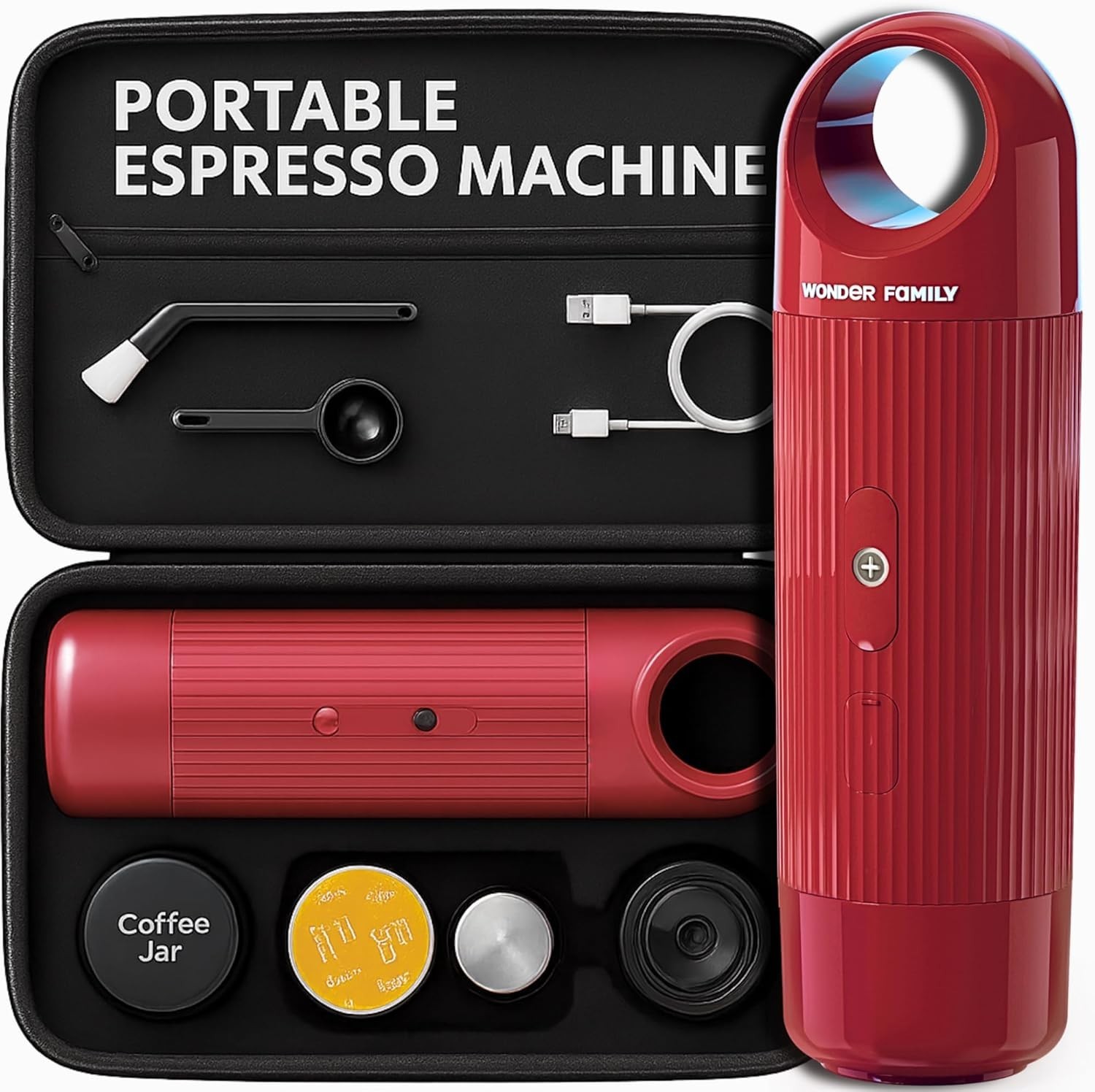 Portable Espresso Machine Travel Coffee Maker for Pods & Grounds Mini 5 Cup Make$34.99View on eBay
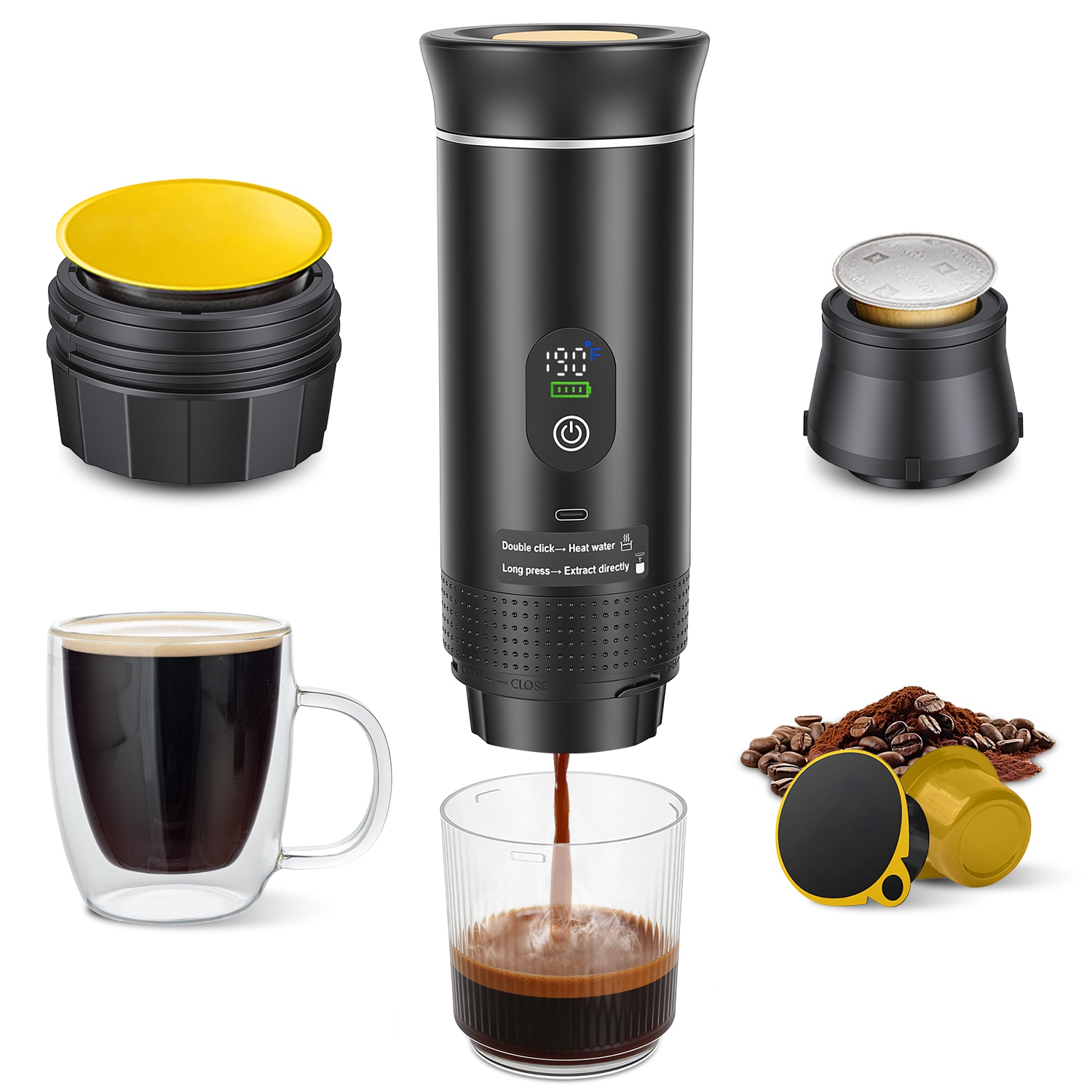 3 In 1 Portable Espresso Machine Cordless Mother Day Self Heating Coffee Maker With 7500mAh Battery 20Bar Pressure Anti Dry Burn Fit For Ground Capsules For Camping Hiking RV Home$73.99View on Mallflare
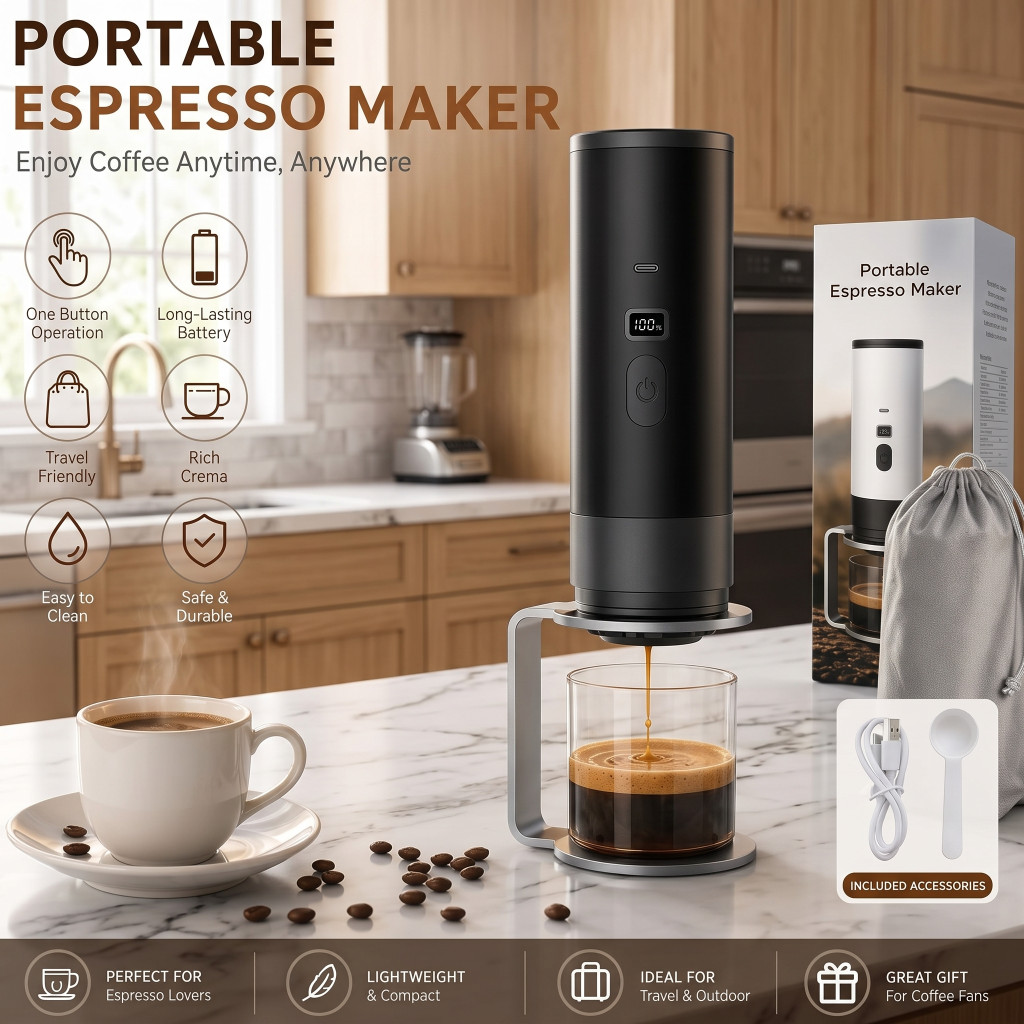 Portable Electric Espresso Maker - 3 in 1 Travel Coffee Machine for Camping US$45.58View on eBay
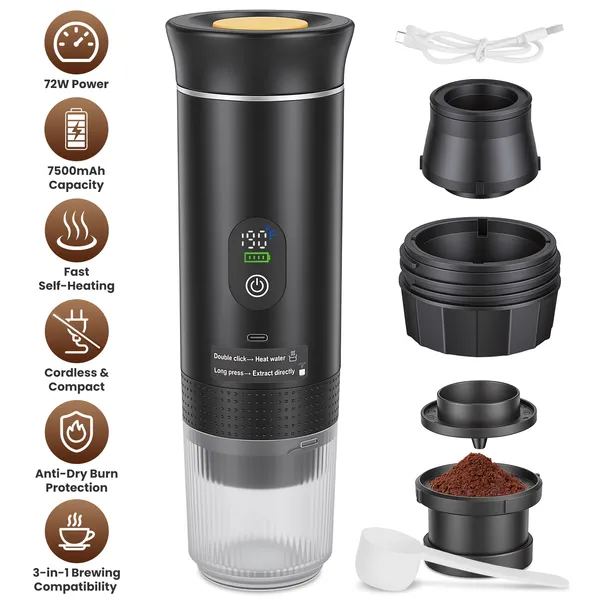 3-in-1 Portable Espresso Machine Cordless Self-Heating Coffee Maker With 7500mAh Battery 20Bar Pressure Anti-Dry Burn Fit For Ground Coffee&NS&DG Capsules For Camping Hiking RV Home Office$89.99View on Mallflare
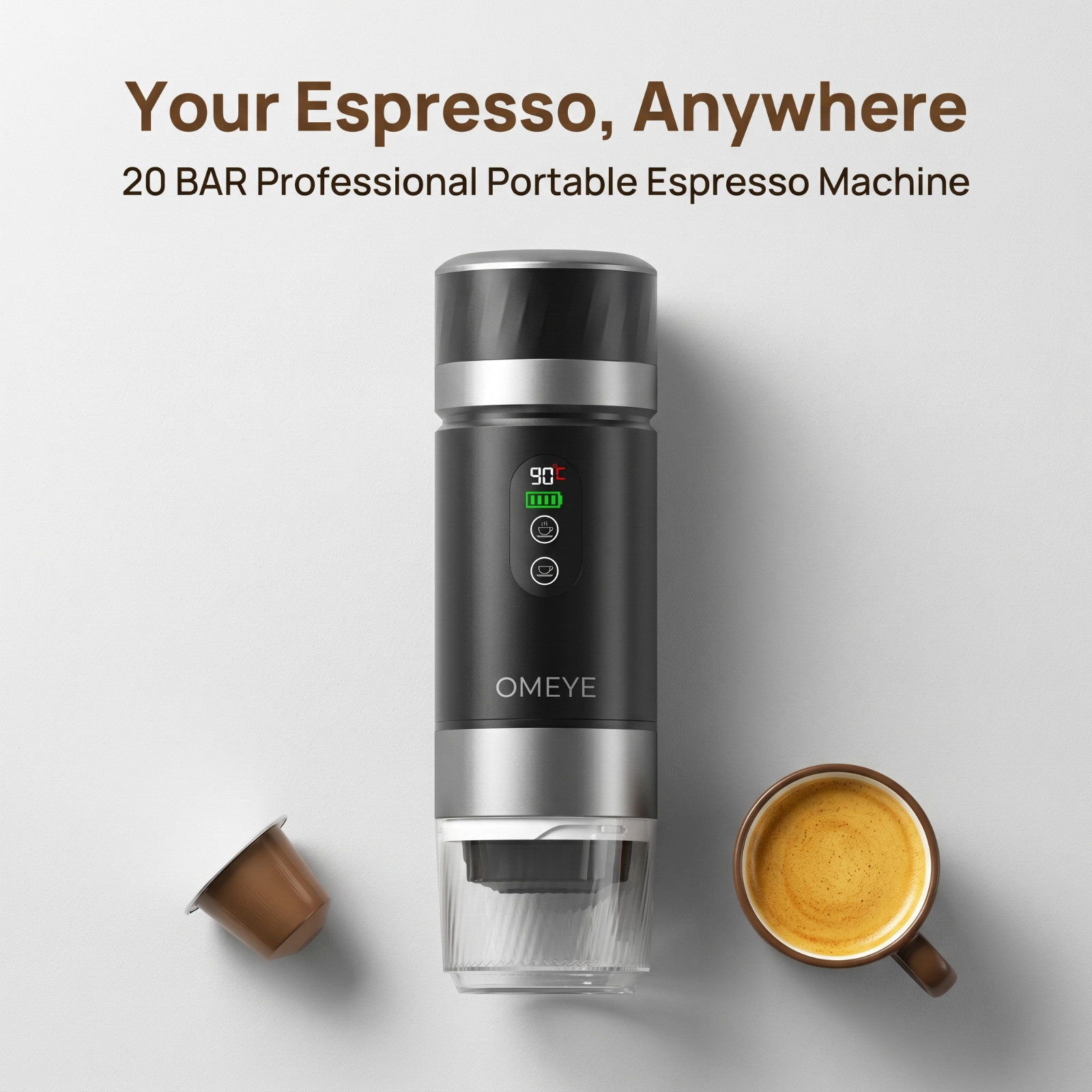 OMEYE Portable Espresso Maker 20 Bar Battery USB-C Capsule Ground Coffee$69.99View on eBay
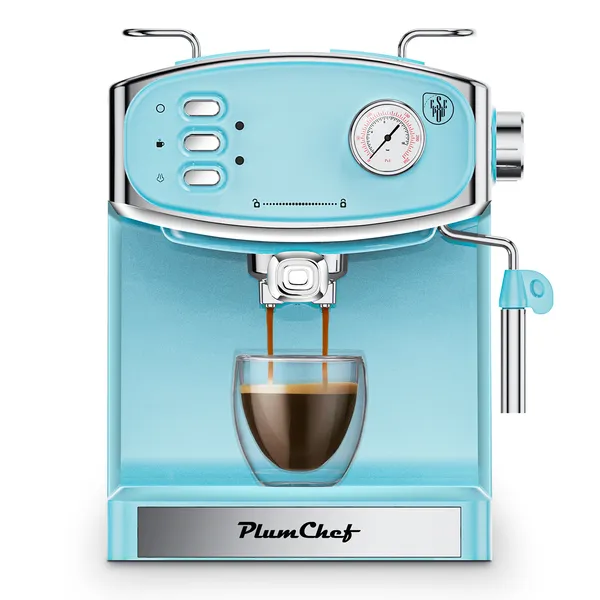 20 Bar Espresso Machine For Home- Professional Compact Maker With Milk Frother Steam Wand, Pressure Gauge & 54oz Large Water Tank, Low Noise Fast Brewing For Cappuccino, Latte$96.99View on Mallflare
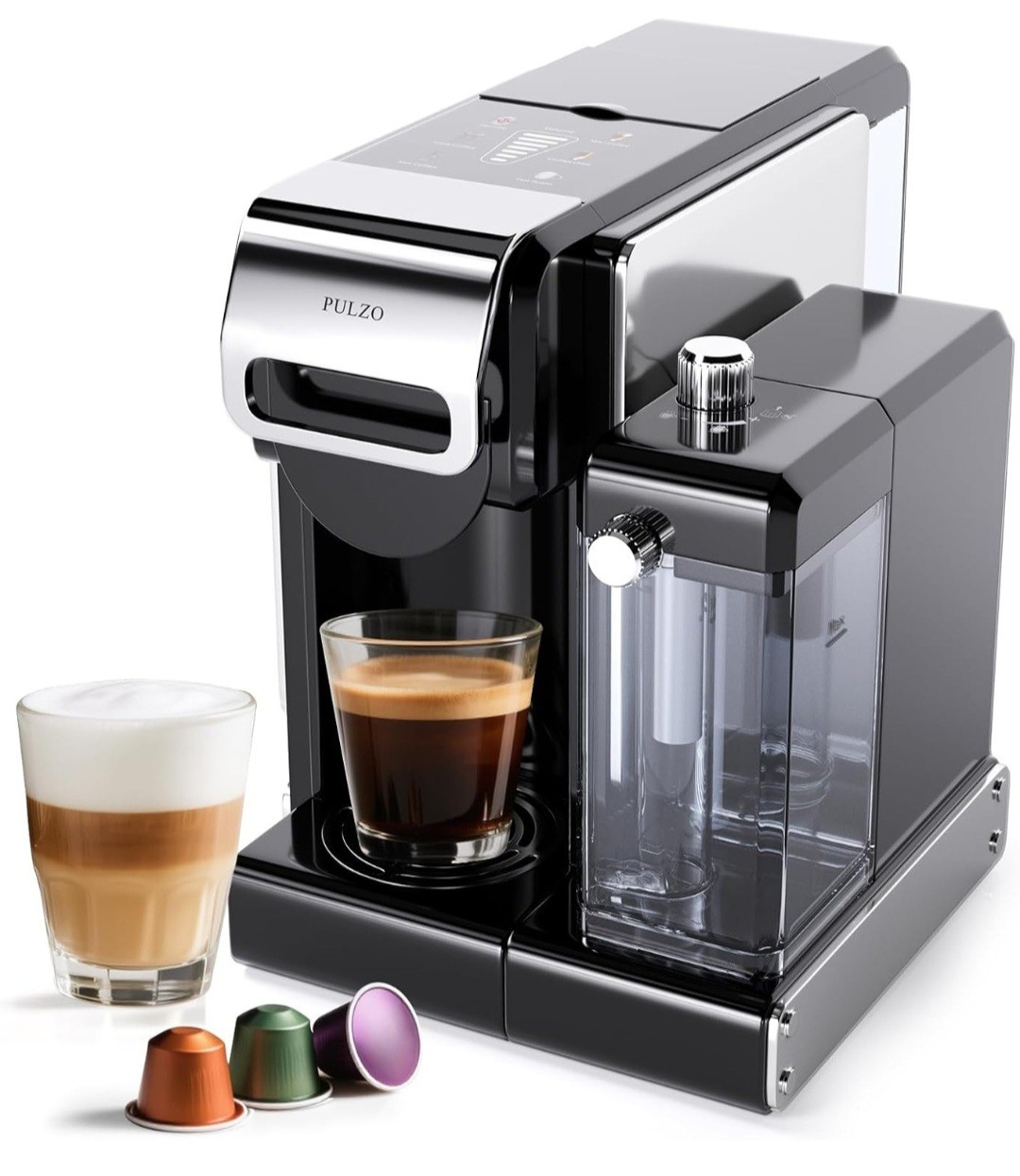 PULZO Espresso Machine Automatic Milk Frother Capsule Coffee Maker Latte Cappucc$113.90View on eBay
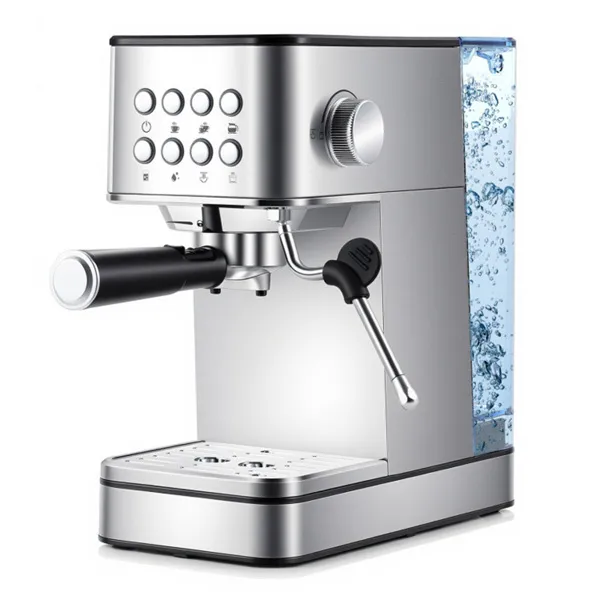 Professional Espresso Maker - 360° Steam Wand, Automatic Cup Warmer, Low-Noise Operation$207.99View on Mallflare
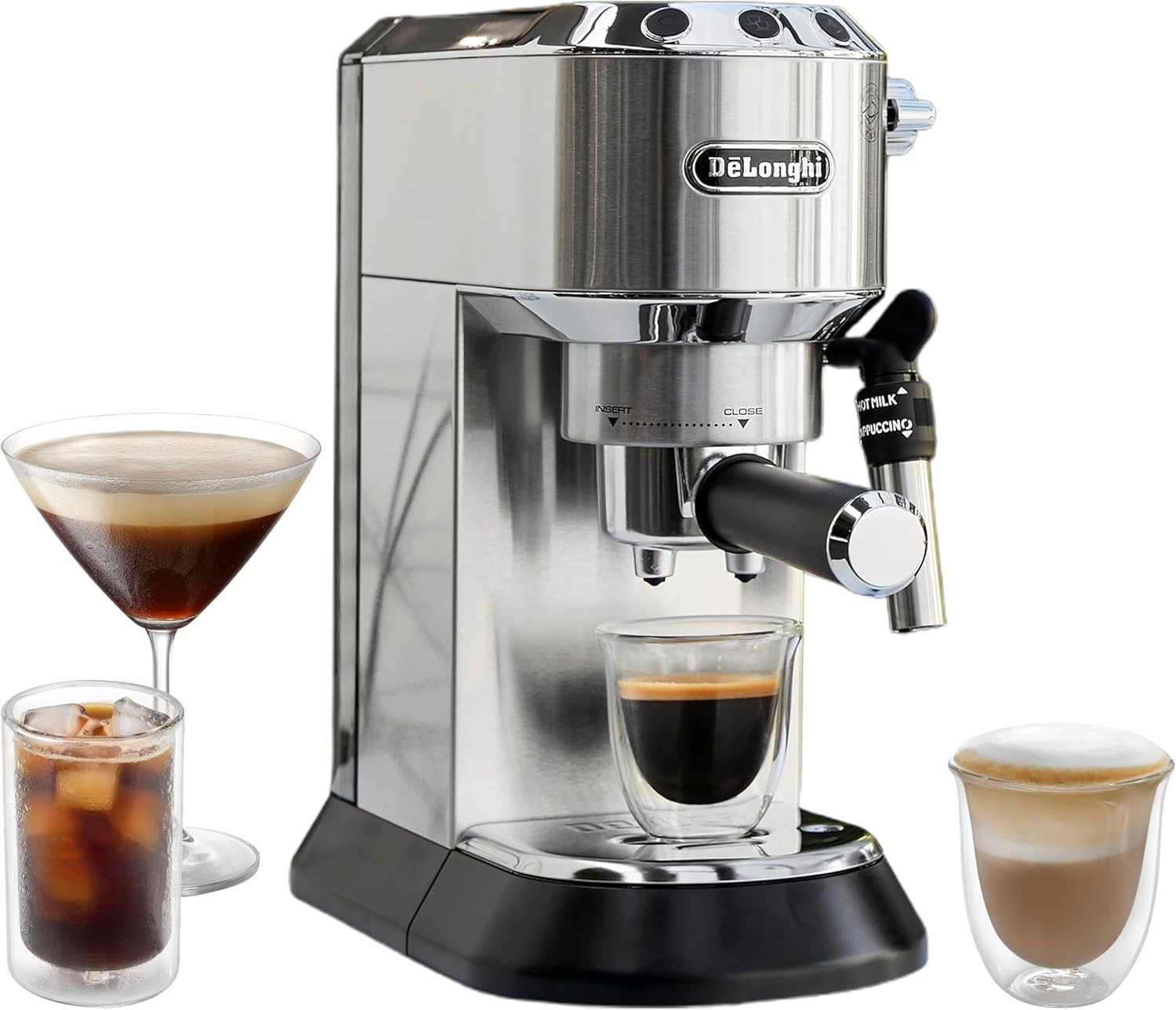 Delonghi EC685M Dedica Automatic Espresso Cappuccino Maker Machine 35oz Metallic$119.99View on eBay
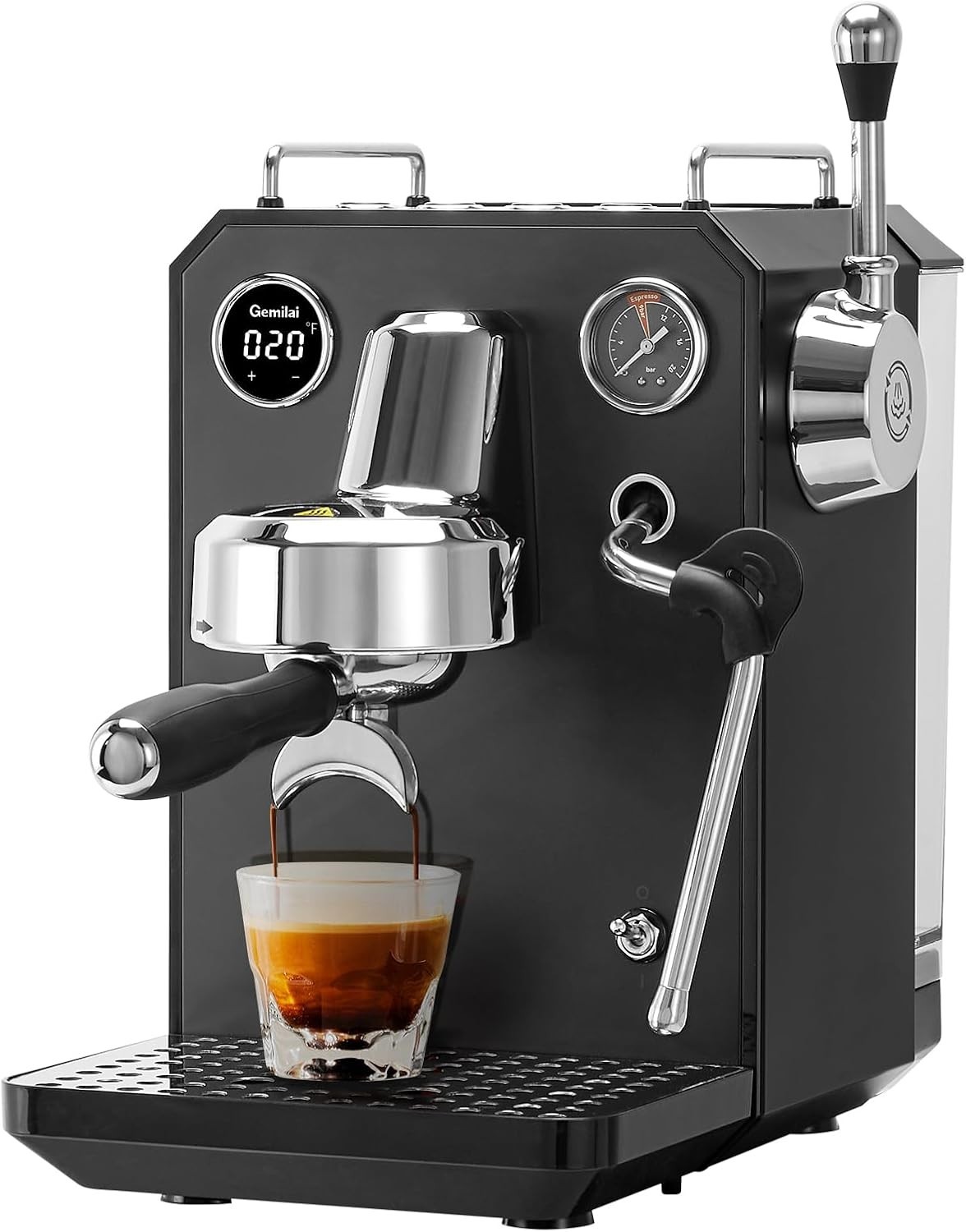 Gemilai Owl G3006 Espresso Machine 15 Bar Professional Coffee Maker Black$229.00Open box · Last checked Nov 21, 2026View on eBay
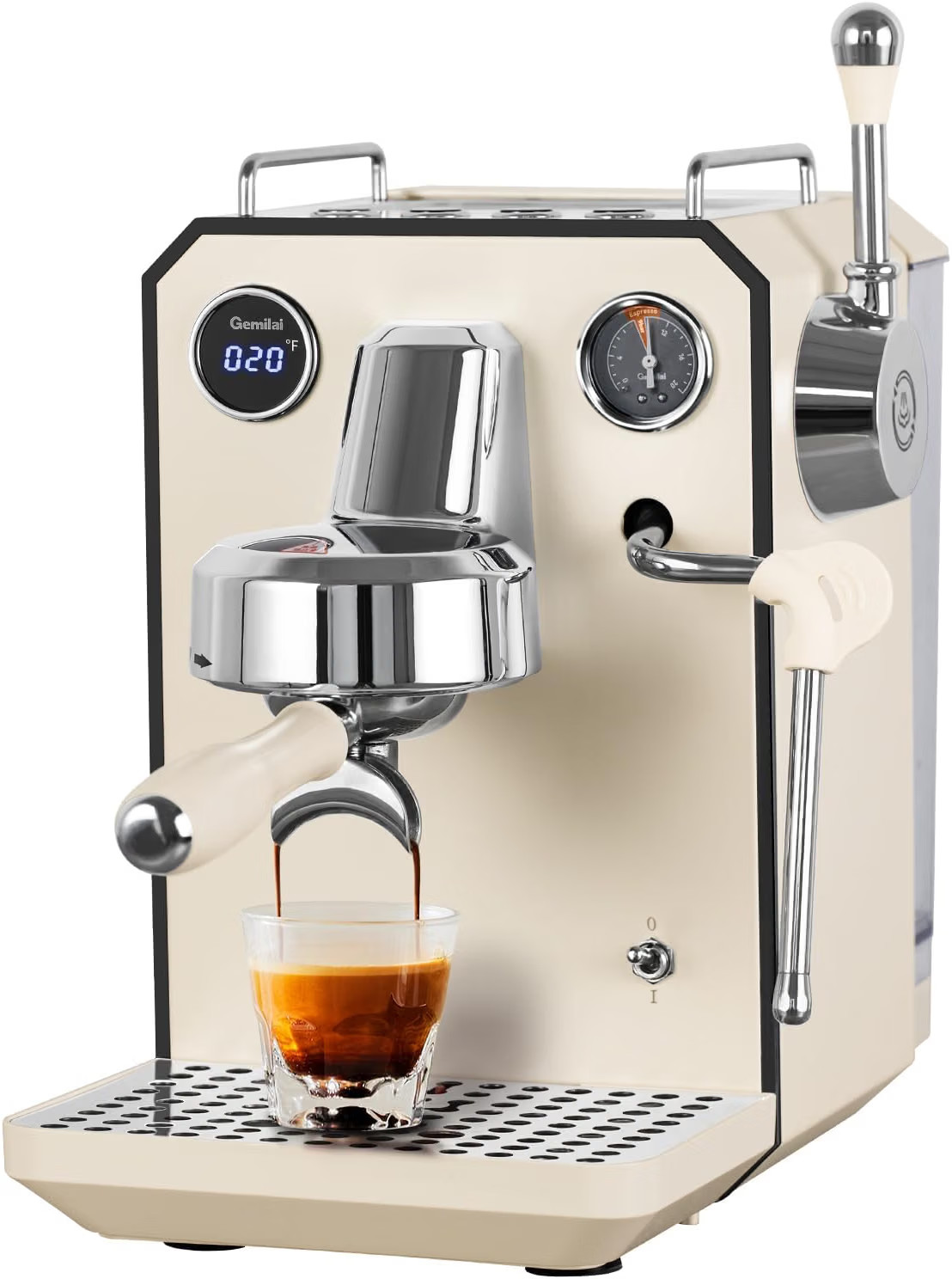 Gemilai Owl G3006 Espresso Machine 15 Bar Professional Coffee Maker White$229.00Open box · Last checked Nov 21, 2026View on eBay
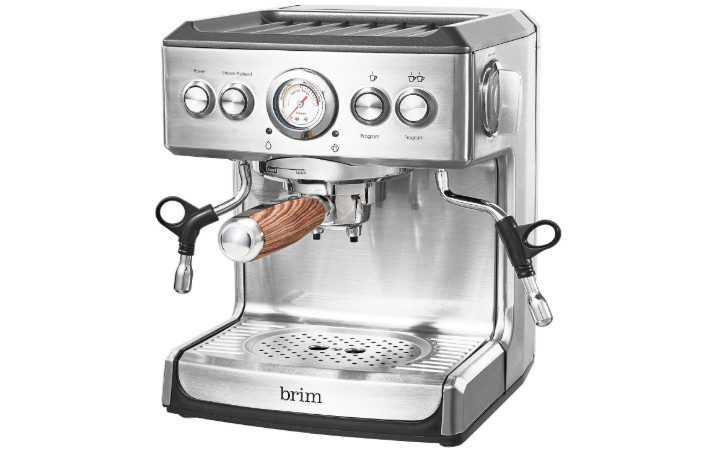 Brim 19 Bar Espresso Machine Maker 50019 Stainless Steel Milk Frother Steam Wand$249.99New · Last checked Nov 23, 2026View on eBay
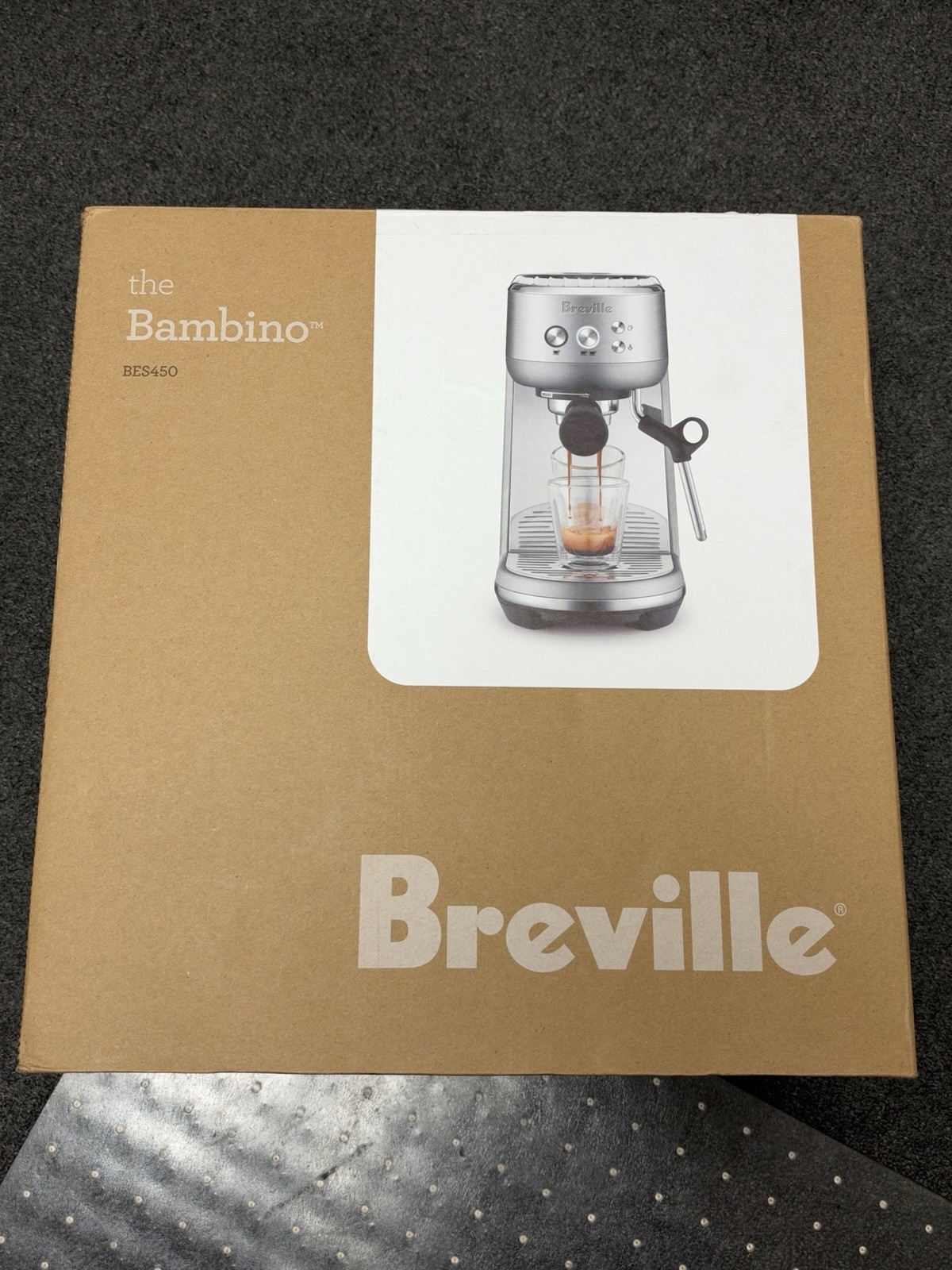 Breville Bambino Espresso Maker - BES450BSS1BUS1$258.00Open box · Last checked Nov 21, 2026View on eBay
Highlights
- Burr type decides flavor clarity: conical steel burrs (e.g., Baratza Sette, Breville Smart Grinder Pro) give a uniform particle distribution; blade 'grinders' pulverize unevenly and produce muddy, bitter shots.
- Brew-temperature control separates real espresso from faux-espresso: PID-controlled thermoblocks or dual boilers hold ±1–2°C, while cheap aluminum thermoblocks swing 10°C+ and scorch light roasts.
- Integrated steam and grind on the same circuit means recovery time matters: single thermoblock units need 30–60 seconds between shots; dual-boiler or heat-exchanger designs brew and steam simultaneously.
- Grind-size adjustability defines bean compatibility: stepless or 30+ step adjustments let you dial in single-origin light roasts; 5–10 click grinders lock you into dark, oily beans and pressurized baskets.
Best use cases
- Best fit: daily straight-espresso drinkers pulling 2–4 shots who want zero-retention freshness and a compact counter footprint — pick a PID thermoblock with conical burrs and a 54–58mm portafilter.
- Best fit: milk-based drink households (latte/cappuccino) — choose a dual-boiler or heat-exchanger integrated unit so steam pressure doesn't wait on the brew cycle.
- Wrong fit: buyers who want to switch between espresso, pour-over, and French press — a dedicated espresso grinder's fine-range bias wastes 80% of its adjustment travel; buy separate brewers and a multi-purpose grinder.
- Skip if: you plan to upgrade the grinder within two years — integrated grinders are rarely modular; a separate Eureka Mignon or DF64 plus a manual lever gives a better upgrade path.
Buying tips
- Match burr material to volume: steel burrs hold an edge for 500–1,000 kg of coffee; ceramic burrs last longer but fracture on stones — steel is the safer household choice.
- Confirm portafilter diameter: 58mm baskets have a vast aftermarket of precision baskets and tampers; 51–54mm integrated units limit puck prep upgrades and channeling control.
- Check boiler architecture against your drink ratio: single thermoblock for straight shots only, heat-exchanger for 1–2 milk drinks, dual boiler for 3+ milk drinks back-to-back.
- Verify grind adjustment is stepless or has at least 30 steps — fewer than 15 steps cannot dial in a 25–30 second shot across bean freshness changes.
Specs
| Grinder Burr Type | Conical/flat steel vs blade |
|---|---|
| Brew Temp Control | PID ±1-2°C vs analog thermostat |
| Boiler Architecture | Thermoblock / HX / Dual boiler |
| Portafilter Diameter | 58mm standard vs 51-54mm |
Related searches
What to check before buying
- Measure counter depth and height clearance: integrated units run 30–40 cm deep and 35–45 cm tall; confirm the hopper fits under upper cabinets and the portafilter has swing room.
- Check electrical: most integrated espresso makers draw 1,200–1,600 W and require a dedicated 15 A circuit; confirm your kitchen outlet is not shared with a microwave or kettle.
- Confirm water hardness: PID and thermoblock units scale quickly above 150 ppm; budget for a descaling routine or a softener cartridge before purchase.
- Verify companion parts: integrated units often ship with pressurized baskets only — confirm a non-pressurized (single-wall) basket is included or available in 58mm/54mm before buying.
FAQ
Data sources: eBay / Amazon listings and product attribute feeds. Updated Nov 27, 2026.
Some links on this page are affiliate links. If you buy after clicking one, we may earn a commission at no extra cost to you. This does not change which products appear here or their order. Affiliate disclosure.