
Photos from current listings. Actual item, color, and included accessories may vary.
Latte Machine Buying Guide
A latte machine is an espresso maker paired with a milk-steaming or frothing system, and the core trade-off is between a manual steam wand (best microfoam, requires skill) and an automatic frother or capsule system (convenience, less control). Durable picks use a 15–20 bar pump, a thermoblock or PID-controlled boiler, and a stainless or brass steam valve; compromises show up as weak 3–5 bar pumps, plastic steam wands, and unheated group heads.
Median $138.99 · New listings
Key takeaways
- Pump pressure: 15–20 bar Italian-style vibratory pumps are the standard for real espresso; anything rated under 9 bar cannot build proper crema or texture milk well.
- Milk system tiers: manual steam wand gives silky microfoam; panarello/automatic frothers give stiff foam with less control; capsule latte machines trade control for one-button operation.
- Boiler architecture: thermoblock heats fast for back-to-back lattes, while single-boiler machines need a 30–60 second recovery between brewing and steaming.
At a glance
- Category
- Coffee Makers & Espresso
- Last updated
- Nov 27, 2026
Current offers
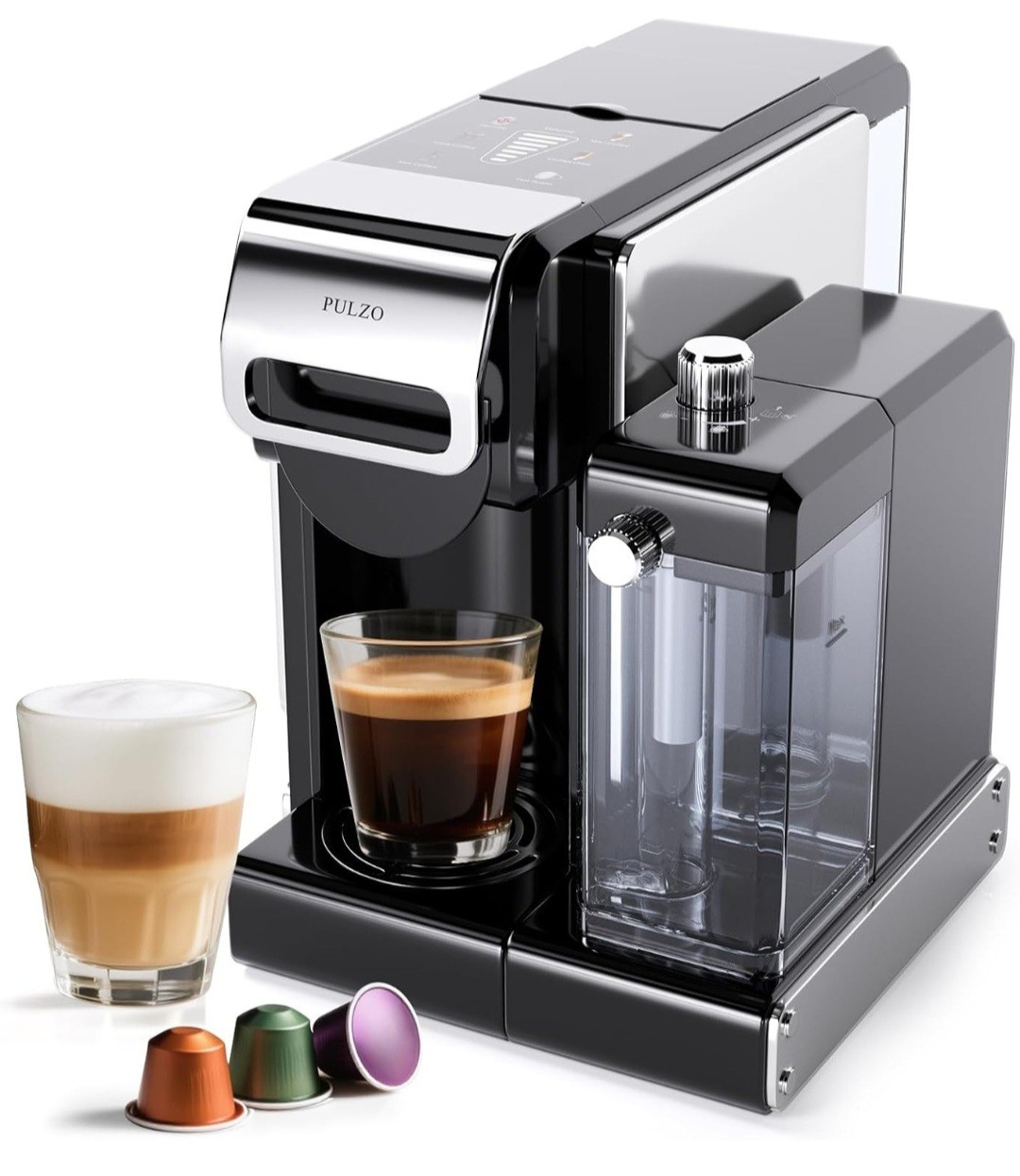 PULZO Espresso Machine Automatic Milk Frother Capsule Coffee Maker Latte Cappucc$113.90View on eBay
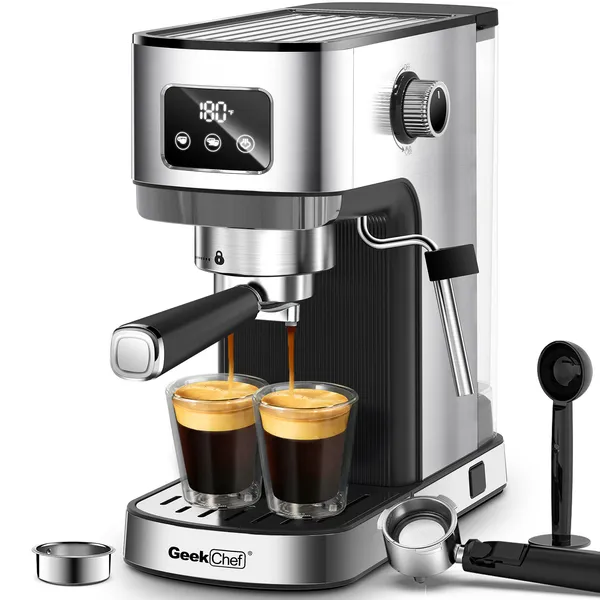 Geek Chef Espresso Machine, Cappuccino & Latte With ESE POD Filter & Milk Frother Steam Wand, Accurate Temperature & Time Control, Compact Coffee For Home,Stainless Steel$138.99View on Mallflare
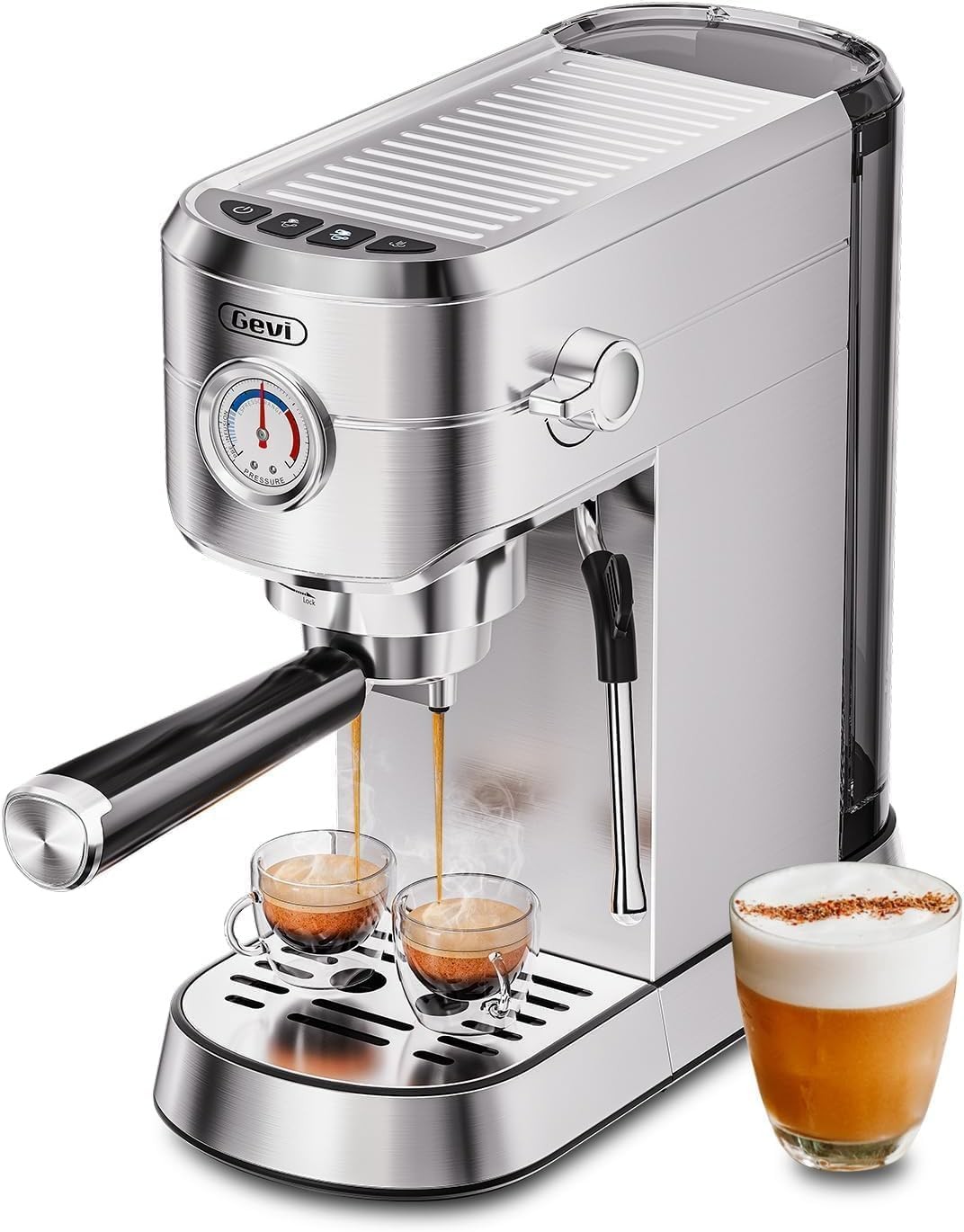 20 Bar Compact Espresso Machine For Home, Latte、cappuccino Coffee Maker$200.21New · Last checked Nov 23, 2026View on eBay
Highlights
- Pump pressure: 15–20 bar Italian-style vibratory pumps are the standard for real espresso; anything rated under 9 bar cannot build proper crema or texture milk well.
- Milk system tiers: manual steam wand gives silky microfoam; panarello/automatic frothers give stiff foam with less control; capsule latte machines trade control for one-button operation.
- Boiler architecture: thermoblock heats fast for back-to-back lattes, while single-boiler machines need a 30–60 second recovery between brewing and steaming.
- Portafilter sizing: 51 mm and 54 mm baskets are common in compact home machines; 58 mm commercial baskets give better temperature stability and third-party accessory support.
Best use cases
- Best fit: daily latte drinkers who want café-style microfoam — pick a 20 bar machine with a stainless steam wand and 58 mm portafilter; skip capsule units.
- Best fit: small kitchens or desks under 12 inches of counter depth — pick a slim vertical 43 oz tank model with a cup warmer; skip dual-boiler or plumbed units.
- Best fit: convenience-first households with guests who want one-touch lattes — pick an automatic milk-frother or capsule latte maker; skip manual wands if nobody will learn steaming.
- Wrong fit: buyers expecting café-grade shots from a sub-9 bar or panarello-only machine — those produce foam, not microfoam, and inconsistent extraction.
Buying tips
- Match pump to brew: choose 15–20 bar with a pressure gauge and single/double shot baskets; 3–5 bar units are steam toys, not espresso machines.
- Measure counter depth first: slim vertical units need about 8–10 inches depth, while standard compact machines need 12–14 inches plus clearance for the portafilter handle.
- Check tank capacity against your routine: 43 oz covers roughly 4–6 lattes before refill; 54 oz covers 6–8; smaller tanks mean mid-session refills.
- Confirm basket and pod compatibility: 51/54 mm pressurized baskets suit pre-ground coffee, while ESE pod support and 58 mm baskets open up fresh-bean and accessory options.
Specs
| Pump Pressure | 15–20 bar vibratory (9 bar brew) |
|---|---|
| Milk System | Steam wand vs auto frother vs capsule |
| Boiler Type | Thermoblock vs single boiler vs dual |
| Portafilter Size | 51 / 54 / 58 mm baskets |
Related searches
What to check before buying
- Counter space: measure width, depth, and overhead clearance for the cup warmer and portafilter swing before choosing slim versus standard chassis.
- Voltage and plug: confirm 120V US plug or 220–240V with the correct plug type for your region; most home units are 1000–1500 W and need a dedicated outlet.
- Water and descaling: check whether the tank is removable and whether a descaling cycle or filter is supported, since hard water shortens boiler life.
- Companion gear: budget for a grinder (burr, not blade), a milk pitcher, and a tamper or distributor sized to the portafilter — 51/54 mm and 58 mm each need matching accessories.
FAQ
Data sources: eBay / Amazon listings and product attribute feeds. Updated Nov 27, 2026.
Some links on this page are affiliate links. If you buy after clicking one, we may earn a commission at no extra cost to you. This does not change which products appear here or their order. Affiliate disclosure.