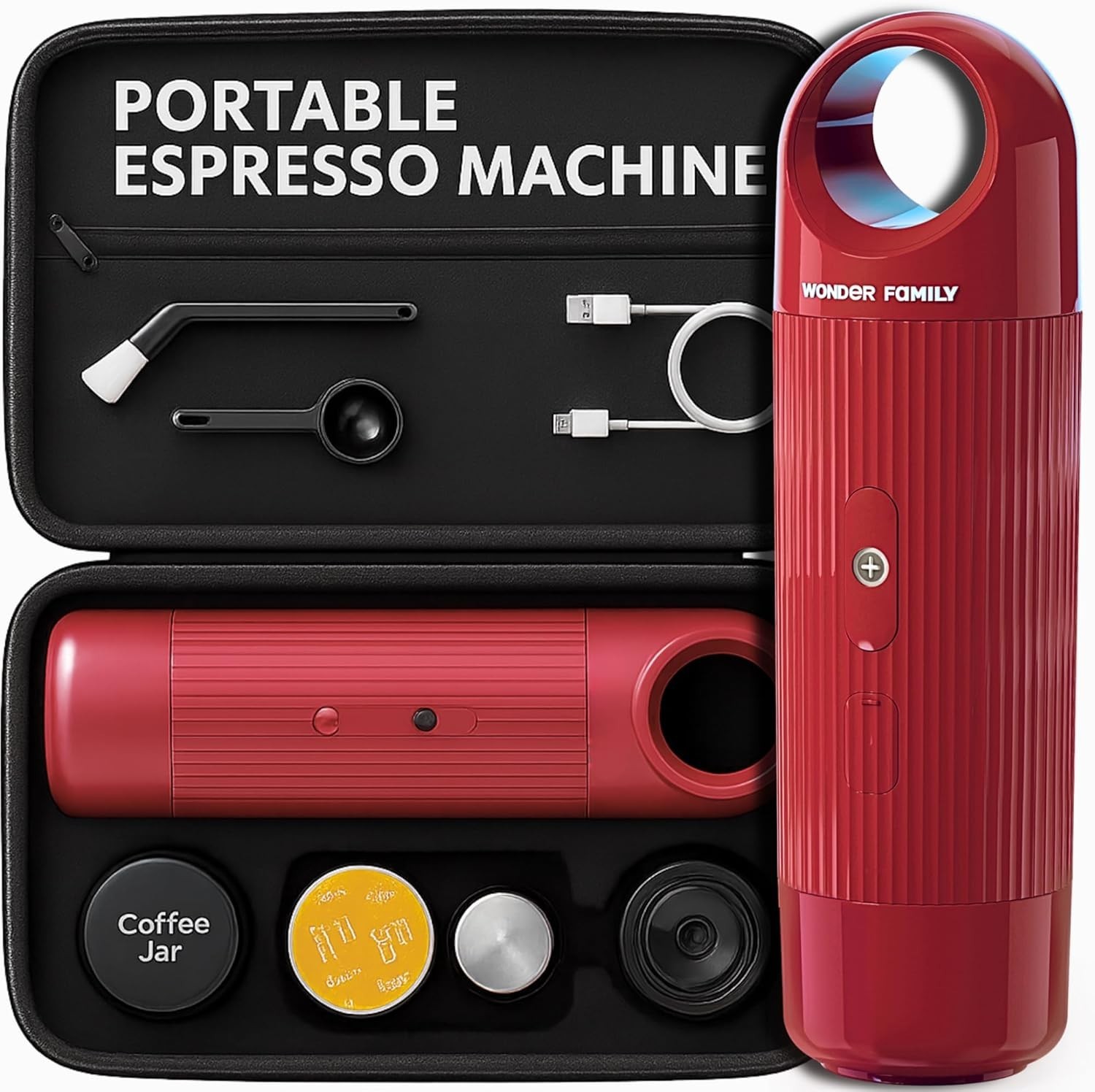

Photos from current listings. Actual item, color, and included accessories may vary.
Mini Coffee Machine Buying Guide
A mini coffee machine is a compact brewer designed for small counters, travel, or single-cup output—typically limited to 5–6 cups per brew cycle and built around either a pressurized espresso head or a drip/pod chamber. The core trade-off is footprint versus thermal stability and pump pressure: true espresso extraction requires a 15–19 bar pump and a heated metal group, while drip and pod minis rely on gravity or low-pressure percolation and sacrifice crema and body. Choose a mini only if you brew 1–2 cups at a time and accept narrower capacity; skip it if you need back-to-back milk drinks or full 10–12 cup carafes.
Key takeaways
- Pump pressure separates real espresso minis (15–19 bar ULKA-style vibratory pumps) from steam-driven or gravity units that produce weak, thin shots at 1–3 bar.
- Heating architecture dictates recovery time: aluminum or stainless thermoblocks heat in 30–60 seconds but drift ±5°C, while single-boiler minis with PID hold ±1–2°C for consistent extraction.
- Pod-and-grounds dual compatibility requires a pressurized dual-wall basket; non-pressurized baskets demand a burr grinder and are rarely bundled with sub-compact machines.
At a glance
- Category
- Coffee Makers & Espresso
- Last updated
- Nov 28, 2026
Current offers
Highlights
- Pump pressure separates real espresso minis (15–19 bar ULKA-style vibratory pumps) from steam-driven or gravity units that produce weak, thin shots at 1–3 bar.
- Heating architecture dictates recovery time: aluminum or stainless thermoblocks heat in 30–60 seconds but drift ±5°C, while single-boiler minis with PID hold ±1–2°C for consistent extraction.
- Pod-and-grounds dual compatibility requires a pressurized dual-wall basket; non-pressurized baskets demand a burr grinder and are rarely bundled with sub-compact machines.
- Stainless steel housings and group heads resist scale and heat cycling far better than ABS plastic shells, which warp and crack under repeated 90–95°C exposure.
Best use cases
- Best fit: a single remote worker brewing one 30–60 ml espresso or 150 ml americano daily—pick a 15-bar thermoblock mini with a 0.6–1.0 L tank and 50–60 mm portafilter.
- Best fit: frequent travelers and campers—choose a hand-pump or 12V/USB-powered portable espresso unit weighing under 1 kg that accepts both capsules and ground coffee.
- Wrong fit: households serving 3+ coffee drinkers at once—a 5-cup mini with a 0.8 L tank cannot refill fast enough; step up to a 1.5 L dual-boiler or 10-cup drip machine.
- Wrong fit: anyone wanting latte art or back-to-back milk steaming—mini single-boiler units require 2–5 minutes of recovery between brew and steam; choose a heat-exchanger or dual-boiler instead.
Buying tips
- Match tank size to cups: 0.6–0.8 L yields about 3–5 espressos before refill; anything under 0.5 L forces refills mid-session and suits only solo travelers.
- Check portafilter diameter—51 mm and 54 mm baskets are common on minis and limit dose to 12–16 g; 58 mm commercial baskets need a full-size machine and rarely fit mini footprints.
- For pod-plus-grounds models, confirm the machine includes both a capsule adapter and a single/double pressurized basket; missing adapters turn a dual-use unit into pod-only.
- Verify voltage and plug standard for travel units: 120V North American minis need a step-up converter abroad, while 12V car units run directly off a cigarette socket.
Specs
| Pump Pressure | 15-19 bar vs 3-5 bar steam |
|---|---|
| Brew Capacity | 1-5 cups (0.6-0.8 L tank) |
| Pod & Ground Support | Dual-use vs pod-only vs ground-only |
| Housing Material | Stainless steel vs ABS plastic |
Related searches
What to check before buying
- Measure counter depth and overhead clearance: most minis need 15–20 cm width and 28–32 cm height with the water tank and cup platform deployed.
- Confirm your cup or mug height fits under the spout—many minis clear only 10–12 cm, so a standard 12 cm latte mug may not fit without removing the drip tray.
- Check water hardness: above 150 mg/L calcium carbonate, use filtered or bottled water and descale every 2–3 months to protect thermoblocks and pumps.
- For portable units, verify the power source (hand pump, 12V car, or USB-C) and that the capsule system matches your region (Nespresso Original vs Vertuo, K-cup, or ground-only).
FAQ
Data sources: eBay / Amazon listings and product attribute feeds. Updated Nov 28, 2026.
Some links on this page are affiliate links. If you buy after clicking one, we may earn a commission at no extra cost to you. This does not change which products appear here or their order. Affiliate disclosure.