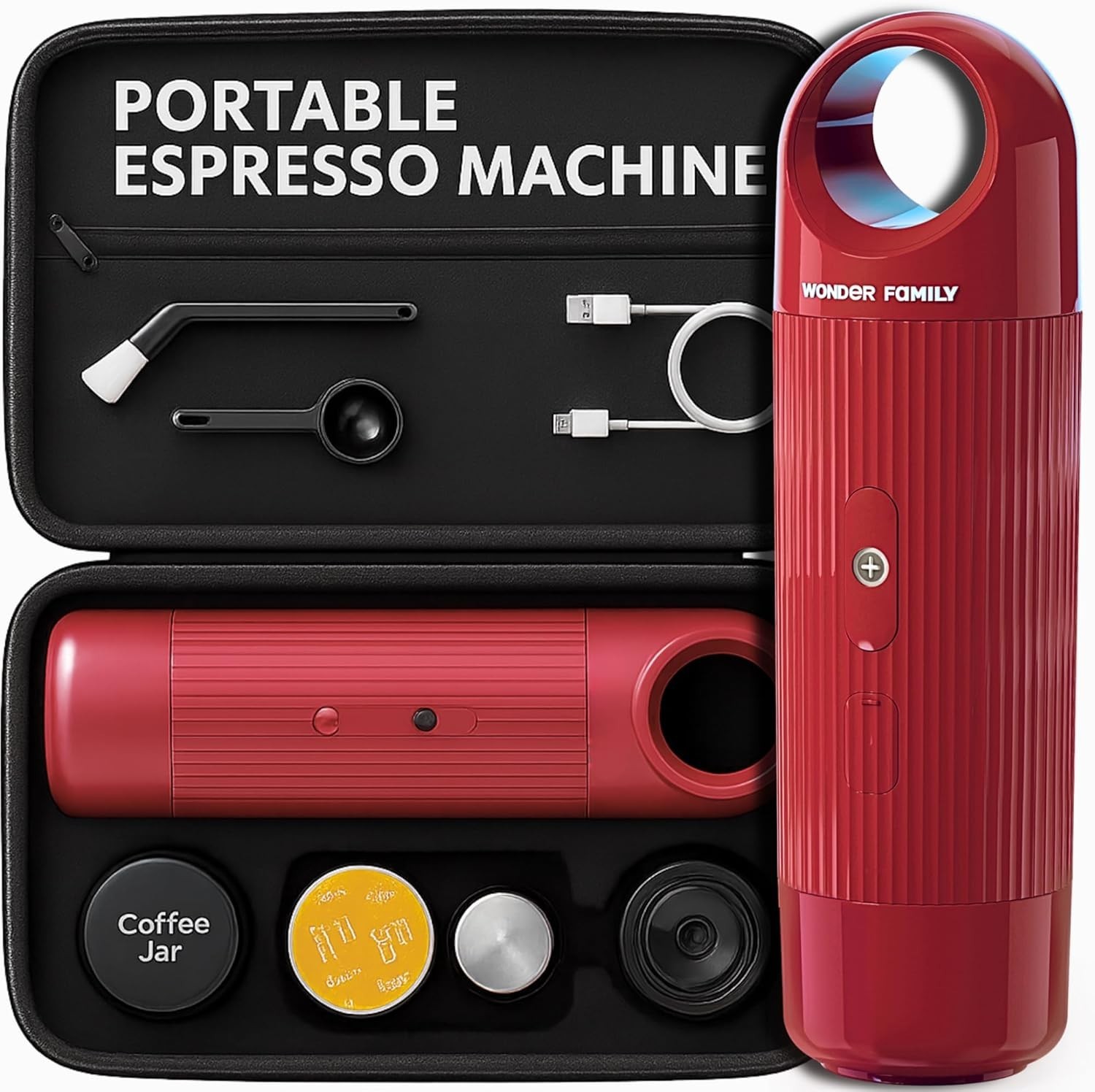

Photos from current listings. Actual item, color, and included accessories may vary.
Mini Espresso Maker Buying Guide
A mini espresso maker is a compact, manually or electrically powered device that brews a concentrated shot using pressurized hot water, typically sized for one to five cups and built for travel, small kitchens, or office desks. The core trade-off is between true 9-bar extraction for real crema and portability: hand-pump or piston units deliver café-grade pressure but require manual effort, while thermoblock electric minis add convenience at the cost of warm-up time and counter space. The decision rule is simple: buy a pressure-rated manual or thermoblock electric unit with a metal brew head and standard basket compatibility; skip unpressurized plastic pod-only toys that cannot sustain 9 bar.
Key takeaways
- True espresso extraction requires 9 bar (130 psi) at the group head; hand-pump piston minis must be rated to 15-18 bar to compensate for pressure loss, while electric thermoblock minis should specify a 15-19 bar pump.
- Brew head material determines durability and heat retention: stainless steel or aluminum alloy holds temperature and resists cracking, whereas unlisted or polycarbonate heads warp and leak within months of daily use.
- Pod compatibility is split into two standards: original Nespresso-style capsules (small, ~5-6 g) and K-cup-style pods; dual-function minis accept both plus loose grounds via a refillable basket, which adds versatility but requires a 45-52 mm basket diameter.
At a glance
- Category
- Coffee Makers & Espresso
- Last updated
- Nov 28, 2026
Current offers
Highlights
- True espresso extraction requires 9 bar (130 psi) at the group head; hand-pump piston minis must be rated to 15-18 bar to compensate for pressure loss, while electric thermoblock minis should specify a 15-19 bar pump.
- Brew head material determines durability and heat retention: stainless steel or aluminum alloy holds temperature and resists cracking, whereas unlisted or polycarbonate heads warp and leak within months of daily use.
- Pod compatibility is split into two standards: original Nespresso-style capsules (small, ~5-6 g) and K-cup-style pods; dual-function minis accept both plus loose grounds via a refillable basket, which adds versatility but requires a 45-52 mm basket diameter.
- Manual piston minis need no power but require a separate hot-water source and produce 1-2 shots per fill; electric thermoblock minis heat in 30-60 seconds and pull 1-5 cups per session but draw 800-1200 W and need a 120 V US outlet.
Best use cases
- Best fit for travel, camping, and hotel rooms: choose a hand-pump piston mini with a stainless steel brew head and a 15-18 bar rating that accepts ground coffee in a refillable basket — skip electric units that need a wall outlet and warm-up time.
- Best fit for small kitchens and office desks with outlet access: pick a thermoblock electric mini rated 15-19 bar with a 1-5 cup capacity and dual pod/ground compatibility — skip manual pumps if you want one-button shots without kettle boiling.
- Wrong fit for entertaining or milk drinks: a mini espresso maker produces 1-2 shots per cycle and has no steam wand — choose a full-size single-boiler or dual-boiler machine if you need back-to-back shots or lattes.
- Wrong fit for high-volume daily use: piston seals and thermoblock elements in mini units are rated for roughly 1-3 shots per day — step up to a 58 mm commercial-style machine for 4+ shots daily.
Buying tips
- Match the pump rating to the brew method: hand-pump piston minis need a 15-18 bar specification to hit 9 bar at the coffee bed; electric minis with a 15-19 bar pump and a 51 mm basket deliver consistent single shots.
- Check the basket diameter before buying pods or grounds: 45-52 mm baskets accept most refillable ground baskets and original-style capsules, while 54-58 mm baskets are full-size commercial and do not fit mini units.
- For electric minis, confirm 120 V / 60 Hz and a standard NEMA 5-15 plug for US outlets; a 800-1200 W draw means you should not share the circuit with a microwave or kettle.
- Prioritize a stainless steel or aluminum brew head and a metal drip tray over plastic: these hold brew temperature within 2-3 °F and survive daily thermal cycling without cracking.
Specs
| Pump Pressure | 9 bar at group head / 15-19 bar rated |
|---|---|
| Power Source | Manual piston / 120 V electric |
| Basket Size | 45-52 mm (mini) vs 54-58 mm (full) |
| Brew Head Material | Stainless steel / aluminum alloy |
Related searches
What to check before buying
- Measure your counter or travel bag clearance: most mini espresso makers stand 6-9 inches tall and 3-5 inches wide; confirm the unit fits under upper cabinets or in a carry-on before buying.
- Confirm your water source: manual piston minis require a separate kettle or hot-water flask; electric minis need a filled 300-800 mL reservoir and a nearby 120 V outlet.
- Verify pod and grounds compatibility: decide whether you will use original Nespresso-style capsules, K-cup-style pods, or loose grounds, and confirm the included basket or adapter matches that format.
- Check the pressure gauge or rating on the box: a stated 9 bar minimum at the group head (or 15-18 bar pump rating) is the threshold for real crema; unrated units typically produce weak, under-extracted coffee.
FAQ
Data sources: eBay / Amazon listings and product attribute feeds. Updated Nov 28, 2026.
Some links on this page are affiliate links. If you buy after clicking one, we may earn a commission at no extra cost to you. This does not change which products appear here or their order. Affiliate disclosure.