
Photos from current listings. Actual item, color, and included accessories may vary.
Percolator Coffee Pot Buying Guide
A percolator coffee pot is a stovetop or electric brewer that cycles boiling water repeatedly through a basket of grounds, producing a strong, full-bodied cup. The core trade-off is between electric models with keep-warm convenience and stovetop models for fire/camp versatility, versus the risk of over-extraction and bitter oils from prolonged cycling. Buyers should choose electric for countertop speed and stovetop for off-grid and durability, avoiding thin-gauge aluminum or plastic internals if long-term heat and flavor purity matter.
Median $88.46
Key takeaways
- Electric percolators use 500–1000W heating elements with an automatic keep-warm cycle; stovetop models rely on direct flame or induction and have no cord or thermostat.
- 304 stainless steel (18/8) resists corrosion and off-flavors better than aluminum or enameled steel, which can pit or react with acidic coffee over time.
- Cup ratings are based on 5–6 oz cups; a 12-cup electric pot yields roughly 60–72 oz, while 9-cup stovetop pots suit 4–6 mugs.
At a glance
- Category
- Coffee Makers & Espresso
- Last updated
- Nov 27, 2026
Current offers
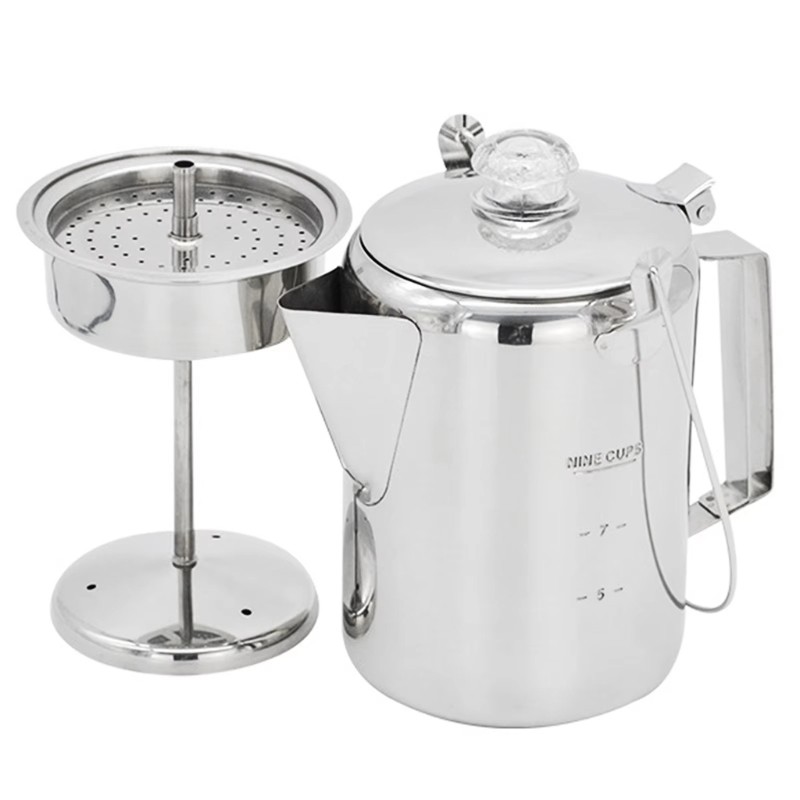 9 Cup Coffee Percolator for Campfires and Kitchen Brewing Household Coffee Pot$66.93Last checked Nov 24, 2026View on eBay
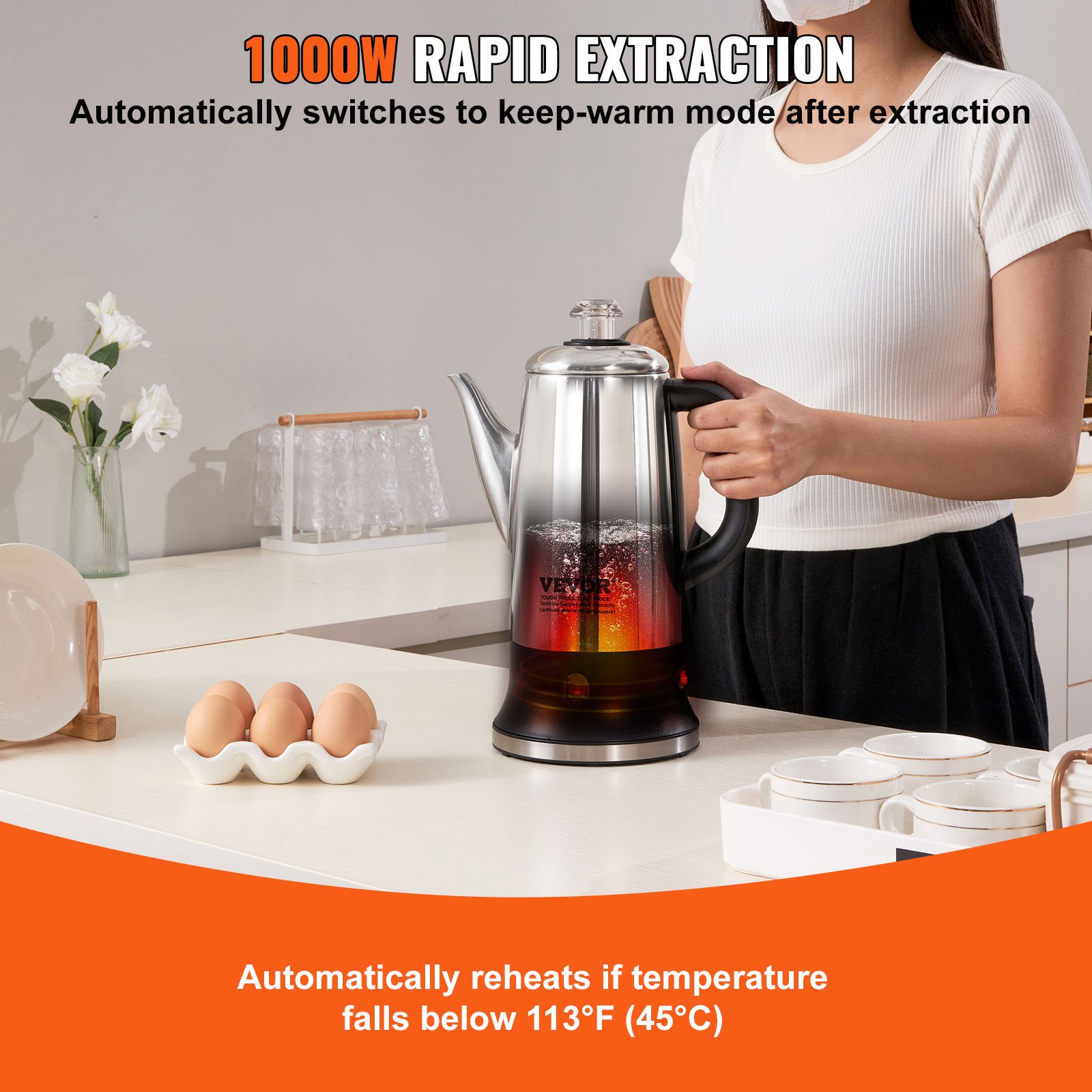 12-Cup Electric Percolator Coffee Pot, 304 Stainless Steel With Keep Warm Function & Heat-Resistant Handle, Classic Maker, Quick Brew & Easy-Pour Spout, Silver$50.99View on Mallflare
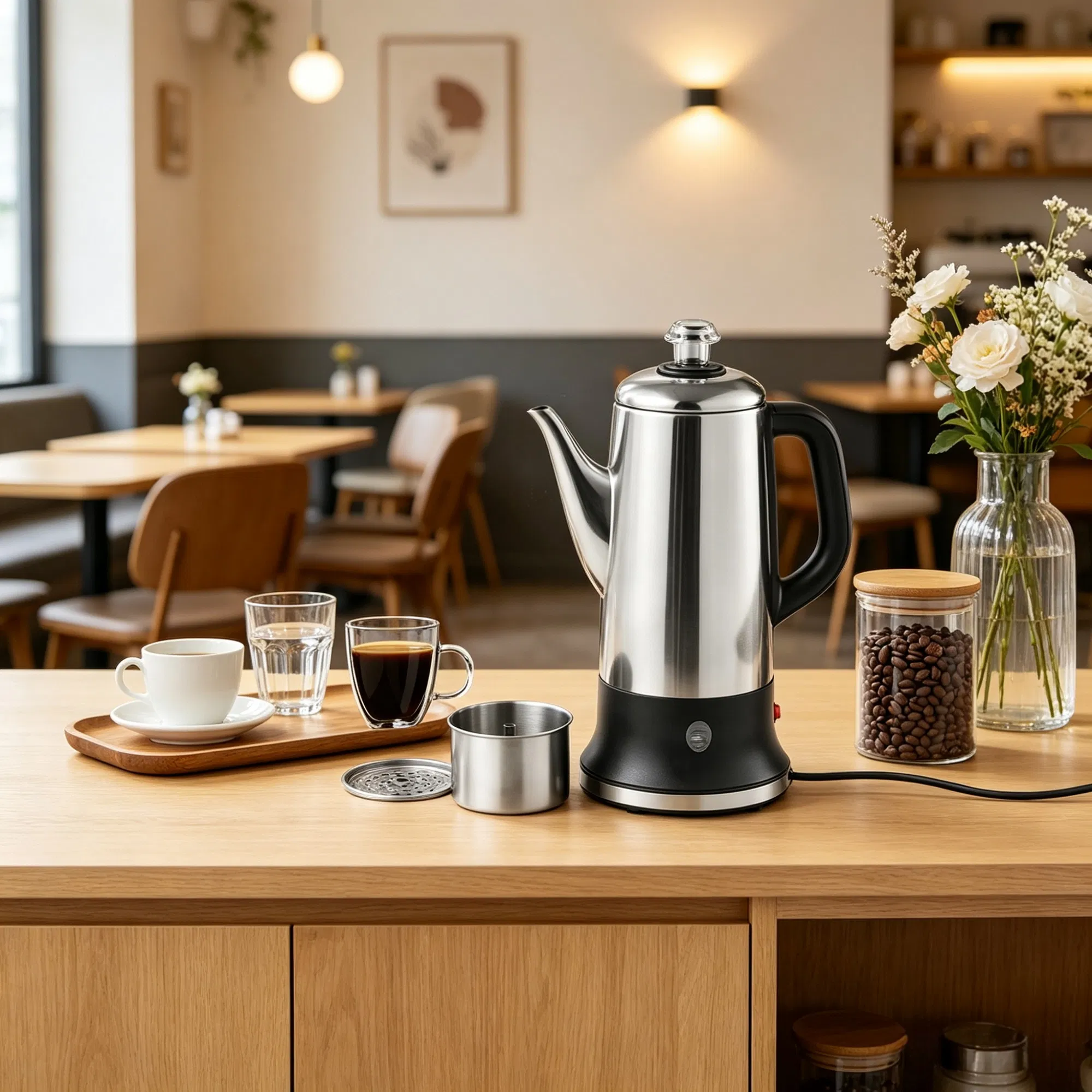 12-Cup Electric Percolator Coffee Pot, Maker with Keep Warm Function & Heat-Resistant Handle, Silver$109.99View on Mallflare
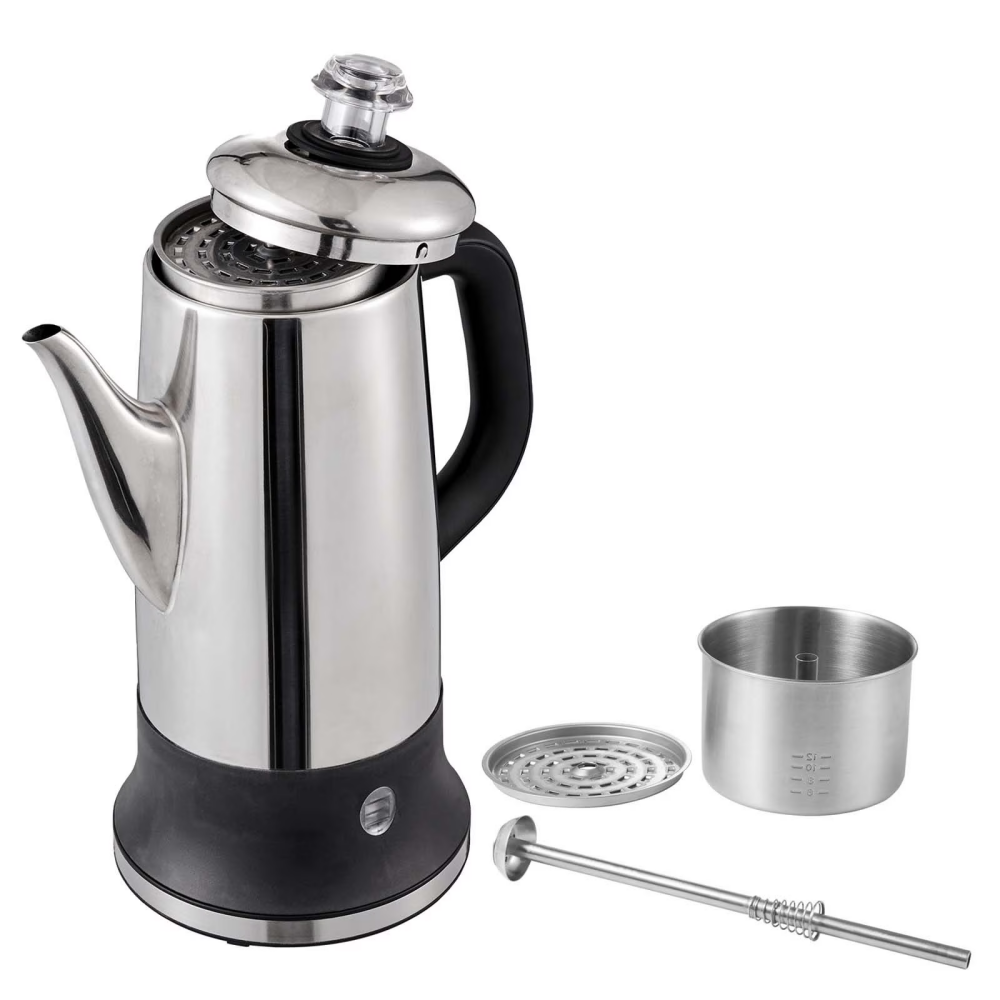 12-Cup Electric Percolator Coffee Pot Stainless Steel Maker Silver$123.99View on Mallflare
Highlights
- Electric percolators use 500–1000W heating elements with an automatic keep-warm cycle; stovetop models rely on direct flame or induction and have no cord or thermostat.
- 304 stainless steel (18/8) resists corrosion and off-flavors better than aluminum or enameled steel, which can pit or react with acidic coffee over time.
- Cup ratings are based on 5–6 oz cups; a 12-cup electric pot yields roughly 60–72 oz, while 9-cup stovetop pots suit 4–6 mugs.
- Percolator baskets and stems are sized to the pot; replacement parts are model-specific, so standardizing on common 8–12 cup formats improves serviceability.
Best use cases
- Choose an electric 12-cup stainless percolator for daily kitchen batches and keep-warm entertaining; skip it if you need precise temperature control or brew-strength adjustment.
- Choose a 9-cup stovetop stainless percolator for campfires, gas ranges, and power outages; skip glass-top or induction cooktops unless the base is magnetic-grade.
- Choose a smaller 6–8 cup stovetop pot for 1–3 drinkers to avoid over-extraction from a large batch cycling too long; skip oversized pots for solo use.
Buying tips
- Match pot size to drinkers: allow 6–8 oz per person; a 12-cup pot wastes coffee and over-extracts if you regularly brew fewer than 6 cups.
- Pick 304 stainless steel over aluminum or enamelware for daily heat cycles and acidic coffee; aluminum can discolor and impart metallic notes.
- For electric models, confirm detachable cord or cordless serving if you want to move the pot; fixed cords limit placement near outlets.
- For stovetop, verify base diameter fits your burner and that induction compatibility is stated (magnetic stainless base) if using induction.
Specs
| Power Source | Electric corded vs stovetop flame |
|---|---|
| Body Material | 304 stainless / aluminum / enamel |
| Cup Capacity | 6–12 cups (5–6 oz each) |
| Heat Compatibility | Gas, coil; induction if magnetic base |
Related searches
What to check before buying
- Measure your stovetop burner or electric outlet reach: stovetop pots need a stable base wider than the burner grate; electric models need counter clearance and a nearby outlet.
- Check cabinet height: 12-cup percolators with handles and lids often exceed 10–12 inches tall; measure under-cabinet space before buying.
- Confirm your cooktop type: glass-top and induction require flat, magnetic-compatible bases; open flame and coil are fine with standard stainless.
- Plan for filters and parts: most percolators use a reusable metal basket; replacement stems, baskets, and glass knobs are model-specific, so note the model series.
FAQ
Data sources: eBay / Amazon listings and product attribute feeds. Updated Nov 27, 2026.
Some links on this page are affiliate links. If you buy after clicking one, we may earn a commission at no extra cost to you. This does not change which products appear here or their order. Affiliate disclosure.