
Photos from current listings. Actual item, color, and included accessories may vary.
Professional Coffee Machine Buying Guide
A professional coffee machine is a commercial-grade or prosumer espresso/brew system built for sustained duty cycles, thermal stability, and serviceable components—not a plastic consumer appliance. The core trade-off is between single-boiler/thermoblock convenience and dual-boiler/heat-exchanger architectures that hold brew and steam temperatures independently. The decision rule: buy a machine with a metal group head, standard 58mm portafilter, and serviceable pump/valves if you need back-to-back shots; skip thermoblock units with pressurized baskets for anything beyond casual home use.
Median $229.00 · Pre-owned listings
Key takeaways
- Dual-boiler and heat-exchanger (HX) designs let you brew and steam simultaneously; single-boiler machines require a temperature recovery wait between shots and steaming.
- Commercial group heads are brass or stainless steel with standard 58mm baskets; aluminum or 51mm pressurized setups limit dose size and shot consistency.
- Vibration pumps (15-20 bar rated, ~9 bar at the group) are common in prosumer units; rotary pumps deliver quieter, cooler, more consistent pressure for high-volume service.
At a glance
- Category
- Coffee Makers & Espresso
- Last updated
- Nov 27, 2026
Current offers
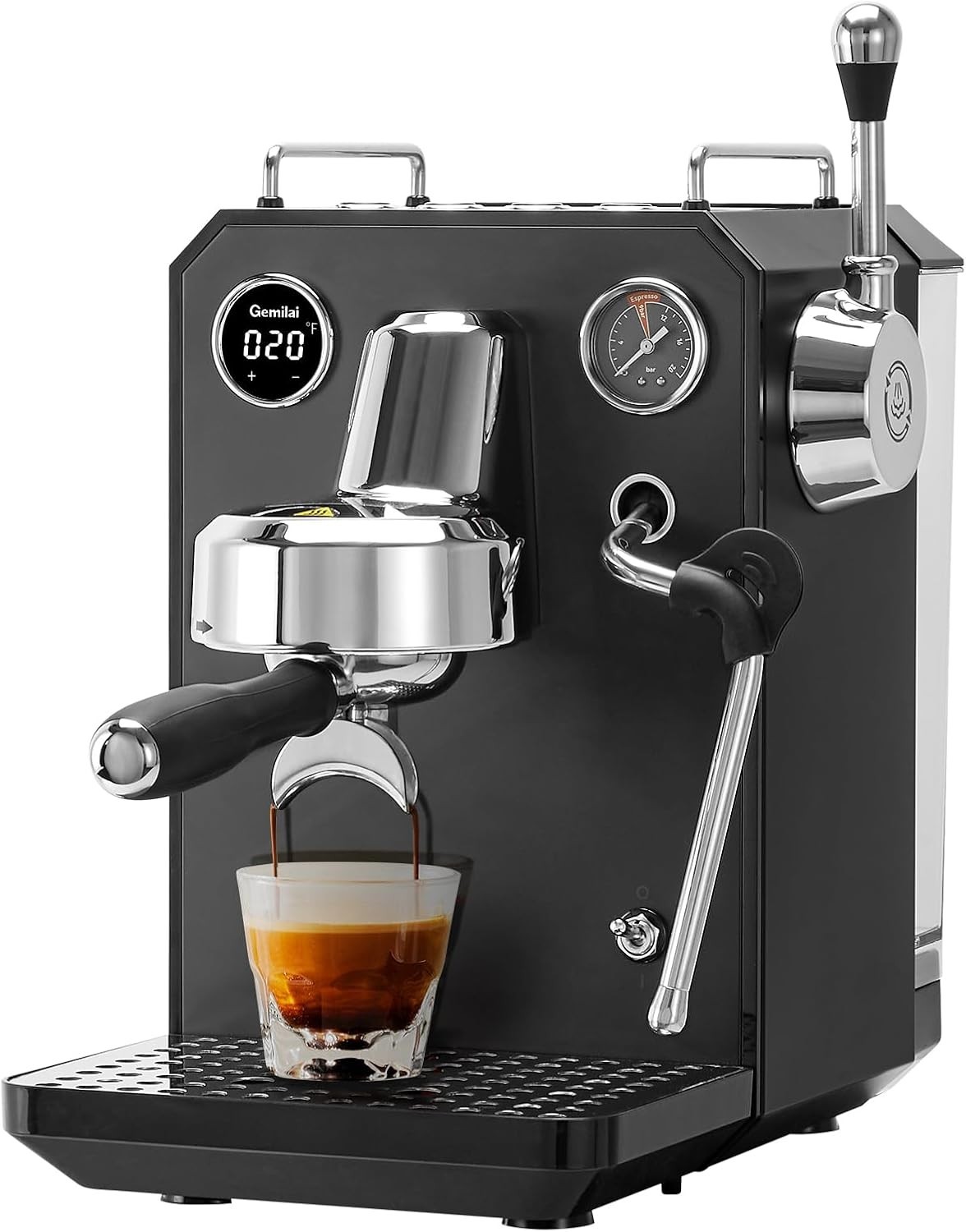 Gemilai Owl G3006 Espresso Machine 15 Bar Professional Coffee Maker Black$229.00Open box · Last checked Nov 21, 2026View on eBay
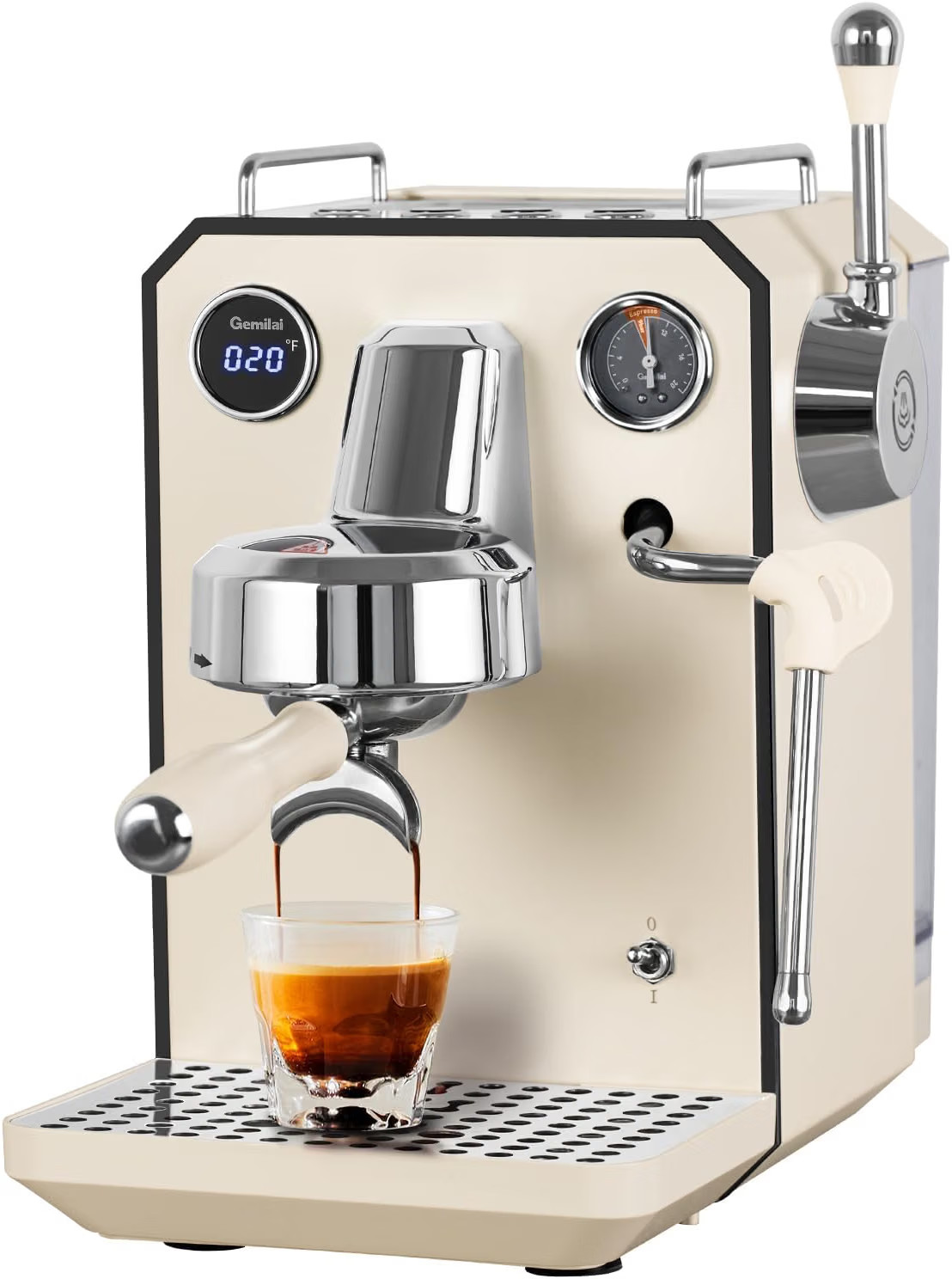 Gemilai Owl G3006 Espresso Machine 15 Bar Professional Coffee Maker White$229.00Open box · Last checked Nov 21, 2026View on eBay
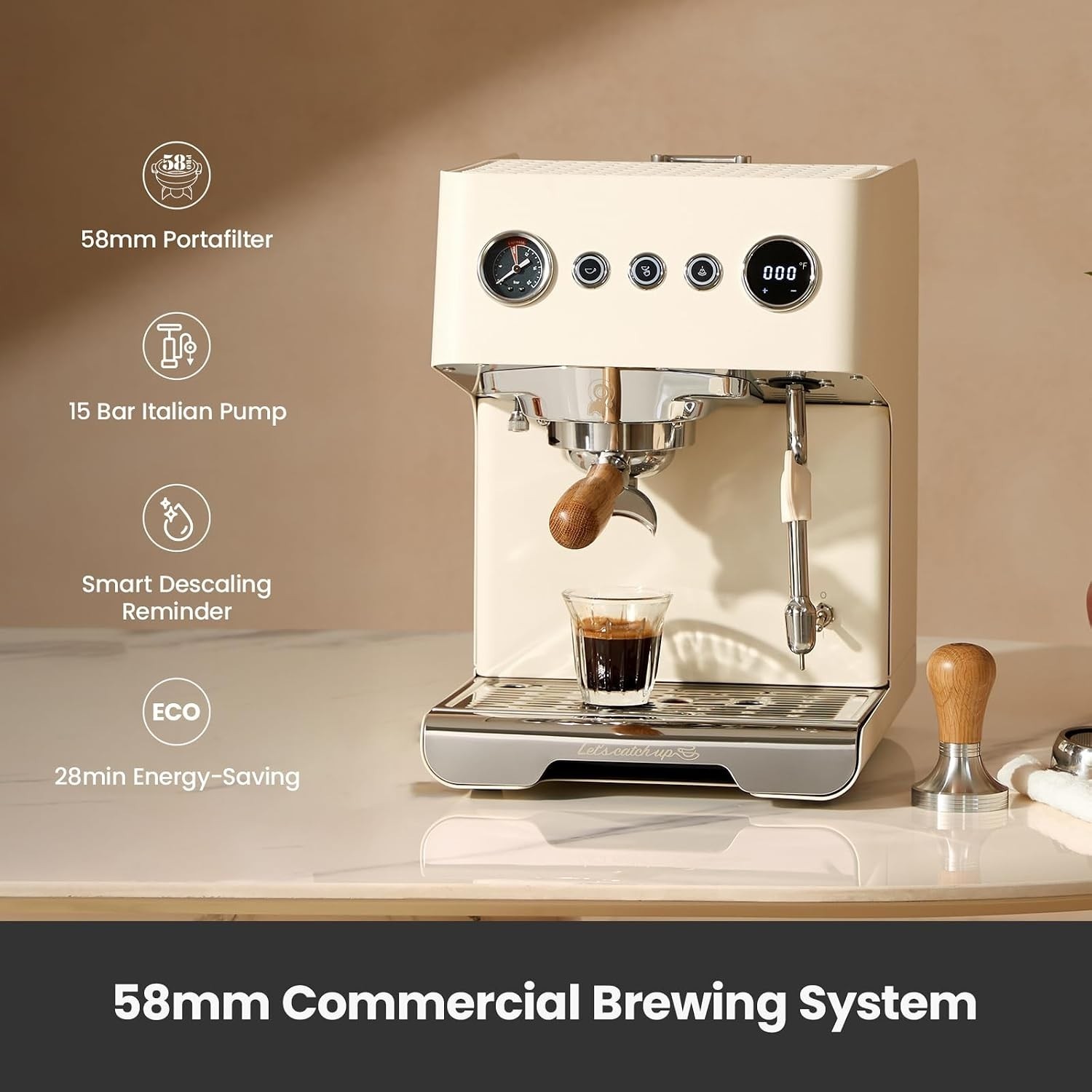 Gemilai G3028A Espresso Machine, 15 Bar Professional Coffee Maker with Adjustabl$499.00Open box · Last checked Nov 21, 2026View on eBay
Highlights
- Dual-boiler and heat-exchanger (HX) designs let you brew and steam simultaneously; single-boiler machines require a temperature recovery wait between shots and steaming.
- Commercial group heads are brass or stainless steel with standard 58mm baskets; aluminum or 51mm pressurized setups limit dose size and shot consistency.
- Vibration pumps (15-20 bar rated, ~9 bar at the group) are common in prosumer units; rotary pumps deliver quieter, cooler, more consistent pressure for high-volume service.
- PID temperature control holds brew temp within ±1°C; entry thermostats swing several degrees and drift under repeated use.
Best use cases
- Home espresso for 2-4 daily milk drinks: pick a single-boiler PID machine with 58mm portafilter and non-pressurized baskets; skip dual-boiler units unless you regularly steam and brew back-to-back.
- Small café or office serving 20-50 shots/day: choose an HX or dual-boiler with rotary pump, plumbed water option, and 2+ liter boiler; skip thermoblock prosumer units that overheat under continuous duty.
- Dedicated milk-heavy menu (lattes/cappuccinos): prioritize steam recovery and boiler capacity—dual boiler or large HX—over brew-only features; skip single-boiler units with small 0.5L boilers.
- Filter/drip professional batch brewing: select a commercial batch brewer with stainless tank, independent hot-water spigot, and 1.8-2.5L capacity; skip espresso machines for high-volume drip service.
Buying tips
- Match boiler type to workflow: dual boiler for simultaneous brew+steam; HX for fast recovery with one boiler; single boiler only for low-volume home use.
- Confirm 58mm commercial portafilter and non-pressurized baskets—these determine dose range (14-22g) and compatibility with standard tampers, distribution tools, and bottomless handles.
- Check pump type and water connection: rotary pump with 9 bar at group and plumb-in or 3L+ reservoir supports sustained service; vibration pump suits lighter home duty.
- Verify PID control and adjustable brew temperature (88-96°C range) plus steam pressure gauge; fixed thermostats limit tuning for different roasts.
Specs
| Boiler Architecture | Single / HX / Dual boiler |
|---|---|
| Portafilter Size | 58mm commercial standard |
| Pump Type | Vibration vs Rotary |
| Temperature Control | PID ±1°C vs thermostat |
Related searches
What to check before buying
- Measure counter depth and overhead clearance: commercial machines run 40-50cm deep and 35-45cm tall; confirm space for cup clearance and water reservoir access.
- Check electrical circuit: many prosumer/pro machines draw 1400-1800W on 120V (15A dedicated) or 2000-3000W on 220-240V; confirm plug type and breaker capacity.
- Confirm water quality plan: plumbed machines need filtration (softener/carbon) to protect boilers; reservoir machines require regular descaling with appropriate solution.
- Verify companion parts availability: 58mm tamper, bottomless portafilter, precision baskets, and replacement group gaskets should be standard and easy to source.
FAQ
Data sources: eBay / Amazon listings and product attribute feeds. Updated Nov 27, 2026.
Some links on this page are affiliate links. If you buy after clicking one, we may earn a commission at no extra cost to you. This does not change which products appear here or their order. Affiliate disclosure.