
Photos from current listings. Actual item, color, and included accessories may vary.
Semi Automatic Espresso Machine Buying Guide
A semi-automatic espresso machine gives you manual control over extraction start/stop while the pump and boiler handle pressure and temperature, separating it from fully automatic bean-to-cup units and from manual lever machines. The core trade-off is boiler architecture and group-head thermal stability: single-boiler thermoblock or small boiler designs are lighter and faster to heat but require temperature surfing between brew and steam, while dual-boiler or heat-exchanger designs hold brew temperature steady and steam simultaneously. The clear decision rule: buy a dual-boiler or heat-exchanger with a 58mm commercial-style group and PID if you pull multiple milk drinks daily; choose a single-boiler thermoblock only if you drink straight espresso and accept a 1-2 minute steam wait.
Median $366.27 · New listings
Key takeaways
- Group head diameter is the durability benchmark: 58mm commercial portafilters accept standard baskets, tampers, and distribution tools, while 51mm and 54mm pressurized setups limit upgrade paths and basket availability.
- Boiler architecture defines workflow: dual boilers brew and steam at independent temperatures, heat exchangers brew off a steam boiler with a cooling flush, and single thermoblocks require a purge-and-wait cycle between espresso and milk.
- PID temperature control holds brew stability within roughly ±1°C, versus ±5°C or worse on basic thermostat or bimetal switches, which directly changes shot-to-shot consistency on light roasts.
At a glance
- Category
- Coffee Makers & Espresso
- Last updated
- Nov 27, 2026
Current offers
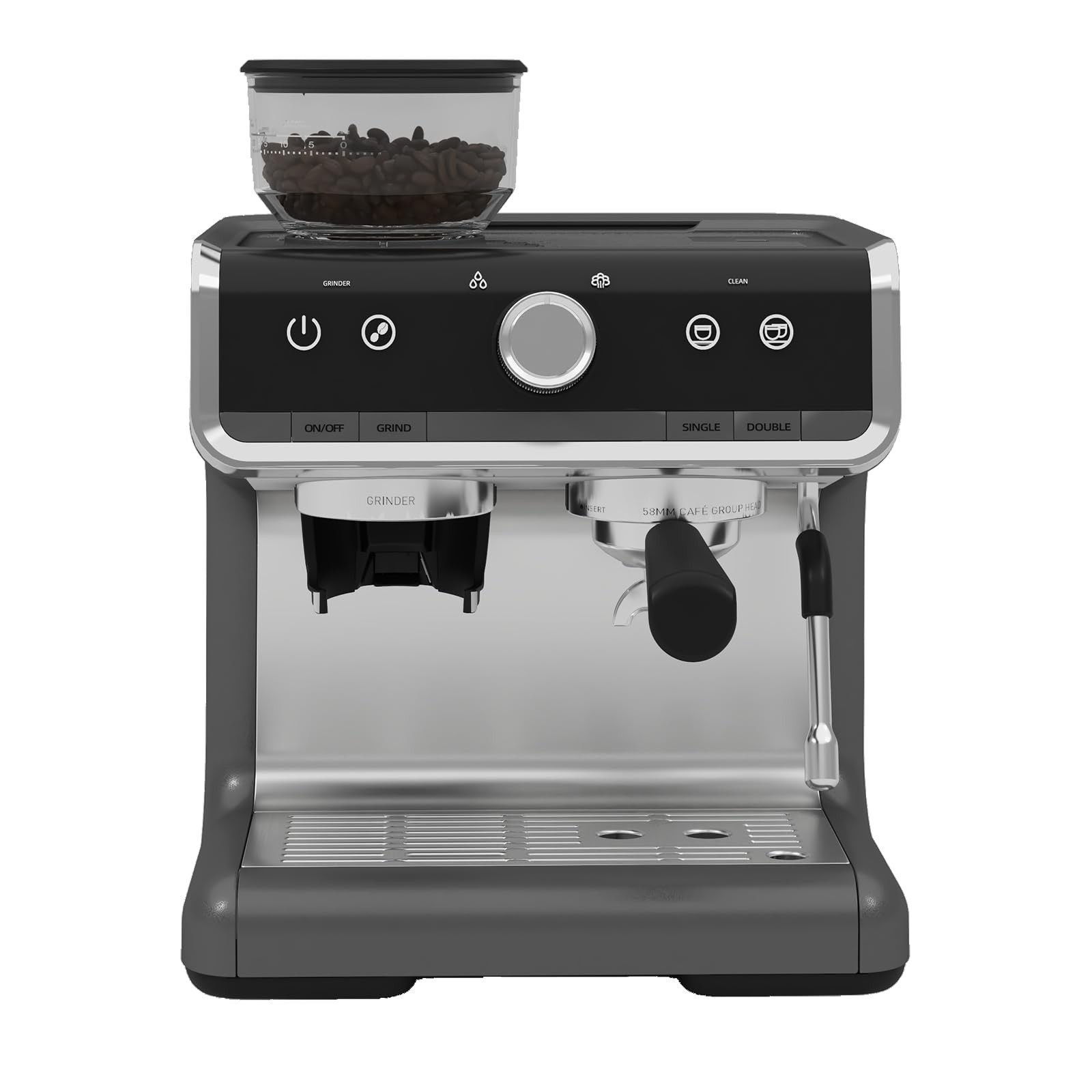 Semi Automatic 20Bar Espresso Machine W/ Conical Grinder Steam Wand For Home$281.99New · Last checked Nov 23, 2026View on eBay
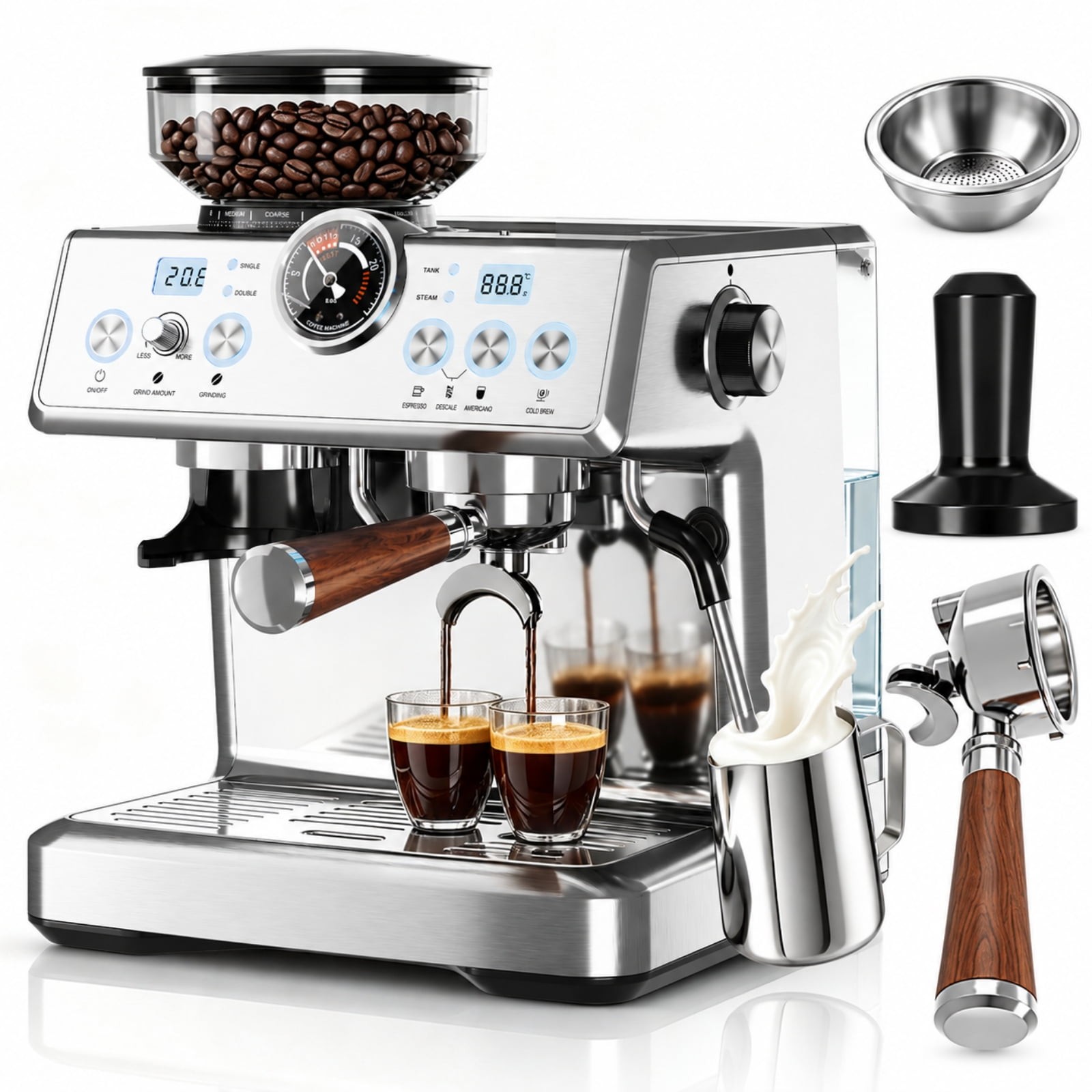 Espresso Machine with Grinder, 20 Bar Semi-Automatic Coffee Maker with Dual Boil$366.27New · Last checked Nov 21, 2026View on eBay
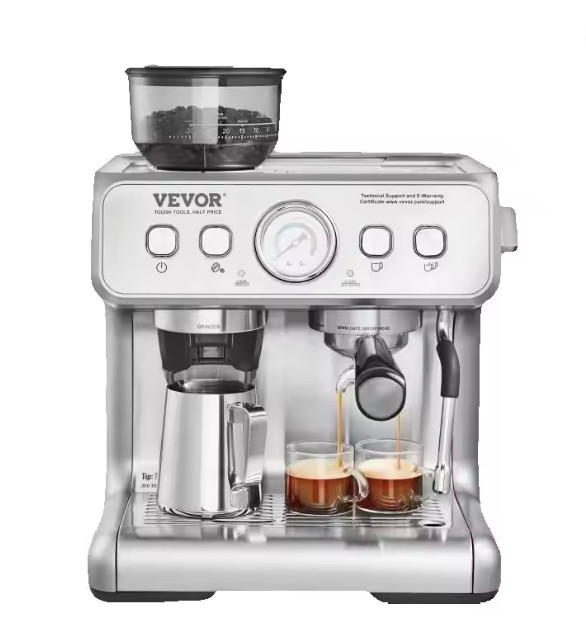 Espresso Machine with Grinder 15 Bar Semi-Automatic Espresso Coffee Maker$420.00New · Last checked Nov 23, 2026View on eBay
Highlights
- Group head diameter is the durability benchmark: 58mm commercial portafilters accept standard baskets, tampers, and distribution tools, while 51mm and 54mm pressurized setups limit upgrade paths and basket availability.
- Boiler architecture defines workflow: dual boilers brew and steam at independent temperatures, heat exchangers brew off a steam boiler with a cooling flush, and single thermoblocks require a purge-and-wait cycle between espresso and milk.
- PID temperature control holds brew stability within roughly ±1°C, versus ±5°C or worse on basic thermostat or bimetal switches, which directly changes shot-to-shot consistency on light roasts.
- Pump and plumbing tier matters: a 15-bar ULKA-style vibratory pump with OPV set near 9 bar is the espresso standard, while rotary pumps with plumbed-in or reservoir-fed designs run quieter and support continuous back-to-back shots.
Best use cases
- Best fit: daily flat-white or cappuccino drinkers should pick a dual-boiler PID machine with a 58mm group and dedicated steam boiler; skip single thermoblocks, which force a temperature-recovery wait between every shot and pitcher.
- Best fit: straight-espresso and Americano drinkers who pull 1-2 shots a day should choose a single-boiler PID with a 58mm group; this delivers café-grade temperature stability at lower cost and complexity than dual boilers.
- Wrong fit: households serving 4+ milk drinks in a row should skip any single-boiler or thermoblock model regardless of brand tier, because recovery time compounds and steam pressure drops mid-service.
- Wrong fit: buyers wanting one-touch lattes or capsule convenience should skip semi-automatics entirely; these machines require grinding, dosing, tamping, and dialing in, and a super-automatic or pod system matches that expectation better.
Buying tips
- Match the portafilter to your grinder plan: a 58mm non-pressurized basket demands an espresso-capable burr grinder with fine stepped or stepless adjustment; pressurized 51-54mm baskets tolerate pre-ground coffee but cap flavor ceiling.
- Size the boiler to your session: single boilers around 0.3-0.5L suit 1-2 shots, heat exchangers around 1.5-2L handle 4-6 drinks, and dual boilers with 0.5-1L brew boilers plus separate steam boilers sustain continuous service.
- Confirm the pump and OPV: a 15-bar vibratory pump with an adjustable over-pressure valve set to 9 bar is the target; fixed 15-bar with no OPV typically over-extracts and channels.
- Check group-head heating method: an E61-style group thermosiphons from the boiler for stable temperature, while unheated group heads on entry thermoblocks lose heat on the first shot of the day.
Specs
| Boiler Type | Single / HX / Dual boiler |
|---|---|
| Portafilter Size | 58mm commercial vs 51-54mm |
| Temperature Control | PID ±1°C vs thermostat ±5°C |
| Pump & Pressure | 15-bar vibratory, OPV ~9 bar |
Related searches
What to check before buying
- Measure counter depth and height clearance: semi-automatics with a top-mounted hopper or cup warmer need 40-45cm of vertical space, and reservoir access may require side or rear clearance.
- Verify electrical circuit: most dual-boiler and heat-exchanger machines draw 1400-1800W on a standard 120V/15A circuit, so confirm the outlet is not shared with high-draw appliances.
- Confirm water quality plan: hard water above roughly 120ppm scales boilers and group heads, so budget for a softener or use low-mineral water to protect the machine.
- Check included accessories: a 58mm tamper, portafilter baskets (single and double), and a steam pitcher are baseline; missing tampers or pressurized-only baskets signal an entry tier with limited upgrade room.
FAQ
Data sources: eBay / Amazon listings and product attribute feeds. Updated Nov 27, 2026.
Some links on this page are affiliate links. If you buy after clicking one, we may earn a commission at no extra cost to you. This does not change which products appear here or their order. Affiliate disclosure.