
Photos from current listings. Actual item, color, and included accessories may vary.
Glass Electric Kettle Buying Guide
Glass electric kettles use a borosilicate or tempered-glass body with a concealed stainless-steel heating element, letting you watch the boil while avoiding plastic water contact. The core trade-off is thermal-shock durability and base-plate quality: cheap soda-lime glass and thin 304 elements fail early, while borosilicate bodies with a full stainless-steel flat plate and dry-boil cutoff last years. Buy borosilicate glass rated for stovetop-level thermal shock with a concealed 304 stainless element and auto shut-off; skip thin soda-lime glass with exposed spiral elements.
Median $214.11 · New listings
Key takeaways
- Borosilicate glass (often 3.3) handles rapid temperature swings from -20°C to 150°C without cracking, while soda-lime glass is prone to shattering on cold-water refills after boiling.
- Concealed flat stainless-steel base plates (304 grade) heat faster and descale more easily than exposed spiral coils, and prevent mineral buildup around the element.
- Most full-size glass kettles run 1.7L at 1500-2200W on 120V (US) or 220-240V (EU/UK), bringing water to boil in roughly 4-7 minutes depending on wattage.
At a glance
- Category
- Electric Kettles
- Last updated
- Nov 28, 2026
Current offers
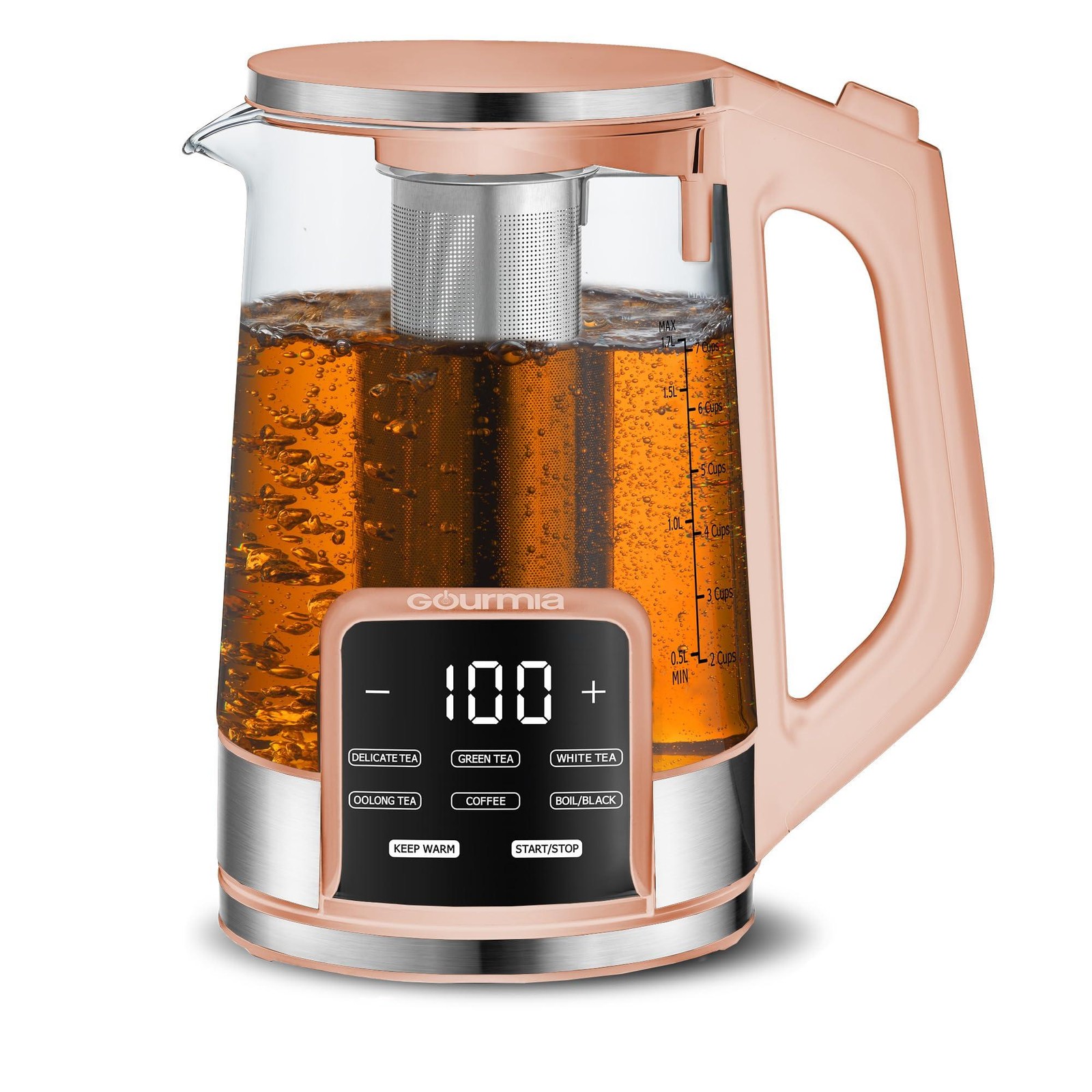 Gourmia Electric Glass Kettle – 1.7L Programmable Tea & Coffee Brewer with Digit$344.22New · Last checked Nov 26, 2026View on eBay
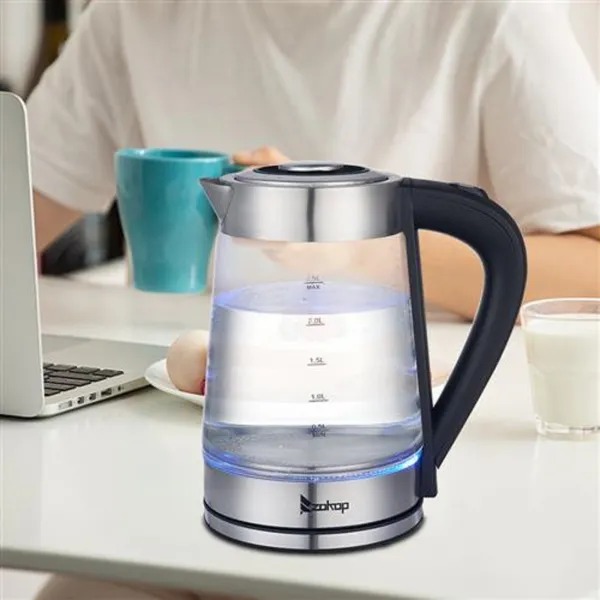 HD-250 110V 1200W 2.5L Electric Kettle With Blue Glass$30.99View on Mallflare
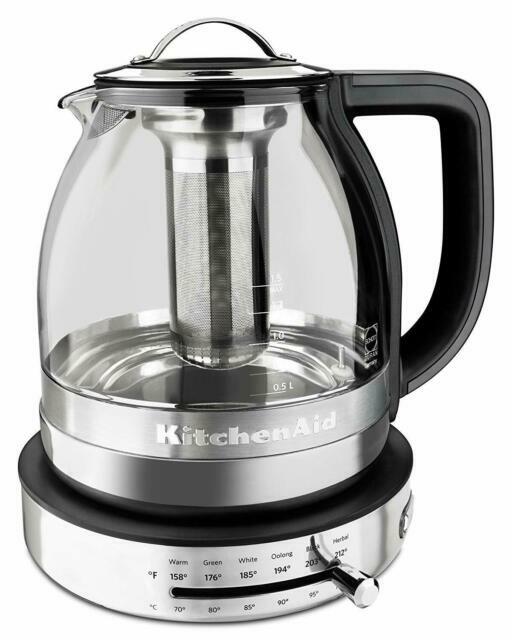 KitchenAid KEK1322SS 1.5L Electric Glass Tea Kettle - Stainless Steel$349.99New · Last checked Nov 16, 2026View on eBay
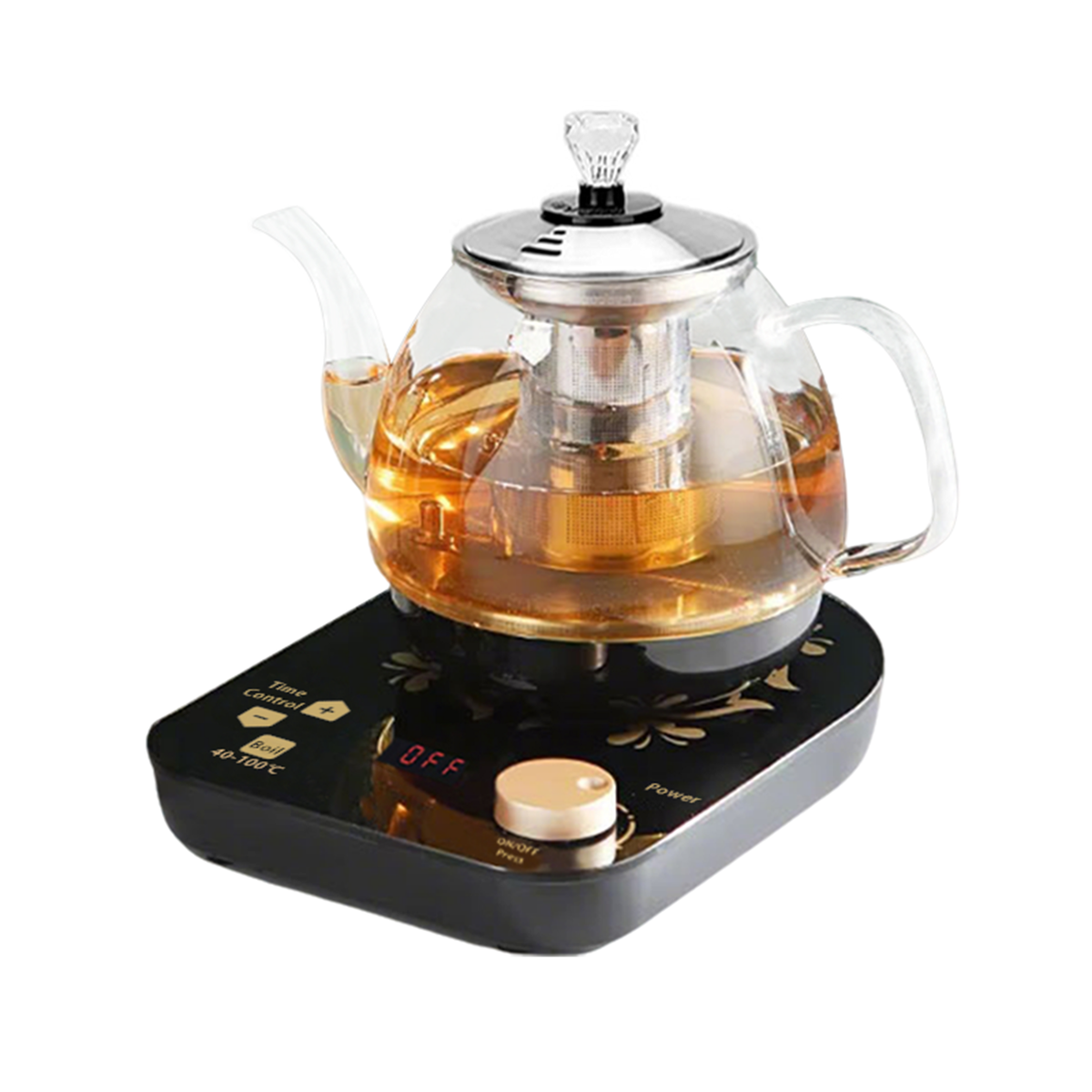 Professional multi-functional glass teapot | 800ml fast heating, cooking and brewing integrated electric kettle with stainless steel filter$83.99View on Mallflare
Highlights
- Borosilicate glass (often 3.3) handles rapid temperature swings from -20°C to 150°C without cracking, while soda-lime glass is prone to shattering on cold-water refills after boiling.
- Concealed flat stainless-steel base plates (304 grade) heat faster and descale more easily than exposed spiral coils, and prevent mineral buildup around the element.
- Most full-size glass kettles run 1.7L at 1500-2200W on 120V (US) or 220-240V (EU/UK), bringing water to boil in roughly 4-7 minutes depending on wattage.
- Stainless-steel mesh filters and spouts keep scale out of the pour; removable filters are easier to clean than fixed perforated glass spouts.
Best use cases
- Best fit: daily tea and pour-over brewing at 1.0-1.7L with borosilicate glass and a concealed 304 plate; you get visual boil control and easy descaling. Skip if you need precise temperature hold — choose a variable-temperature gooseneck instead.
- Best fit: households with hard water — a glass body plus removable stainless filter lets you see and scrub scale; skip plastic-bodied kettles that hide buildup in opaque seams.
- Wrong fit: large families or office kitchens needing 2L+ rapid boils — glass kettles top out around 1.7L; pick a 1.7L stainless or 2L+ commercial urn instead.
- Wrong fit: high-altitude or frequent cold-refill use — thermal shock risk rises; choose borosilicate explicitly and avoid pouring cold water into a hot empty kettle.
Buying tips
- Confirm borosilicate (3.3) glass in the spec, not just 'glass'; soda-lime bodies are cheaper but crack under thermal shock from boiling to cold refill.
- Match wattage to voltage: 1500W on 120V boils 1.7L in about 6-7 minutes; 2200W on 220-240V cuts that to roughly 4-5 minutes. Never run a 220V kettle on 120V.
- Pick a concealed 304 stainless flat plate over exposed spiral elements; flat plates descale faster and resist pitting from chlorinated water.
- Check the lid and handle attachment: screw-fixed stainless collars and heat-resistant PP or silicone seals outlast glued plastic lids that loosen with steam cycles.
Specs
| Body Glass | Borosilicate 3.3 vs soda-lime |
|---|---|
| Heating Plate | Concealed 304 stainless flat vs exposed coil |
| Capacity & Power | 1.0-1.7L / 1500W (120V) or 2200W (230V) |
| Safety Cutoff | Auto shut-off + boil-dry protection |
Related searches
What to check before buying
- Measure your counter clearance and cord reach: full-size glass kettles are roughly 22-26cm tall and need a 360° swivel base with at least 60cm cord to the outlet.
- Verify outlet and plug standard: US 120V NEMA 1-15P vs EU/UK 220-240V Schuko/Type G; a voltage converter is not a safe substitute for a correctly rated kettle.
- Confirm your water hardness: hard water (above ~180 mg/L CaCO3) makes a removable stainless filter and wide glass mouth essential for descaling.
- Check the base footprint fits your counter and that the kettle lifts cleanly off the power base for filling at the tap.
FAQ
Data sources: eBay / Amazon listings and product attribute feeds. Updated Nov 28, 2026.
Some links on this page are affiliate links. If you buy after clicking one, we may earn a commission at no extra cost to you. This does not change which products appear here or their order. Affiliate disclosure.