
Photos from current listings. Actual item, color, and included accessories may vary.
110v Stove Buying Guide
A 110V stove is any freestanding or built-in electric cooktop, hot plate, or range designed to run on standard North American 120V household current, which caps total power at roughly 1,800W per 15A circuit or 2,400W per 20A circuit. The core trade-off is heating technology: infrared coil and glass radiant burners are cheap and pan-agnostic but slow and inefficient, while induction is faster, safer, and more efficient but requires magnetic cookware and precise low-wattage engineering. The decision rule: buy induction only if your pan bases are magnetic and your circuit can supply 1,800W continuous; otherwise choose a 1,500-1,800W radiant or coil burner and accept longer heat-up times.
Median $132.49
Key takeaways
- 110V induction units are engineered for low-power continuous output (typically 1,800W peak shared across two burners, or 1,300-1,800W single), so they throttle to maintain heat rather than pulsing full power on and off.
- Residential 120V circuits are limited to 1,440W on a 15A breaker and 1,920W on a 20A breaker; any 110V stove rated 3,500W requires a dedicated 30A+ circuit and is not plug-and-cook on a standard outlet.
- Induction requires ferromagnetic cookware (cast iron, magnetic stainless steel); aluminum, copper, and most glass or ceramic pans will not heat, while radiant glass and coil burners work with any flat-bottomed pan.
At a glance
- Category
- Home Ranges, Ovens & Cooktops
- Last updated
- Nov 28, 2026
Current offers
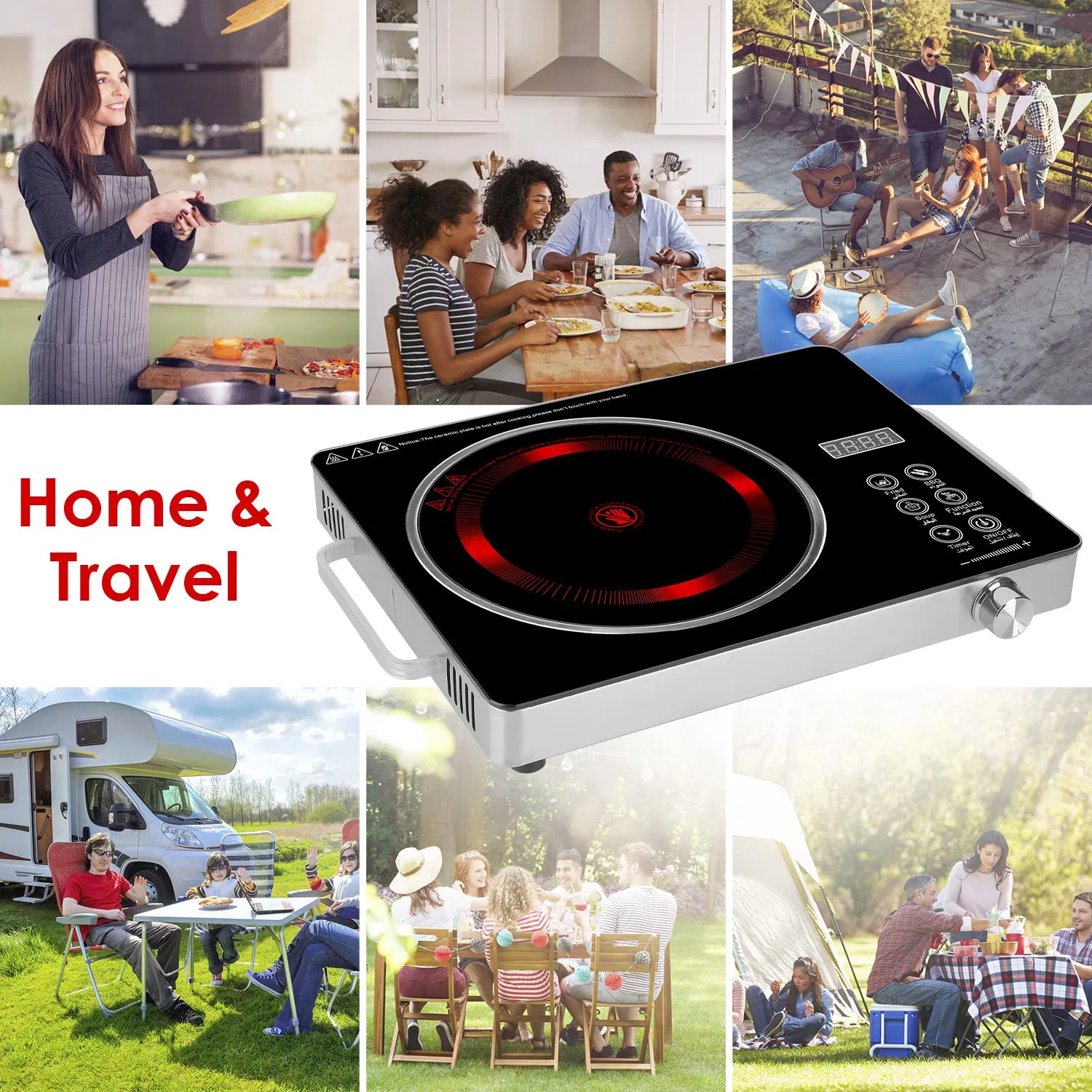 Portable Electric Single Burner Cooktop 3500W 110V, Heat-Resistant Glass Surface (Easy to Clean) with Side Handles, 4 Preset Cooking Modes for Camper/Studio/Dorm$71.99View on Mallflare
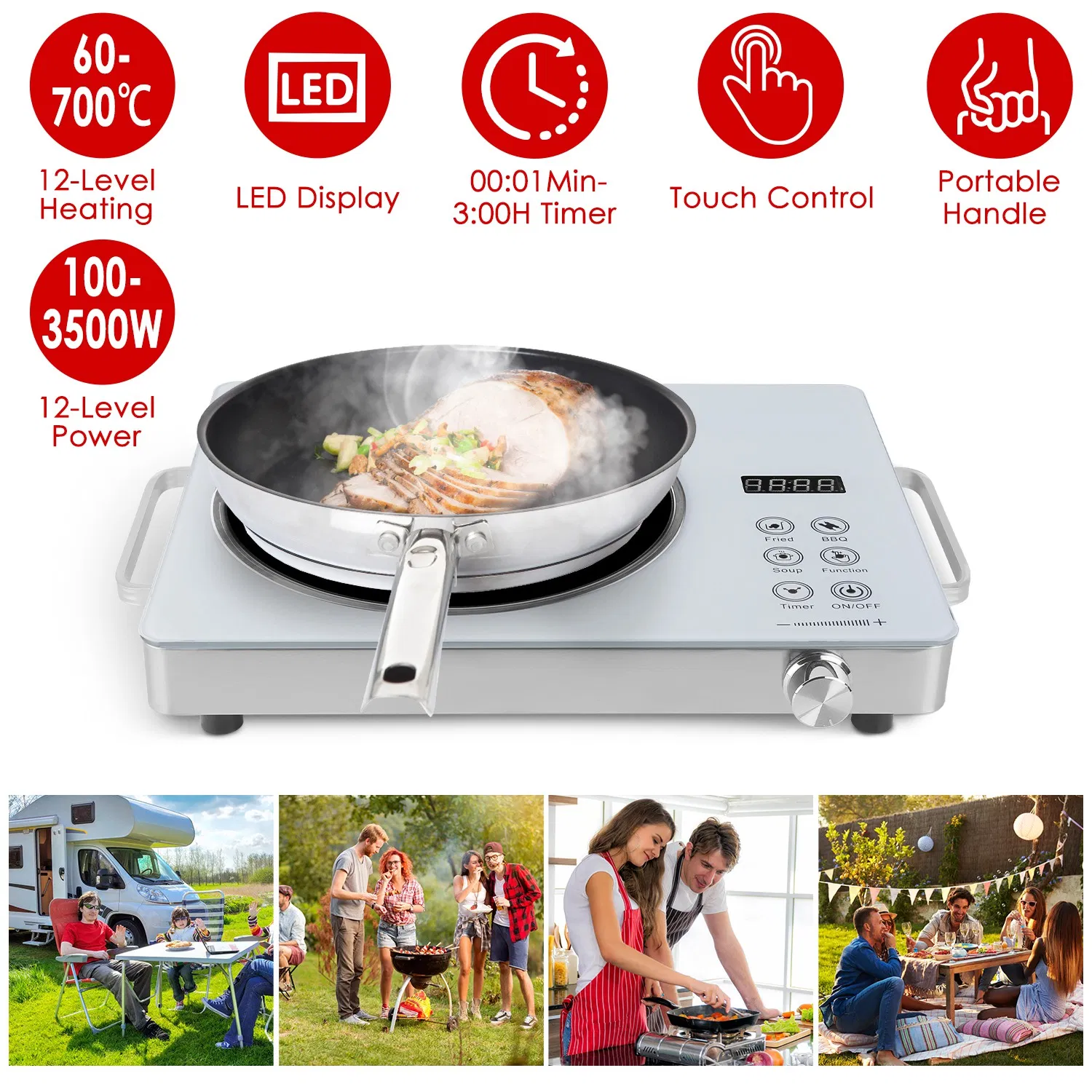 3500W Electric Single Burner Cooktop 110V - Rapid Heating Hot Plate with 4 Preset Modes (Fried/BBQ/Soup/Function), 12-Level Power/Temp Control, 0-3H Timer, Portable Handles & Easy-Clean Glass Surface$71.99View on Mallflare
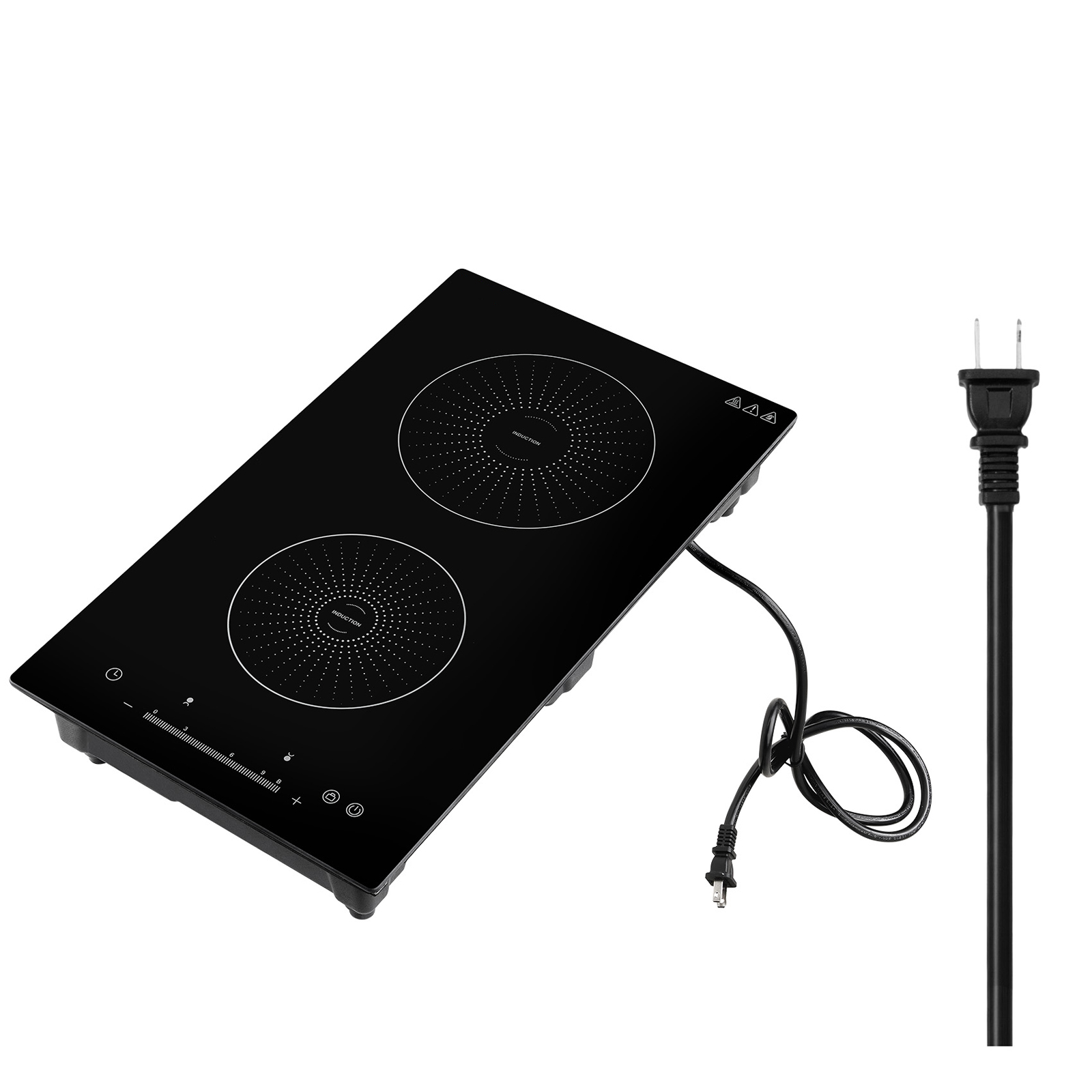 Induction Cooktop 12in 2 Burners Built-in Electric Stove 110V 1800W, Low-Power Continuous Heating, Countertop Burner, 9 Power Levels, LED Touch Screen, Ceramic Glass, And Child Lock$119.99View on Mallflare
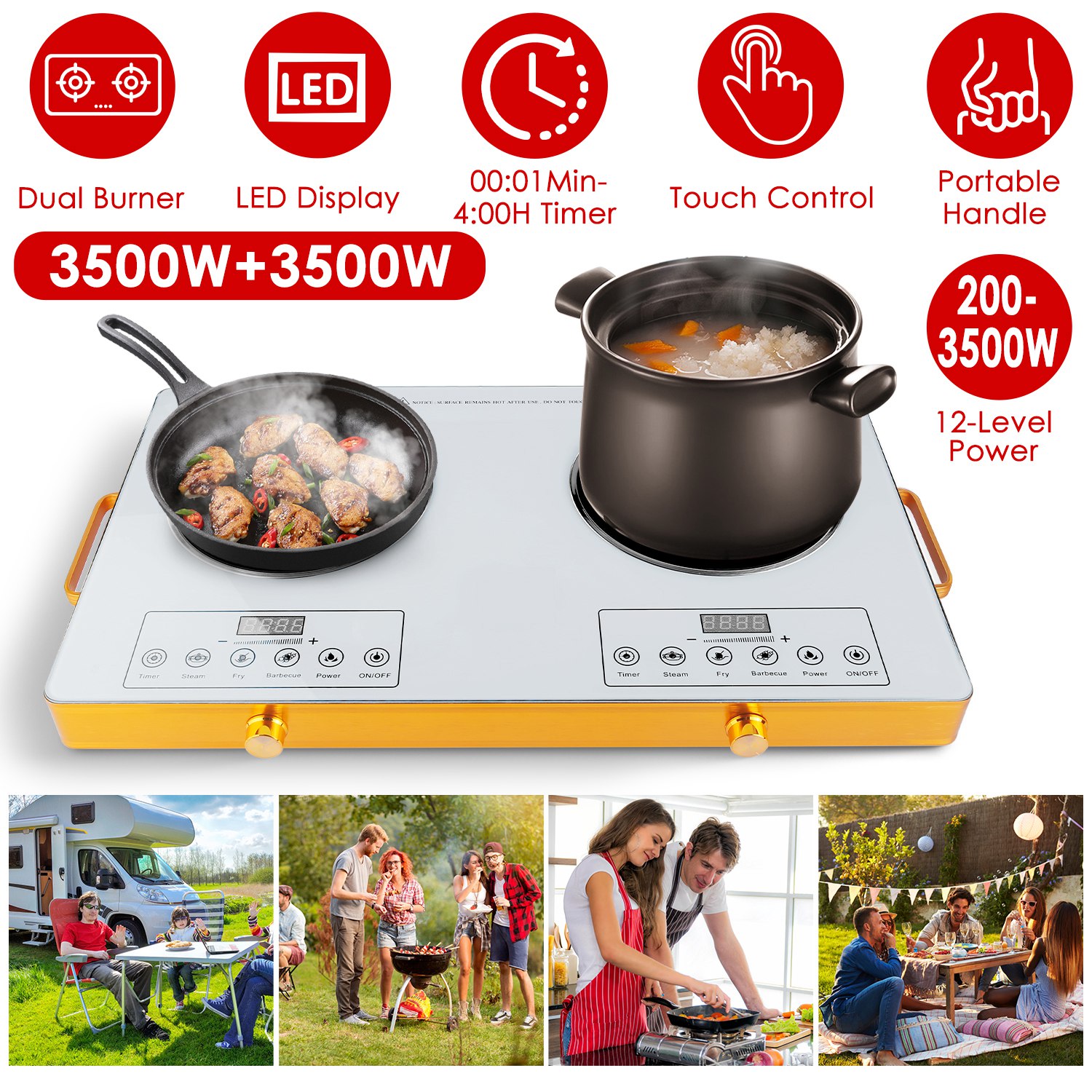 7000W Double Burner Electric Cooktop 110V, 2x3500W Rapid Heating Hot Plate with 4 Preset Modes (Steam/Fry/Barbecue/Power), 11-Level Power Control, Portable Handles & Easy-Clean Glass Surface, Fit All$144.99View on Mallflare
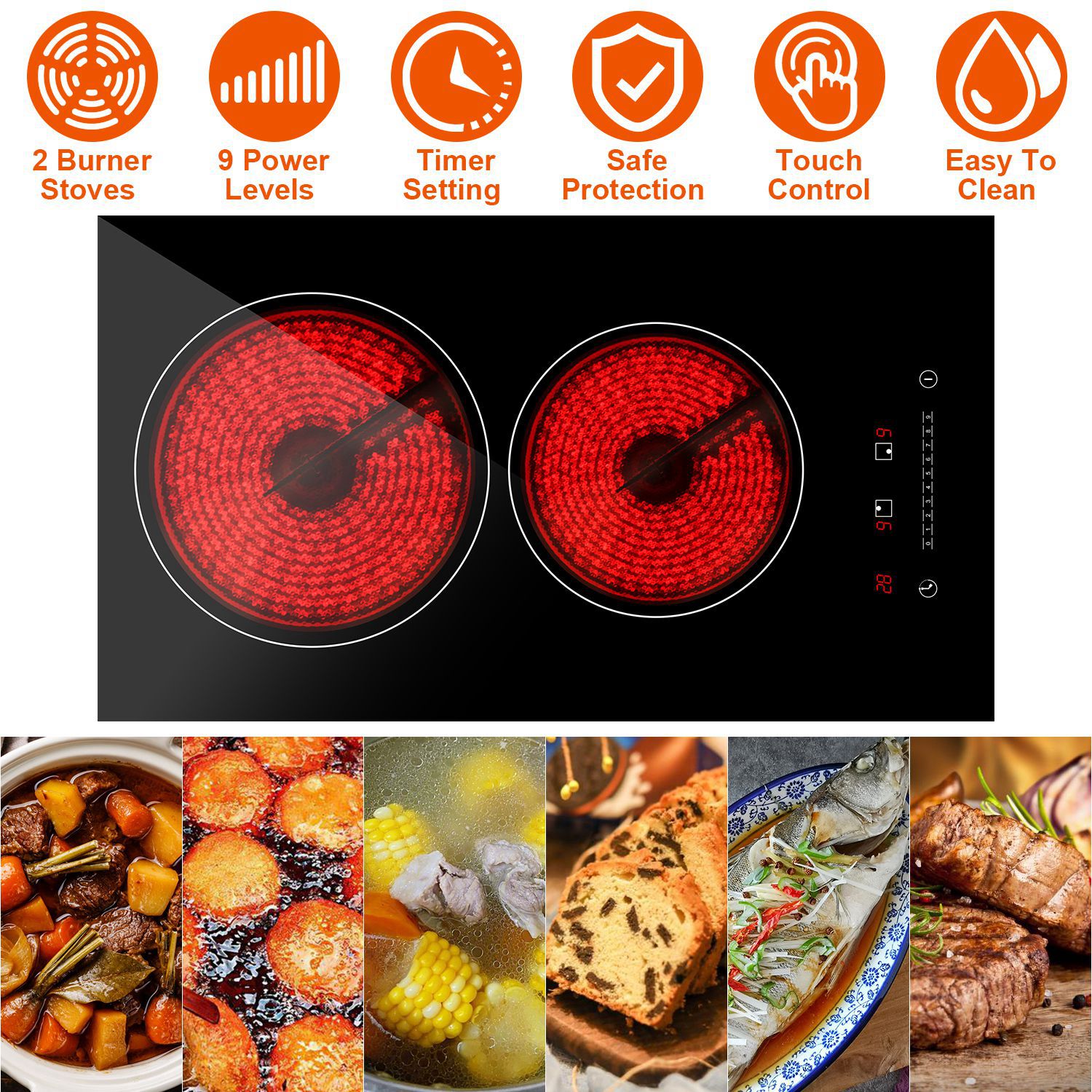 1Pc Dual Induction Burners Electric Cooktop 110V Total 1900W Stove Built In Ceramic With Timer Setting 9 Firepower Levels Over Heating Protection$152.99View on Mallflare
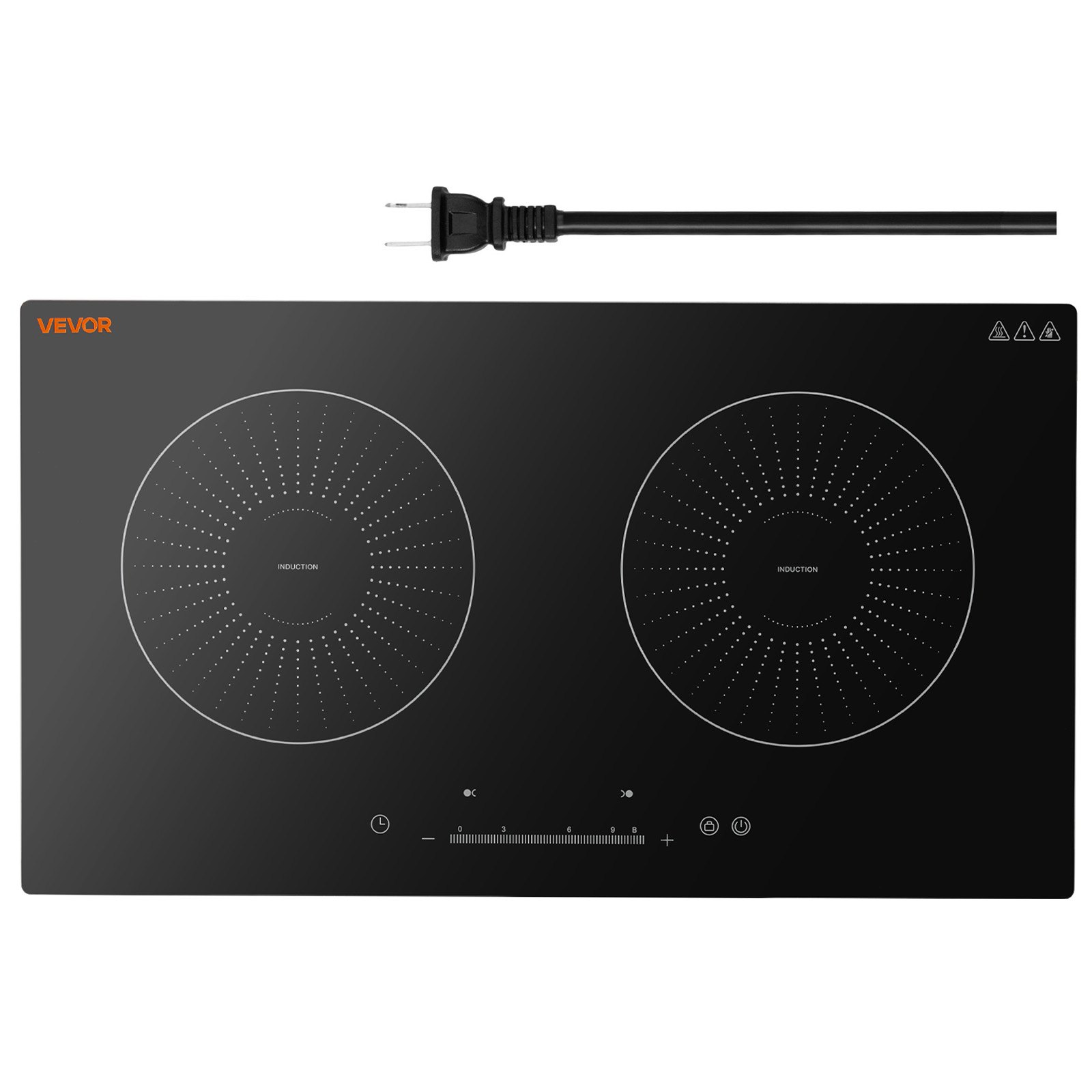 Induction Cooktop 24inch 2 Burners Built-in Electric Stove 110V 1800W, Low-Power Continuous Heating, Burner, with 9 Power Levels, LED Touch Screen, and Child Lock, for Kitchen, RV$153.99View on Mallflare
Highlights
- 110V induction units are engineered for low-power continuous output (typically 1,800W peak shared across two burners, or 1,300-1,800W single), so they throttle to maintain heat rather than pulsing full power on and off.
- Residential 120V circuits are limited to 1,440W on a 15A breaker and 1,920W on a 20A breaker; any 110V stove rated 3,500W requires a dedicated 30A+ circuit and is not plug-and-cook on a standard outlet.
- Induction requires ferromagnetic cookware (cast iron, magnetic stainless steel); aluminum, copper, and most glass or ceramic pans will not heat, while radiant glass and coil burners work with any flat-bottomed pan.
- Built-in 12-inch and 24-inch two-burner induction cooktops use ceramic glass tops with touch controls, child locks, and 9 power levels, while portable single-burner units add physical side handles and preset cooking modes for countertop use.
Best use cases
- Best fit: a dorm, studio, RV, or camper with a standard 15A or 20A outlet and magnetic cookware — pick a 1,800W two-burner induction cooktop for efficiency and easy-clean ceramic glass.
- Best fit: a home kitchen adding a auxiliary burner or a rental without 240V wiring — choose a 1,500-1,800W radiant glass or coil hot plate, which works with any pan and needs no special circuit.
- Wrong fit: a main household range replacement — a 110V cooktop cannot deliver the 3,000-4,000W+ per burner of a 240V range; skip 110V for primary family cooking and wire a 240V circuit instead.
- Wrong fit: high-volume searing or wok cooking — 110V units cap at 1,800W and will not sustain the heat of a gas or 240V electric burner; choose a dedicated high-output appliance or outdoor burner.
Buying tips
- Match wattage to your circuit: on a 15A breaker keep total draw at or below 1,440W; on a 20A breaker stay at or below 1,920W — a 3,500W 110V unit needs a dedicated 30A circuit, not a standard outlet.
- For induction, test your pans with a magnet: if a magnet sticks firmly to the base, the pan will work; if it slides off, the pan is aluminum or non-magnetic and needs replacing.
- Choose ceramic glass tops for scratch resistance and easy cleaning, but avoid dragging cast iron across them; coil burners tolerate rough use but are harder to clean.
- For two-burner 110V induction, expect shared power: running both burners simultaneously splits the total wattage, so a 1,800W unit gives roughly 900W per burner when both are active.
Specs
| Heating Type | Induction / Radiant glass / Coil |
|---|---|
| Circuit Limit | 1,440W (15A) / 1,920W (20A) at 120V |
| Burner Wattage | 1,000-1,800W single; 1,800W shared dual |
| Cookware Requirement | Magnetic base for induction; any flat pan for radiant |
Related searches
What to check before buying
- Measure your counter or cutout: portable units need roughly 12 x 14 inches of clear counter, while built-in 12-inch and 24-inch models require an exact cutout and minimum 2-3 inches of clearance around the glass.
- Confirm your outlet and breaker: a standard 120V/15A outlet supports up to 1,440W, a 20A kitchen circuit supports 1,920W; check the breaker panel before buying a high-wattage unit.
- Verify cookware compatibility: for induction, bring a magnet to the store or test your pans at home; for radiant or coil, ensure pans are flat-bottomed and within the burner diameter.
- Plan ventilation and countertop material: 110V cooktops produce heat and steam, so keep them under a hood or near a window, and avoid placing them on heat-sensitive surfaces without a trivet or clearance.
FAQ
Data sources: eBay / Amazon listings and product attribute feeds. Updated Nov 28, 2026.
Some links on this page are affiliate links. If you buy after clicking one, we may earn a commission at no extra cost to you. This does not change which products appear here or their order. Affiliate disclosure.