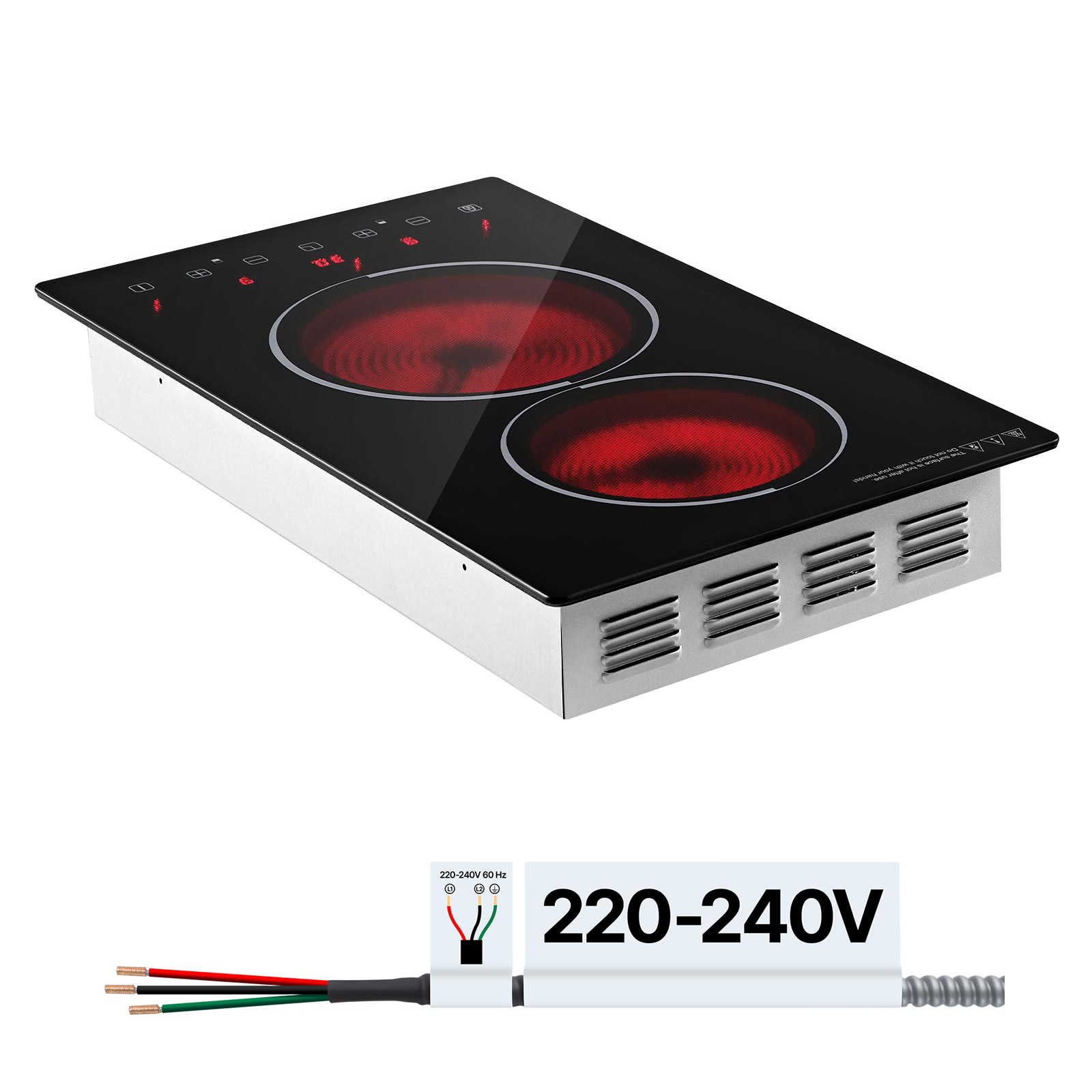

Photos from current listings. Actual item, color, and included accessories may vary.
2 Burner Electric Burner Buying Guide
A 2-burner electric burner is a compact 120V cooktop for apartments, RVs, dorms, and backup kitchens, offered in radiant ceramic and induction architectures. The core trade-off is radiant compatibility with any cookware versus induction's faster, safer, more precise heating that requires magnetic-bottom pans. Buy radiant if you need universal pan support; buy induction only if you own or will buy ferromagnetic cookware.
Key takeaways
- Radiant models use coiled resistance elements under ceramic glass, accepting any pan but wasting heat and cooling slowly.
- Induction models energize only ferromagnetic cookware, delivering roughly 85-90% energy efficiency versus about 70% for radiant.
- Both run on standard 120V/15A circuits and typically total 1800W, so both burners cannot run at full power simultaneously.
At a glance
- Category
- Home Ranges, Ovens & Cooktops
- Last updated
- Nov 28, 2026
Current offers
Highlights
- Radiant models use coiled resistance elements under ceramic glass, accepting any pan but wasting heat and cooling slowly.
- Induction models energize only ferromagnetic cookware, delivering roughly 85-90% energy efficiency versus about 70% for radiant.
- Both run on standard 120V/15A circuits and typically total 1800W, so both burners cannot run at full power simultaneously.
- Induction adds low-power continuous output (as low as 100-200W) for simmering, while radiant cycles on/off at low settings.
Best use cases
- Best fit: induction for daily cooking in a small kitchen if you own magnetic cookware — fastest boils and safest surface.
- Best fit: radiant for renters or RV owners with aluminum or copper pans — works with every pan and needs no cookware upgrade.
- Wrong fit: induction if you rely on aluminum or copper pans — they won't heat at all and replacement cost adds up.
- Skip either if you need true high-heat searing or two full-power burners at once — 1800W total shared output caps performance.
Buying tips
- Test pans with a magnet: if it sticks firmly to the base, it works on induction; weak or no attraction means radiant only.
- Match the cutout to the unit: 12-inch models need roughly 11-inch cutouts, while 24-inch models need about 22-inch cutouts for drop-in installs.
- Confirm your circuit: both architectures draw up to 15A at 120V, so a dedicated 15A or 20A kitchen circuit is required.
- Choose touch controls for flat, wipe-clean surfaces and knob controls for wet or gloved hands; both are common in this class.
Specs
| Cooktop Type | Radiant ceramic vs induction |
|---|---|
| Power Draw | 120V / up to 1800W total |
| Burner Output Sharing | Shared total; both can't max at once |
| Cookware Requirement | Radiant: any / Induction: magnetic base |
Related searches
What to check before buying
- Measure your counter cutout and clearance: drop-in 12-inch units need about 11 x 19.5 inches; verify depth for the chassis and ventilation.
- Check your cookware bases with a magnet before choosing induction; radiant needs no cookware check.
- Verify a 120V grounded outlet on a 15A+ circuit within cord reach; these units do not run on 240V.
- For RVs and boats, confirm the inverter or shore power can supply 1800W continuous draw.
FAQ
Data sources: eBay / Amazon listings and product attribute feeds. Updated Nov 28, 2026.
Some links on this page are affiliate links. If you buy after clicking one, we may earn a commission at no extra cost to you. This does not change which products appear here or their order. Affiliate disclosure.