
Photos from current listings. Actual item, color, and included accessories may vary.
2 Burner Electric Cooktop Portable Buying Guide
A 2-burner portable electric cooktop is a compact radiant or induction unit that runs on standard 120V household power, letting you add two cooking zones on a countertop or drop it into a cutout. The core trade-off is between radiant ceramic glass (cheap, works with any cookware, slow to respond) and induction (fast, efficient, but needs magnetic-base pans); within radiant, the real differentiators are wattage per burner, power-level granularity, and safety interlocks. Choose a 120V plug-in radiant unit for rental kitchens, dorm rooms, or auxiliary cooking; step up to induction or a 240V built-in only if you need restaurant-grade heat or permanent installation.
Median $129.99
Key takeaways
- Radiant ceramic-glass cooktops heat via a coiled element under the glass; induction models energize the pan directly and are 85–90% efficient versus roughly 70% for radiant.
- Standard 120V portables cap at 1800W total (15A circuit), so two burners typically split 1200W + 800W or 1000W + 800W; a 240V built-in can deliver 3000W+ per zone.
- Power-level count matters: 16-level touch control gives finer simmer control than 9-level, which jumps in coarser heat steps and is harder to hold at low simmers.
At a glance
- Category
- Home Ranges, Ovens & Cooktops
- Last updated
- Nov 28, 2026
Current offers
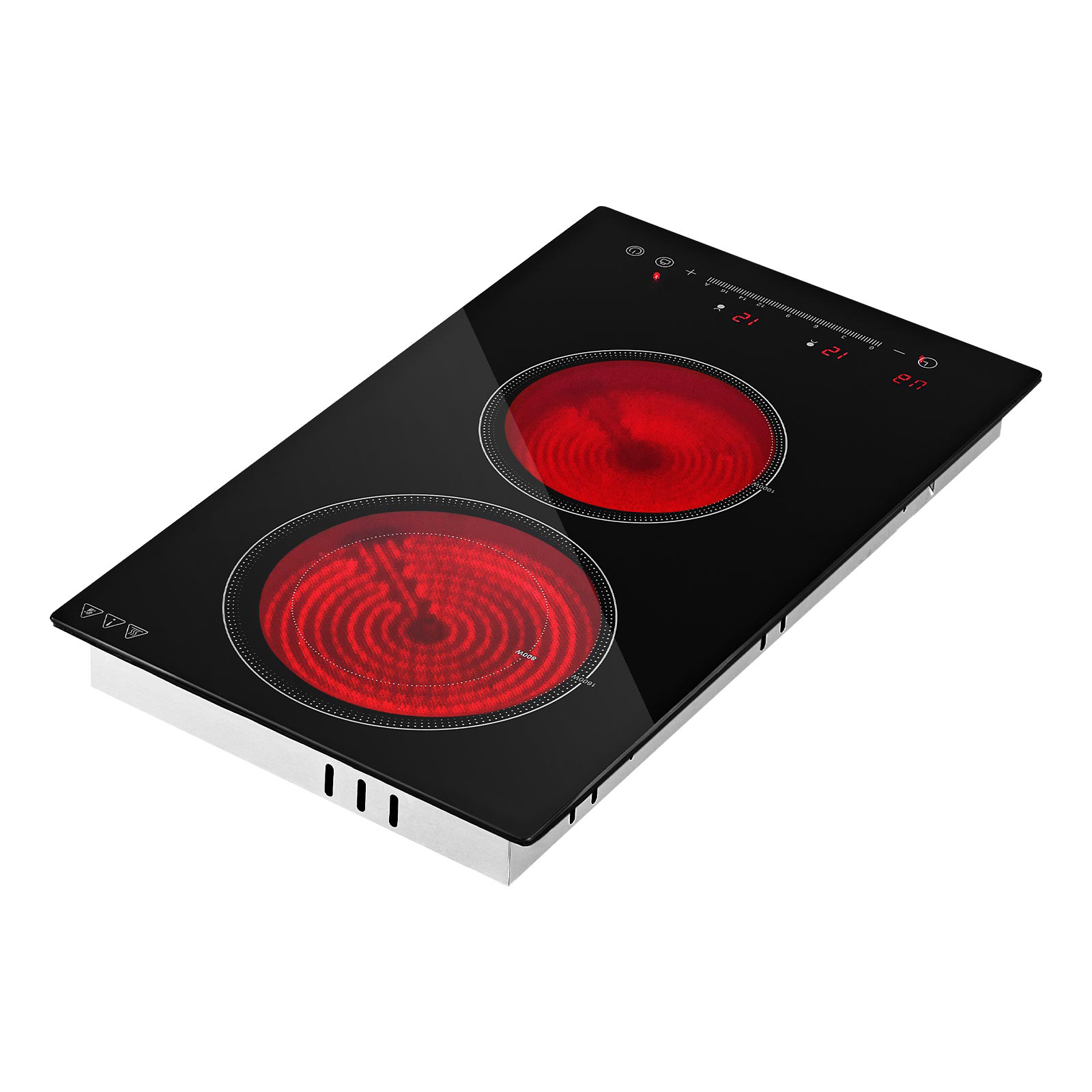 Electric Cooktop 12inch 2 Burners Portable Stove Top 1800W 120V, Ceramic Countertop/Built-in Radiant With 16 Power Levels, Timer, Child Lock, Over-Heat Guard, Touch Control$111.99View on Mallflare
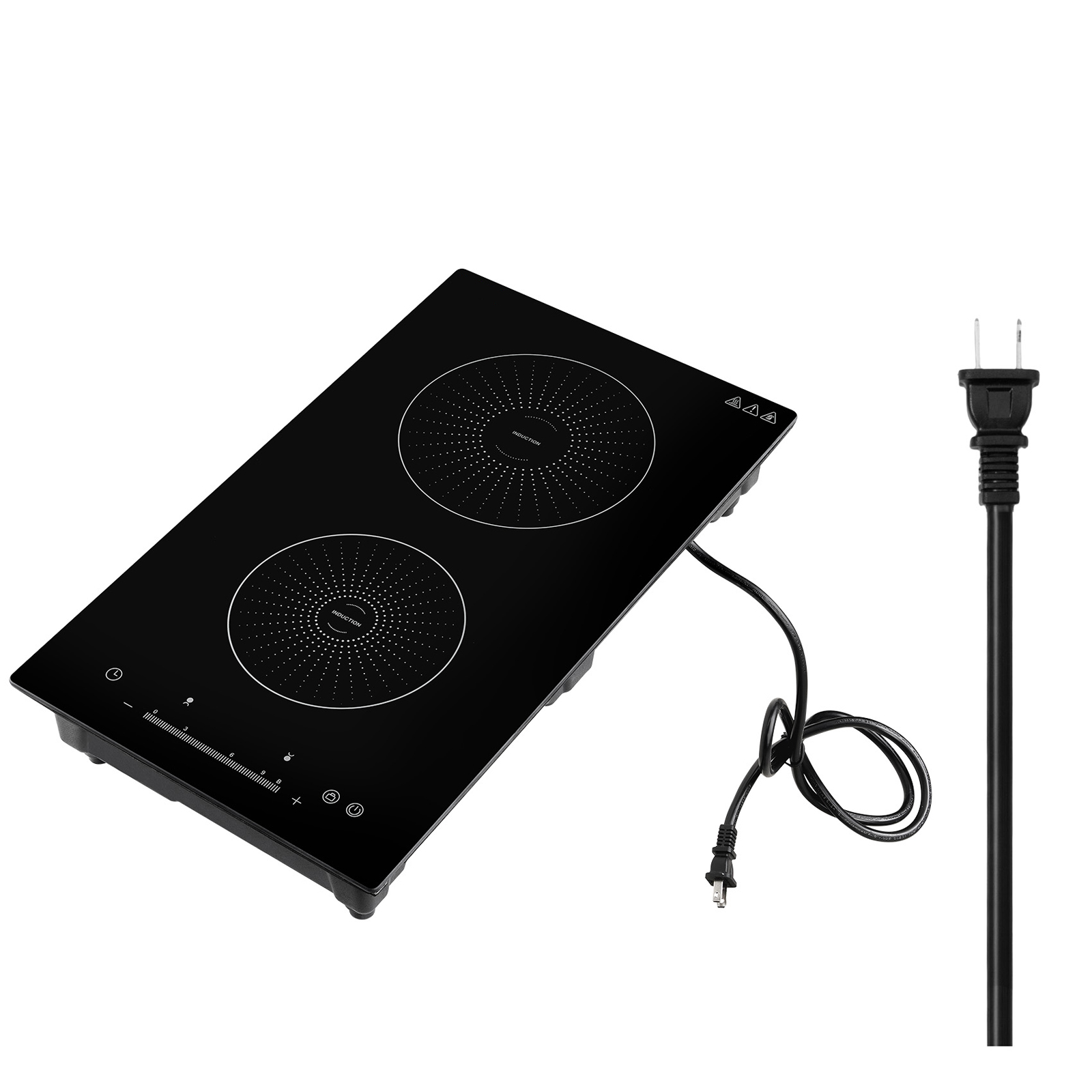 Induction Cooktop 12in 2 Burners Built-in Electric Stove 110V 1800W, Low-Power Continuous Heating, Countertop Burner, 9 Power Levels, LED Touch Screen, Ceramic Glass, And Child Lock$119.99View on Mallflare
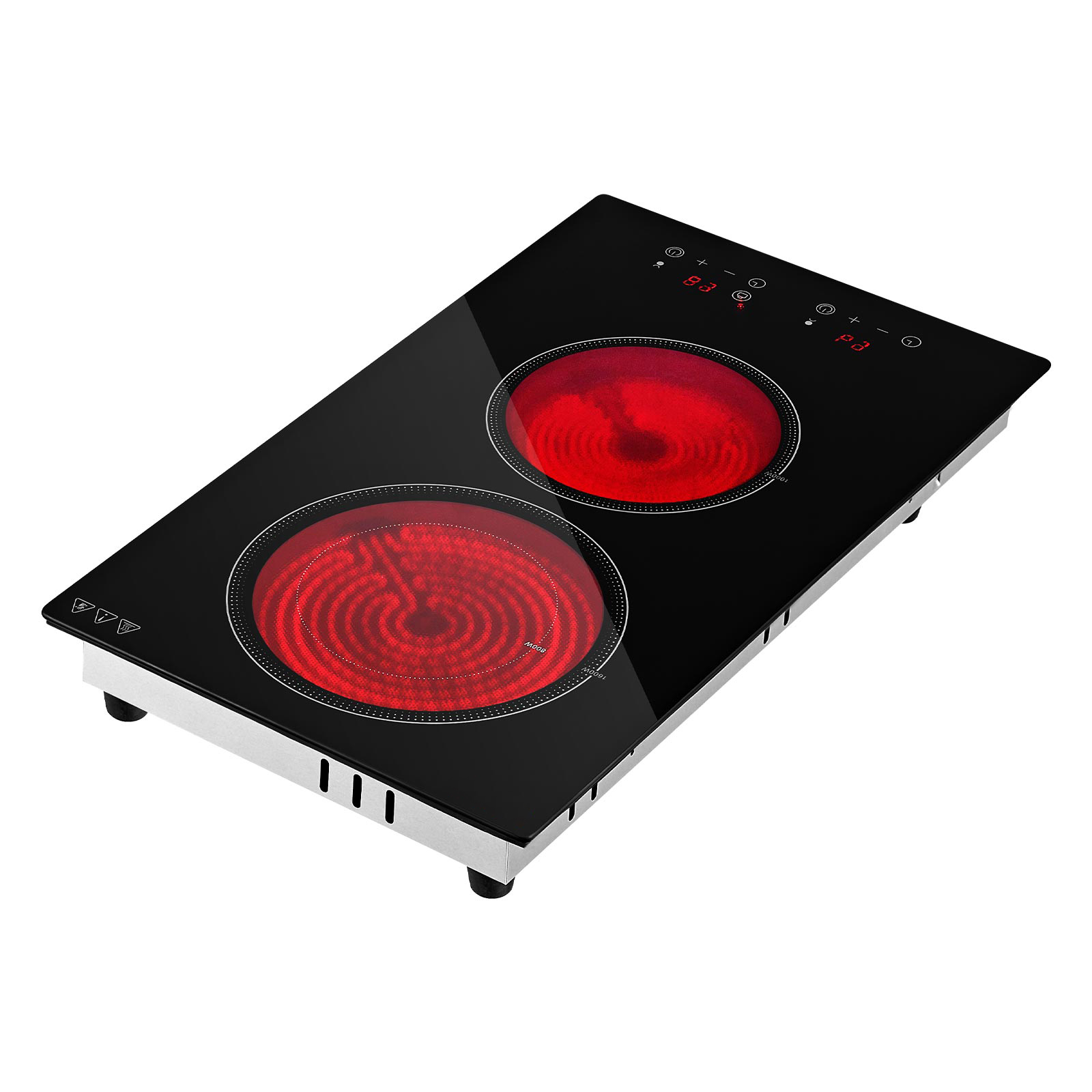 Electric Cooktop 12inch 2 Burners Portable Stove Top 1800W 120V, Ceramic Countertop,Built-in Radiant With 9 Power Levels, Timer, Child Lock, Over-Heat Guard, Touch Control$129.99View on Mallflare
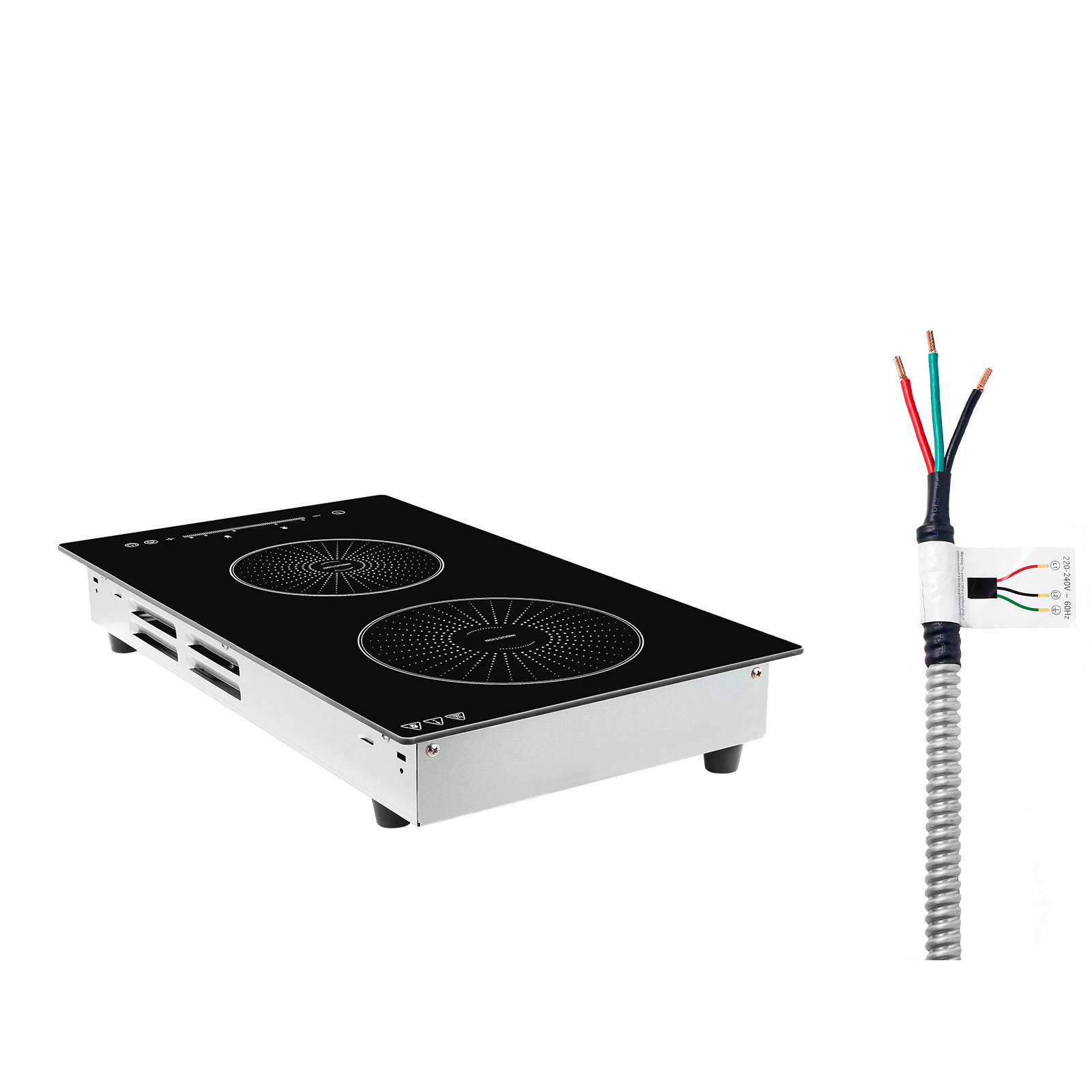 Induction Cooktop 12in 2 Burners Built-in Electric Stove 220V 3500W, Low-Power Continuous Heating, Burner For Kitchen, 9 Power Levels, LED Touch Screen, Ceramic Glass, And Child Lock$151.99View on Mallflare
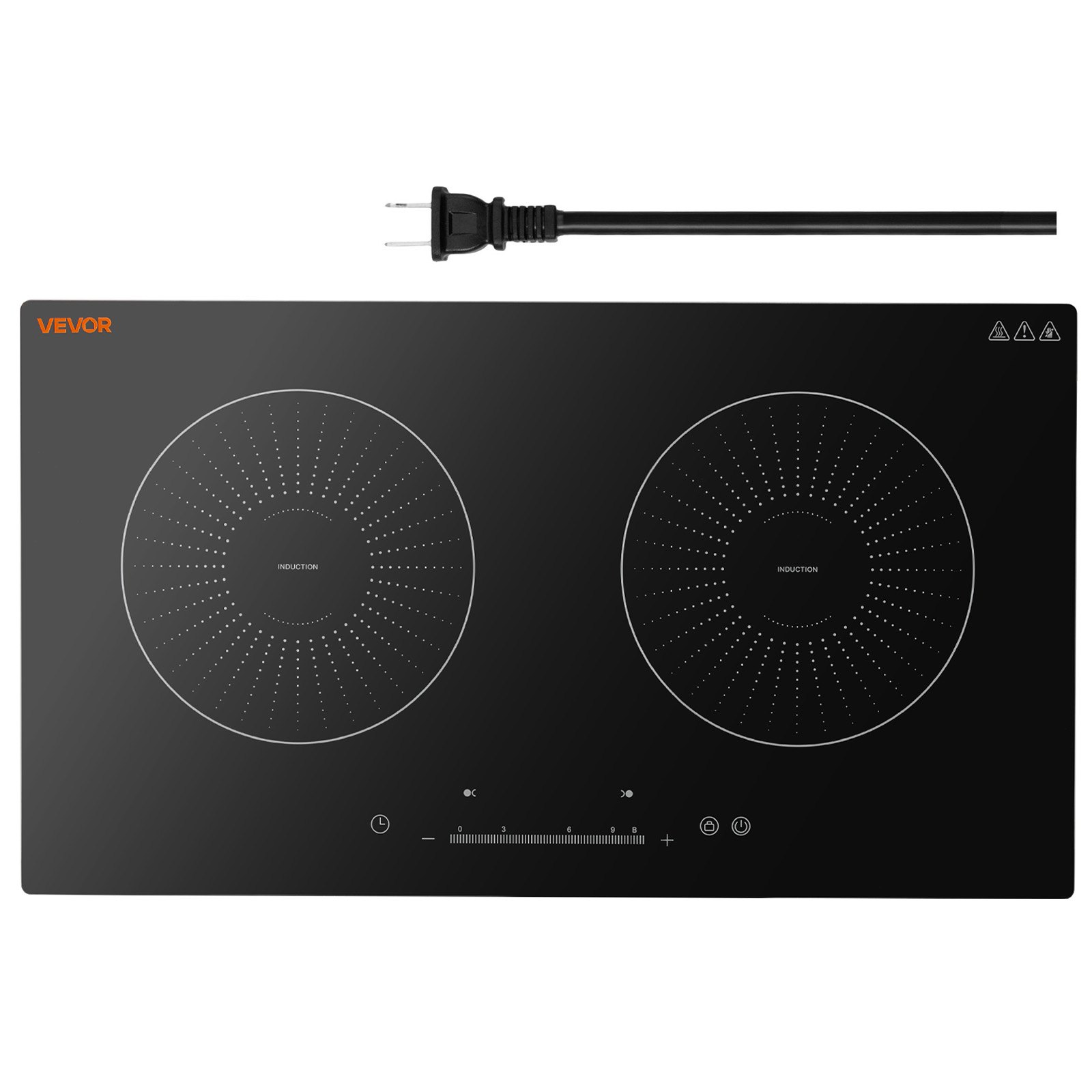 Induction Cooktop 24inch 2 Burners Built-in Electric Stove 110V 1800W, Low-Power Continuous Heating, Burner, with 9 Power Levels, LED Touch Screen, and Child Lock, for Kitchen, RV$153.99View on Mallflare
Highlights
- Radiant ceramic-glass cooktops heat via a coiled element under the glass; induction models energize the pan directly and are 85–90% efficient versus roughly 70% for radiant.
- Standard 120V portables cap at 1800W total (15A circuit), so two burners typically split 1200W + 800W or 1000W + 800W; a 240V built-in can deliver 3000W+ per zone.
- Power-level count matters: 16-level touch control gives finer simmer control than 9-level, which jumps in coarser heat steps and is harder to hold at low simmers.
- Safety interlocks separate serious units: child lock, over-heat shutoff, and residual-heat indicators are standard on UL/ETL-listed models; unlisted imports often omit auto-shutoff.
Best use cases
- Best fit: renters or dorm residents who need two extra burners on a standard 15A kitchen circuit—pick a 120V radiant unit with at least 16 power levels and a child lock.
- Best fit: small-apartment or ADU kitchens with no full range—a 12-inch 2-burner built-in drop-in radiant cooktop fits a 10.5–11-inch cutout and handles daily light cooking.
- Wrong fit: wok cooking, searing, or canning—120V portables max out around 1800W total and cannot sustain the BTU-equivalent heat; choose a 240V built-in or gas instead.
- Wrong fit: induction-speed seekers on a budget—if you want induction responsiveness, buy a true 120V induction portable (recognizable by pan-detection sensors), not a radiant unit labeled 'fast'.
Buying tips
- Verify the circuit: 1800W at 120V draws 15A, so the cooktop must be the only high-draw appliance on that breaker; shared kitchen circuits will trip.
- Measure the cutout, not the glass: a 12-inch cooktop typically needs a 10.5–11-inch wide cutout with 2+ inches of clearance behind and beside for the chassis and ventilation.
- Match burner wattage to cooking: 1200W for boiling and pan-frying, 800W for simmering; two 1200W burners on one 120V plug exceed the circuit and are not offered by reputable brands.
- Choose 16-level over 9-level control if you simmer sauces or melt chocolate; the finer duty cycle holds lower, steadier heat on radiant glass.
Specs
| Burner Type | Radiant ceramic glass vs induction |
|---|---|
| Power Supply | 120V 15A (1800W max) vs 240V built-in |
| Power Levels | 9-level vs 16-level touch control |
| Safety Features | Child lock, over-heat, residual-heat light |
Related searches
What to check before buying
- Countertop clearance: leave at least 2 inches behind and beside the unit for the chassis and cooling vents; never block the bottom intake.
- Circuit check: confirm a dedicated 15A/120V outlet within cord reach; the unit draws the full 1800W at max and will trip a shared circuit.
- Cookware check: radiant works with any flat-bottom pan; induction requires magnetic stainless, cast iron, or induction-ready base—test with a magnet.
- Built-in fit: measure the cutout width, depth, and countertop thickness; most 12-inch drop-ins require 10.5–11 inches wide and 19–20 inches deep, with a minimum 2-inch rear clearance.
FAQ
Data sources: eBay / Amazon listings and product attribute feeds. Updated Nov 28, 2026.
Some links on this page are affiliate links. If you buy after clicking one, we may earn a commission at no extra cost to you. This does not change which products appear here or their order. Affiliate disclosure.