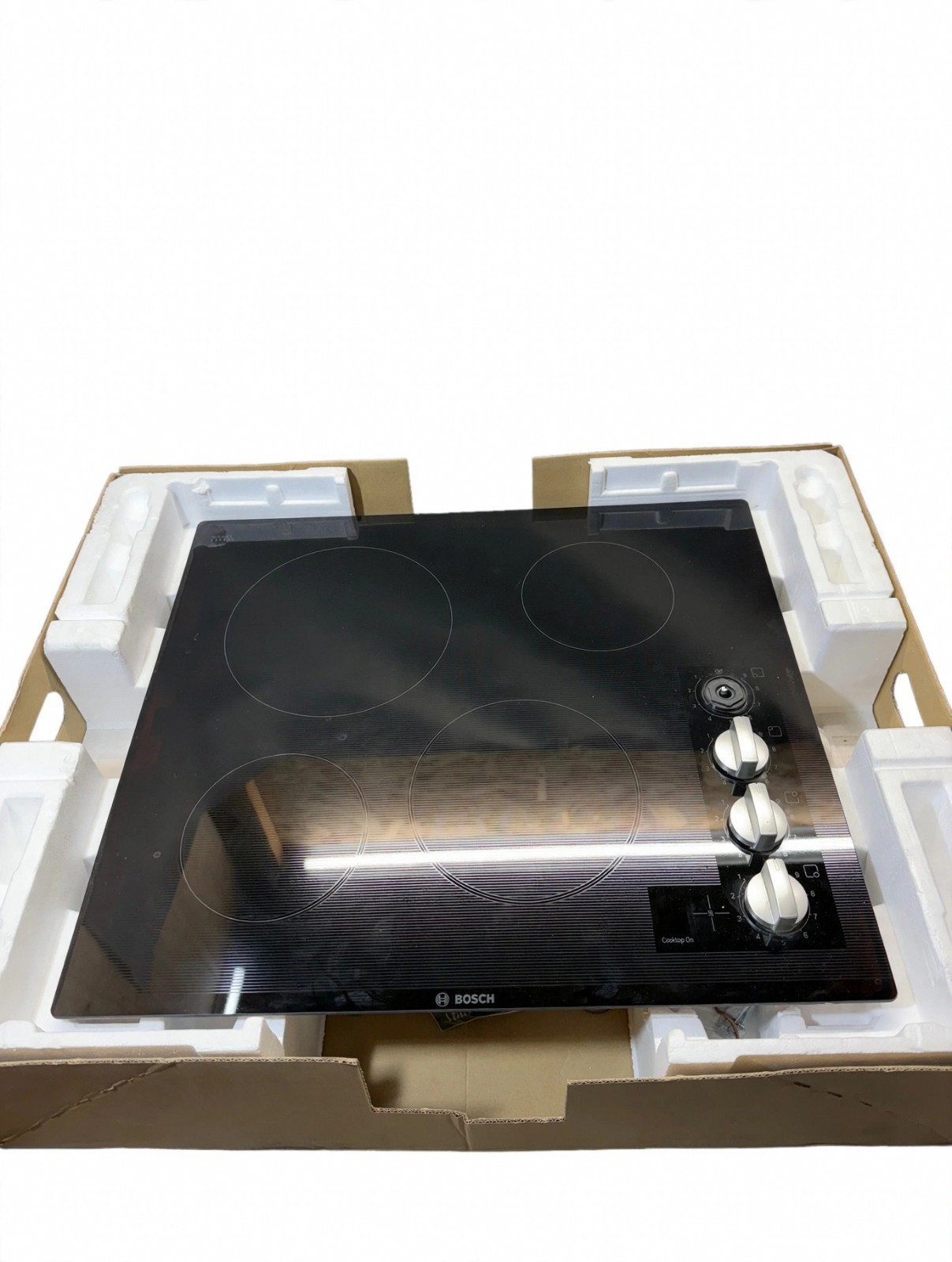

Photos from current listings. Actual item, color, and included accessories may vary.
Bosch Stove Buying Guide
Bosch stoves span gas, electric coil, radiant smoothtop, and induction cooktops—the core trade-off is heating technology and control precision versus installation constraints. Induction delivers the fastest, most precise heat and safest surface but requires magnetic cookware and often a dedicated 240V circuit; gas suits wok and flame-roasting but demands ventilation and a gas line. The decision rule: match the fuel and cookware you actually own, then choose the control tier—mechanical knobs for durability, touch/Home Connect for precision—and skip any model whose cutout or amperage your kitchen cannot support.
Key takeaways
- Induction models (e.g., Benchmark series) deliver 3,600–4,400W boost per burner and near-instant response; radiant and coil electric top out around 2,500–3,200W with slower cycling.
- Sealed gas burners with continuous cast-iron grates spread flame evenly and contain spills; open burners and porcelain grates are cheaper but harder to clean and prone to chipping.
- Bosch 800 and Benchmark lines add touch controls, Home Connect Wi-Fi, and FlexInduction zones merging two burners; 500 series keeps physical knobs for simpler, repair-friendly operation.
At a glance
- Category
- Home Ranges, Ovens & Cooktops
- Last updated
- Nov 28, 2026
Current offers
Highlights
- Induction models (e.g., Benchmark series) deliver 3,600–4,400W boost per burner and near-instant response; radiant and coil electric top out around 2,500–3,200W with slower cycling.
- Sealed gas burners with continuous cast-iron grates spread flame evenly and contain spills; open burners and porcelain grates are cheaper but harder to clean and prone to chipping.
- Bosch 800 and Benchmark lines add touch controls, Home Connect Wi-Fi, and FlexInduction zones merging two burners; 500 series keeps physical knobs for simpler, repair-friendly operation.
- All Bosch smoothtops use Schott Ceran glass-ceramic rated to roughly 700°C; cookware with warped bases or rough bottoms scratches the surface and voids the cosmetic warranty.
Best use cases
- Pick induction (Benchmark/800) if you cook daily, want 2-minute boils, and own magnetic stainless or cast-iron pans—skip if your cookware is aluminum or copper without a magnetic base.
- Choose a sealed-burner gas Bosch if you use a wok, roast peppers over flame, or lose power often—skip if the kitchen lacks a gas line or adequate hood CFM (600+ for high-BTU burners).
- Select a 500-series electric radiant or coil model for rental units and budget remodels where 240V/40A exists but precision and speed matter less—skip if you expect induction-level responsiveness.
- Pick a slide-in range version over a cooktop-only unit when replacing a freestanding stove and you need the oven included—skip if your cabinet cutout is already sized for a separate wall oven.
Buying tips
- Measure the cutout, not the old appliance: Bosch 30-inch cooktops typically need a 28⅜–28½ inch wide cutout and 2-inch rear clearance; verify depth and vent clearance before ordering.
- Check your electrical service: induction and radiant smoothtops usually require 240V/40A (some 30A); gas cooktops need a 120V outlet for ignition and a gas line with a shutoff valve.
- Confirm burner wattage tiers: entry radiant burners run 1,200–1,800W; performance induction burners hit 3,600W+ boost—match the wattage to your biggest pot and cooking style.
- For gas, count burner BTUs: standard Bosch sealed burners run 5,000–18,000 BTU; a dedicated simmer burner below 2,000 BTU is essential for delicate sauces.
Specs
| Cooktop Type | Induction / Radiant / Coil / Gas |
|---|---|
| Electrical Supply | 240V 40A (electric), 120V (gas) |
| Burner Wattage | 1,200–4,400W (induction boost) |
| Gas Burner Output | 5,000–18,000 BTU sealed burners |
Related searches
What to check before buying
- Countertop cutout width, depth, and corner radius measured against Bosch's published template for the exact model series.
- Electrical circuit amperage and voltage verified at the breaker (240V/40A for most induction; 120V for gas ignition).
- Gas line type, pressure, and shutoff location confirmed for gas models; hood CFM sized to total burner BTUs.
- Cookware base diameter and magnetic grade checked—induction needs flat, magnetic bottoms within ½ inch of burner size.
FAQ
Data sources: eBay / Amazon listings and product attribute feeds. Updated Nov 28, 2026.
Some links on this page are affiliate links. If you buy after clicking one, we may earn a commission at no extra cost to you. This does not change which products appear here or their order. Affiliate disclosure.