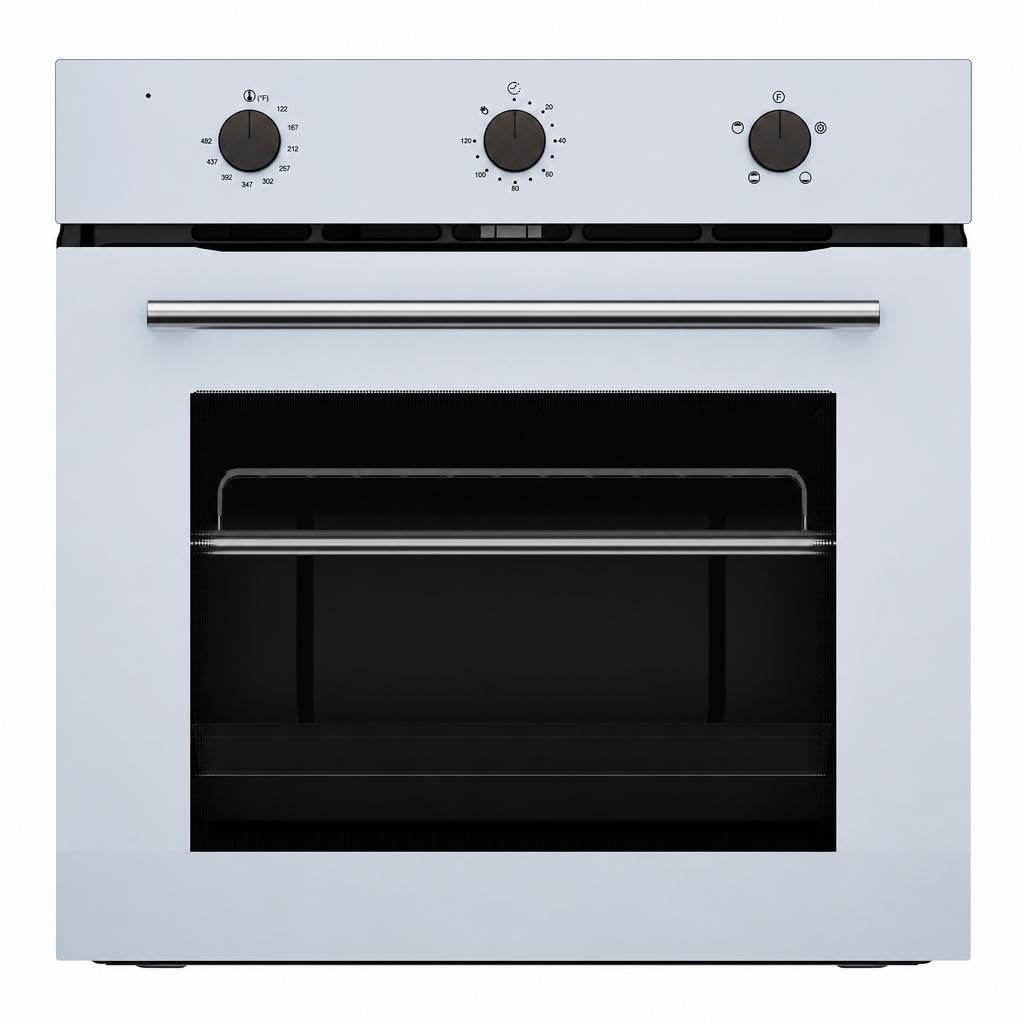

Photos from current listings. Actual item, color, and included accessories may vary.
Built In Electric Oven Buying Guide
A built-in electric oven is a wall- or cabinet-mounted cooking appliance that trades the all-in-one footprint of a freestanding range for dedicated cabinet integration and often larger capacity. The core trade-off is heating architecture: true European convection (fan + third element) delivers even multi-rack baking, while single-element radiant ovens create hot spots that force pan rotation. Choose convection with a hidden bake element and a self-clean cycle for durable daily performance; skip basic radiant models unless you bake one sheet pan at a time.
Key takeaways
- Convection type: true fan-forced convection with a dedicated third heating element behind the fan bakes evenly on multiple racks; simple fan-assist without a rear element just moves hot air unevenly.
- Bake element placement: hidden bake elements under the oven floor protect from spills and simplify cleaning; exposed elements speed preheat but are harder to wipe and more prone to damage.
- Capacity by cabinet cutout: single wall ovens run about 2.5–3.5 cu ft in a 24-inch cabinet and 4.0–5.0 cu ft in a 27- or 30-inch cabinet; confirm cutout width, height, and depth before ordering.
At a glance
- Category
- Home Ranges, Ovens & Cooktops
- Last updated
- Nov 28, 2026
Current offers
Highlights
- Convection type: true fan-forced convection with a dedicated third heating element behind the fan bakes evenly on multiple racks; simple fan-assist without a rear element just moves hot air unevenly.
- Bake element placement: hidden bake elements under the oven floor protect from spills and simplify cleaning; exposed elements speed preheat but are harder to wipe and more prone to damage.
- Capacity by cabinet cutout: single wall ovens run about 2.5–3.5 cu ft in a 24-inch cabinet and 4.0–5.0 cu ft in a 27- or 30-inch cabinet; confirm cutout width, height, and depth before ordering.
- Control and power tier: mechanical knob controls survive power surges and are easy to repair; touch-panel electronic controls add timers and presets but raise replacement cost. Most wall ovens require a dedicated 240V circuit.
Best use cases
- Multi-rack baking and roasting: pick a 30-inch single wall oven with true convection and a third element; skip 24-inch radiant models if you regularly bake two trays at once.
- Small kitchens and condos: a 24-inch single oven fits a narrow cabinet base and still delivers 2.5–3.0 cu ft; choose one with a hidden bake element for easier cleanup.
- Double-oven households: a 30-inch double wall oven splits into two independent cavities for simultaneous baking and roasting; avoid double units in 24-inch cabinets where each cavity becomes too small for a turkey.
- Cabinet-depth retrofit: measure cabinet depth first; standard wall ovens need about 24 inches of cabinet depth, so shallow cabinets require a compact or European-style oven and a matching trim kit.
Buying tips
- Match the oven to the cabinet cutout, not the door width: the cutout width, height, and depth (typically 28.5–29 inches wide for a 30-inch oven) determine fit; confirm your cabinet interior before ordering.
- Require a dedicated 240V circuit: most built-in electric ovens draw 20–40 amps at 240V; a standard 120V outlet will not power them, so check your breaker panel for a spare double-pole breaker.
- Choose true convection over fan-assist: look for a visible third element around the convection fan; without it, the fan only circulates air from the bake and broil elements and creates uneven browning.
- Pick self-clean or steam-clean by tolerance: pyrolytic self-clean reaches about 800°F and burns residue to ash but produces smoke and odor; steam-clean uses water and low heat for light soil and gentler on enamel.
Specs
| Convection Type | True (3-element) vs Fan-assist |
|---|---|
| Standard Width | 24, 27, or 30 in cabinet cutout |
| Bake Element | Hidden vs Exposed |
| Clean System | Pyrolytic self-clean / Steam-clean |
Related searches
What to check before buying
- Measure the cabinet cutout width, height, and depth, plus the door swing clearance and whether the oven door opens into a walkway or adjacent cabinet.
- Confirm a dedicated 240V circuit with the correct amperage at the breaker panel and that the outlet or junction box sits within the oven's conduit reach.
- Verify the oven's trim kit or reveal matches your cabinet opening so gaps are covered; 27-inch and 30-inch ovens often need a specific trim to finish the install.
- Check floor and cabinet construction: built-in ovens add 100–200 lbs to the cabinet, so ensure the base cabinet is securely anchored to the wall or floor.
FAQ
Data sources: eBay / Amazon listings and product attribute feeds. Updated Nov 28, 2026.
Some links on this page are affiliate links. If you buy after clicking one, we may earn a commission at no extra cost to you. This does not change which products appear here or their order. Affiliate disclosure.