
Photos from current listings. Actual item, color, and included accessories may vary.
Countertop Electric Stove Buying Guide
Countertop electric stoves are portable cooktops that deliver 120V plug-in heat for renters, dorms, RVs, and backup kitchen capacity. The core trade-off is coil/infrared hot-plate simplicity versus ceramic radiant glass with digital controls: solid-plate and exposed-coil units survive abuse and cheap cookware, while glass-top radiant units need flat pans and gentler handling. Choose a sealed solid-plate or infrared burner for durability and any-pot compatibility; choose ceramic radiant only if you will use flat-bottom magnetic or heavy aluminum pans and want precise low-heat control.
Median $83.99
Key takeaways
- Heating element type defines performance: exposed coil heats fastest and tolerates warped pans, solid cast-iron plates hold heat for searing, infrared glass tubes reach temperature in seconds with minimal residual heat, and radiant ceramic glass gives the most even low simmer.
- Power tiers are dictated by 120V/15A household circuits: single burners run 1000-1500W, dual-burner units split 1800-2000W total, and any unit above 1800W requires a dedicated 20A circuit to avoid breaker trips.
- Cookware compatibility splits by top: coil and solid-plate burners accept any flat-bottom pot including aluminum and ceramic; infrared and radiant glass require perfectly flat, heavy-gauge pans and reject thin or concave cookware.
At a glance
- Category
- Home Ranges, Ovens & Cooktops
- Last updated
- Nov 28, 2026
Current offers
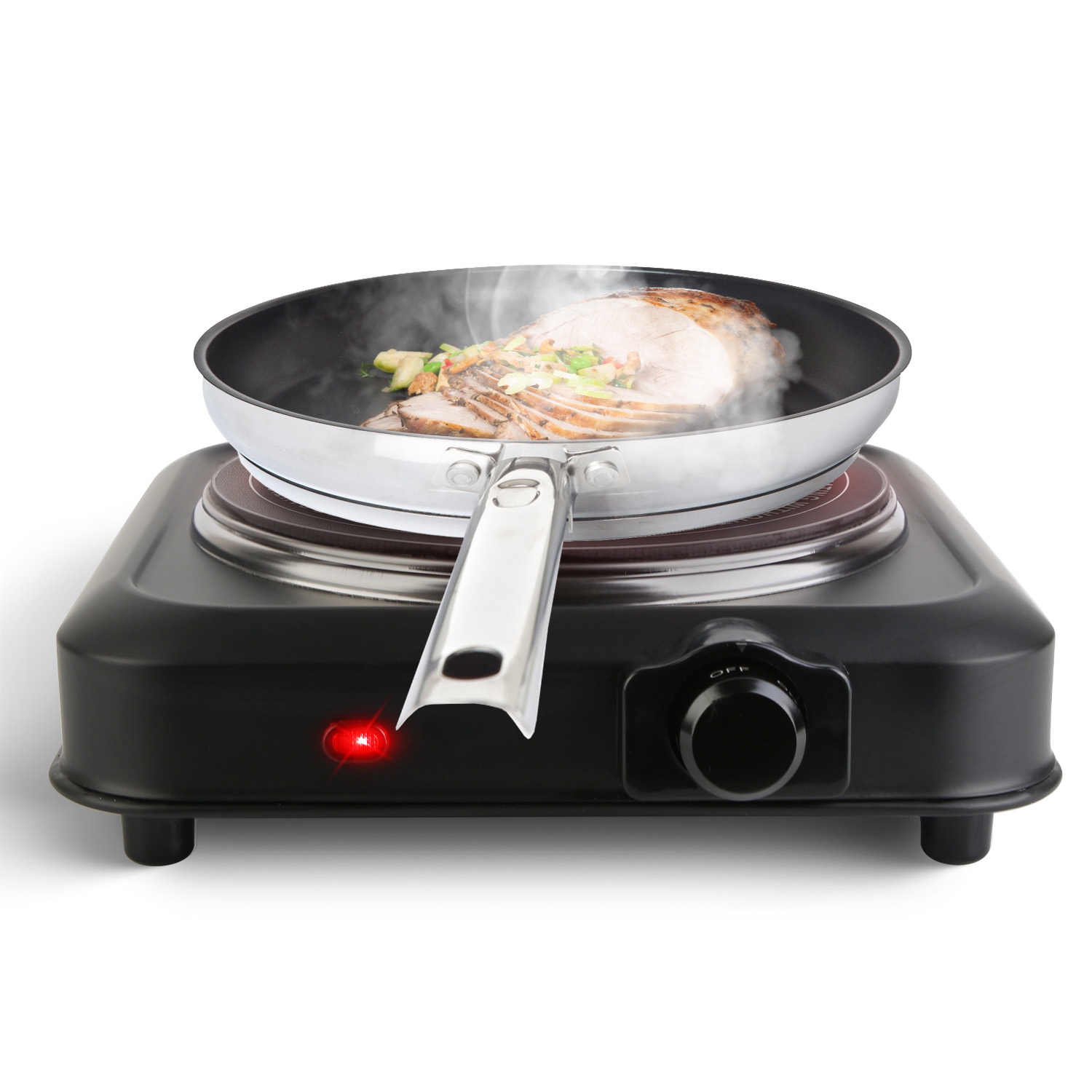 1Pc 1200W Electric Infrared Single Burner Portable Heating Hot Plate Stove Countertop RV Hotplate With 7.5in Glass Cooktop Stepless Temperature Adjustments For Home RV Camp$53.99View on Mallflare
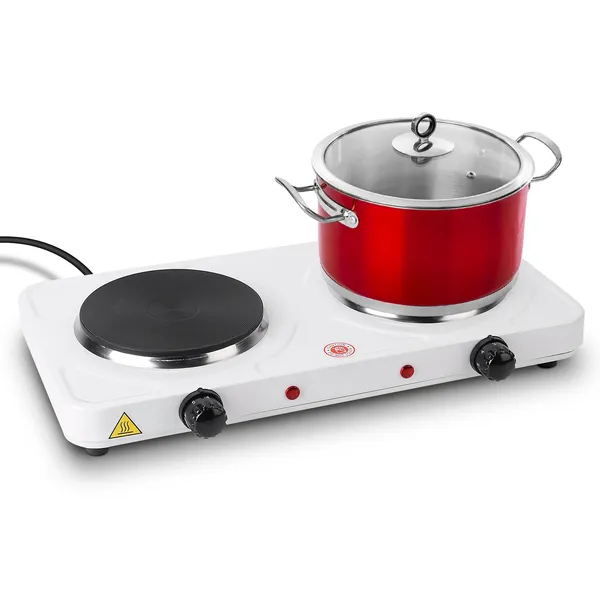 2000W Double Electric Burner Portable Dual Counter Stove Countertop Hot Plate Kitchen Cooker With 5 Gear Temperature Control$56.99View on Mallflare
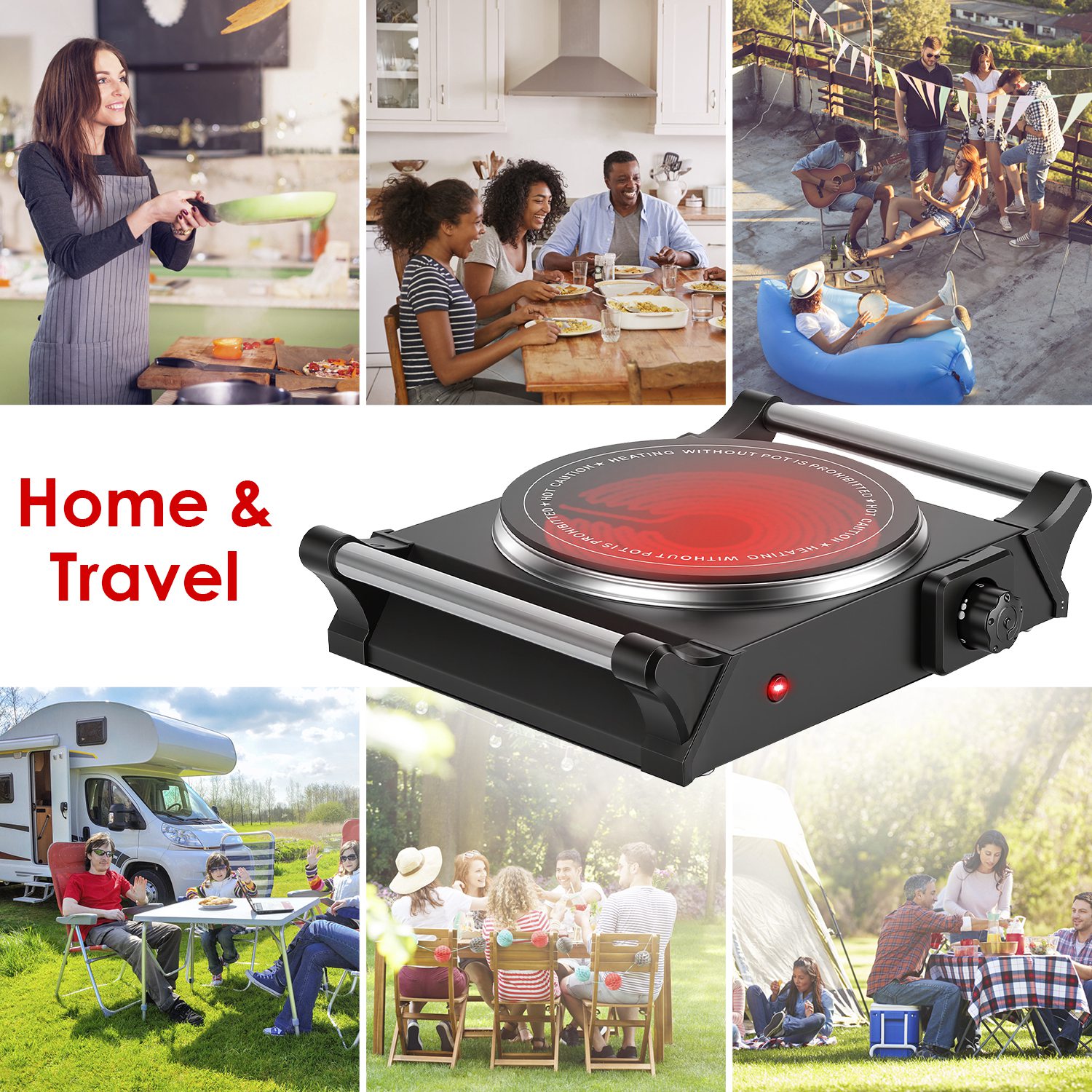 1 Thousand Power Electric Single Burner Portable Heating Hot Plate Stove Countertop RV Hotplate With 5 Temperature Stepless Adjustments Handles$59.99View on Mallflare
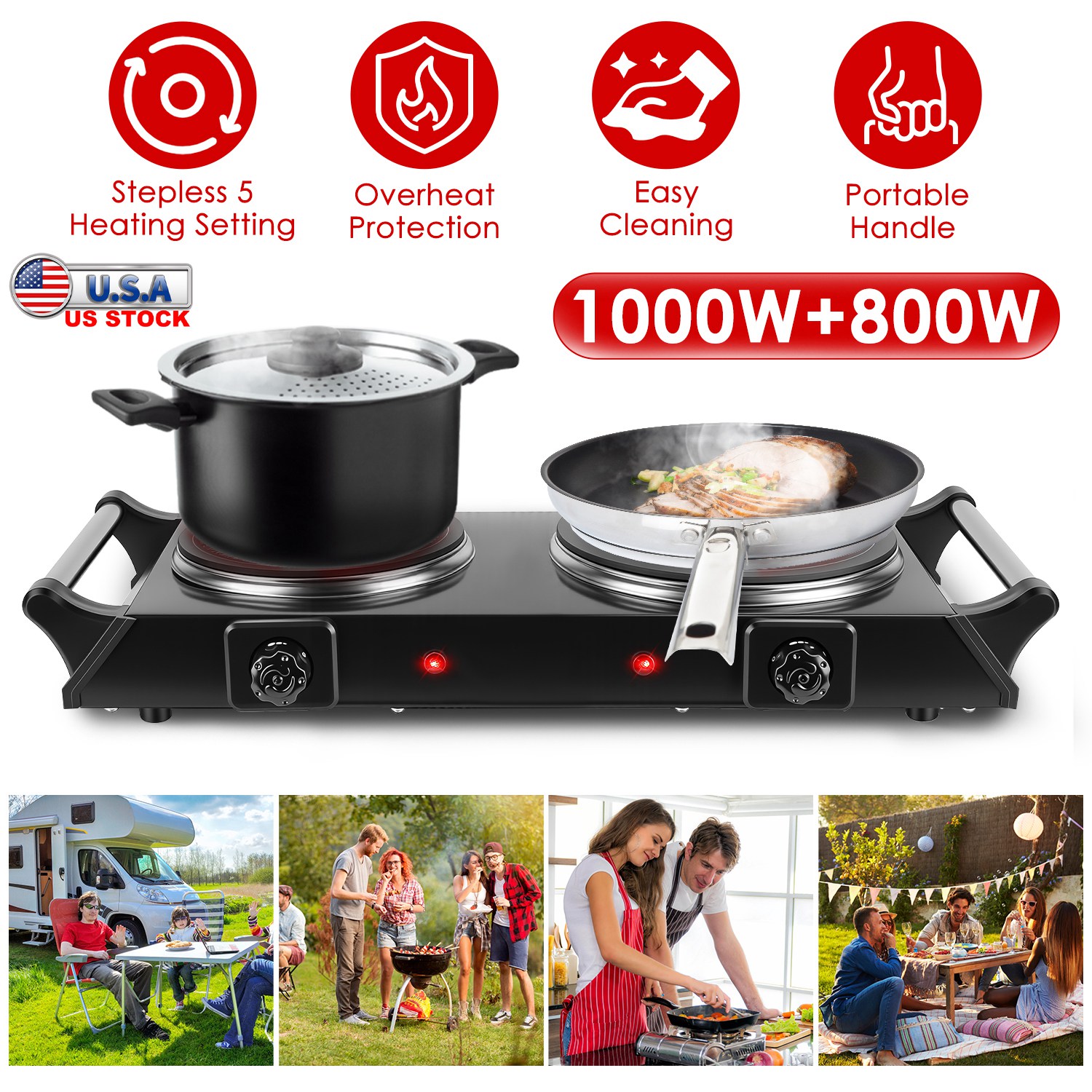 1800W Electric Double Burner Portable Heating Hot Plate Stove Countertop RV Hotplate With 5 Temperature Stepless Adjustments Handles$83.99View on Mallflare
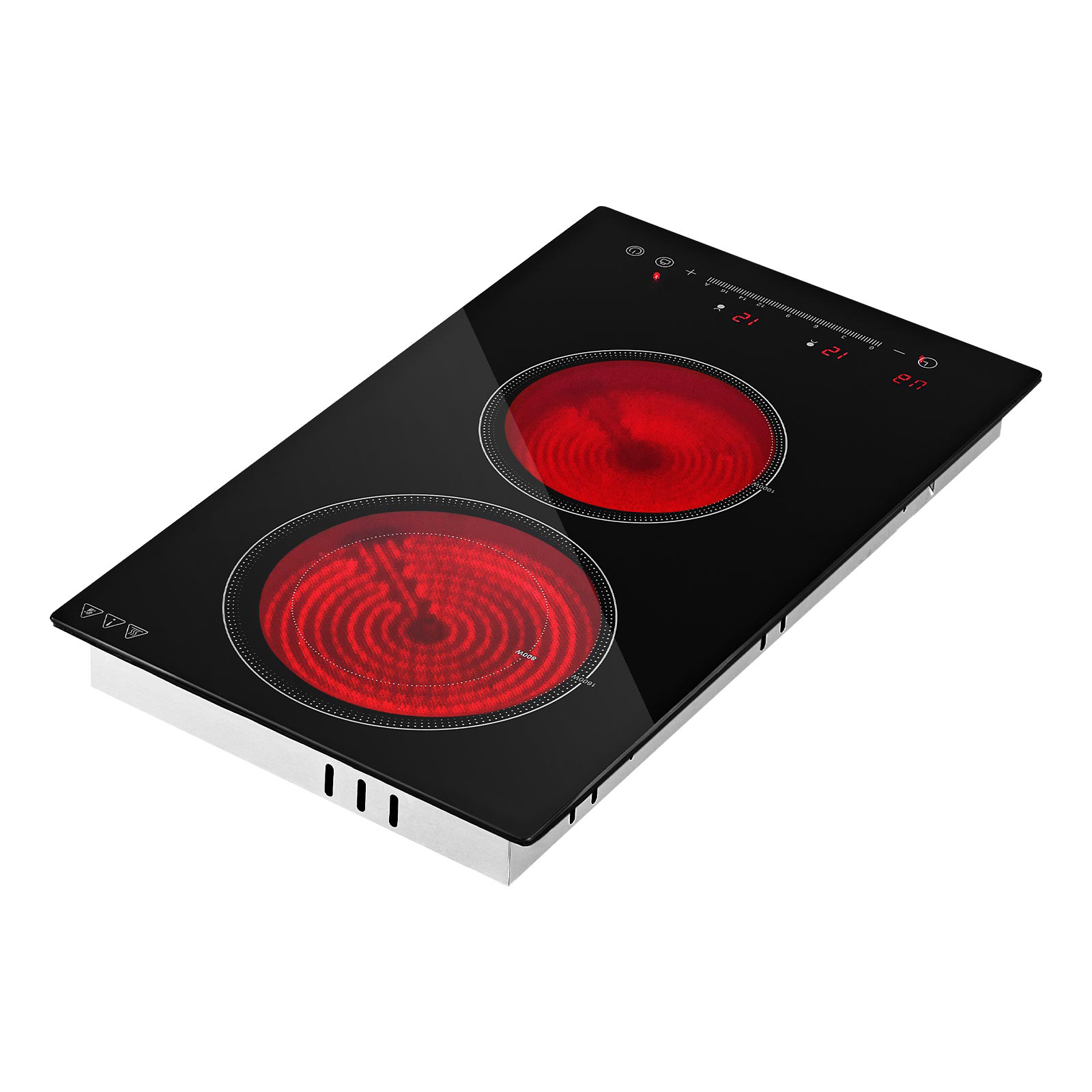 Electric Cooktop 12inch 2 Burners Portable Stove Top 1800W 120V, Ceramic Countertop/Built-in Radiant With 16 Power Levels, Timer, Child Lock, Over-Heat Guard, Touch Control$111.99View on Mallflare
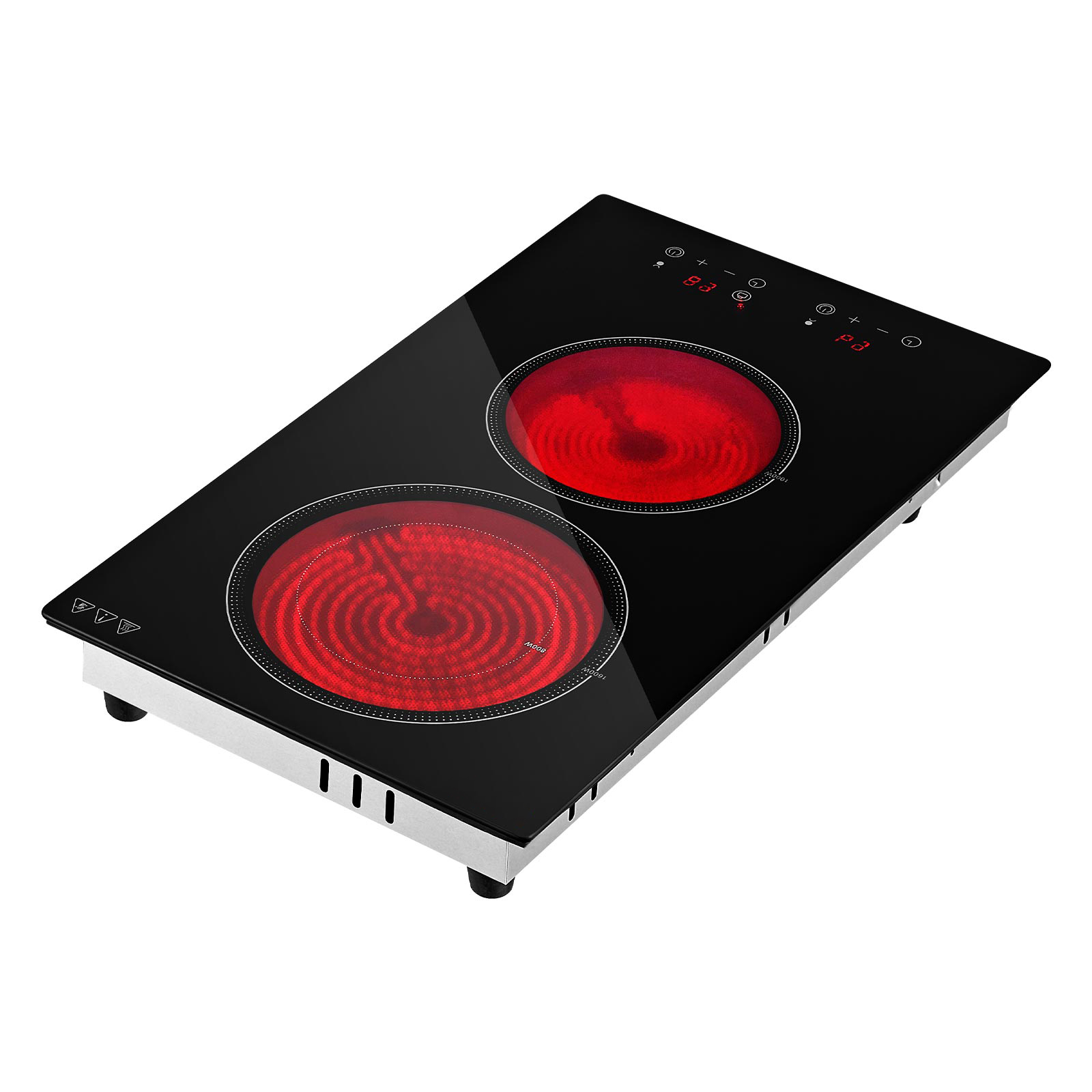 Electric Cooktop 12inch 2 Burners Portable Stove Top 1800W 120V, Ceramic Countertop,Built-in Radiant With 9 Power Levels, Timer, Child Lock, Over-Heat Guard, Touch Control$129.99View on Mallflare
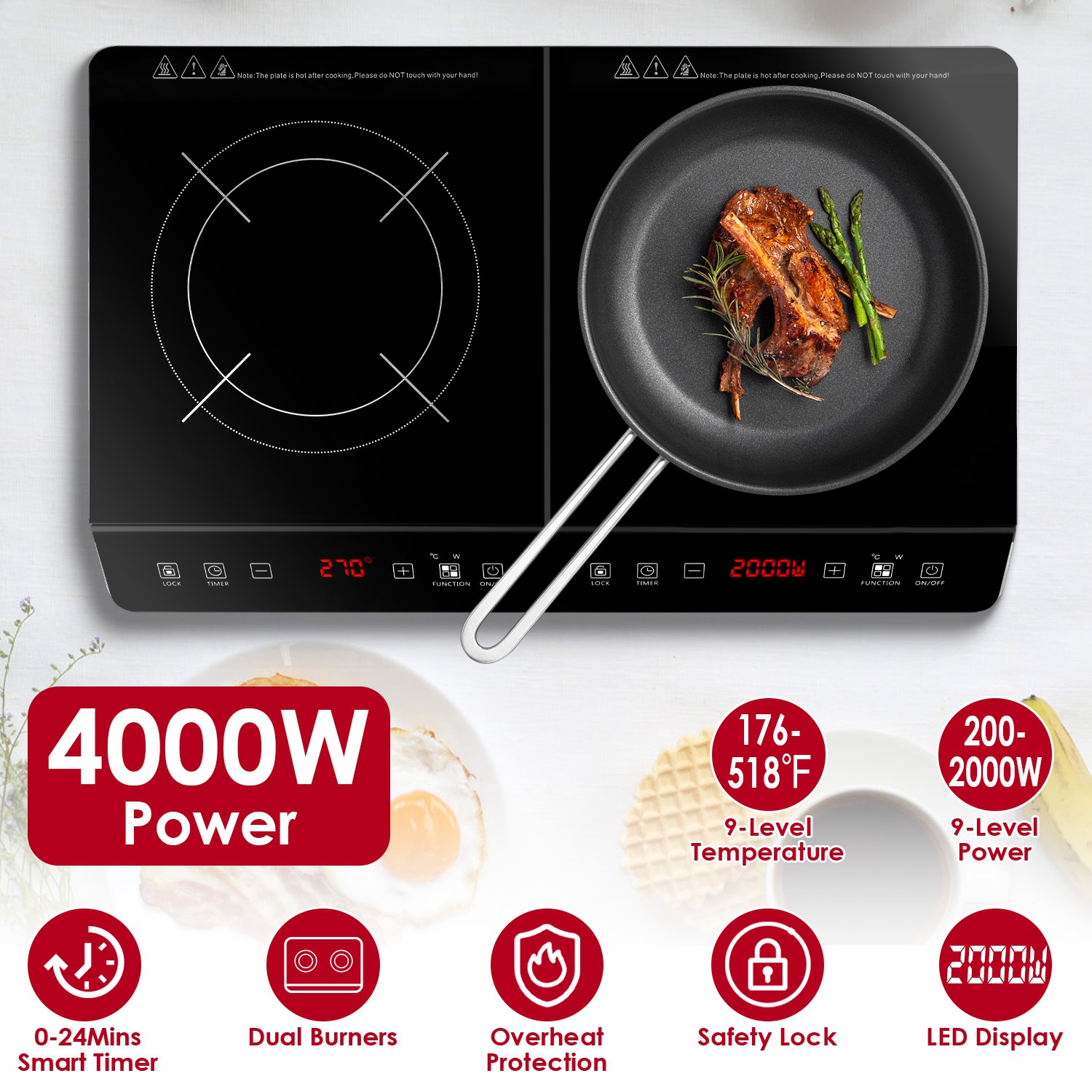 1Pc 4000W Induction Cooktop Portable Double Cooker Electric Dual Burner Stove Countertop Hot Plate With 9 Power 9 Temperature 3H Timer$147.99View on Mallflare
Highlights
- Heating element type defines performance: exposed coil heats fastest and tolerates warped pans, solid cast-iron plates hold heat for searing, infrared glass tubes reach temperature in seconds with minimal residual heat, and radiant ceramic glass gives the most even low simmer.
- Power tiers are dictated by 120V/15A household circuits: single burners run 1000-1500W, dual-burner units split 1800-2000W total, and any unit above 1800W requires a dedicated 20A circuit to avoid breaker trips.
- Cookware compatibility splits by top: coil and solid-plate burners accept any flat-bottom pot including aluminum and ceramic; infrared and radiant glass require perfectly flat, heavy-gauge pans and reject thin or concave cookware.
- Control architecture separates tiers: stepless dials and 5-gear switches are mechanical and repairable, while touch-control ceramic tops add timers, child locks, and overheat guards that depend on sensitive membrane electronics.
Best use cases
- Best fit for dorm rooms, RV galleys, and backup kitchens: a 1200-1800W single or dual solid-plate/coil hot plate, because it runs on any 15A outlet and works with the inexpensive aluminum cookware already on hand.
- Best fit for simmering sauces and precise low-heat work: a ceramic radiant glass cooktop with 9-16 power levels and a timer, provided you own flat-bottom stainless or cast-iron pans and have a clear 12-inch counter footprint.
- Wrong fit for high-volume family cooking: dual 2000W portable burners cannot match a 240V range's recovery time and will trip a shared 15A kitchen circuit if both elements run on high simultaneously.
- Skip infrared glass-tube single burners if you routinely use thin or warped pans: the exposed quartz tube concentrates heat and warped bottoms cause hot spots and slow, uneven cooking.
Buying tips
- Match total wattage to your circuit: keep single-burner units at or below 1500W and dual-burner units at or below 1800W for standard 15A/120V outlets; only choose 2000W dual units if a 20A dedicated circuit is available.
- Pick the element by cookware: solid cast-iron plate or exposed coil for aluminum, ceramic, and warped pots; infrared or radiant ceramic glass only for flat, heavy-gauge stainless or cast iron.
- For ceramic glass tops, verify the glass is Schott or equivalent thermal-shock-rated ceramic and that the unit has an overheat guard and child lock—these are the parts that fail first on cheap radiant cooktops.
- Check physical dimensions against your counter and storage: 12-inch two-burner ceramic tops need roughly 12 x 20 inches of clear counter and 4 inches of side clearance for the heat shield; single hot plates need about 10 inches diameter.
Specs
| Burner Type | Coil / Solid Plate / Infrared / Radiant Glass |
|---|---|
| Total Wattage | 1000-2000W (120V, 15-20A circuit) |
| Cookware Fit | Any flat-bottom vs flat heavy-gauge only |
| Control Type | Stepless dial / 5-gear switch / touch digital |
Related searches
What to check before buying
- Measure your counter depth and overhead clearance: dual-burner units are typically 20-24 inches deep and need 4 inches of side clearance from walls and cabinets.
- Confirm your kitchen outlet is a standard 120V 15A grounded receptacle; a 2000W dual burner on a 15A circuit will trip the breaker when both elements run on high.
- Inventory your cookware bottoms: coil and solid-plate burners need flat bottoms but accept any material; radiant glass requires perfectly flat, heavy-gauge pans at least 5 inches in diameter.
- Check the unit's cord length and plug type—most portable stoves ship with a 3-prong 120V cord around 3 feet, so plan for an outlet within reach without an extension cord.
FAQ
Data sources: eBay / Amazon listings and product attribute feeds. Updated Nov 28, 2026.
Some links on this page are affiliate links. If you buy after clicking one, we may earn a commission at no extra cost to you. This does not change which products appear here or their order. Affiliate disclosure.