
Photos from current listings. Actual item, color, and included accessories may vary.
Countertop Stove Electric Buying Guide
A countertop electric stove is a portable 120V cooking appliance that provides one or two burners without a full range install, available in coil, infrared ceramic-glass, and induction architectures. The core trade-off is burner-to-cookware compatibility and heat control: resistance coils work with any flat-bottom pot, radiant glass needs flat magnetic or heavy-gauge bases, and induction demands ferromagnetic cookware for its superior efficiency. Choose based on your cookware set and amperage headroom—coil or infrared for universal pot compatibility, induction only if every pan is magnetic and you want faster, safer heat.
Median $71.99
Key takeaways
- Resistance coil burners are the most tolerant: any flat-bottom pot or pan works, but they heat slowly and retain residual heat after shutoff.
- Radiant ceramic-glass burners use infrared elements under a smooth top; they need flat, heavy-gauge cookware for full contact and even heat.
- Induction burners only energize ferromagnetic cookware (magnetic stainless, cast iron); they deliver the fastest, most precise heat and stay cool to the touch.
At a glance
- Category
- Home Ranges, Ovens & Cooktops
- Last updated
- Nov 28, 2026
Current offers
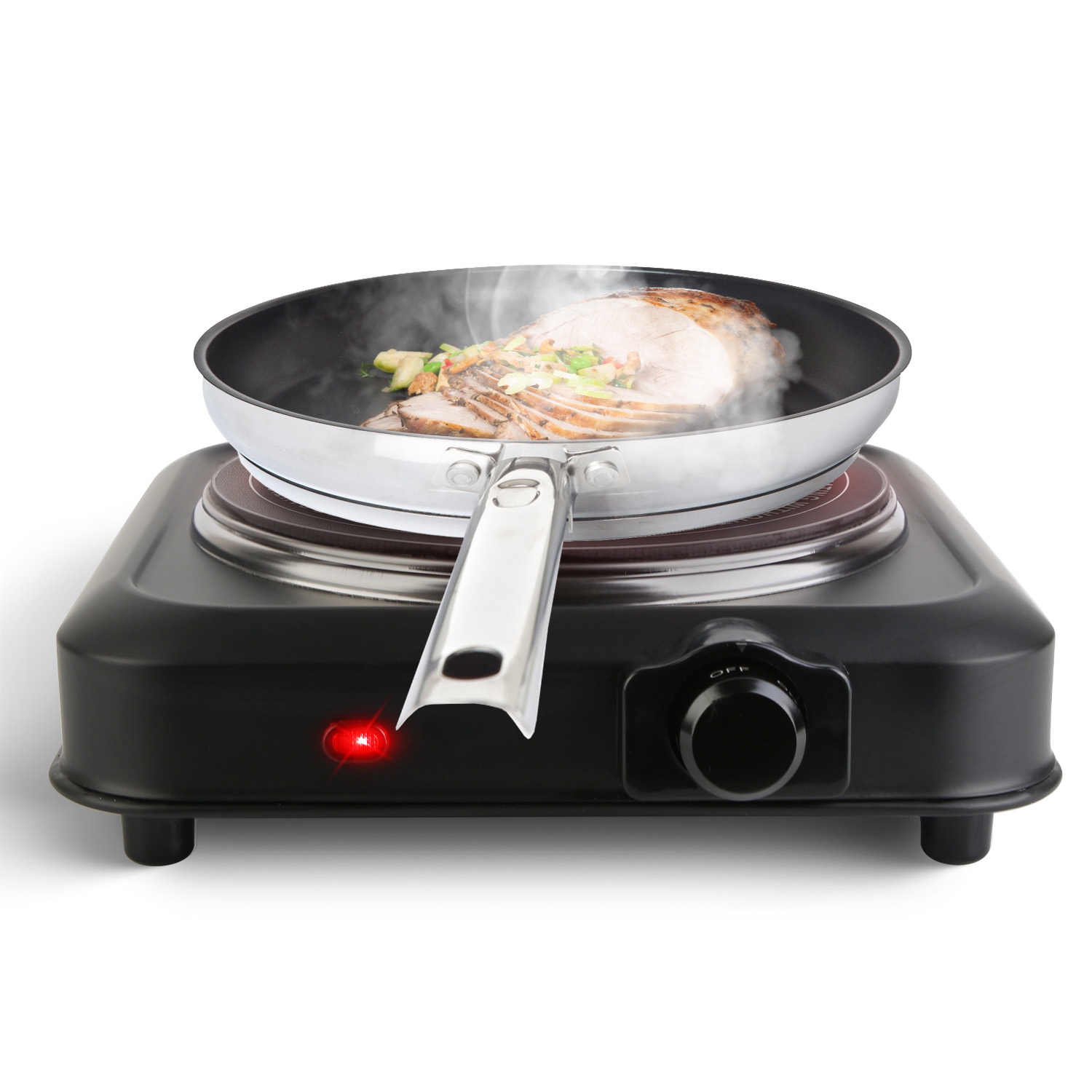 1Pc 1200W Electric Infrared Single Burner Portable Heating Hot Plate Stove Countertop RV Hotplate With 7.5in Glass Cooktop Stepless Temperature Adjustments For Home RV Camp$53.99View on Mallflare
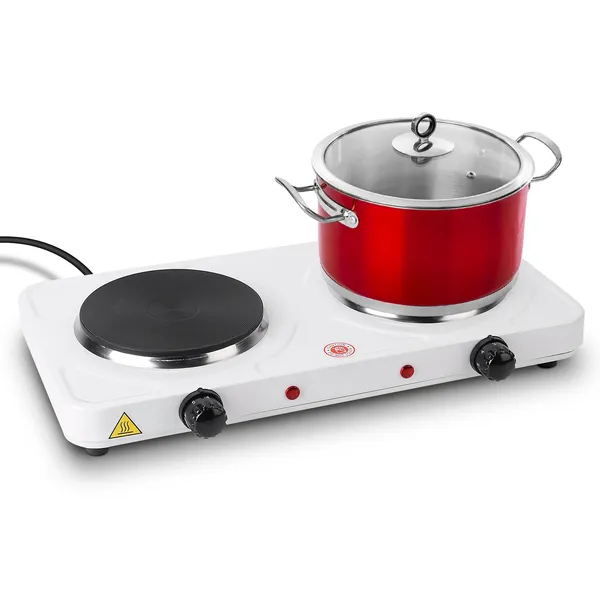 2000W Double Electric Burner Portable Dual Counter Stove Countertop Hot Plate Kitchen Cooker With 5 Gear Temperature Control$56.99View on Mallflare
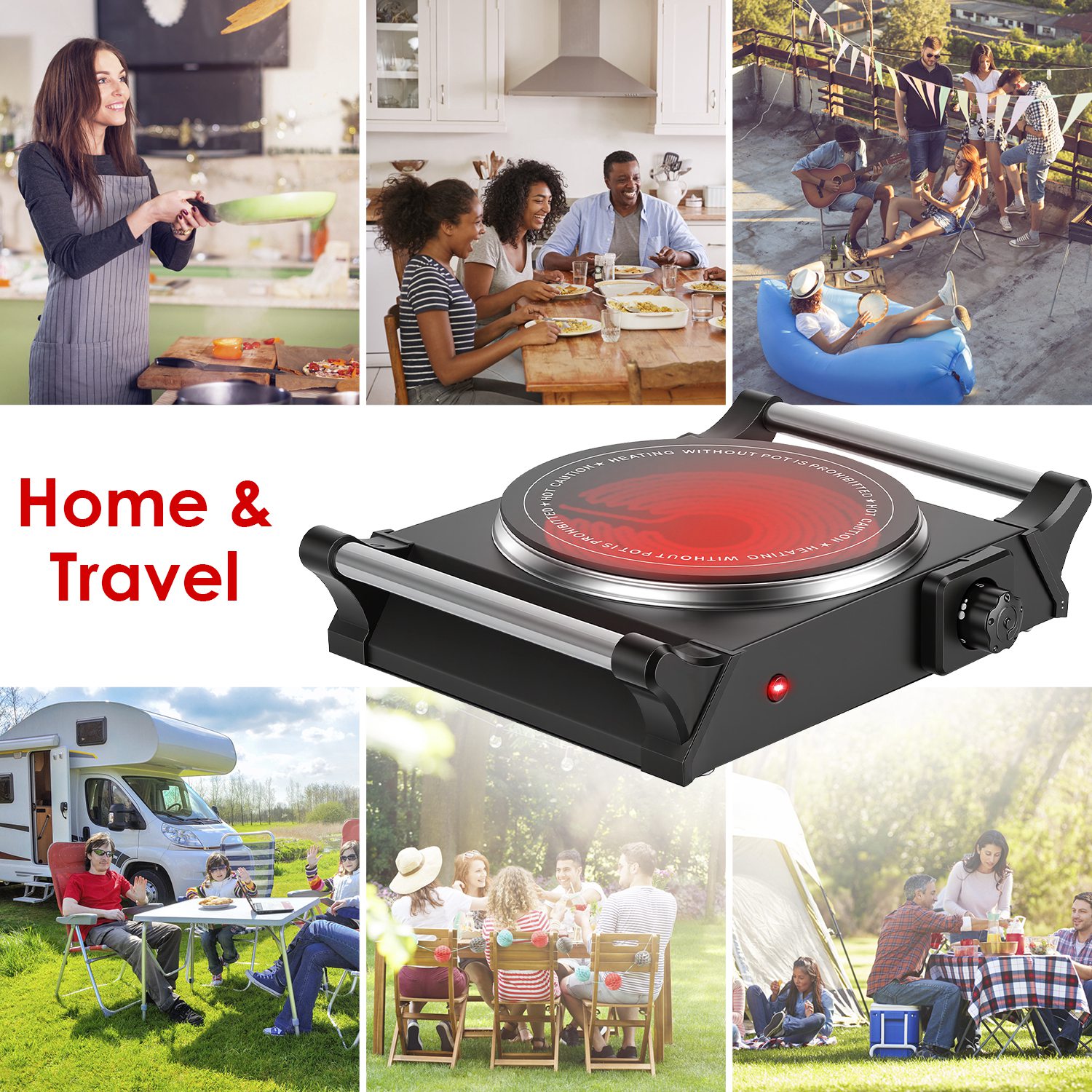 1 Thousand Power Electric Single Burner Portable Heating Hot Plate Stove Countertop RV Hotplate With 5 Temperature Stepless Adjustments Handles$59.99View on Mallflare
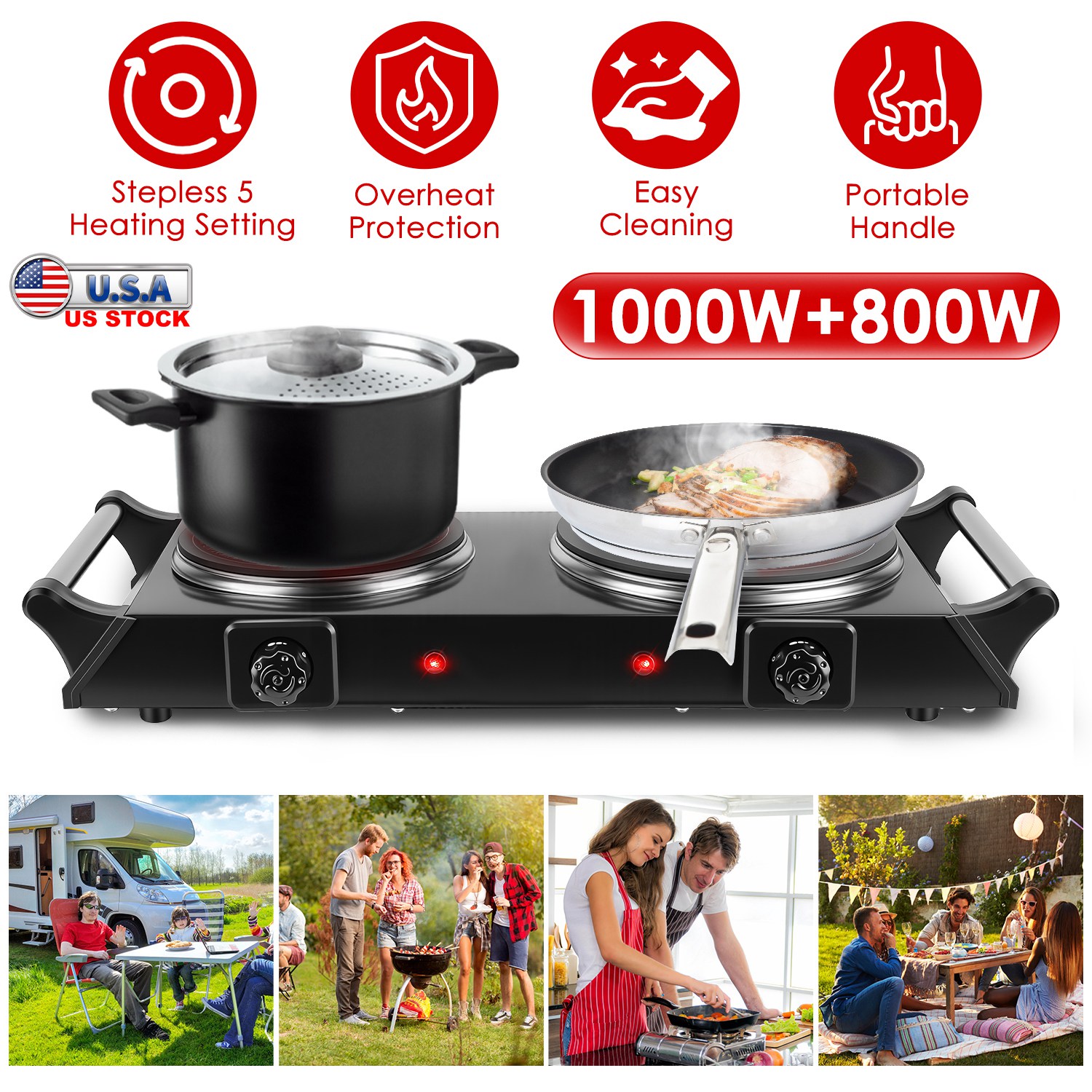 1800W Electric Double Burner Portable Heating Hot Plate Stove Countertop RV Hotplate With 5 Temperature Stepless Adjustments Handles$83.99View on Mallflare
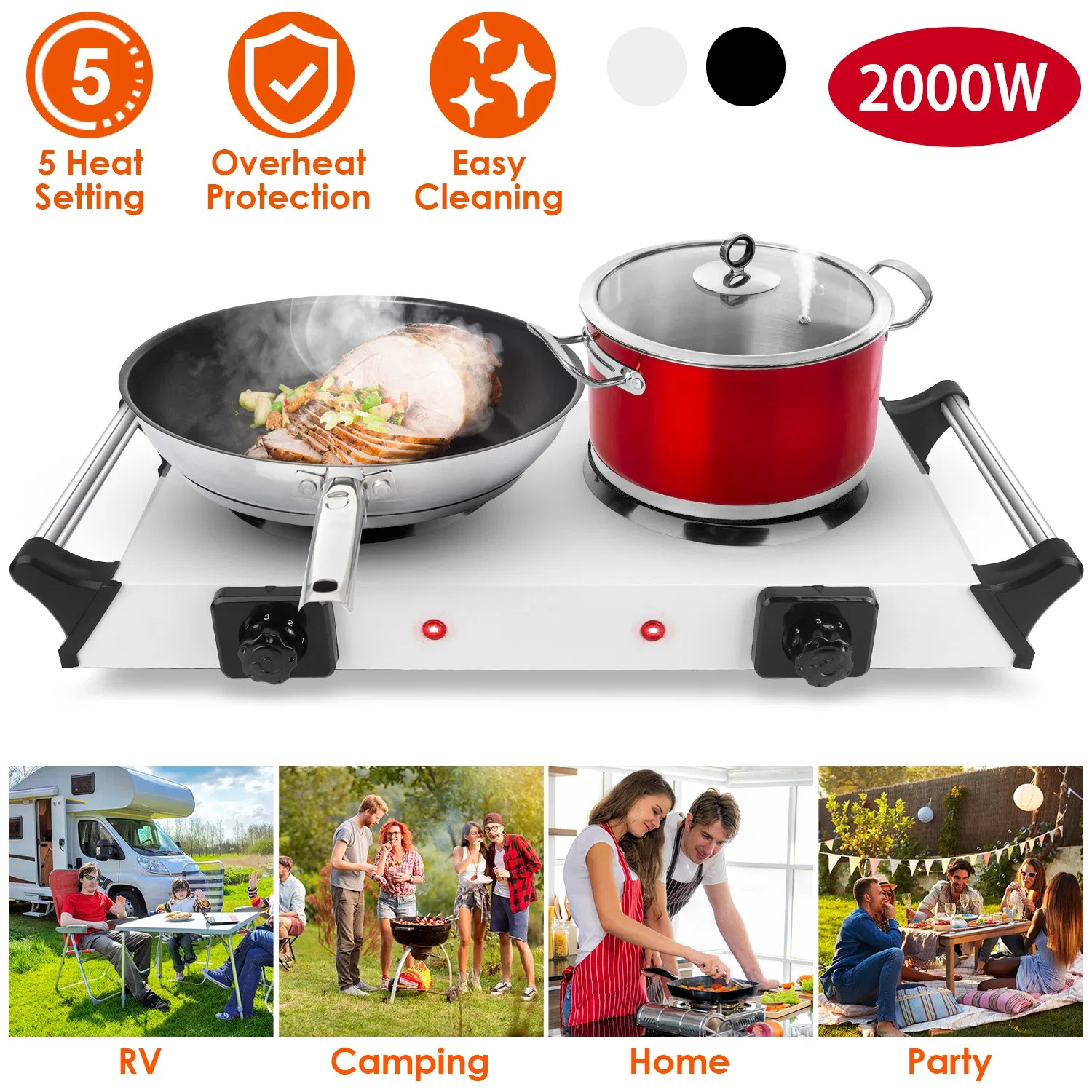 2000W Dual Burner Electric Hot Plate, 5 Temperature Settings (392F-932F), Portable Countertop Stove for All Flat Cookware, Fast & Even Heating, Easy to Clean, Ideal for Dorms, RVs, Apartments$93.99View on Mallflare
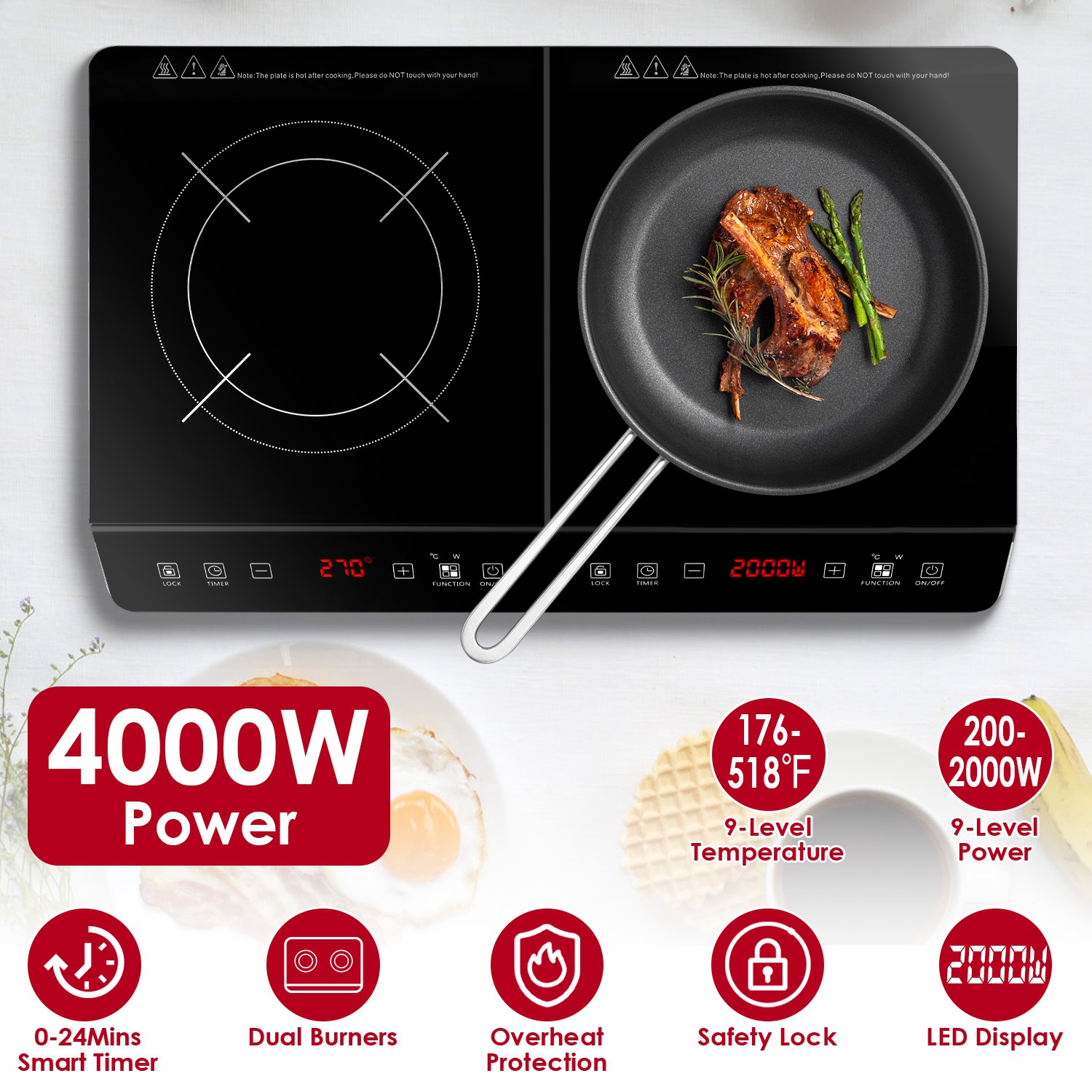 1Pc 4000W Induction Cooktop Portable Double Cooker Electric Dual Burner Stove Countertop Hot Plate With 9 Power 9 Temperature 3H Timer$147.99View on Mallflare
Highlights
- Resistance coil burners are the most tolerant: any flat-bottom pot or pan works, but they heat slowly and retain residual heat after shutoff.
- Radiant ceramic-glass burners use infrared elements under a smooth top; they need flat, heavy-gauge cookware for full contact and even heat.
- Induction burners only energize ferromagnetic cookware (magnetic stainless, cast iron); they deliver the fastest, most precise heat and stay cool to the touch.
- Dual-burner units typically split a shared 120V/15A circuit, so total wattage near 1800W means burners moderate each other during simultaneous use.
Best use cases
- Best fit: Dorm, RV, or apartment with limited counter space and mixed cookware — pick a single or dual coil/infrared unit for universal pot compatibility.
- Best fit: Small kitchen where speed and safety matter and all pans are magnetic — pick an induction unit with touch or knob control and a child lock.
- Wrong fit: Canning, wok cooking, or high-BTU searing — skip countertop electric units; their wattage and burner diameter cannot sustain rolling boils or high heat.
- Wrong fit: Built-in cutout installation without checking dimensions — skip drop-in models unless your counter cutout matches the unit's exact flange and depth.
Buying tips
- Match wattage to circuit: a 120V/15A outlet safely supports about 1500-1800W total; dual burners near 1800W share that budget and cannot run both at full power.
- For induction, test your pans with a magnet: if it sticks firmly to the base, the pan works; if it barely grips or falls off, the burner will not detect it.
- Choose stepless/knob control for simmering and canning-style adjustments; digital touch panels offer timers and locks but can be fussy with wet hands.
- For radiant glass tops, use flat-bottom pans within the burner ring diameter; oversized or warped pans waste heat and can scratch the ceramic surface.
Specs
| Burner Technology | Coil / Radiant glass / Induction |
|---|---|
| Circuit Requirement | 120V, 15-20A grounded outlet |
| Total Wattage | 1200-1800W shared across burners |
| Cookware Compatibility | Coil: any flat base / Induction: magnetic |
Related searches
What to check before buying
- Measure your counter footprint and overhead clearance: dual-burner units often span 12-24 inches wide and need several inches of side clearance for handles and cords.
- Confirm your outlet is a standard 120V grounded receptacle on a 15A or 20A circuit; do not share it with high-draw appliances like microwaves or space heaters.
- Audit your cookware bases: coil and radiant accept most flat pans, but induction requires magnetic bases — check every pot before committing.
- Verify the unit's cord length and plug type reach your counter outlet without an extension cord, and confirm non-slip feet suit your counter material.
FAQ
Data sources: eBay / Amazon listings and product attribute feeds. Updated Nov 28, 2026.
Some links on this page are affiliate links. If you buy after clicking one, we may earn a commission at no extra cost to you. This does not change which products appear here or their order. Affiliate disclosure.