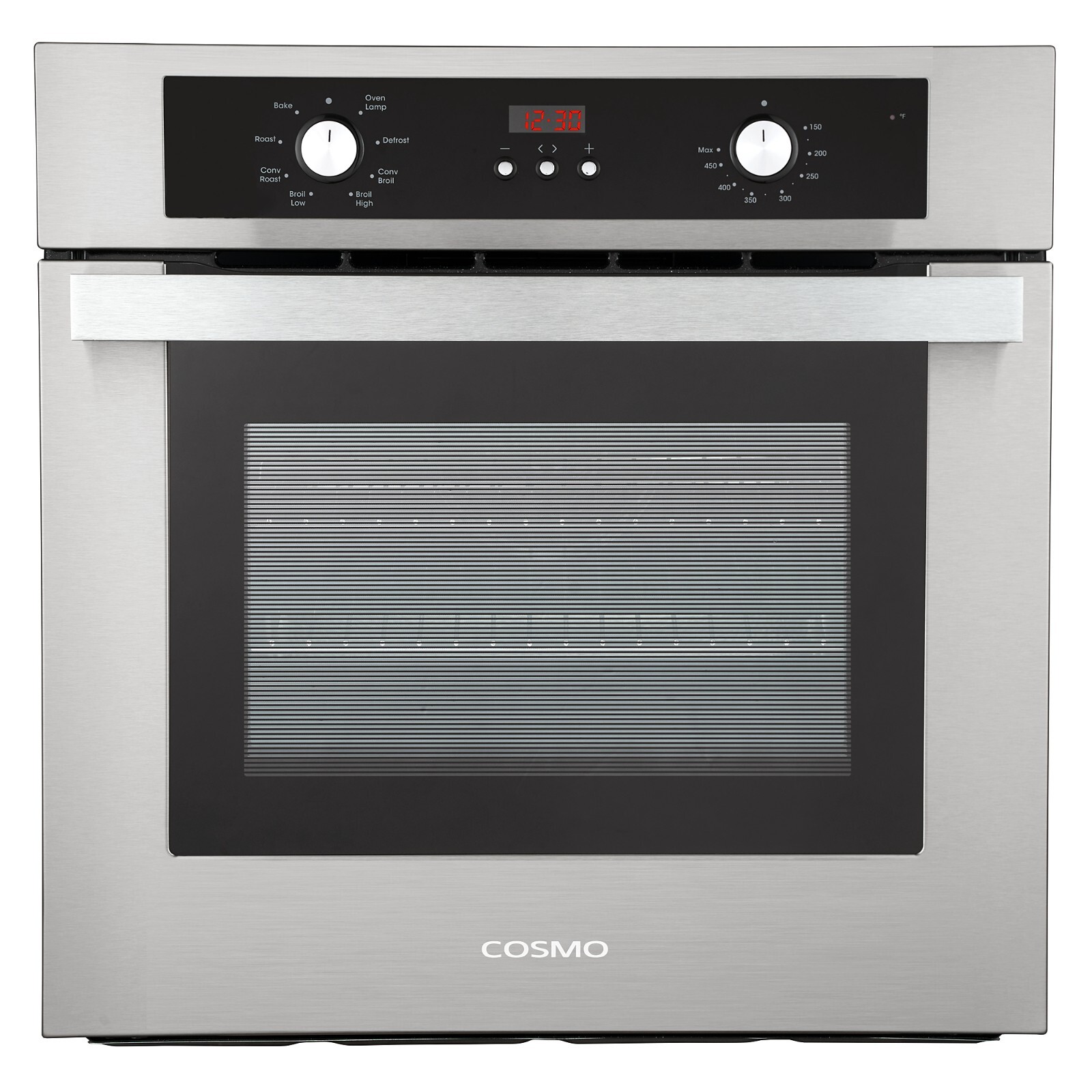

Photos from current listings. Actual item, color, and included accessories may vary.
Electric Convection Oven Buying Guide
An electric convection oven uses a rear fan to circulate hot air for faster, more even baking and roasting than standard radiant electric ovens. The key trade-off is between true fan-forced convection with a dedicated heating element versus 'fan-assisted' designs that only move air without added heat. Buyers should choose true convection when baking precision matters, and accept fan-assisted or radiant-only models only for budget or simple reheating needs.
Median $987.50 · Pre-owned listings
Key takeaways
- True European convection adds a third heating element around the fan, eliminating temperature gradients and enabling multi-rack baking without rotation.
- Fan-assisted convection uses the existing bake element and fan only; it speeds preheat but still requires single-rack baking for best results.
- Smooth glass ceramic cooktops tolerate thermal shock better than coil elements but require cookware with flat, ferromagnetic-safe bases for induction variants.
At a glance
- Category
- Home Ranges, Ovens & Cooktops
- Last updated
- Nov 28, 2026
Current offers
Highlights
- True European convection adds a third heating element around the fan, eliminating temperature gradients and enabling multi-rack baking without rotation.
- Fan-assisted convection uses the existing bake element and fan only; it speeds preheat but still requires single-rack baking for best results.
- Smooth glass ceramic cooktops tolerate thermal shock better than coil elements but require cookware with flat, ferromagnetic-safe bases for induction variants.
- Convection mode typically reduces bake temperature by 25°F and time by 10-15% versus conventional radiant baking; recipes must be adjusted accordingly.
Best use cases
- Best fit: serious bakers and multi-dish roasters should pick a true convection range with a third element and convection conversion mode; skip fan-assisted models.
- Best fit: small kitchens with 30-inch cutouts should choose a freestanding 30-inch smooth-top convection range; skip 24-inch models unless space is truly constrained.
- Wrong fit: buyers wanting induction speed should not buy a radiant convection range; choose an induction convection range instead.
- Wrong fit: high-volume canning or wok cooking is poorly suited to glass cooktops; choose coil or gas instead.
Buying tips
- Measure cutout width: standard freestanding ranges are 30 inches wide, while slide-in models require exact countertop overlap; confirm 30-inch cutout before ordering.
- Verify true convection by checking for a visible third element behind the fan; 'convection' alone often means fan-assisted only.
- Check amperage: most electric ranges require a 40-amp or 50-amp 240V circuit; confirm breaker size before installation.
- Choose smooth glass ceramic for easy cleaning, but avoid if cookware is warped or not flat-bottomed; coil elements tolerate uneven pots better.
Specs
| Convection Type | True (3-element) vs Fan-assisted |
|---|---|
| Width | 30 in standard / 24 in compact |
| Cooktop Surface | Smooth glass ceramic vs coil |
| Oven Capacity | 4.5-6.0 cu ft freestanding |
Related searches
What to check before buying
- Measure the cutout width, depth, and height; standard 30-inch freestanding ranges need 30 inches wide and 25 inches deep clearance.
- Confirm a dedicated 240V circuit with 40-50 amp breaker and proper receptacle type (NEMA 14-50 or 10-50).
- Check oven capacity in cubic feet: 5.0 cu ft fits a 20-lb turkey; 4.5 cu ft or less suits single-rack baking.
- Verify cooktop surface type matches cookware: glass ceramic needs flat bottoms; induction needs magnetic bases.
FAQ
Data sources: eBay / Amazon listings and product attribute feeds. Updated Nov 28, 2026.
Some links on this page are affiliate links. If you buy after clicking one, we may earn a commission at no extra cost to you. This does not change which products appear here or their order. Affiliate disclosure.