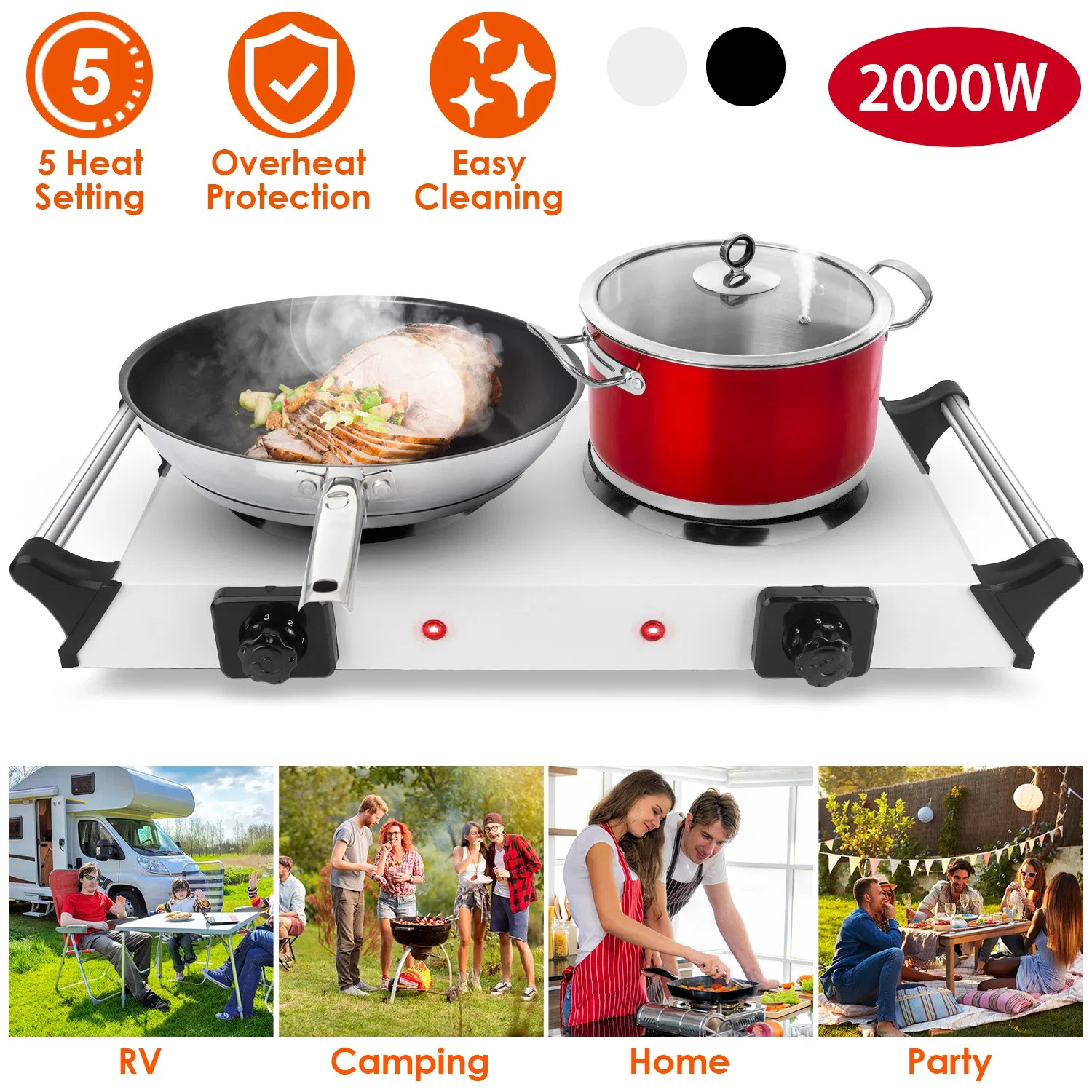

Photos from current listings. Actual item, color, and included accessories may vary.
Flat Stove Buying Guide
A flat stove is a portable or built-in cooking surface with a smooth, continuous top—either electric coil, solid disk, ceramic glass radiant, or induction—that heats flat-bottomed cookware. The core trade-off is between fast, precise induction or radiant glass (higher cost, requires compatible pans) and rugged, cheap electric coil or solid-disk plates (slower, uneven, but forgiving of any flat metal pot). Buy induction only if your cookware is magnetic; buy coil or solid disk if you want maximum durability and pan flexibility on a budget.
Key takeaways
- Heating element type: electric coil (exposed spiral), solid disk (cast iron plate), ceramic glass radiant (halogen/ribbon under glass), or induction (magnetic coil) — each determines pan compatibility, heat-up speed, and durability.
- Power tier: portable dual-burner units draw 1800–2000 W total, so a standard 15 A / 120 V kitchen circuit can run one unit but not two high-power appliances simultaneously.
- Temperature range: coil and solid-disk portables typically span 392°F to 932°F across 5 settings; induction and radiant glass reach similar peaks but with finer electronic control and faster response.
At a glance
- Category
- Home Ranges, Ovens & Cooktops
- Last updated
- Nov 28, 2026
Current offers
Highlights
- Heating element type: electric coil (exposed spiral), solid disk (cast iron plate), ceramic glass radiant (halogen/ribbon under glass), or induction (magnetic coil) — each determines pan compatibility, heat-up speed, and durability.
- Power tier: portable dual-burner units draw 1800–2000 W total, so a standard 15 A / 120 V kitchen circuit can run one unit but not two high-power appliances simultaneously.
- Temperature range: coil and solid-disk portables typically span 392°F to 932°F across 5 settings; induction and radiant glass reach similar peaks but with finer electronic control and faster response.
- Build grade: cast-iron solid disks and heavy coil elements survive years of daily use; thin stamped coil plates and lightweight glass tops are more prone to warping, cracking, or element failure under heavy pots.
Best use cases
- Best fit: apartment, dorm, or RV kitchen with limited counter space and a 120 V outlet — choose a 2000 W dual-burner coil or solid-disk portable for low cost and any flat metal pan.
- Best fit: daily home cooking with magnetic stainless or cast-iron cookware and a dedicated 240 V circuit — choose a built-in induction or ceramic-glass radiant cooktop for speed, precise simmer, and easy-clean surface.
- Wrong fit: buying a glass-top radiant or induction unit for canning or heavy cast-iron searing — skip glass and choose a coil or solid-disk element that tolerates high heat and heavy loads.
- Wrong fit: expecting a 2000 W dual-burner portable to boil two large pots fast on one 15 A circuit — pick a single high-output burner or run one burner at a time.
Buying tips
- Measure your largest pan’s bottom diameter: coil and solid-disk burners need a pan base at least as wide as the element (typically 5.5–7 in) for stable, even contact.
- For induction, test cookware with a magnet — if it doesn’t stick firmly to the base, the pan won’t heat; skip induction and choose coil or radiant glass instead.
- Check the circuit: a 2000 W dual-burner portable draws about 16.7 A at 120 V, so it needs a 20 A circuit or must be the only high-draw appliance on a 15 A line.
- Match element material to use: cast-iron solid disks resist warping and hold heat for searing; exposed coils heat faster but are harder to clean; glass tops need flat, smooth pans and gentle handling.
Specs
| Heating Element | Coil / Solid Disk / Radiant Glass / Induction |
|---|---|
| Power Draw | 1200-2000 W per burner; 240 V built-ins |
| Pan Compatibility | Flat-bottom; magnetic for induction |
| Temp Range | 392-932°F across 5 settings (portable) |
Related searches
What to check before buying
- Counter or cutout dimensions: portable units need clearance for the body and cord; built-in cooktops need an exact cutout width and depth plus rear/side clearance for airflow.
- Electrical supply: confirm 120 V / 15–20 A for portables or 240 V circuit for built-in radiant and induction models; verify plug type and breaker size before purchase.
- Cookware inventory: check that every pan is flat-bottomed and, for induction, magnetic; warped or rounded woks and thin aluminum pans are wrong-fit for glass and induction.
- Ventilation and surface: coil and solid-disk portables radiate heat upward and sideways, so keep them away from cabinets and use a nearby hood or open window; glass tops need a level, heat-safe counter.
FAQ
Data sources: eBay / Amazon listings and product attribute feeds. Updated Nov 28, 2026.
Some links on this page are affiliate links. If you buy after clicking one, we may earn a commission at no extra cost to you. This does not change which products appear here or their order. Affiliate disclosure.