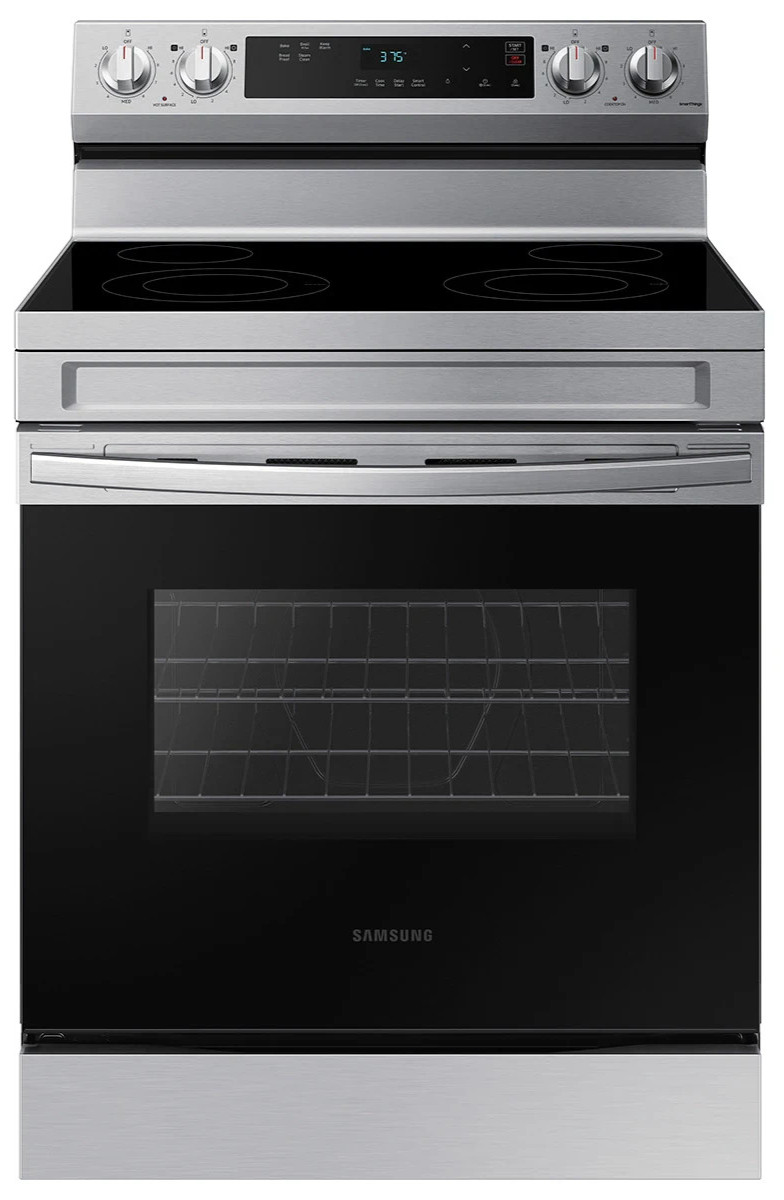

Photos from current listings. Actual item, color, and included accessories may vary.
Freestanding Electric Oven Buying Guide
A freestanding electric oven is a self-contained cooking appliance that combines a radiant or convection oven with a separate electric cooktop and slides into a standard 30-inch cutout without built-in cabinetry modification. The core trade-off is heating architecture: coil elements deliver fast, cheap, durable heat, while smooth radiant glass-top and true convection systems improve baking evenness and cleanup at higher cost and repair complexity. The decisive rule is simple: match the oven's electrical circuit (40A vs 50A), cutout width, and ventilation clearance to your kitchen before choosing a cooktop surface—then pick the heating element type that fits your cooking style.
Key takeaways
- Standard freestanding width is 30 inches (76 cm), with 29.5–30 inch cutout clearance; 24-inch and 36-inch models exist but require dedicated cabinetry layouts and are not drop-in swaps.
- Coil-top ovens use exposed tubular elements at 2,000–3,000 W per burner and are the most repair-friendly; smooth glass-top radiant models use halogen or ribbon elements under ceramic glass and need special cleaner and flat-bottom cookware.
- True convection adds a third heating element and fan behind the rear wall, cutting bake times by roughly 10–25% and improving multi-rack evenness; 'convection' without a third element is only fan-assisted and performs closer to a standard oven.
At a glance
- Category
- Home Ranges, Ovens & Cooktops
- Last updated
- Nov 28, 2026
Current offers
Highlights
- Standard freestanding width is 30 inches (76 cm), with 29.5–30 inch cutout clearance; 24-inch and 36-inch models exist but require dedicated cabinetry layouts and are not drop-in swaps.
- Coil-top ovens use exposed tubular elements at 2,000–3,000 W per burner and are the most repair-friendly; smooth glass-top radiant models use halogen or ribbon elements under ceramic glass and need special cleaner and flat-bottom cookware.
- True convection adds a third heating element and fan behind the rear wall, cutting bake times by roughly 10–25% and improving multi-rack evenness; 'convection' without a third element is only fan-assisted and performs closer to a standard oven.
- Electrical requirements are split: 40A circuits are typical for coil and basic radiant models, while 50A circuits are required for dual-oven or high-wattage convection ranges; hardwired connections are standard, and cord kits are sold separately.
Best use cases
- Best fit for rental or budget kitchens: coil-top freestanding electric oven with mechanical knobs—fewer failure points, cheap element replacement, and no glass-top cracking risk from cast iron.
- Best fit for serious bakers: true convection (third element + fan) with smooth glass top and at least 4.5 cu ft oven capacity—delivers even multi-rack cookies and bread without rotating pans.
- Wrong fit: buying a 36-inch or slide-in model for a standard 30-inch freestanding cutout—cabinet modification and countertop re-cutting make it a renovation, not an appliance swap.
- Skip slide-in and built-in wall-oven designs when you need a freestanding unit: they lack finished side panels and rear control clearance, so they cannot stand alone against open cabinetry.
Buying tips
- Measure the cutout width, depth, and height—not the old appliance—and confirm the new range fits with at least 0.25 inch clearance on each side; standard freestanding depth is 25–27 inches excluding handle.
- Verify the circuit amperage at the breaker before ordering: 40A handles most coil and single-oven radiant models, but 50A is required for dual-oven and high-wattage true convection ranges; a 40A circuit cannot safely feed a 50A appliance.
- Choose true convection only if the spec sheet lists a third heating element plus fan; fan-only 'convection' ovens are marketing labels for standard bake with air movement and cost less for a reason.
- For glass-top models, confirm cookware is flat-bottomed and magnetic (for induction) or heavy-gauge aluminum/steel (for radiant); warped pans and cast iron with rough bottoms scratch and can crack ceramic glass.
Specs
| Width / Cutout | 30 in standard; 24/36 in special |
|---|---|
| Cooktop Surface | Coil, radiant glass, or induction |
| Oven Convection | True (3rd element + fan) vs fan-only |
| Circuit / Voltage | 40A or 50A, 240V hardwired |
Related searches
What to check before buying
- Cutout and clearance: measure cabinet opening width (nominal 30 inches), depth, and height, plus front door swing clearance and space for the rear control panel against the wall.
- Electrical circuit: confirm breaker size (40A vs 50A), voltage (240V AC), and whether the existing connection is hardwired or a 3-prong vs 4-prong cord—match the range's required cord type.
- Ventilation and flooring: ensure at least 30 inches of clearance above the cooktop to a non-combustible surface or range hood, and verify the floor can support 150–250 lbs without flexing.
- Cookware compatibility: for glass-top radiant, check pans are flat and smooth-bottomed; for induction, confirm magnetic bases; coil tops accept all flat-bottom cookware including cast iron.
FAQ
Data sources: eBay / Amazon listings and product attribute feeds. Updated Nov 28, 2026.
Some links on this page are affiliate links. If you buy after clicking one, we may earn a commission at no extra cost to you. This does not change which products appear here or their order. Affiliate disclosure.