
Photos from current listings. Actual item, color, and included accessories may vary.
Gas Cooktop With Downdraft Buying Guide
A gas cooktop with downdraft combines open-flame cooking with an integrated ventilation system that pulls smoke and grease downward, eliminating the need for an overhead hood. The core trade-off is ventilation capacity versus cooking surface: downdraft units sacrifice rear burner space and require high-CFM blowers to match hood performance. Choose a downdraft model only if you cannot install overhead ducting and can meet its deeper cutout and vertical ducting requirements; otherwise a standard gas cooktop with a hood delivers stronger capture.
Median $198.99
Key takeaways
- Downdraft blowers are rated in CFM; gas cooktops require 100-150 CFM per 10,000 BTU, so a 60,000 BTU unit needs 600-900 CFM for equivalent hood performance.
- Most downdraft units vent downward through a 3.25 x 10 inch or 6-inch round duct, requiring a toe-kick or cabinet chase that reduces usable base-cabinet space.
- Downdraft elements are either pop-up (rising 8-12 inches above the counter) or fixed rear grilles; pop-up models capture more effectively but consume rear burner clearance.
At a glance
- Category
- Home Ranges, Ovens & Cooktops
- Last updated
- Nov 28, 2026
Current offers
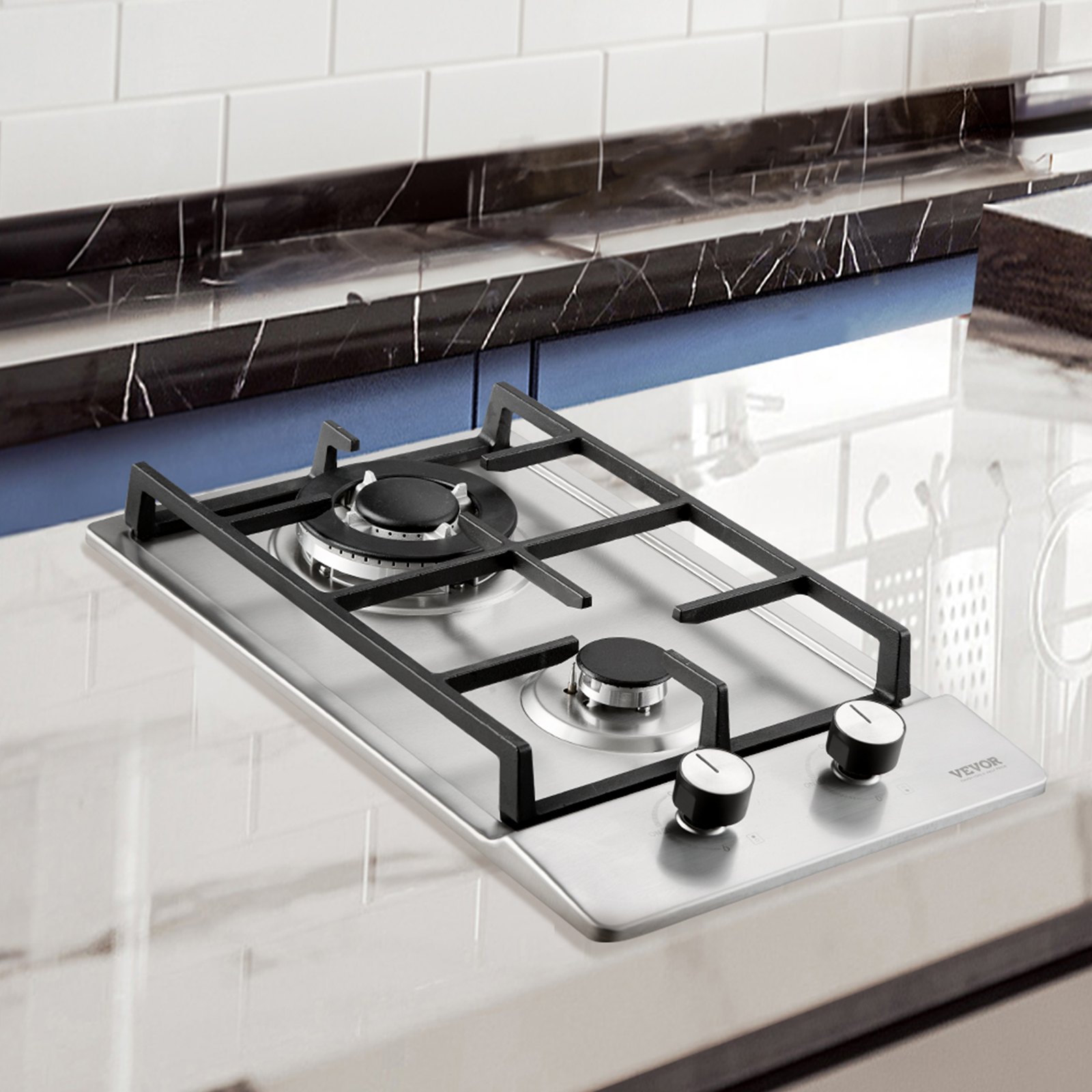 Gas Cooktop 12 Inch, Max 12250BTU 2 Burners Built-in Stainless Steel Gas Stove Top, LPG NG Convertible Dual Fuel Natural Gas Hob With Thermocouple Protection$93.99View on Mallflare
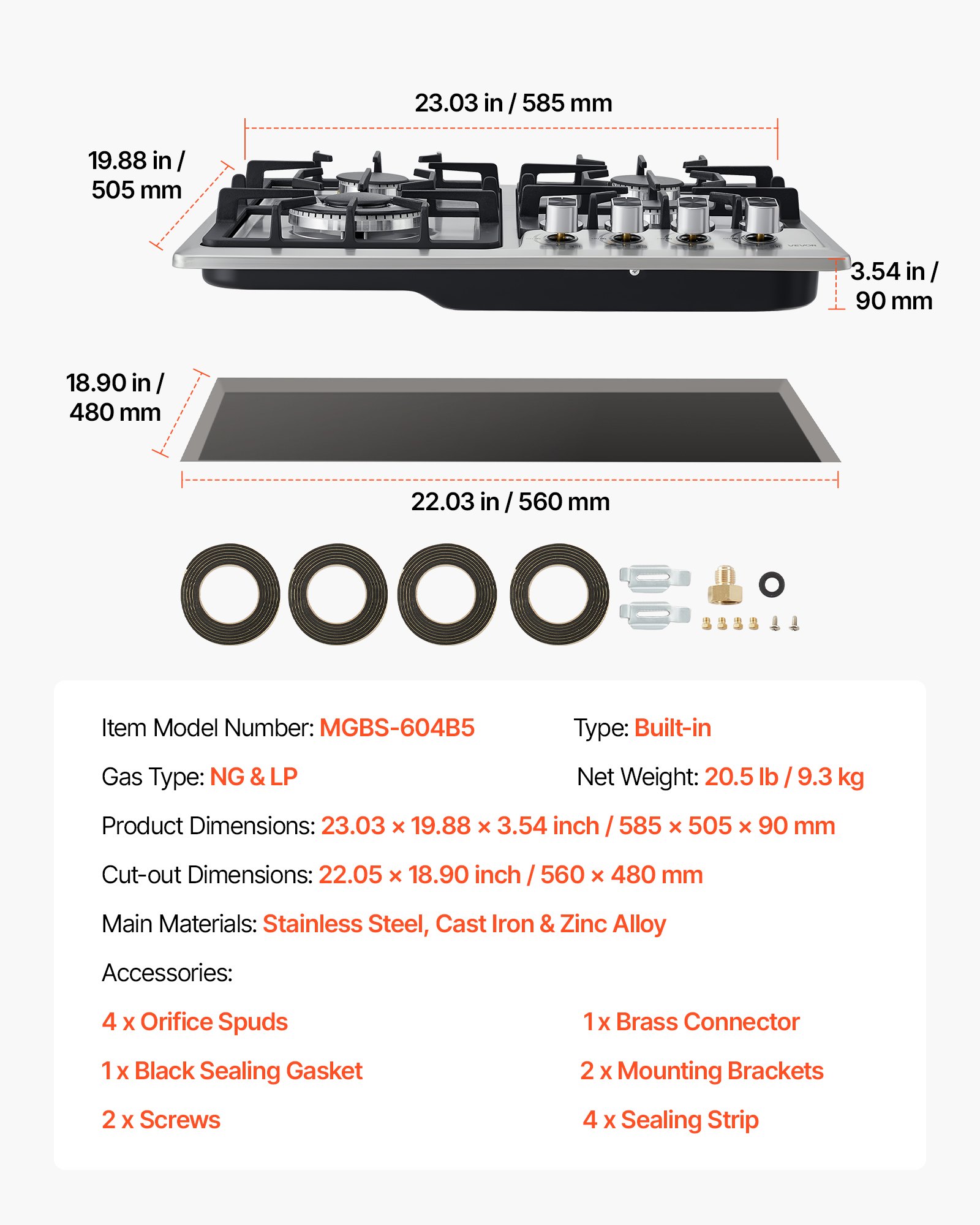 24 Inch Gas Cooktop 4 Burners Gas Stove Top, Max 27000BTU Built-in Stainless Steel Top LPG/NG Convertible Dual Fuel Stoves With Thermocouple Protection For Kitchen Apartment Rvs$157.99View on Mallflare
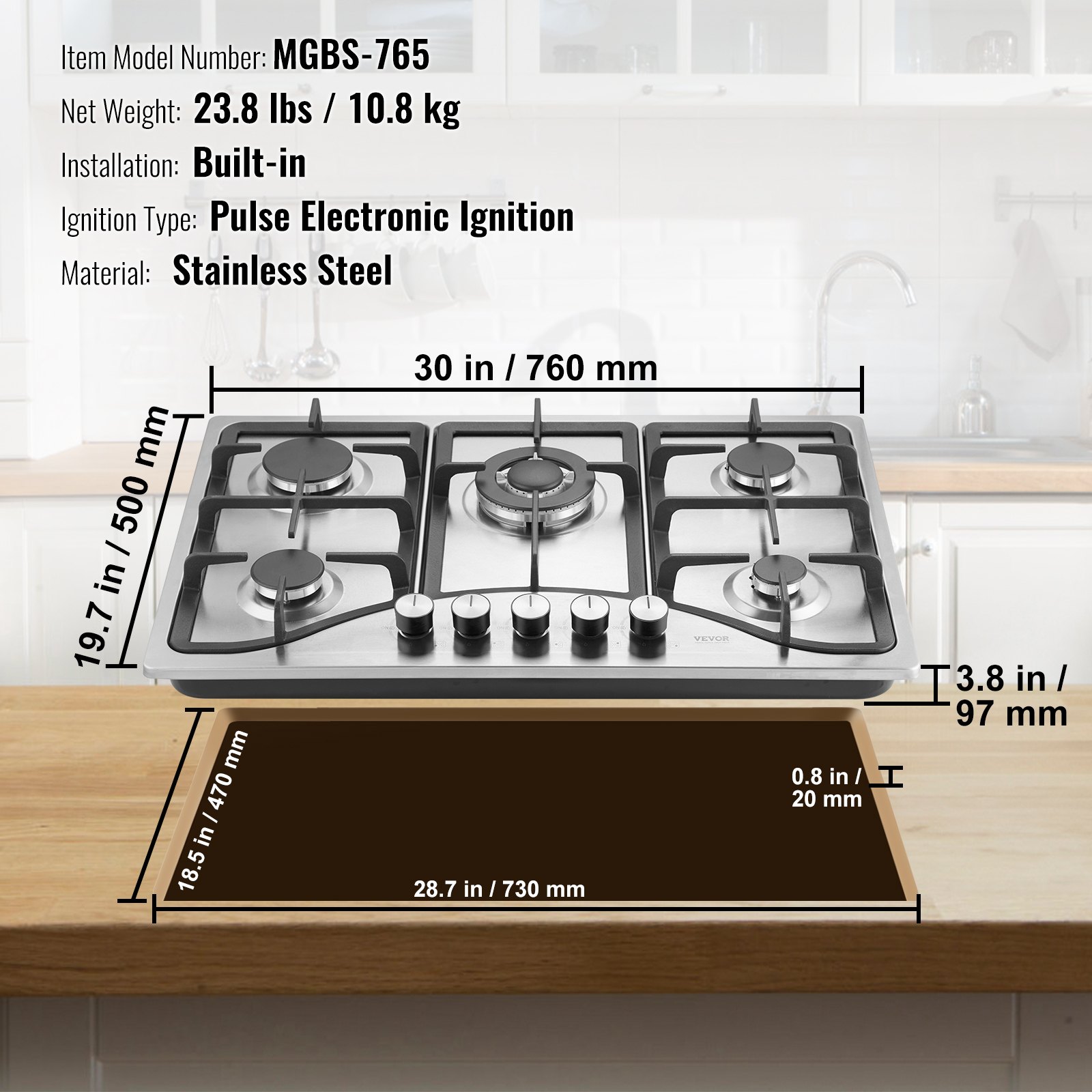 Gas Cooktop 30 Inch, Max 12250BTU 5 Burners Built-in Stainless Steel Gas Stove Top, LPG NG Convertible Dual Fuel Natural Gas Hob With Thermocouple Protection$198.99View on Mallflare
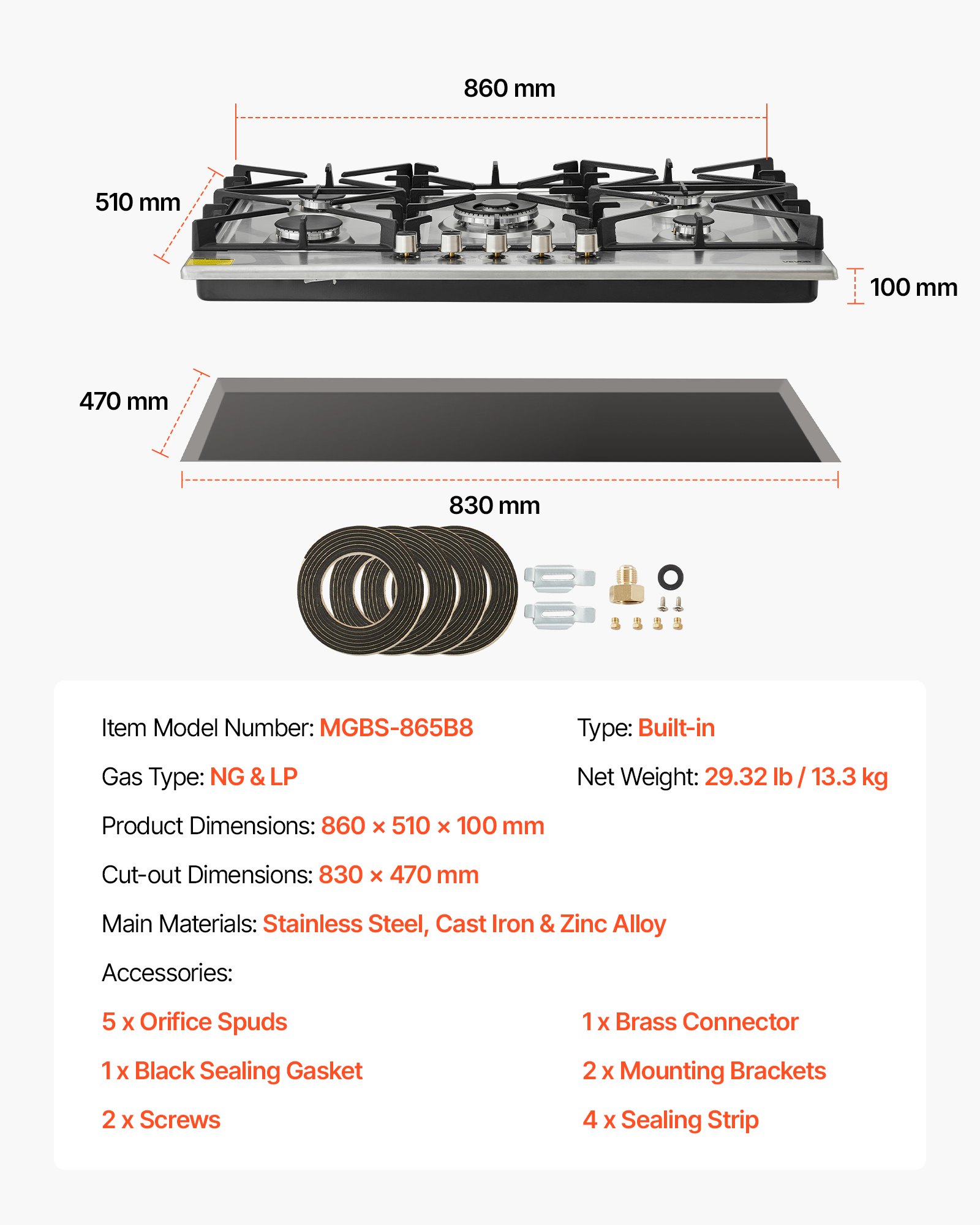 36 Inch Gas Cooktop 5 Burners Gas Stove Top, Max 38300BTU Built-in Stainless Steel Top LPG/NG Convertible Dual Fuel Stoves With SABAF Dual-Ring Burner For Kitchen Apartment Rvs$239.99View on Mallflare
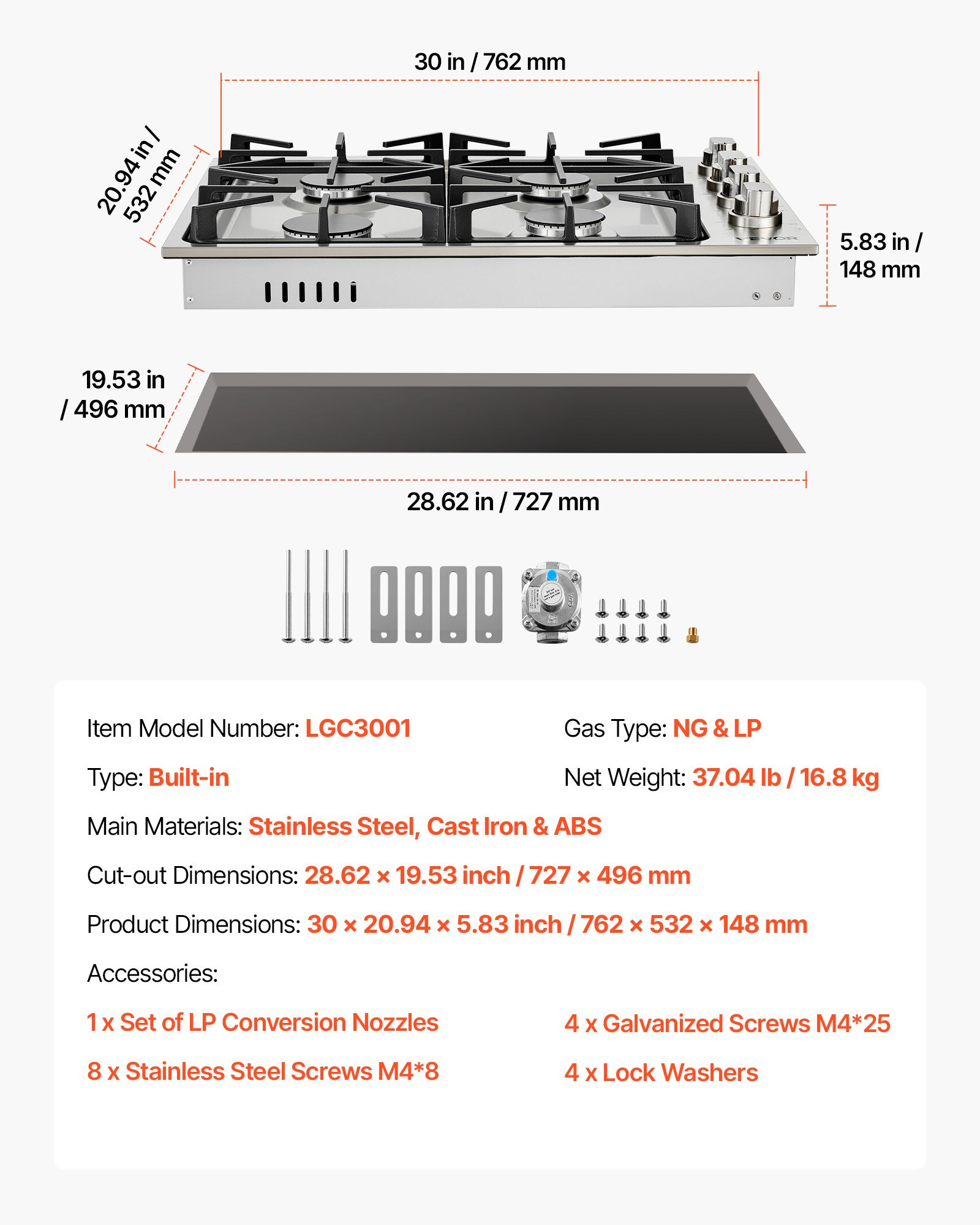 Gas Cooktop, 30 Inch 4 Burners Gas Stove Top, Max 48000BTU Built-in Stainless Steel Top LPG/NG Convertible Dual Fuel Stoves With Sealed Burner For Sear, Stew, Boil, Stir-Fry$312.99View on Mallflare
Highlights
- Downdraft blowers are rated in CFM; gas cooktops require 100-150 CFM per 10,000 BTU, so a 60,000 BTU unit needs 600-900 CFM for equivalent hood performance.
- Most downdraft units vent downward through a 3.25 x 10 inch or 6-inch round duct, requiring a toe-kick or cabinet chase that reduces usable base-cabinet space.
- Downdraft elements are either pop-up (rising 8-12 inches above the counter) or fixed rear grilles; pop-up models capture more effectively but consume rear burner clearance.
- Gas downdraft cooktops are typically 30 or 36 inches wide with sealed or open burners; sealed burners are easier to clean but can trap heat and reduce low-simmer control.
Best use cases
- Best fit: kitchen islands or peninsulas with no overhead wall for a hood—choose a 36-inch pop-up downdraft with at least 600 CFM and confirm a 3.25 x 10 inch duct run to the exterior.
- Wrong fit: high-BTU wok cooking above 18,000 BTU per burner—skip consumer downdraft cooktops (most max at 500-600 CFM) and install a 900+ CFM island hood instead.
- Best fit: replacement in an existing downdraft cutout—match the cutout width (30 or 36 inches) and duct location exactly; choose a fixed-grille model if rear counter clearance is tight.
- Wrong fit: kitchens with no downward cabinet or floor chase for ductwork—a recirculating downdraft filters grease but does not remove moisture or combustion byproducts, so gas installation requires exterior venting.
Buying tips
- Calculate required CFM: sum all burner BTUs, divide by 10,000, multiply by 100 (minimum) to 150 (heavy searing); a 50,000 BTU cooktop needs 500-750 CFM.
- Measure the cutout, not the counter: downdraft cooktops need a cutout that accommodates the blower box (usually 19-22 inches deep) plus a rear duct chase, often 6-8 inches behind the unit.
- Choose pop-up over fixed-grille for front burners—pop-up raises capture height to 8-12 inches, but verify it does not block rear pot handles or backsplash clearance.
- Confirm duct type: 3.25 x 10 inch rectangular is common for compact runs; 6-inch round flows better for long runs over 10 feet or with two elbows; never downsize a 6-inch round to 3.25 x 10.
Specs
| Vent Type | Downdraft (pop-up or fixed rear) |
|---|---|
| Blower CFM | 300-600 CFM typical; 600+ for high BTU |
| Duct Compatibility | 3.25x10 in rectangular or 6 in round |
| Width / Cutout | 30 or 36 in; 19-22 in depth |
Related searches
What to check before buying
- Measure counter cutout width (30 or 36 inches), depth (typically 19-22 inches), and rear clearance for the blower box and duct chase before ordering.
- Verify a downward duct path exists through the cabinet base, floor, or rear wall to the exterior; gas appliances cannot vent combustion byproducts indoors.
- Check gas supply: most models require a 1/2-inch NPT connection and a dedicated shutoff valve within reach; confirm natural gas or LP conversion kit availability.
- Confirm electrical need: downdraft blowers require a 120V grounded outlet, often on a separate circuit; gas ignition may also need 120V.
FAQ
Data sources: eBay / Amazon listings and product attribute feeds. Updated Nov 28, 2026.
Some links on this page are affiliate links. If you buy after clicking one, we may earn a commission at no extra cost to you. This does not change which products appear here or their order. Affiliate disclosure.