
Photos from current listings. Actual item, color, and included accessories may vary.
Gas Stove Buying Guide
A gas stove is a cooking appliance that uses natural gas or propane to fuel open or sealed burners, typically available as a freestanding range, slide-in range, or built-in cooktop. The primary trade-off is between high-output sealed burners with electronic ignition and simpler open-burner designs with standing pilots, which affects cleanup, efficiency, and reliability. Choose a sealed-burner model with electronic ignition for the best balance of performance and durability; avoid open-burner stoves with standing pilots unless you prioritize serviceability over efficiency.
Median $198.99
Key takeaways
- Sealed burners prevent spills from entering the cooktop, while open burners offer easier access for cleaning and servicing but allow liquids to seep into the chassis.
- Electronic ignition (spark or hot-surface) eliminates standing pilots, saving gas and enabling automatic reignition, whereas standing pilots waste energy and can be blown out.
- Burner output measured in BTU: standard burners range from 9,000 to 12,000 BTU, high-output power burners reach 15,000 to 18,000 BTU, and simmer burners as low as 5,000 BTU for delicate control.
At a glance
- Category
- Home Ranges, Ovens & Cooktops
- Last updated
- Nov 28, 2026
Current offers
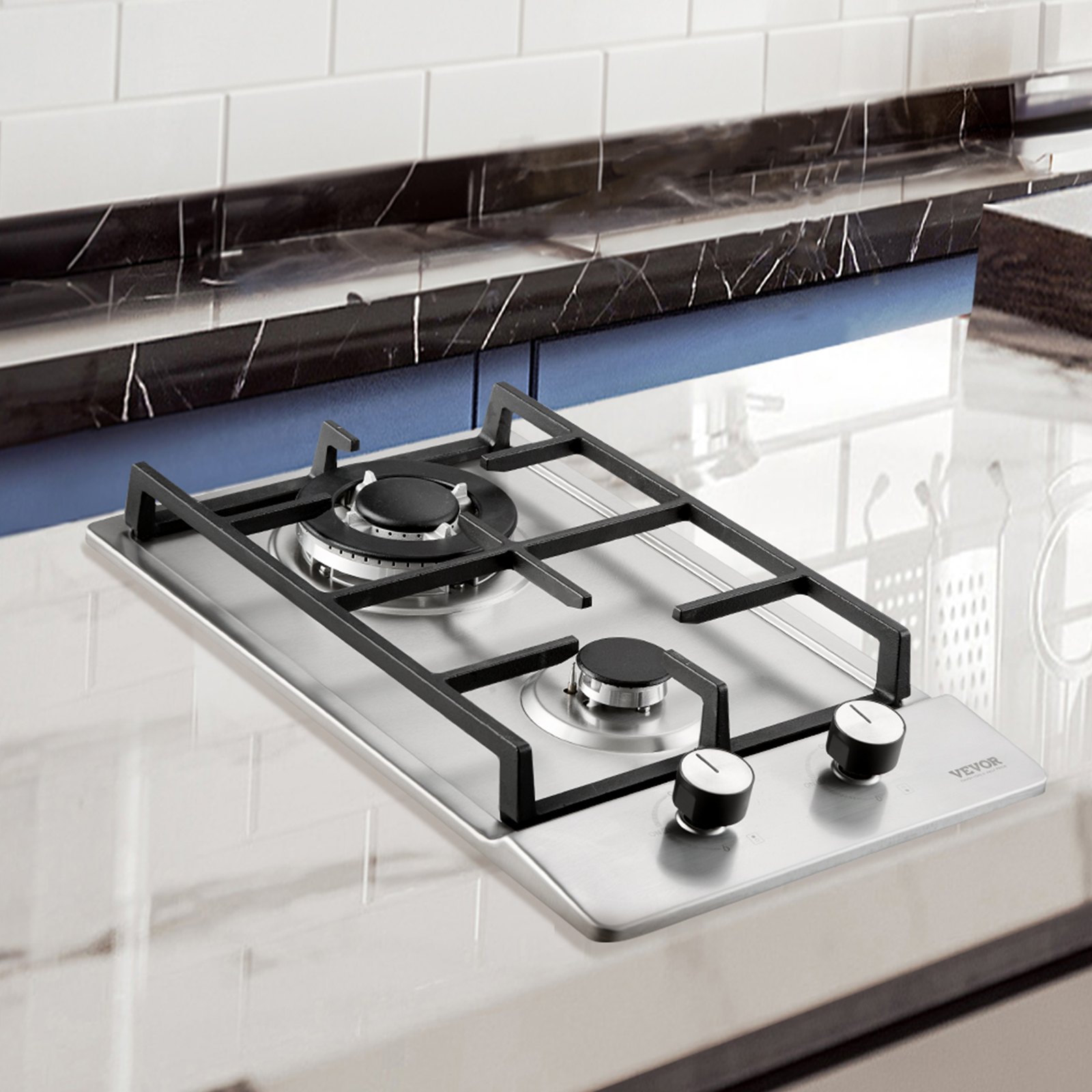 Gas Cooktop 12 Inch, Max 12250BTU 2 Burners Built-in Stainless Steel Gas Stove Top, LPG NG Convertible Dual Fuel Natural Gas Hob With Thermocouple Protection$93.99View on Mallflare
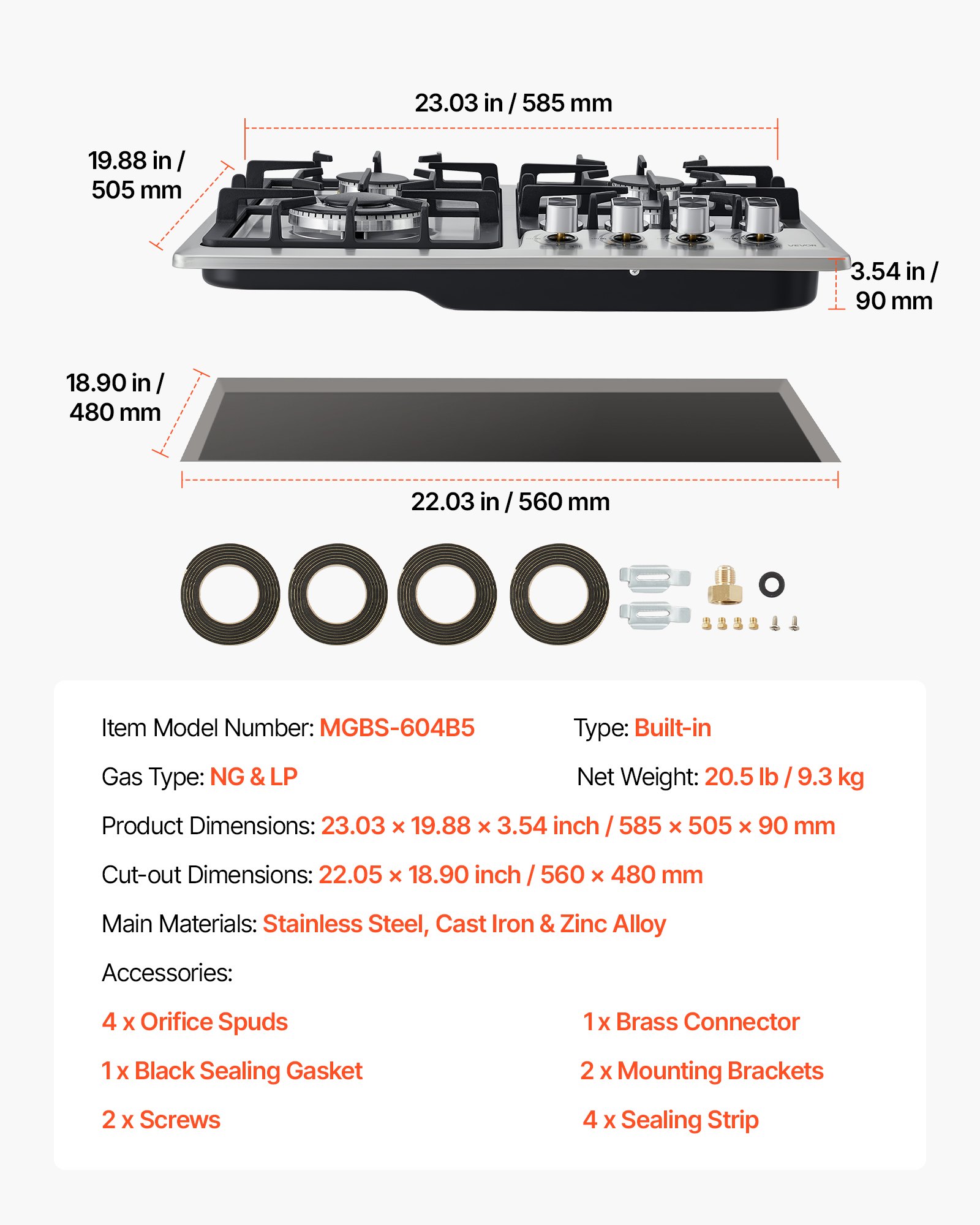 24 Inch Gas Cooktop 4 Burners Gas Stove Top, Max 27000BTU Built-in Stainless Steel Top LPG/NG Convertible Dual Fuel Stoves With Thermocouple Protection For Kitchen Apartment Rvs$157.99View on Mallflare
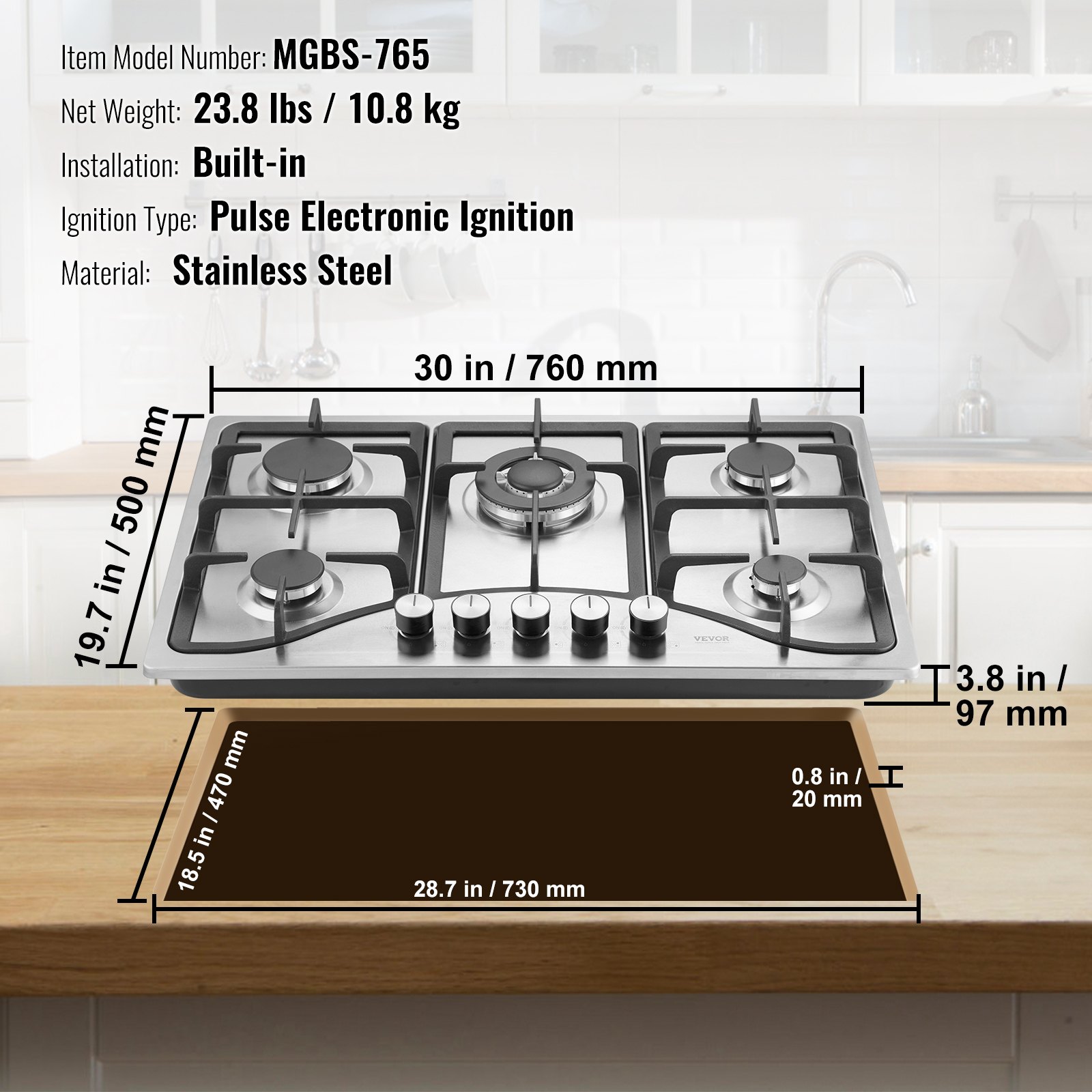 Gas Cooktop 30 Inch, Max 12250BTU 5 Burners Built-in Stainless Steel Gas Stove Top, LPG NG Convertible Dual Fuel Natural Gas Hob With Thermocouple Protection$198.99View on Mallflare
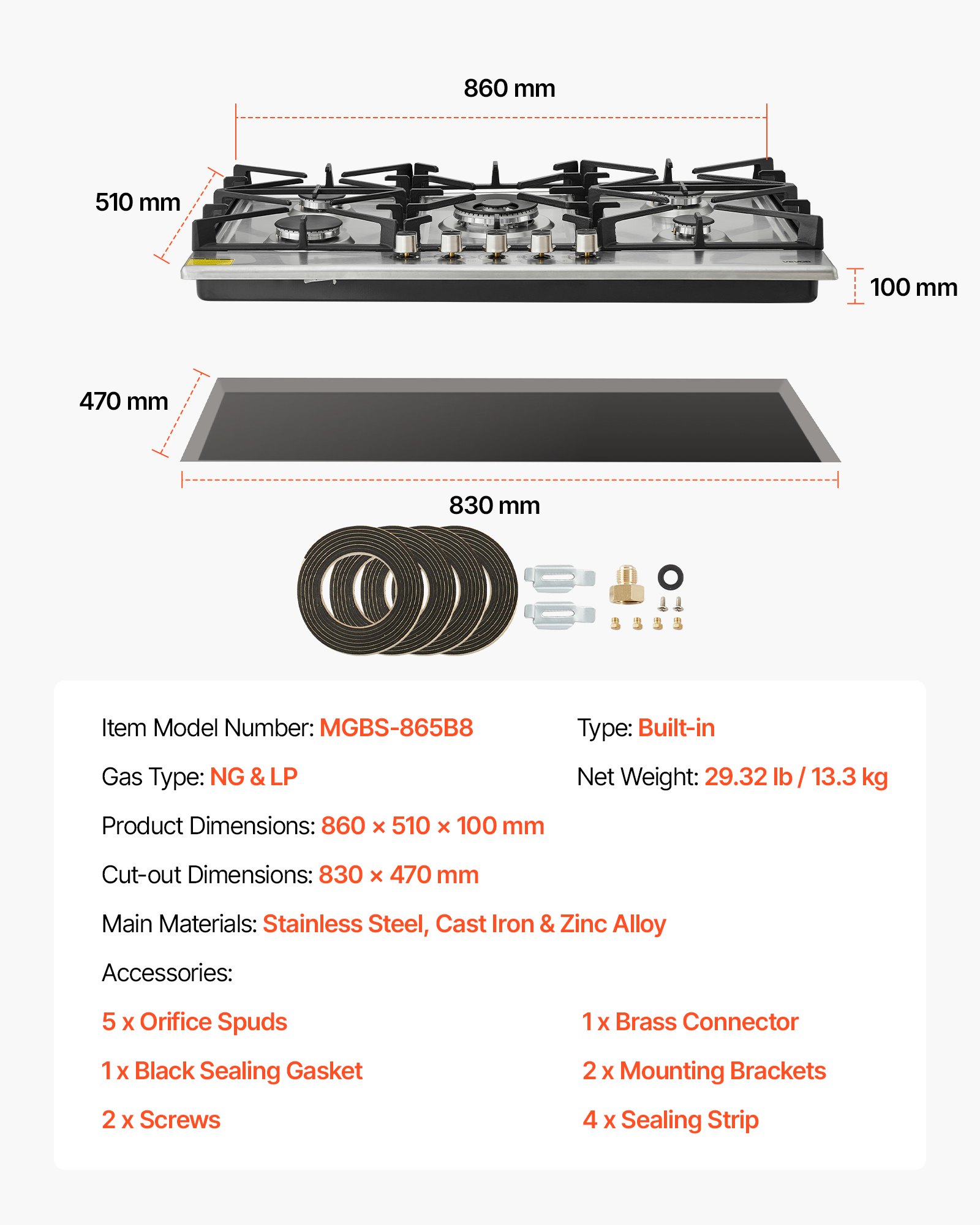 36 Inch Gas Cooktop 5 Burners Gas Stove Top, Max 38300BTU Built-in Stainless Steel Top LPG/NG Convertible Dual Fuel Stoves With SABAF Dual-Ring Burner For Kitchen Apartment Rvs$239.99View on Mallflare
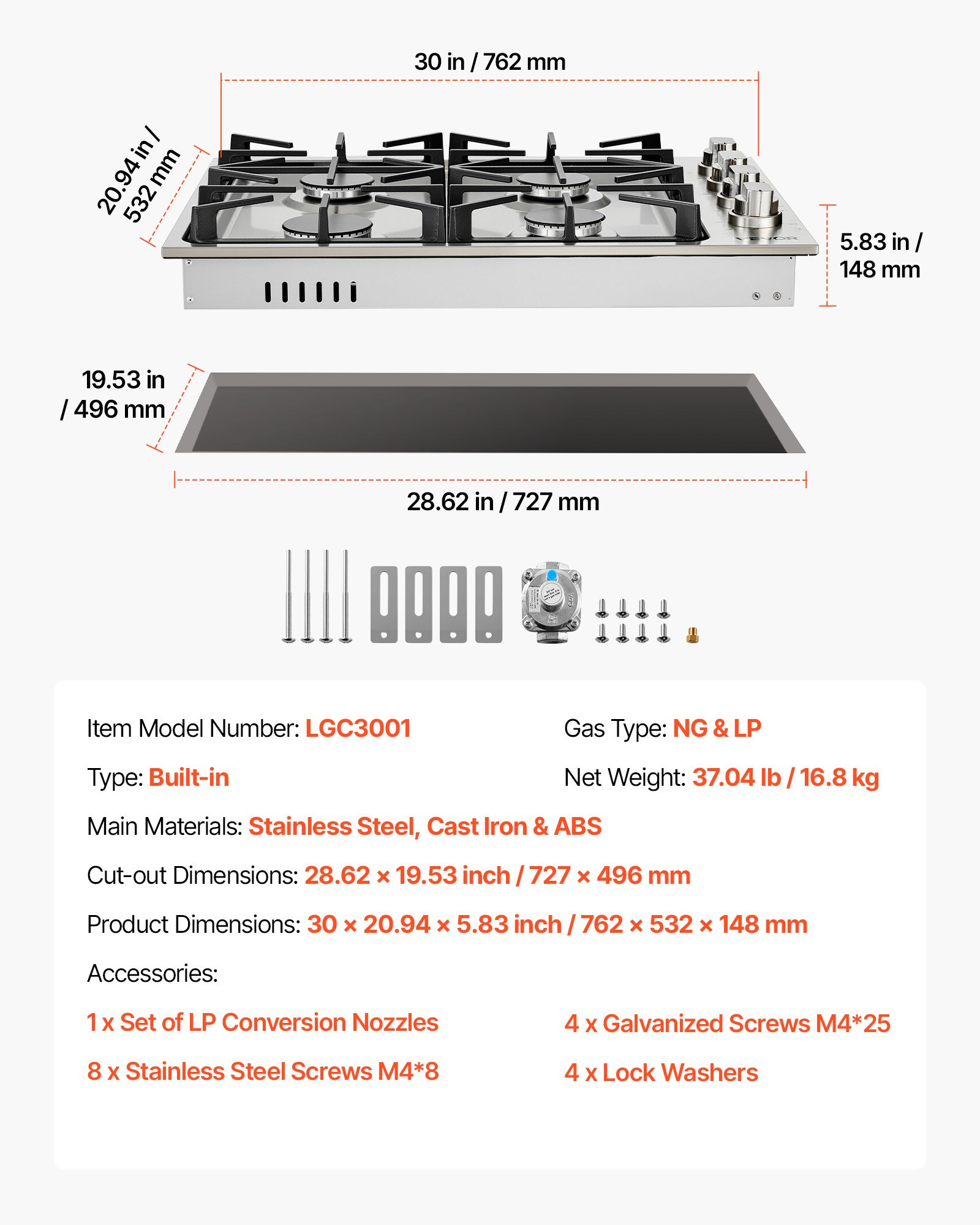 Gas Cooktop, 30 Inch 4 Burners Gas Stove Top, Max 48000BTU Built-in Stainless Steel Top LPG/NG Convertible Dual Fuel Stoves With Sealed Burner For Sear, Stew, Boil, Stir-Fry$312.99View on Mallflare
Highlights
- Sealed burners prevent spills from entering the cooktop, while open burners offer easier access for cleaning and servicing but allow liquids to seep into the chassis.
- Electronic ignition (spark or hot-surface) eliminates standing pilots, saving gas and enabling automatic reignition, whereas standing pilots waste energy and can be blown out.
- Burner output measured in BTU: standard burners range from 9,000 to 12,000 BTU, high-output power burners reach 15,000 to 18,000 BTU, and simmer burners as low as 5,000 BTU for delicate control.
- Freestanding gas ranges integrate cooktop and oven in one chassis, while cooktops require a separate wall oven; ranges dominate for space-constrained kitchens.
Best use cases
- Best fit: a 30-inch freestanding gas range with sealed burners and electronic ignition for standard family kitchens replacing an old stove.
- Best fit: a 36-inch gas cooktop with high-BTU burners (15,000+ BTU) for serious cooks who already have a wall oven and need wok-ready heat.
- Wrong fit: a built-in gas cooktop if you lack a separate oven or have a narrow 24-inch cutout; choose a 24-inch freestanding range instead.
- Skip open-burner stoves with standing pilots if you want easy cleanup and lower energy bills; they are only suitable for off-grid or vintage-restoration contexts.
Buying tips
- Measure your cutout or available width precisely: freestanding ranges come in 20, 24, 30, 36, and 48-inch widths; cooktops require a cutout within 1/4 inch of the nominal size.
- Match the gas type: natural gas stoves require a 1/2-inch NPT connection at 7 inches water column; propane models need a conversion kit and 11 inches water column supply.
- Check burner BTU spread: a dedicated simmer burner (≤5,000 BTU) and at least one high-output burner (≥15,000 BTU) cover the widest range of cooking tasks.
- Prefer sealed burners with cast-iron grates for durability and easy cleaning; avoid cheap enamel grates that chip and rust over time.
Specs
| Burner Type | Sealed vs Open |
|---|---|
| Ignition System | Electronic vs Standing Pilot |
| Burner Output | 5,000–18,000 BTU |
| Gas Type | Natural Gas / Propane (kit required) |
Related searches
What to check before buying
- Confirm the cutout width and depth: freestanding ranges need a 30-inch wide opening (or 36-inch for 36-inch models) with adequate clearance for the oven door swing.
- Verify gas supply type and pressure: natural gas (7 in. WC) or propane (11 in. WC); a conversion kit is mandatory for propane use on natural-gas stoves.
- Ensure a dedicated 120V GFCI outlet is within reach for electronic ignition and oven controls; standing-pilot models need no electricity.
- Check the required clearance to combustible surfaces: typically 0 inches on sides and back for freestanding ranges, but cooktops need at least 2 inches to side walls.
FAQ
Data sources: eBay / Amazon listings and product attribute feeds. Updated Nov 28, 2026.
Some links on this page are affiliate links. If you buy after clicking one, we may earn a commission at no extra cost to you. This does not change which products appear here or their order. Affiliate disclosure.