
Photos from current listings. Actual item, color, and included accessories may vary.
Gas Stove With Downdraft Buying Guide
A gas stove with downdraft combines open-flame cooking with a ventilation system that pulls smoke and grease down through the countertop rather than up through a hood. The core trade-off is ventilation capacity versus cooktop flexibility: downdraft units struggle with high-BTU wok cooking and large stockpots, and most require a dedicated exterior or recirculating duct path. Choose a downdraft gas stove only when overhead cabinetry or sightlines rule out a hood; otherwise a conventional gas range with a 400+ CFM hood delivers stronger capture at lower cost.
Median $198.99
Key takeaways
- Downdraft capture is rated in CFM: 300–600 CFM handles everyday searing and boiling; wok burners above 18,000 BTU demand 600+ CFM or a telescoping riser to avoid smoke spillover.
- Most downdraft gas ranges use sealed or semi-sealed burners with 15,000–18,000 BTU power burners and 5,000–9,000 BTU simmer burners; open-burner designs are easier to clean but less wind-resistant at the downdraft inlet.
- Ducting must be 3¼"×10" rectangular or 6"–8" round, routed through the floor or rear wall to an exterior cap; recirculating downdraft kits exist but rely on charcoal filters and underperform on grease and moisture.
At a glance
- Category
- Home Ranges, Ovens & Cooktops
- Last updated
- Nov 28, 2026
Current offers
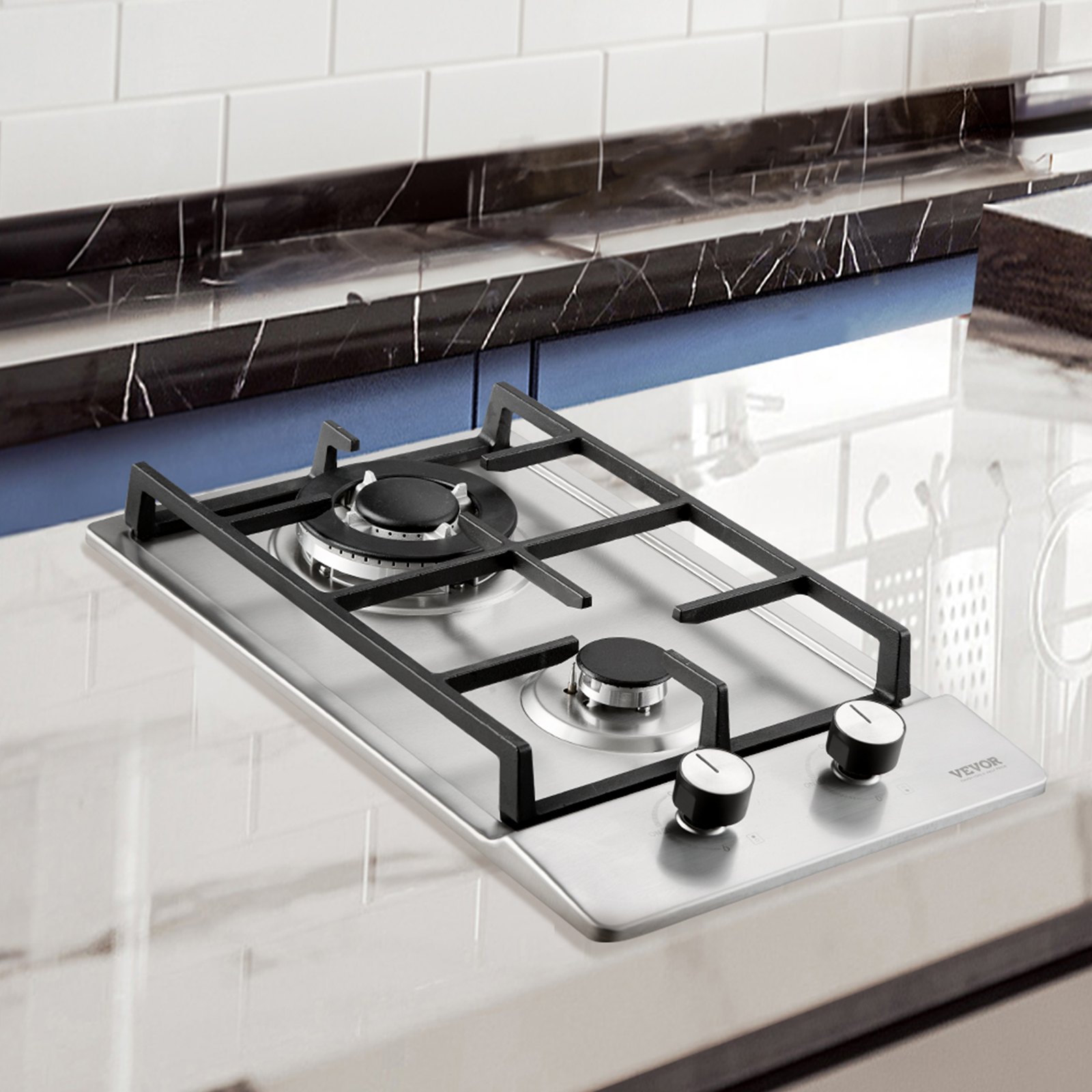 Gas Cooktop 12 Inch, Max 12250BTU 2 Burners Built-in Stainless Steel Gas Stove Top, LPG NG Convertible Dual Fuel Natural Gas Hob With Thermocouple Protection$93.99View on Mallflare
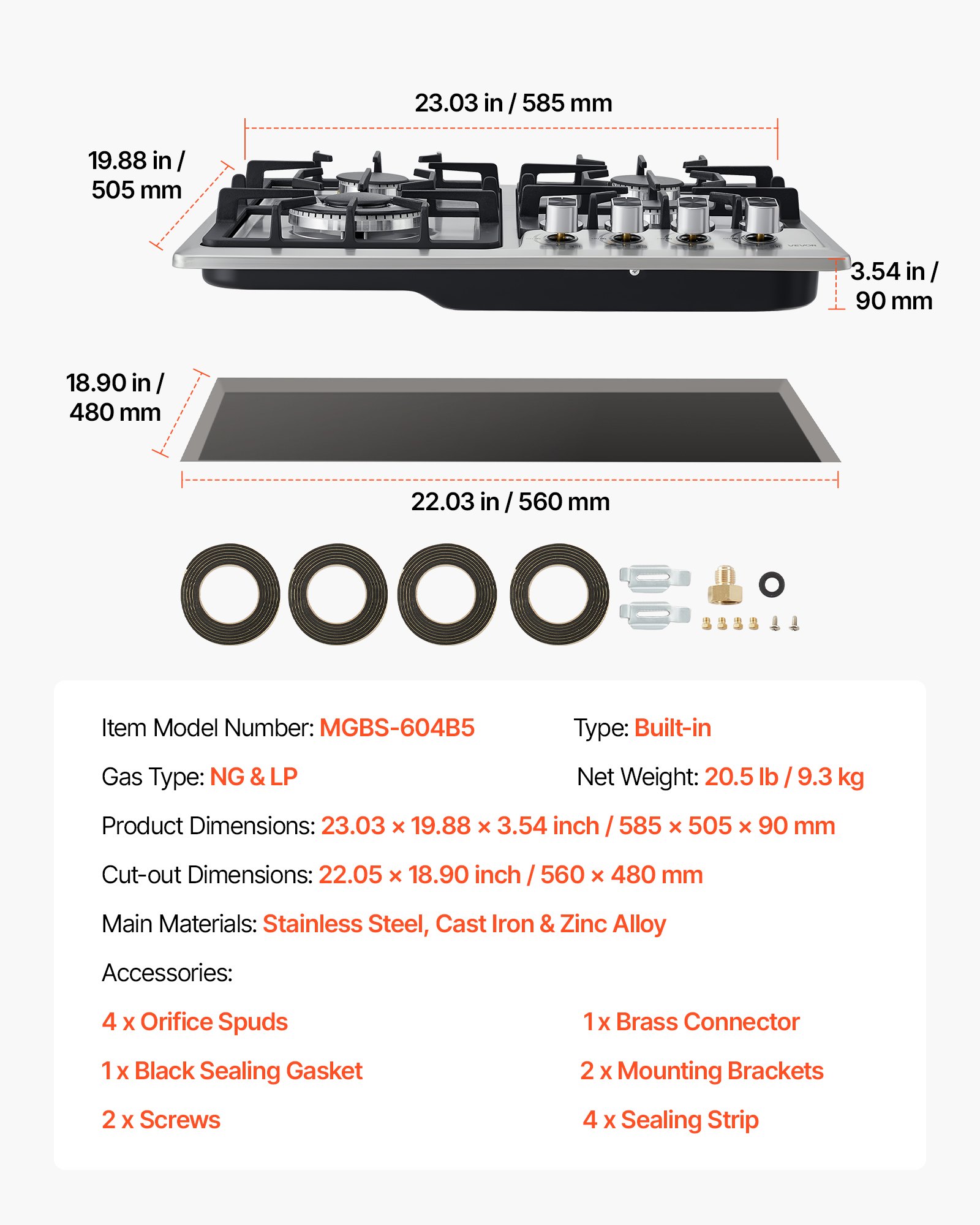 24 Inch Gas Cooktop 4 Burners Gas Stove Top, Max 27000BTU Built-in Stainless Steel Top LPG/NG Convertible Dual Fuel Stoves With Thermocouple Protection For Kitchen Apartment Rvs$157.99View on Mallflare
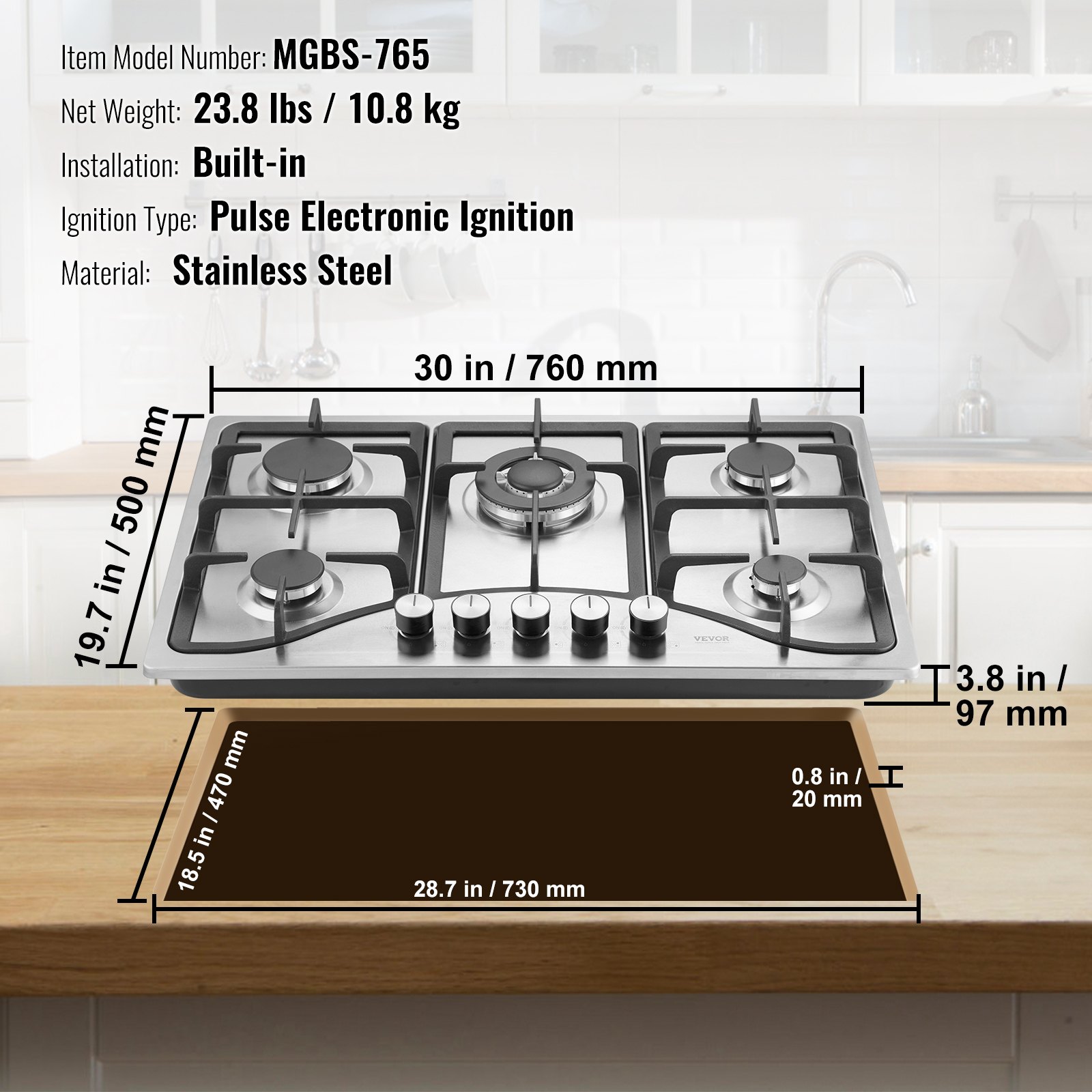 Gas Cooktop 30 Inch, Max 12250BTU 5 Burners Built-in Stainless Steel Gas Stove Top, LPG NG Convertible Dual Fuel Natural Gas Hob With Thermocouple Protection$198.99View on Mallflare
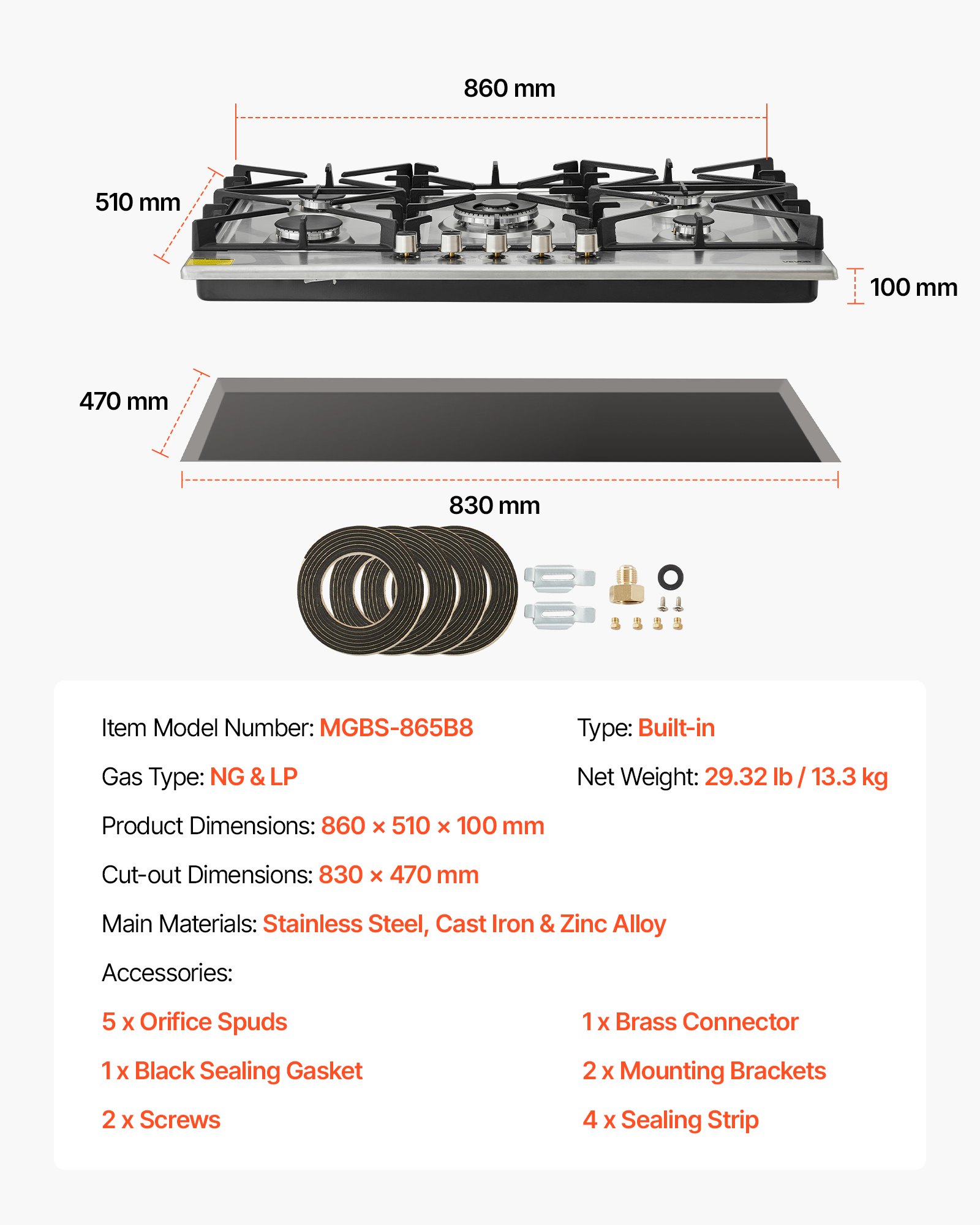 36 Inch Gas Cooktop 5 Burners Gas Stove Top, Max 38300BTU Built-in Stainless Steel Top LPG/NG Convertible Dual Fuel Stoves With SABAF Dual-Ring Burner For Kitchen Apartment Rvs$239.99View on Mallflare
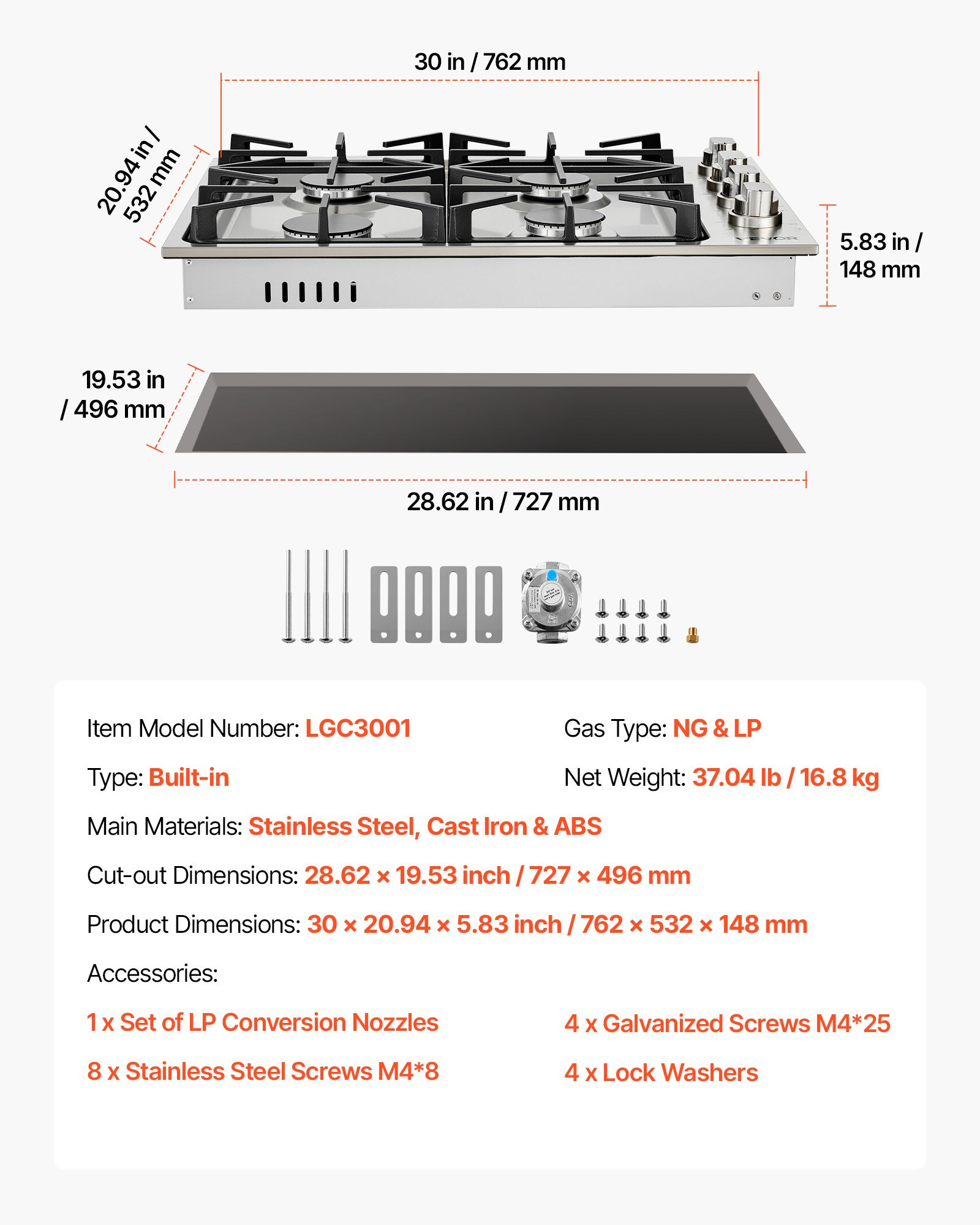 Gas Cooktop, 30 Inch 4 Burners Gas Stove Top, Max 48000BTU Built-in Stainless Steel Top LPG/NG Convertible Dual Fuel Stoves With Sealed Burner For Sear, Stew, Boil, Stir-Fry$312.99View on Mallflare
Highlights
- Downdraft capture is rated in CFM: 300–600 CFM handles everyday searing and boiling; wok burners above 18,000 BTU demand 600+ CFM or a telescoping riser to avoid smoke spillover.
- Most downdraft gas ranges use sealed or semi-sealed burners with 15,000–18,000 BTU power burners and 5,000–9,000 BTU simmer burners; open-burner designs are easier to clean but less wind-resistant at the downdraft inlet.
- Ducting must be 3¼"×10" rectangular or 6"–8" round, routed through the floor or rear wall to an exterior cap; recirculating downdraft kits exist but rely on charcoal filters and underperform on grease and moisture.
- Downdraft modules add 6–10 inches of rear counter depth and require a cutout and cabinet clearance that standard slide-in ranges do not; professional-style dual-fuel downdraft ranges cost significantly more than gas-only models.
Best use cases
- Best fit: kitchen islands or peninsulas with no overhead hood path and a floor or rear-wall duct route; pick a 30-inch gas downdraft range with 500+ CFM and a telescoping riser for daily searing.
- Best fit: remodeling where a hood would block a window or open sightline; choose a downdraft cooktop module paired with a separate wall oven rather than a full range to keep counter depth.
- Wrong fit: high-heat wok cooking, large crawfish boils, or frequent 20,000+ BTU burner use—downdraft inlets sit below the pan and lose capture; a 600–900 CFM overhead hood is the correct choice.
- Wrong fit: apartments or rentals with no exterior duct route and no tolerance for charcoal-filter maintenance; choose a recirculating hood or accept reduced grease capture.
Buying tips
- Match CFM to burner output: total the BTU of the burners you use simultaneously and divide by 100; a 60,000 BTU combined load needs roughly 600 CFM minimum for downdraft, plus 10% per elbow in the duct run.
- Verify duct compatibility before purchase: measure the floor-to-exterior path and confirm 6-inch round or 3¼×10-inch rectangular duct can be run with no more than two 90-degree elbows; downdraft blowers lose 30–50% airflow on long or undersized runs.
- Choose sealed burners with continuous grates if you simmer and wipe down often; choose open burners with a removable drip tray if you char peppers and wok-cook and accept more cleaning.
- Confirm the range's cutout and rear clearance: downdraft ranges need 2–4 inches behind the cooktop for the vent box and often a 24-inch minimum cabinet depth; standard 25-inch countertops may need notching.
Specs
| Vent Capture | 300–600 CFM downdraft |
|---|---|
| Burner Output | 15,000–18,000 BTU power burners |
| Duct Standard | 6" round or 3¼×10" rectangular |
| Fuel Type | Natural gas / LP convertible |
Related searches
What to check before buying
- Measure countertop depth and rear clearance: downdraft vent boxes need 2–4 inches behind the cooktop, and the cutout must clear the cabinet's back panel or wall.
- Map the duct route to an exterior wall or roof: confirm 6-inch round or 3¼×10-inch rectangular duct with ≤2 elbows and a weatherproof exterior cap; no exterior path means recirculating only.
- Check gas supply: most downdraft gas ranges ship for natural gas and include an LP conversion kit; confirm the regulator and orifice kit match your fuel type and that a shut-off valve is within reach.
- Verify electrical: downdraft blowers and ignition need a 120V grounded outlet within cord reach; confirm the circuit is dedicated or shared only with low-draw appliances.
FAQ
Data sources: eBay / Amazon listings and product attribute feeds. Updated Nov 28, 2026.
Some links on this page are affiliate links. If you buy after clicking one, we may earn a commission at no extra cost to you. This does not change which products appear here or their order. Affiliate disclosure.