
Photos from current listings. Actual item, color, and included accessories may vary.
Glass Electric Stove Buying Guide
Glass electric stoves cover two distinct architectures: radiant (infrared heating elements under ceramic glass) and induction (magnetic coils under ceramic glass), plus portable single/double-burner countertop units. The core trade-off is cookware compatibility and power tier versus heat-up speed and efficiency—radiant works with any flat-bottom pot, while induction requires magnetic steel and delivers faster, more precise heat. Choose built-in 240V radiant or induction for full-size kitchen replacement; choose 110V portable or 12-inch built-in units only for RV, camp, or auxiliary cooking.
Median $151.99
Key takeaways
- Radiant glass tops use resistive heating elements beneath ceramic glass (typically 1200-3000W per burner at 240V) and accept any flat-bottom cookware; induction tops use magnetic coils and require ferromagnetic pans but reach boiling faster and waste less ambient heat.
- Built-in full-size cooktops are 240V (30-inch models typically 4-5 burners, 7000-9200W total); portable and 12-inch units run 110V at 1200-2000W and cannot match full-size burner output.
- Ceramic glass (glass-ceramic) is the durable cooktop surface grade; ordinary tempered glass and metal/plastic housings appear only on low-cost portable hot plates and are not drop-in replacements for built-in units.
At a glance
- Category
- Home Ranges, Ovens & Cooktops
- Last updated
- Nov 28, 2026
Current offers
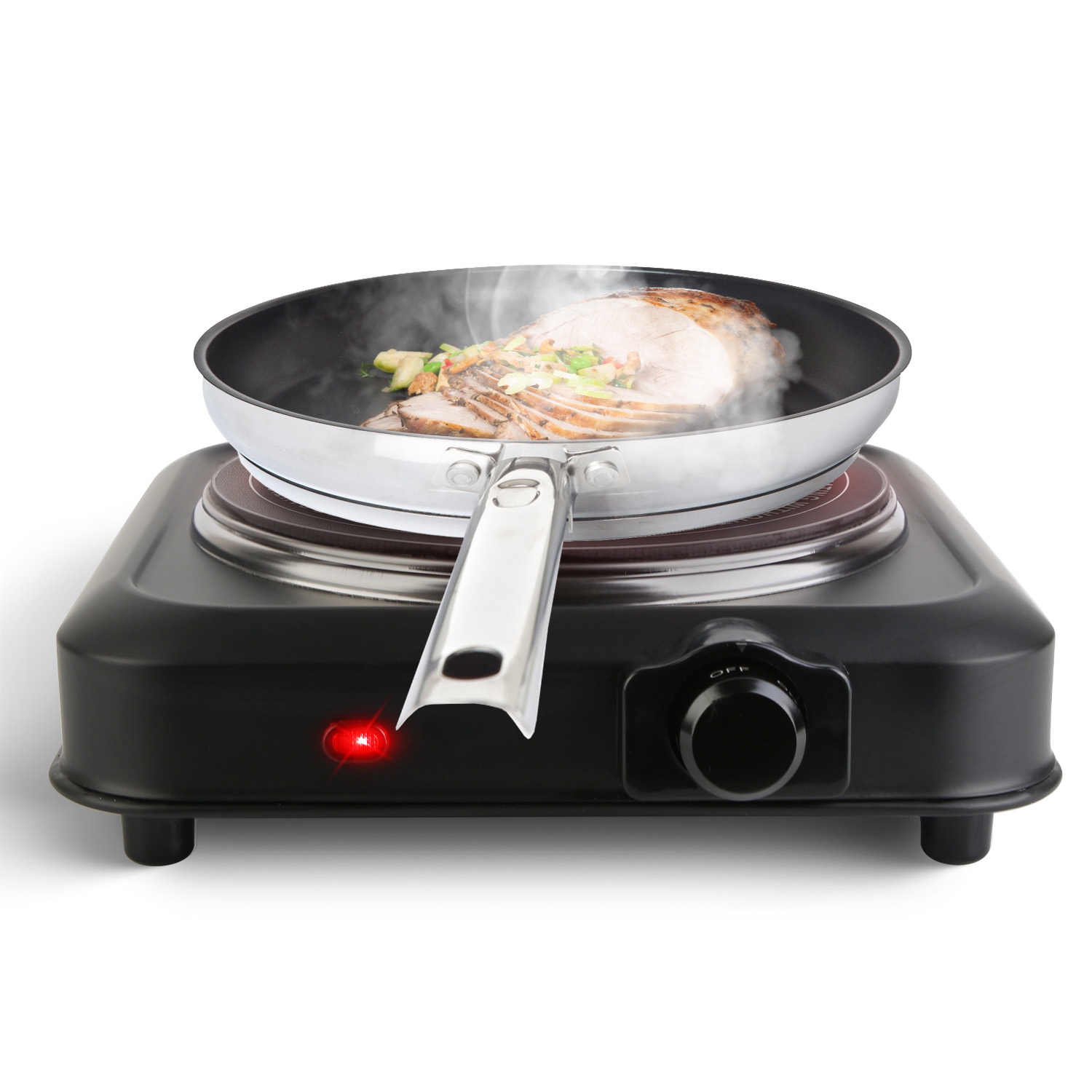 1Pc 1200W Electric Infrared Single Burner Portable Heating Hot Plate Stove Countertop RV Hotplate With 7.5in Glass Cooktop Stepless Temperature Adjustments For Home RV Camp$53.99View on Mallflare
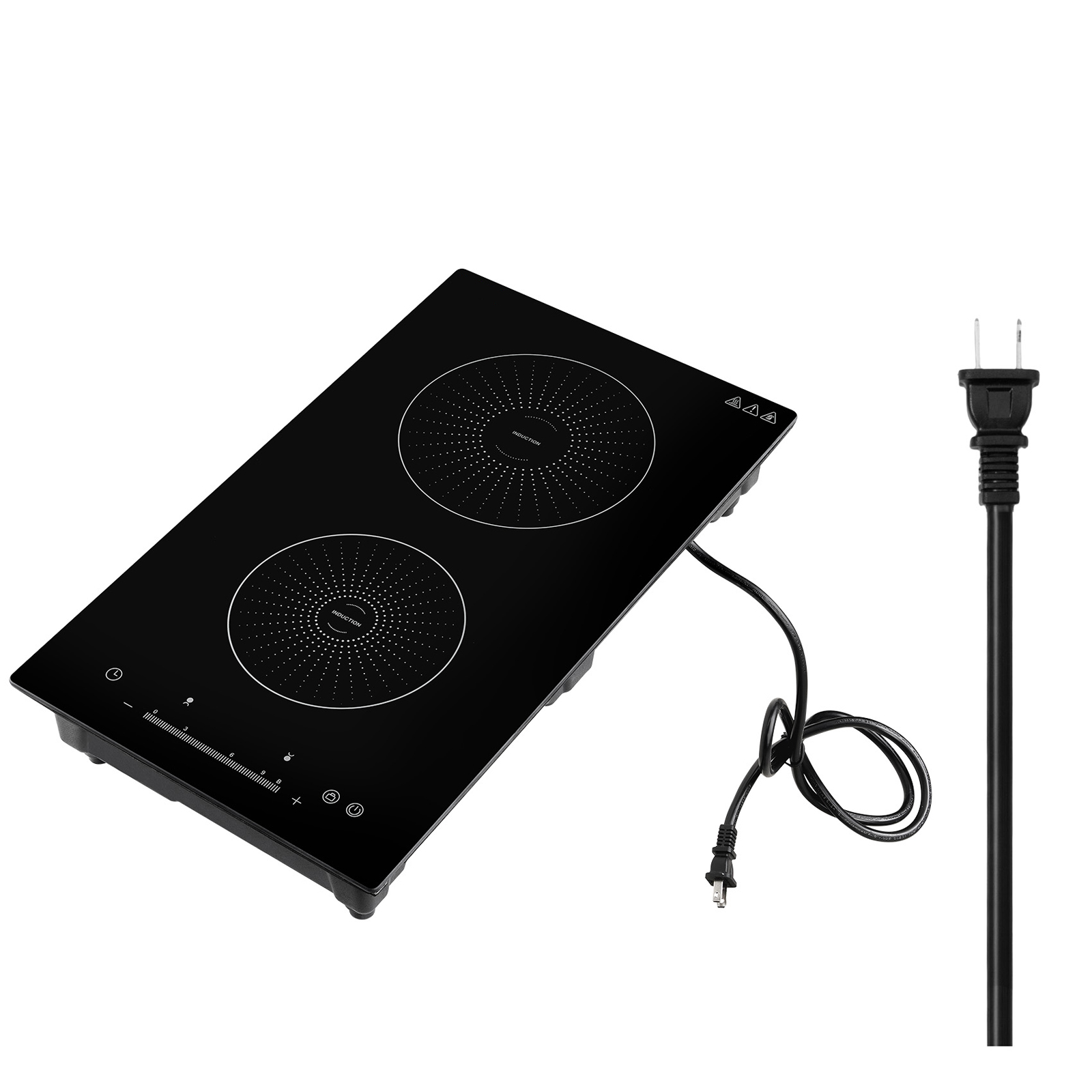 Induction Cooktop 12in 2 Burners Built-in Electric Stove 110V 1800W, Low-Power Continuous Heating, Countertop Burner, 9 Power Levels, LED Touch Screen, Ceramic Glass, And Child Lock$119.99View on Mallflare
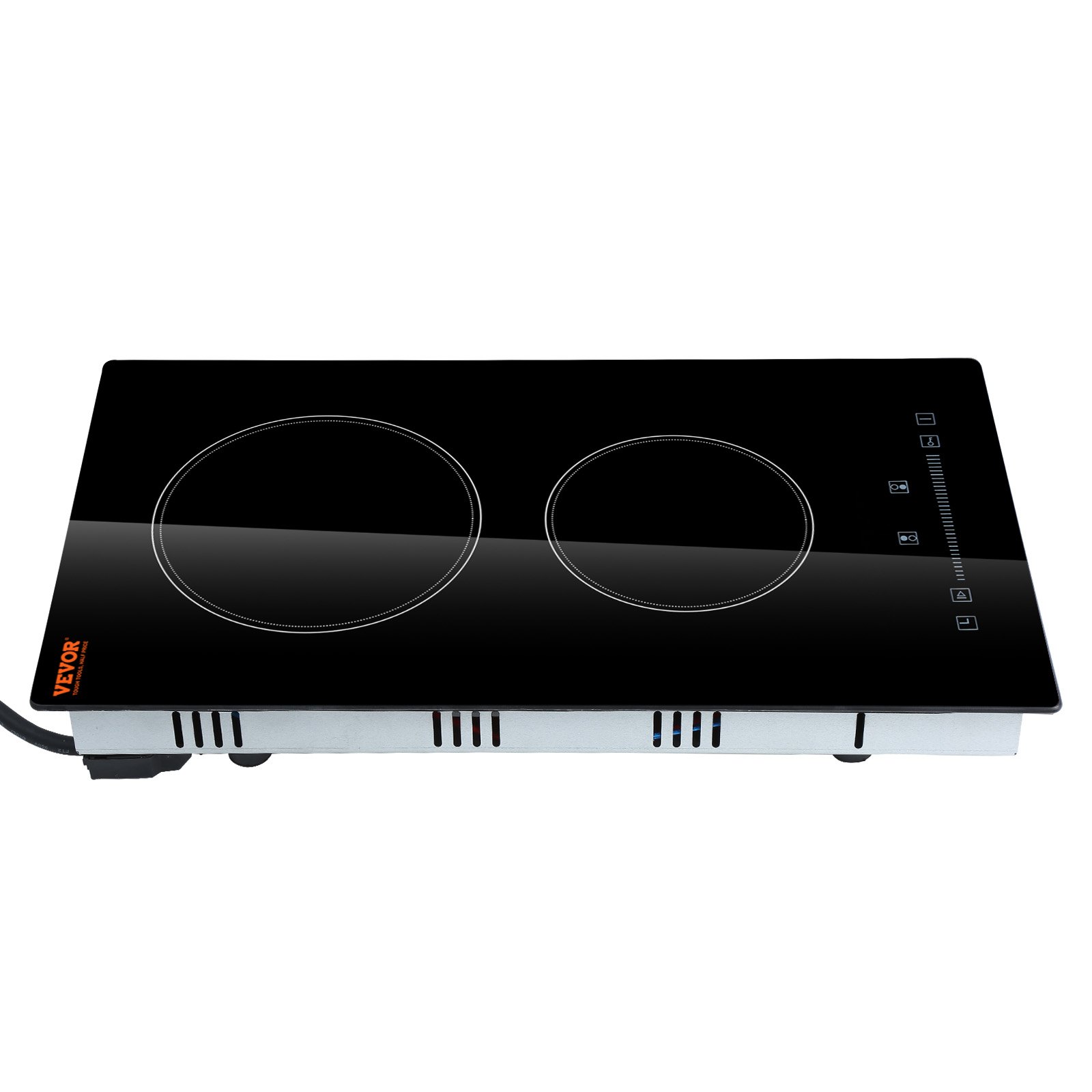 Built In Electric Stove Top, 20 X 11.6 Inch 2 Burners, 110V Glass Radiant Cooktop With Sensor Touch Control, Timer & Child Lock Included, 9 Power Levels For Simmer Steam Slow Cook Fry$120.99View on Mallflare
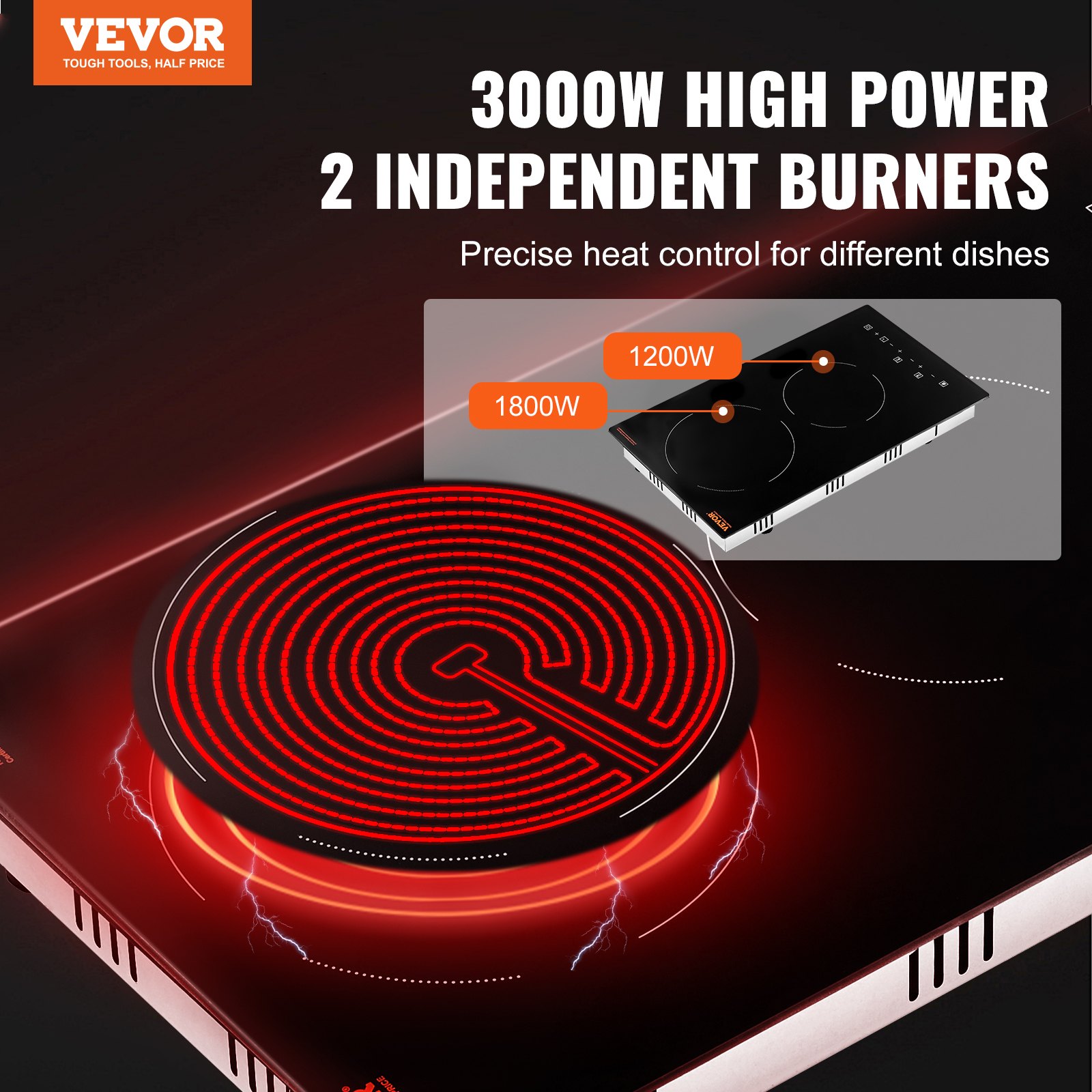 VEVOR Built In Electric Stove Top, 20 X 11.6 Inch 2 Burners, 240V Glass Radiant Cooktop With Sensor Touch Control, Timer & Child Lock Included, 9 Power Levels For Simmer Steam Slow Cook Fry$138.99View on Mallflare
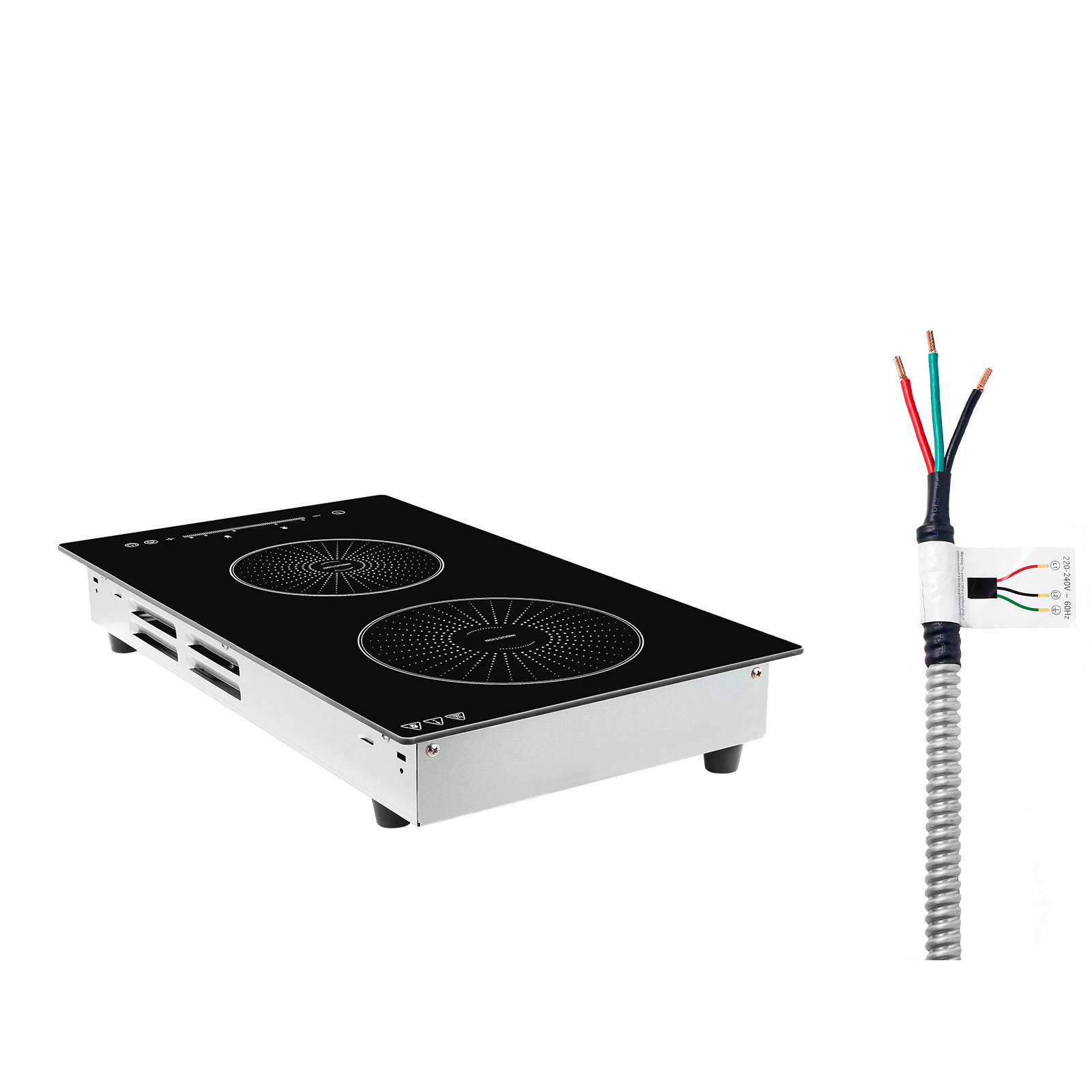 Induction Cooktop 12in 2 Burners Built-in Electric Stove 220V 3500W, Low-Power Continuous Heating, Burner For Kitchen, 9 Power Levels, LED Touch Screen, Ceramic Glass, And Child Lock$151.99View on Mallflare
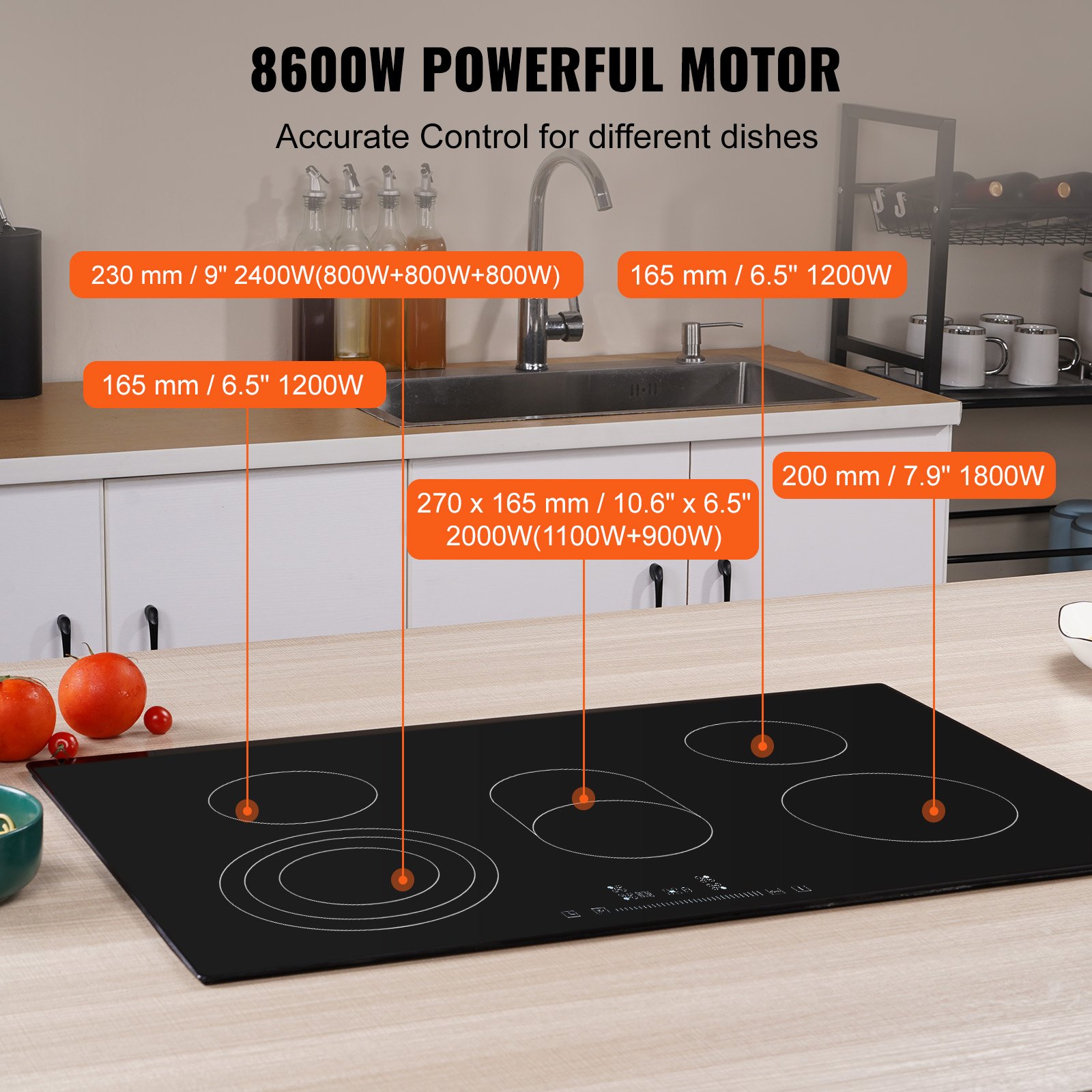 Built In Electric Stove Top, 30.3 X 20.5 Inch 5 Burners, 240V Glass Radiant Cooktop With Sensor Touch Control, Timer & Child Lock Included, 9 Power Levels For Simmer Steam Slow Cook Fry$194.99View on Mallflare
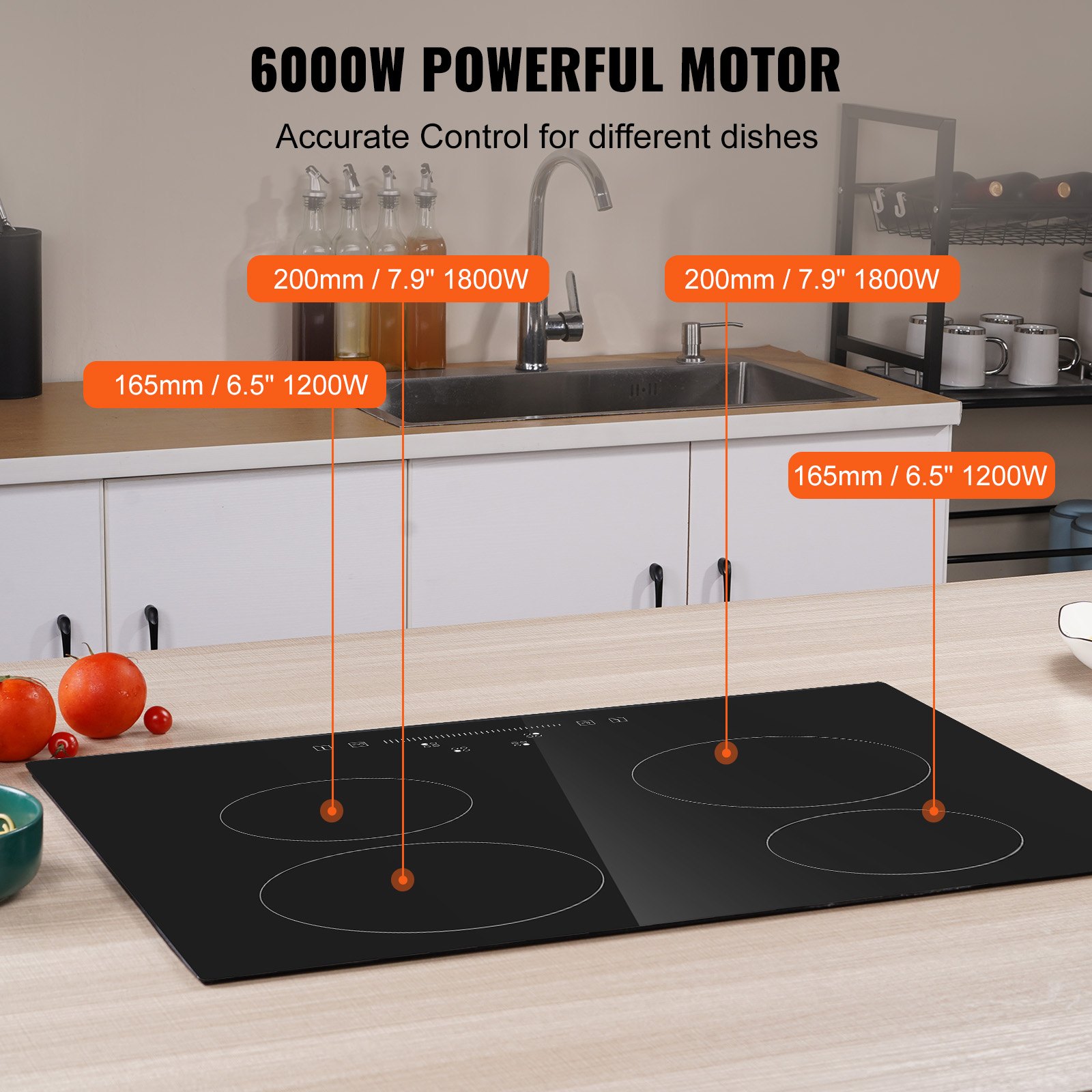 VEVOR Built In Electric Stove Top, 23.2 X 20.5 Inch 4 Burners, 240V Glass Radiant Cooktop With Sensor Touch Control, Timer & Child Lock Included, 9 Power Levels For Simmer Steam Slow Cook Fry$195.99View on Mallflare
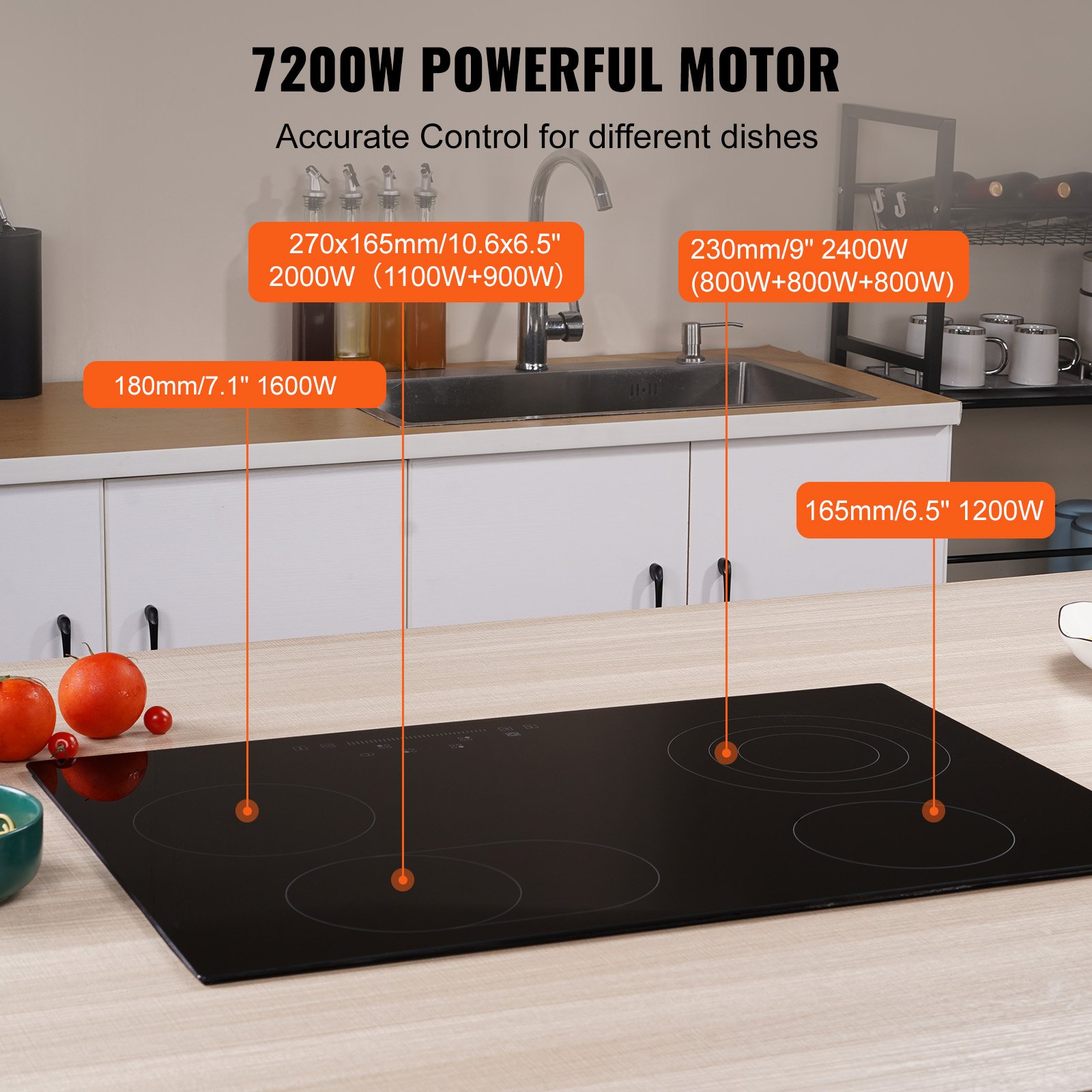 Built In Electric Stove Top, 30.3 X 20.5 Inch 4 Burners, 240V Glass Radiant Cooktop With Sensor Touch Control, Timer & Child Lock Included, 9 Power Levels For Simmer Steam Slow Cook Fry$247.99View on Mallflare
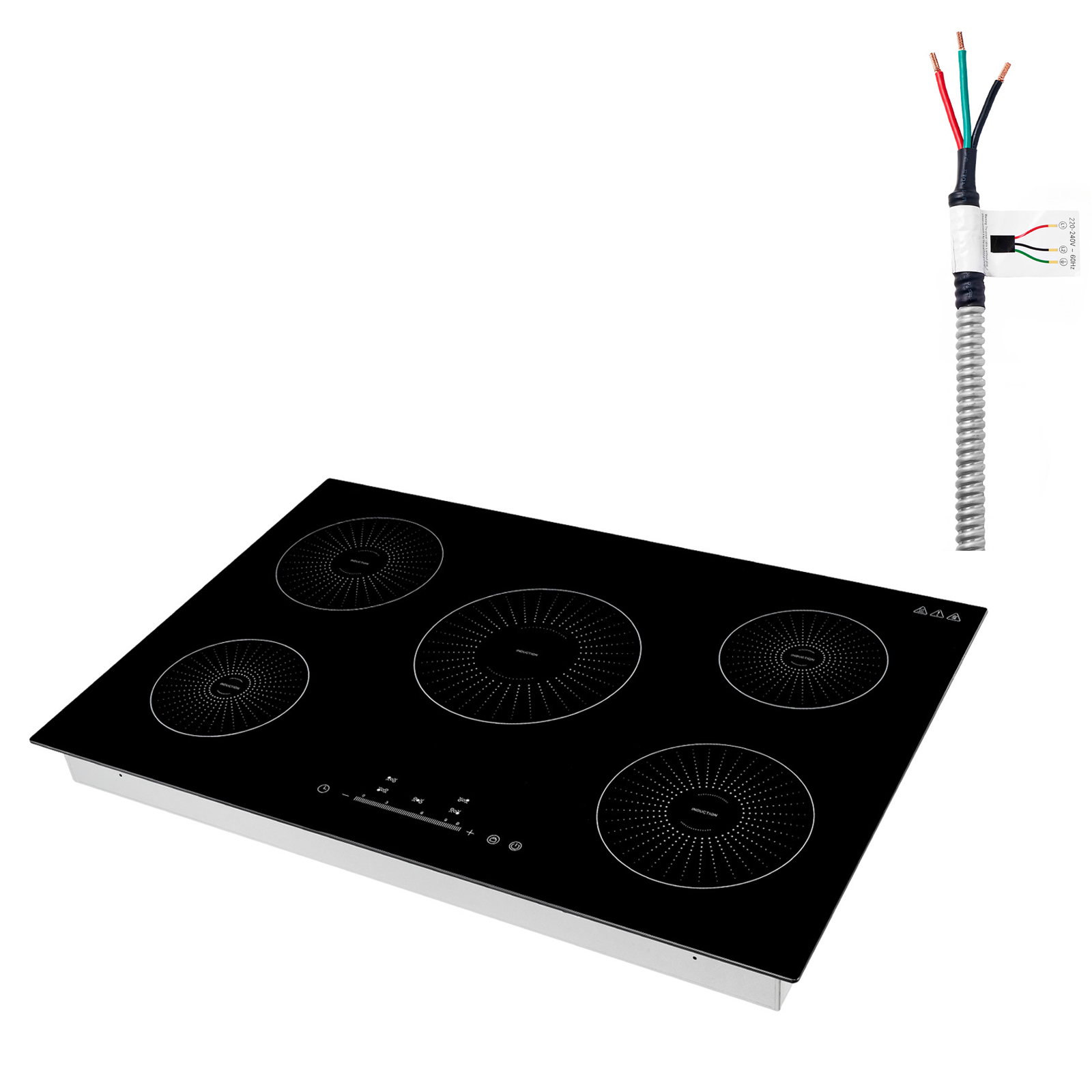 Induction Cooktop 30in 5 Burners Built-in Electric Stove 220V 9200W, Low-Power Continuous Heating, Burner For Kitchen, 9 Power Levels, LED Touch Screen, Ceramic Glass, Child Lock$261.99View on Mallflare
Highlights
- Radiant glass tops use resistive heating elements beneath ceramic glass (typically 1200-3000W per burner at 240V) and accept any flat-bottom cookware; induction tops use magnetic coils and require ferromagnetic pans but reach boiling faster and waste less ambient heat.
- Built-in full-size cooktops are 240V (30-inch models typically 4-5 burners, 7000-9200W total); portable and 12-inch units run 110V at 1200-2000W and cannot match full-size burner output.
- Ceramic glass (glass-ceramic) is the durable cooktop surface grade; ordinary tempered glass and metal/plastic housings appear only on low-cost portable hot plates and are not drop-in replacements for built-in units.
- Control architecture splits into stepless/knob (portable and some 12-inch units, 9-11 power levels) and touch/LED sensor with timer and child lock (most built-in 30-inch models).
Best use cases
- Full kitchen replacement or remodel: pick a 30-inch built-in 240V unit—radiant 4-5 burner if you use aluminum, copper, or glass cookware; induction 5-burner if you own magnetic stainless or cast iron and want faster boils.
- RV, cabin, dorm, or camping: pick a 110V portable single or double burner (1200-2000W) with a glass cooktop and stepless or knob control; skip built-in 240V models because they need a dedicated 240V circuit.
- Small apartment or ADU with limited counter space: pick a 12-inch 2-burner 110V built-in induction unit (1800W) for low-power continuous heating; skip it for high-heat wok searing or large-canning loads.
- Wrong fit: do not buy a portable hot plate as a primary kitchen stove, and do not buy an induction top without checking your existing pans with a magnet first.
Buying tips
- Verify your cookware: if a magnet sticks firmly to the pan base, it works on induction; if not, buy radiant glass or replace pans—aluminum and copper do not work on induction without a magnetic base plate.
- Match voltage to your circuit: 30-inch built-in cooktops require 240V (often 40-50A dedicated service); 110V portable and 12-inch units plug into standard outlets but cap at 1800-2000W total.
- Size the cutout, not just the glass: a 30-inch cooktop typically needs a roughly 29-inch-wide cutout and 20-21 inch depth; measure the existing cutout and clearance to the wall before ordering.
- Choose control type by use: knob/stepless controls survive greasy hands and power surges better on portable units; touch sensor with child lock and timer suits built-in family kitchens.
Specs
| Heating Type | Radiant vs Induction vs Infrared |
|---|---|
| Voltage / Power | 110V 1200-2000W / 240V 7000-9200W |
| Cooktop Surface | Ceramic glass vs tempered glass |
| Burner Count | 1-2 portable / 4-5 built-in |
Related searches
What to check before buying
- Measure the counter cutout width, depth, and clearance to side walls and overhead cabinets; confirm the unit's cutout spec matches before purchase.
- Confirm your electrical service: 240V dedicated circuit for 30-inch built-in models, standard 110V outlet for portable and 12-inch units.
- Test your cookware with a magnet for induction; inventory pan base diameters against burner ring sizes (small burners suit 6-7 inch bases).
- Check ventilation and countertop material: glass cooktops need clearance from combustible surfaces and should not be installed over a dishwasher without a heat barrier.
FAQ
Data sources: eBay / Amazon listings and product attribute feeds. Updated Nov 28, 2026.
Some links on this page are affiliate links. If you buy after clicking one, we may earn a commission at no extra cost to you. This does not change which products appear here or their order. Affiliate disclosure.