
Photos from current listings. Actual item, color, and included accessories may vary.
Portable Gas Stove Buying Guide
Portable gas stoves are compact, freestanding single- or dual-burner cooking appliances designed for camping, tailgating, balcony cooking, and emergency backup. The core trade-off is between burner output (BTU) and fuel efficiency versus build durability and wind resistance: high-output brass burners with sturdy pot supports last, while thin stamped-steel budget models warp and rust quickly. Choose a stove with at least 10,000 BTU per burner, a built-in pressure regulator, and a CSA or equivalent safety certification; skip uncertified no-name units with plastic bodies and no thermocouple.
Median $198.99
Key takeaways
- Burner output ranges from 8,000 to 12,000 BTU per burner on standard portable models; dual-burner units typically total 20,000–24,000 BTU and require a 1 lb propane cylinder or hose adapter.
- Brass burners resist corrosion and hold flame ports cleanly; aluminum or stamped-steel burners degrade faster and clog with grease, reducing efficiency within a few seasons.
- CSA/ANSI Z21.72 certification and a built-in thermocouple or flame-failure safety device are the key safety differentiators on quality portable stoves.
At a glance
- Category
- Home Ranges, Ovens & Cooktops
- Last updated
- Nov 28, 2026
Current offers
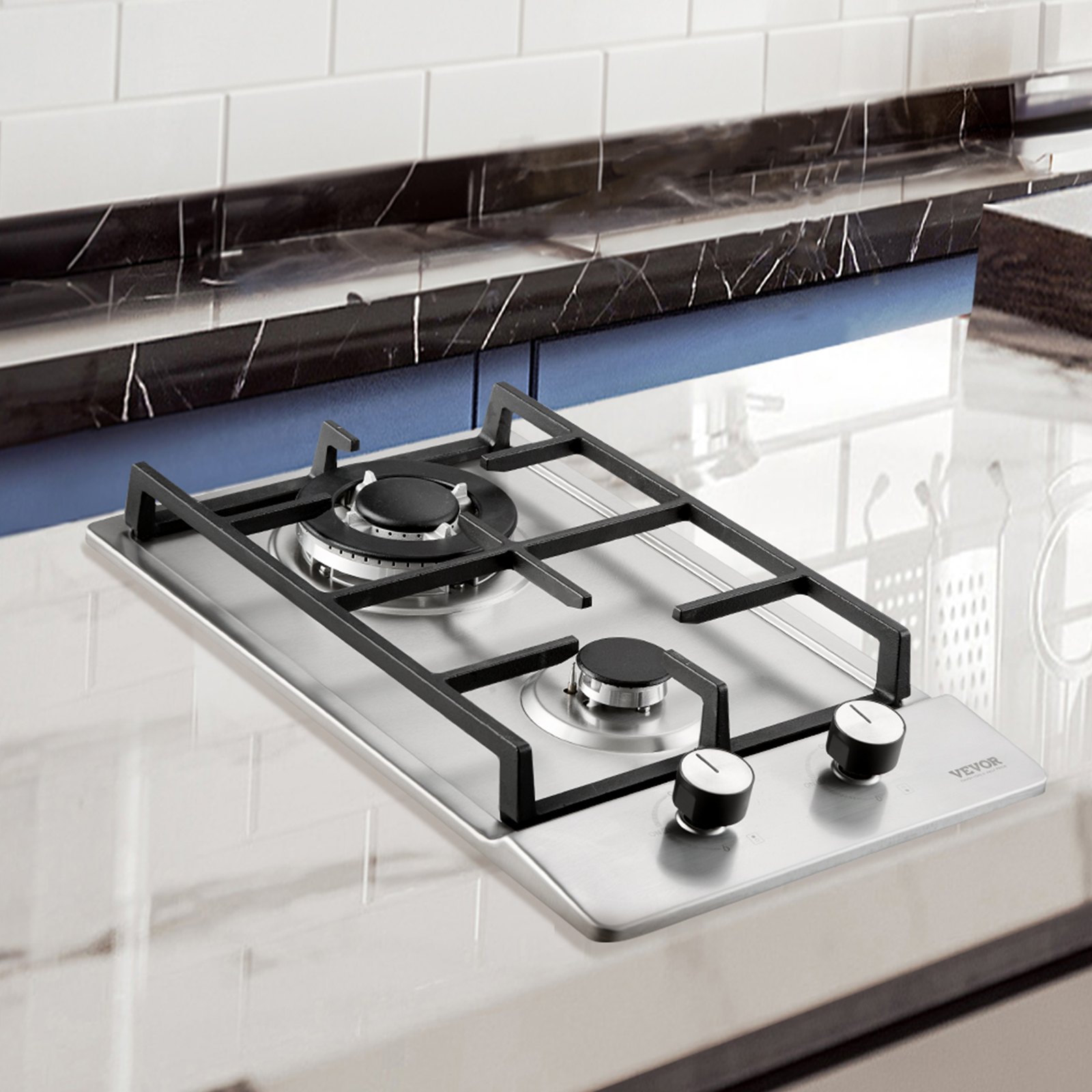 Gas Cooktop 12 Inch, Max 12250BTU 2 Burners Built-in Stainless Steel Gas Stove Top, LPG NG Convertible Dual Fuel Natural Gas Hob With Thermocouple Protection$93.99View on Mallflare
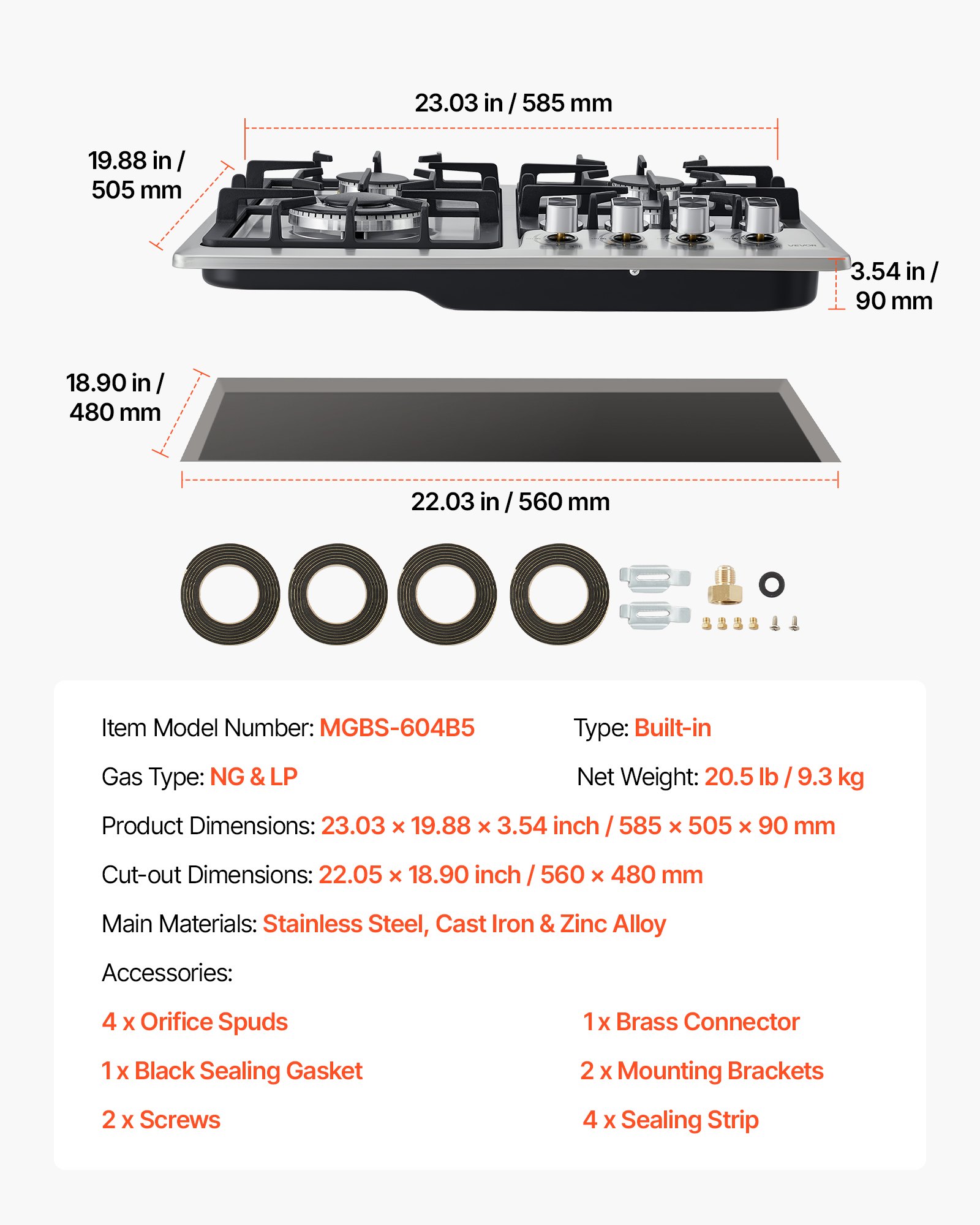 24 Inch Gas Cooktop 4 Burners Gas Stove Top, Max 27000BTU Built-in Stainless Steel Top LPG/NG Convertible Dual Fuel Stoves With Thermocouple Protection For Kitchen Apartment Rvs$157.99View on Mallflare
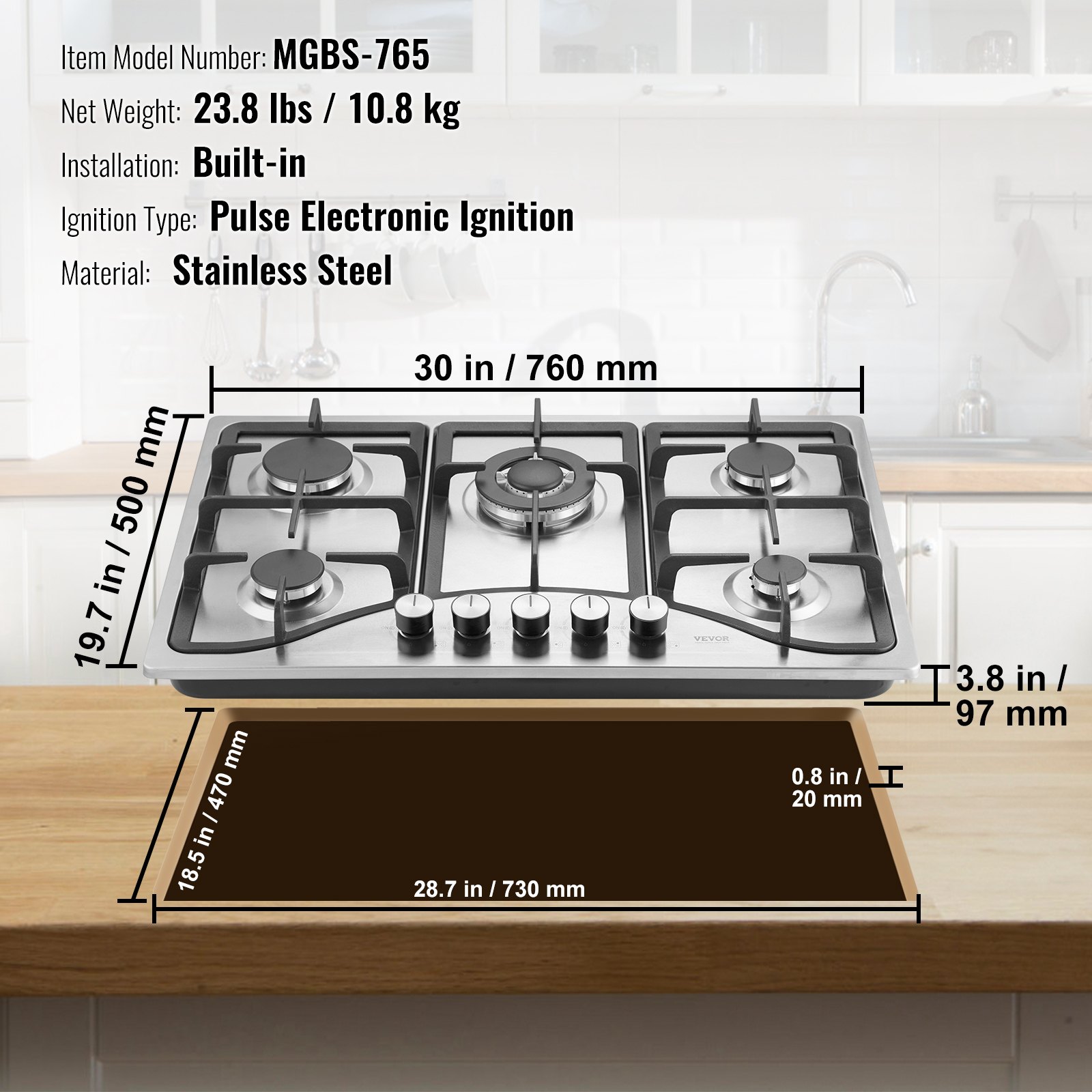 Gas Cooktop 30 Inch, Max 12250BTU 5 Burners Built-in Stainless Steel Gas Stove Top, LPG NG Convertible Dual Fuel Natural Gas Hob With Thermocouple Protection$198.99View on Mallflare
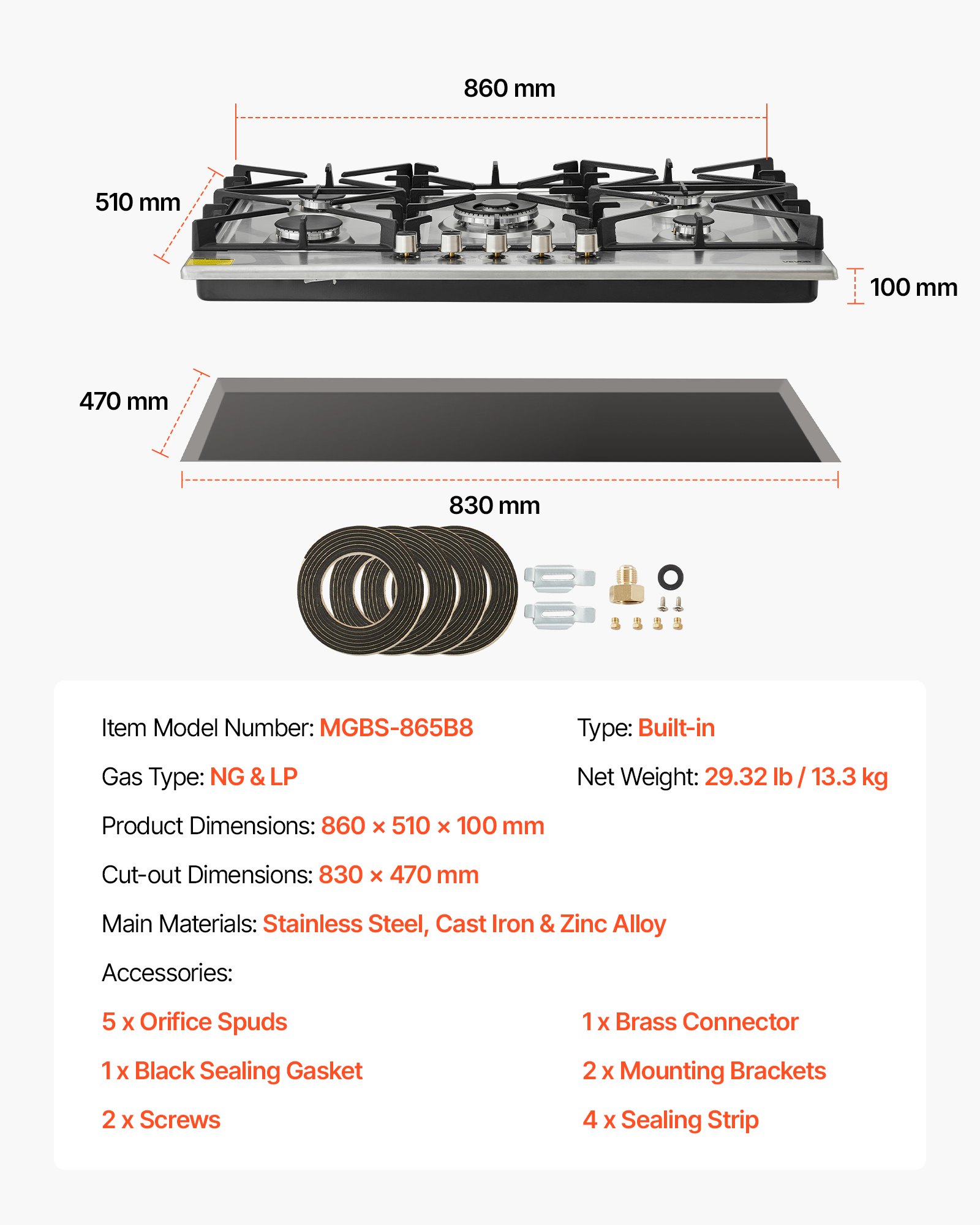 36 Inch Gas Cooktop 5 Burners Gas Stove Top, Max 38300BTU Built-in Stainless Steel Top LPG/NG Convertible Dual Fuel Stoves With SABAF Dual-Ring Burner For Kitchen Apartment Rvs$239.99View on Mallflare
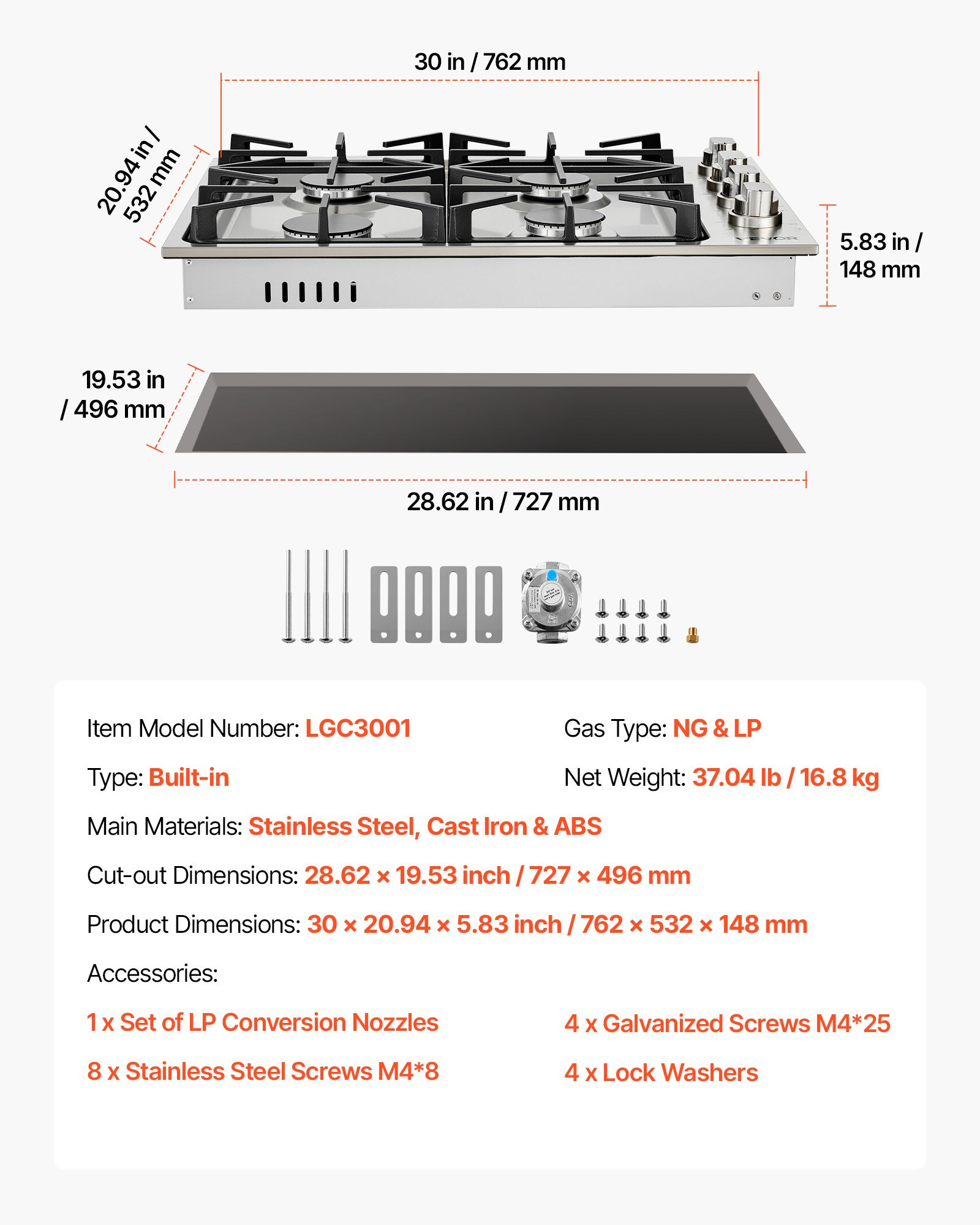 Gas Cooktop, 30 Inch 4 Burners Gas Stove Top, Max 48000BTU Built-in Stainless Steel Top LPG/NG Convertible Dual Fuel Stoves With Sealed Burner For Sear, Stew, Boil, Stir-Fry$312.99View on Mallflare
Highlights
- Burner output ranges from 8,000 to 12,000 BTU per burner on standard portable models; dual-burner units typically total 20,000–24,000 BTU and require a 1 lb propane cylinder or hose adapter.
- Brass burners resist corrosion and hold flame ports cleanly; aluminum or stamped-steel burners degrade faster and clog with grease, reducing efficiency within a few seasons.
- CSA/ANSI Z21.72 certification and a built-in thermocouple or flame-failure safety device are the key safety differentiators on quality portable stoves.
- BTU per hour and burner diameter (typically 3–4 inches) determine heat concentration; wider burners suit large pots, while narrow high-BTU burners boil faster but scorch smaller pans.
Best use cases
- Camping and tailgating: pick a single-burner 10,000+ BTU stove with piezo ignition and a wind screen; skip dual-burner suitcase stoves if you only boil water and cook one pan.
- Balcony or small-space cooking: choose a dual-burner tabletop model with a hose adapter for a 20 lb tank; avoid 1 lb disposable-cylinder-only stoves if you cook daily—fuel cost and waste add up.
- Emergency backup: select a stove that runs on both 1 lb cylinders and a hose-connected 20 lb tank, with a thermocouple safety shutoff; skip ultra-light backpacking stoves with no regulator for indoor-adjacent use.
Buying tips
- Match BTU to pot size: 10,000 BTU suits 8–10 inch pans; 12,000+ BTU with a 4-inch burner is needed for 12-inch skillets or rapid boiling of large pots.
- Check the fuel interface: stoves with a built-in regulator and a standard 1 lb cylinder thread work out of the box; for 20 lb tanks you need a hose with the correct QCC-1 or POL fitting.
- Look for a thermocouple or flame-failure device—this shuts gas off if the flame blows out, a critical safety feature on windy balconies and campsites.
- Stainless-steel or porcelain-coated drip trays outlast painted steel; avoid models with exposed plastic near the burner area, which warps and discolors with heat.
Specs
| Burner Output | 8,000–12,000 BTU per burner |
|---|---|
| Burner Material | Brass vs aluminum / steel |
| Fuel Interface | 1 lb cylinder / 20 lb hose adapter |
| Safety Certification | CSA / ANSI Z21.72 with thermocouple |
Related searches
What to check before buying
- Measure your cooking surface: most portable stoves are 14–20 inches wide and 10–14 inches deep; confirm it fits your balcony rail, table, or tailgate.
- Confirm fuel compatibility: 1 lb disposable cylinders are universal, but 20 lb tank use requires a specific hose adapter—buy the hose with the stove if you plan tank use.
- Check wind protection: a fold-out wind screen or a stove body that shields the burner improves boil times significantly in breezy conditions.
- Verify certification: look for CSA, ANSI Z21.72, or equivalent marks; uncertified stoves may lack proper regulator and thermocouple safety.
FAQ
Data sources: eBay / Amazon listings and product attribute feeds. Updated Nov 28, 2026.
Some links on this page are affiliate links. If you buy after clicking one, we may earn a commission at no extra cost to you. This does not change which products appear here or their order. Affiliate disclosure.