
Photos from current listings. Actual item, color, and included accessories may vary.
Stainless Steel Gas Stove Buying Guide
A stainless steel gas stove is a freestanding or slide-in range with a stainless-clad exterior, open or sealed gas burners, and a gas oven; the core trade-off is between thin 430-grade cosmetic stainless with low-BTU open burners and heavier 304-grade stainless with sealed dual-stack burners and convection ovens. The decision rule: buy sealed burners on a 304 stainless body with at least one 15,000-BTU power burner and a broiler-rated oven door if you cook daily; accept open burners and 430 stainless only for light-duty or rental use.
Median $198.99
Key takeaways
- Sealed burners (one-piece spill-catcher) vs open burners: sealed caps lift out for cleaning and prevent boil-overs reaching the gas manifold; open burners are cheaper but require disassembly to clean.
- Stainless grade: 304 (18/8 chromium-nickel) resists pitting and heat discoloration; 430 (chromium-only, magnetic) is thinner, cheaper, and can rust at weld seams and burner rings.
- Burner output tiers: power burner 15,000–18,000 BTU, standard 9,000–12,000 BTU, simmer 5,000 BTU or lower—total range input typically 40,000–60,000 BTU on a 30-inch body.
At a glance
- Category
- Home Ranges, Ovens & Cooktops
- Last updated
- Nov 28, 2026
Current offers
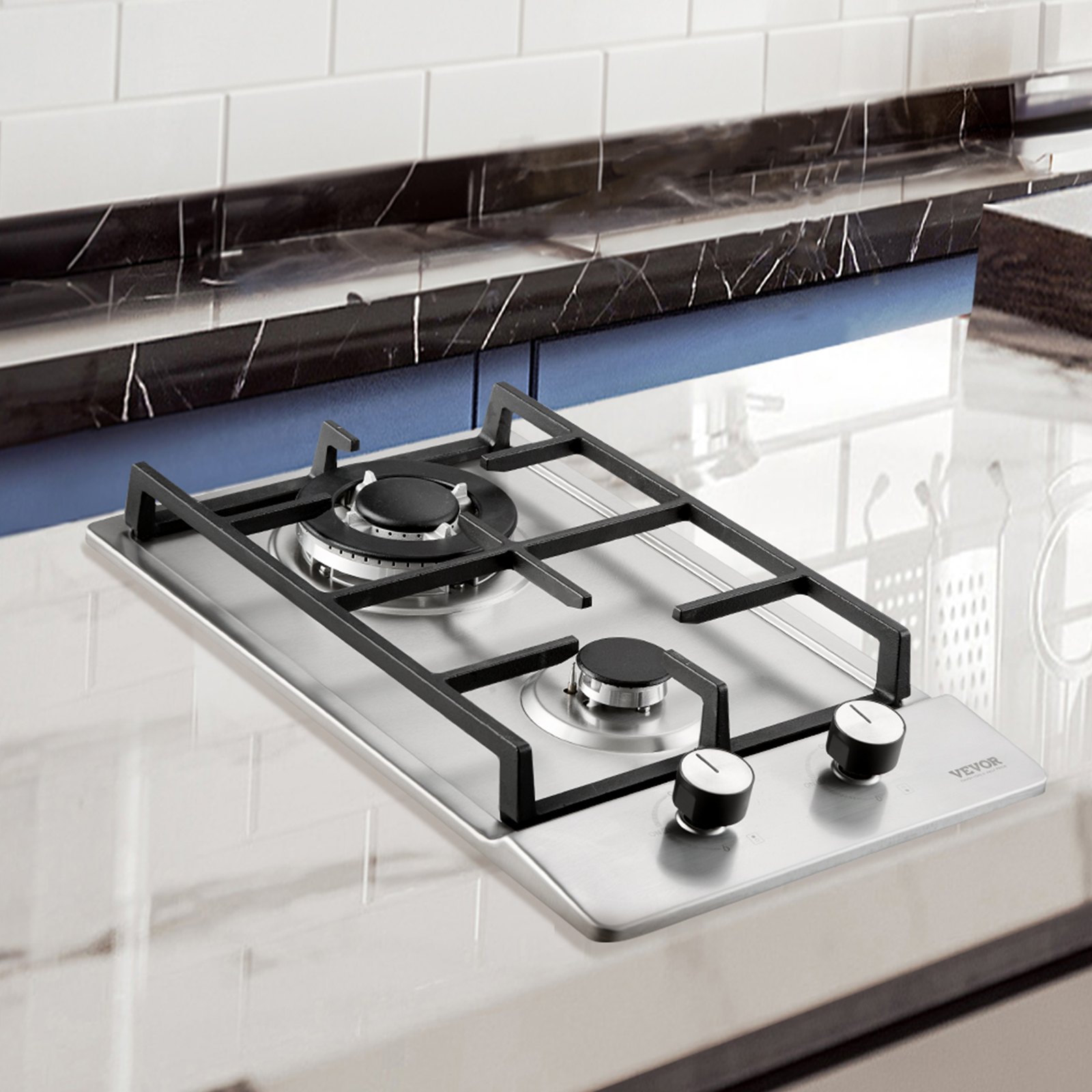 Gas Cooktop 12 Inch, Max 12250BTU 2 Burners Built-in Stainless Steel Gas Stove Top, LPG NG Convertible Dual Fuel Natural Gas Hob With Thermocouple Protection$93.99View on Mallflare
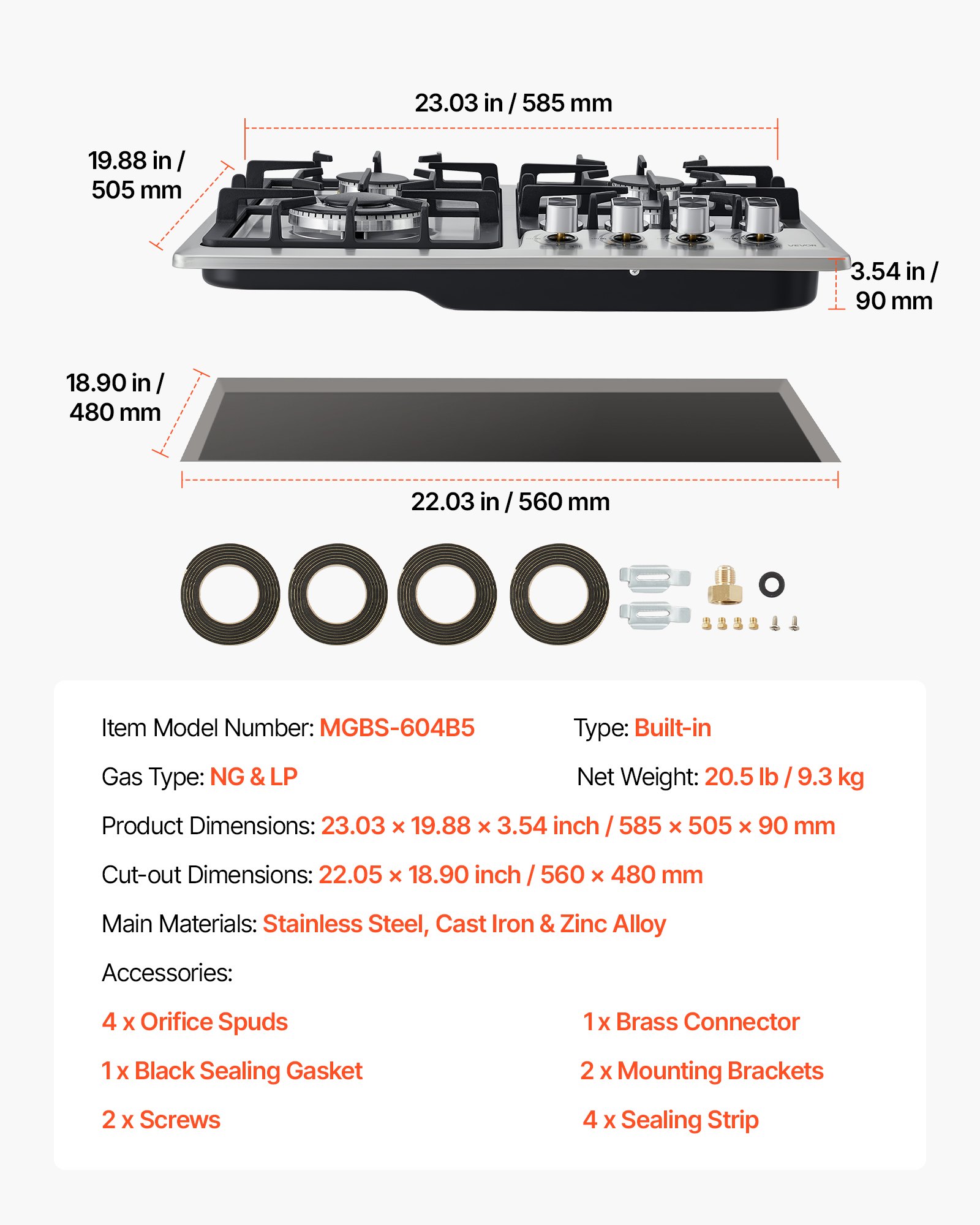 24 Inch Gas Cooktop 4 Burners Gas Stove Top, Max 27000BTU Built-in Stainless Steel Top LPG/NG Convertible Dual Fuel Stoves With Thermocouple Protection For Kitchen Apartment Rvs$157.99View on Mallflare
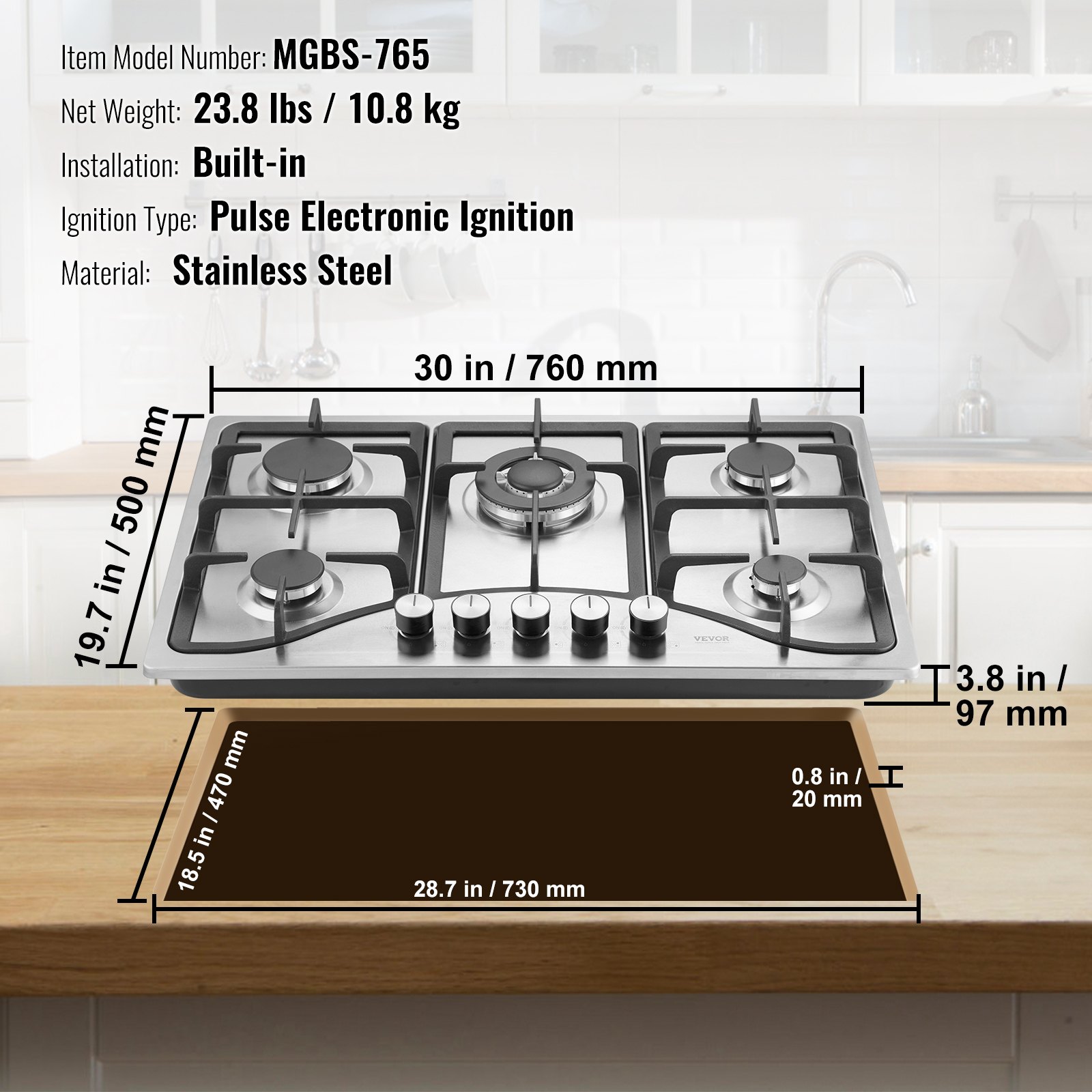 Gas Cooktop 30 Inch, Max 12250BTU 5 Burners Built-in Stainless Steel Gas Stove Top, LPG NG Convertible Dual Fuel Natural Gas Hob With Thermocouple Protection$198.99View on Mallflare
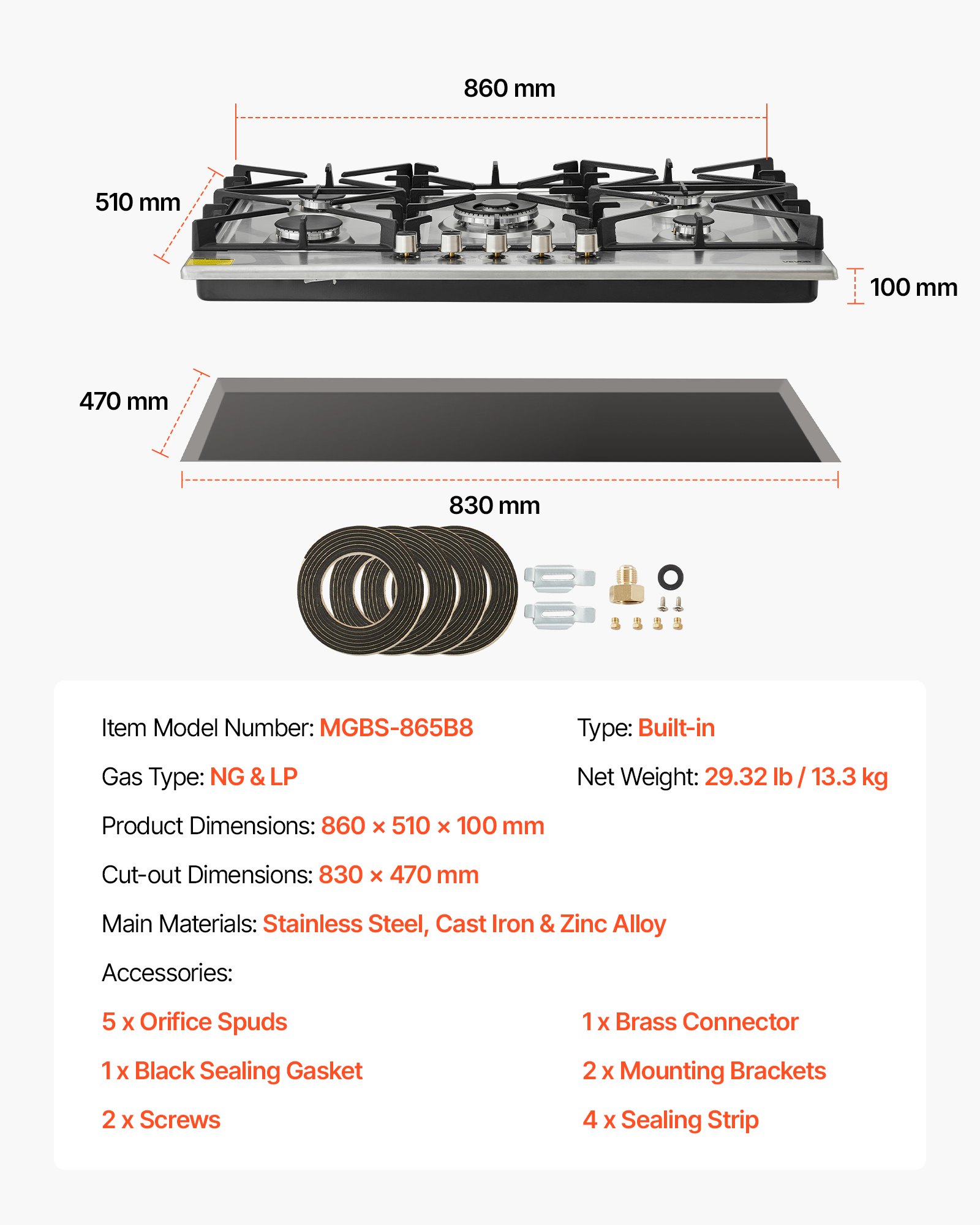 36 Inch Gas Cooktop 5 Burners Gas Stove Top, Max 38300BTU Built-in Stainless Steel Top LPG/NG Convertible Dual Fuel Stoves With SABAF Dual-Ring Burner For Kitchen Apartment Rvs$239.99View on Mallflare
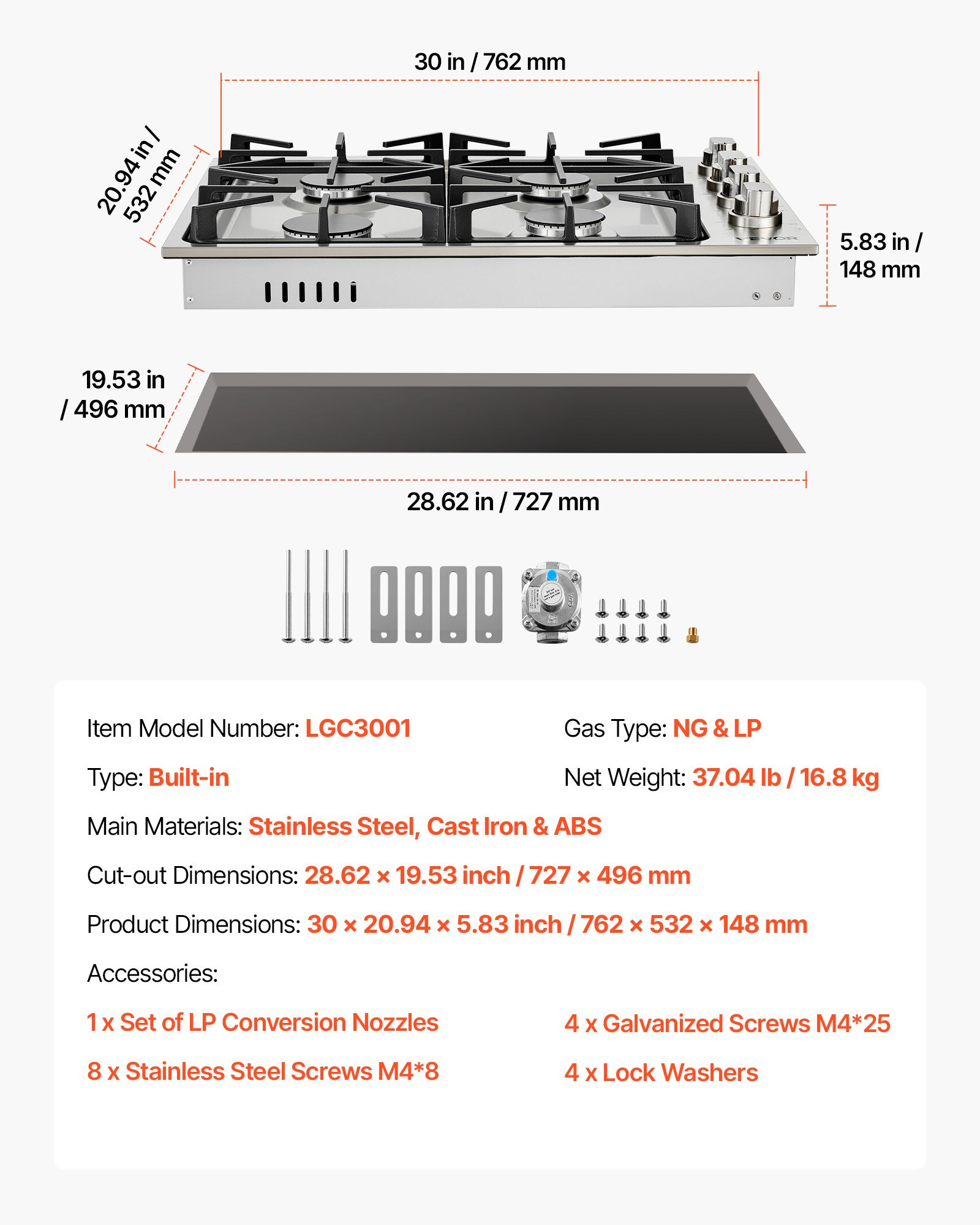 Gas Cooktop, 30 Inch 4 Burners Gas Stove Top, Max 48000BTU Built-in Stainless Steel Top LPG/NG Convertible Dual Fuel Stoves With Sealed Burner For Sear, Stew, Boil, Stir-Fry$312.99View on Mallflare
Highlights
- Sealed burners (one-piece spill-catcher) vs open burners: sealed caps lift out for cleaning and prevent boil-overs reaching the gas manifold; open burners are cheaper but require disassembly to clean.
- Stainless grade: 304 (18/8 chromium-nickel) resists pitting and heat discoloration; 430 (chromium-only, magnetic) is thinner, cheaper, and can rust at weld seams and burner rings.
- Burner output tiers: power burner 15,000–18,000 BTU, standard 9,000–12,000 BTU, simmer 5,000 BTU or lower—total range input typically 40,000–60,000 BTU on a 30-inch body.
- Oven architecture: convection (fan + third element) vs conventional radiant bake; convection cuts temperature variance to ±15°F vs ±30°F and needs no preheat bump for cookies or roasts.
Best use cases
- Best fit: 30-inch freestanding sealed-burner range with 304 stainless and convection oven for a family cooking 4–7 meals a week—skip 430-grade open-burner units; they discolor and clean poorly under daily wok or skillet use.
- Best fit: 36-inch slide-in with a 17,000–18,000-BTU power burner and low-simmer (≤3,000 BTU) for wok cooking and sauce work—skip 30-inch open-burner models if you regularly use a 14-inch wok; the burner spacing is too tight.
- Best fit: 24-inch apartment range with sealed burners and standing pilot for rentals without a 120V dedicated outlet—skip full-size 30-inch convection ranges in tight galley kitchens; door swing and clearance consume the walkway.
- Wrong fit: high-altitude homes above 5,000 ft buying a stock orifice range—skip unless the model ships with altitude conversion orifices; flame lift and yellow tips occur without re-jetting.
Buying tips
- Match burner count and spacing to your cookware: a 30-inch range fits 4–5 burners with 9–11 inch grate spacing; measure your largest skillet's base diameter—13 inches or wider needs a 36-inch range or a griddle plate.
- Check stainless grade at the door and control panel: 304 stainless is non-magnetic and will not hold a fridge magnet; if a magnet sticks, it is 430-grade cosmetic steel—acceptable on side panels, not on the cooktop surface.
- Verify gas type and conversion: natural gas (7-inch water column) vs liquid propane (11-inch WC) requires different orifices; buy only ranges that include LP conversion jets or state the kit part number—do not assume field conversion is free.
- Size the electrical circuit for ignition and convection: spark-ignition ranges need a 120V/15A grounded outlet within 4 feet of the range's right or left rear; convection fan and oven light add draw—do not share the circuit with a microwave.
Specs
| Stainless Grade | 304 (18/8) vs 430 (magnetic) |
|---|---|
| Burner Type | Sealed one-piece vs open |
| Power Burner | 15,000–18,000 BTU |
| Oven Convection | Fan-forced vs radiant bake |
Related searches
What to check before buying
- Measure the range opening (width, depth, height) and the door swing: standard freestanding is 30 in W × 25–27 in D × 36 in H; slide-in models need a flush counter and a cutout within 1/8 inch.
- Confirm the gas supply stub location and shut-off valve: the connector must reach a 1/2-inch NPT male fitting with a new CSA-certified flexible connector—never reuse an old connector or omit the sediment trap.
- Verify the electrical outlet: a 120V grounded receptacle is required for spark ignition; if none exists behind the range, budget for an electrician or choose a standing-pilot model.
- Check the ventilation: a gas range needs a hood vented to the exterior at 100–400 CFM depending on burner total; recirculating filters do not remove carbon monoxide or moisture.
FAQ
Data sources: eBay / Amazon listings and product attribute feeds. Updated Nov 28, 2026.
Some links on this page are affiliate links. If you buy after clicking one, we may earn a commission at no extra cost to you. This does not change which products appear here or their order. Affiliate disclosure.