
Photos from current listings. Actual item, color, and included accessories may vary.
Chest Freezer Buying Guide
A chest freezer is a top-opening, single-compartment appliance that freezes and stores bulk food, prized for efficient cold retention and large capacity per footprint. The core trade-off is between basic manual-defrost units, which are cheaper and more energy-stable but require periodic ice removal, and frost-free or advanced-hinge models that add convenience at higher cost and complexity. Choose a manual-defrost chest freezer if you want maximum storage per dollar and stable long-term efficiency, and only step up to frost-free if convenience outweighs cost and you accept slightly higher energy use.
Median $325.49
Key takeaways
- Manual-defrost chest freezers use static cooling coils; ice builds on walls and must be removed 1–2 times yearly, but cold air stays trapped when the lid opens.
- Frost-free (auto-defrost) chest freezers circulate air and prevent ice buildup, yet the fan and heater cycle add energy use and can dry out unwrapped food.
- Most home chest freezers are 115V/60Hz with a standard 3-prong plug; garage-ready models are rated for ambient temperatures as low as 0°F to 10°F.
At a glance
- Category
- Home Refrigerators, Freezers & Wine Coolers
- Last updated
- Nov 28, 2026
Current offers
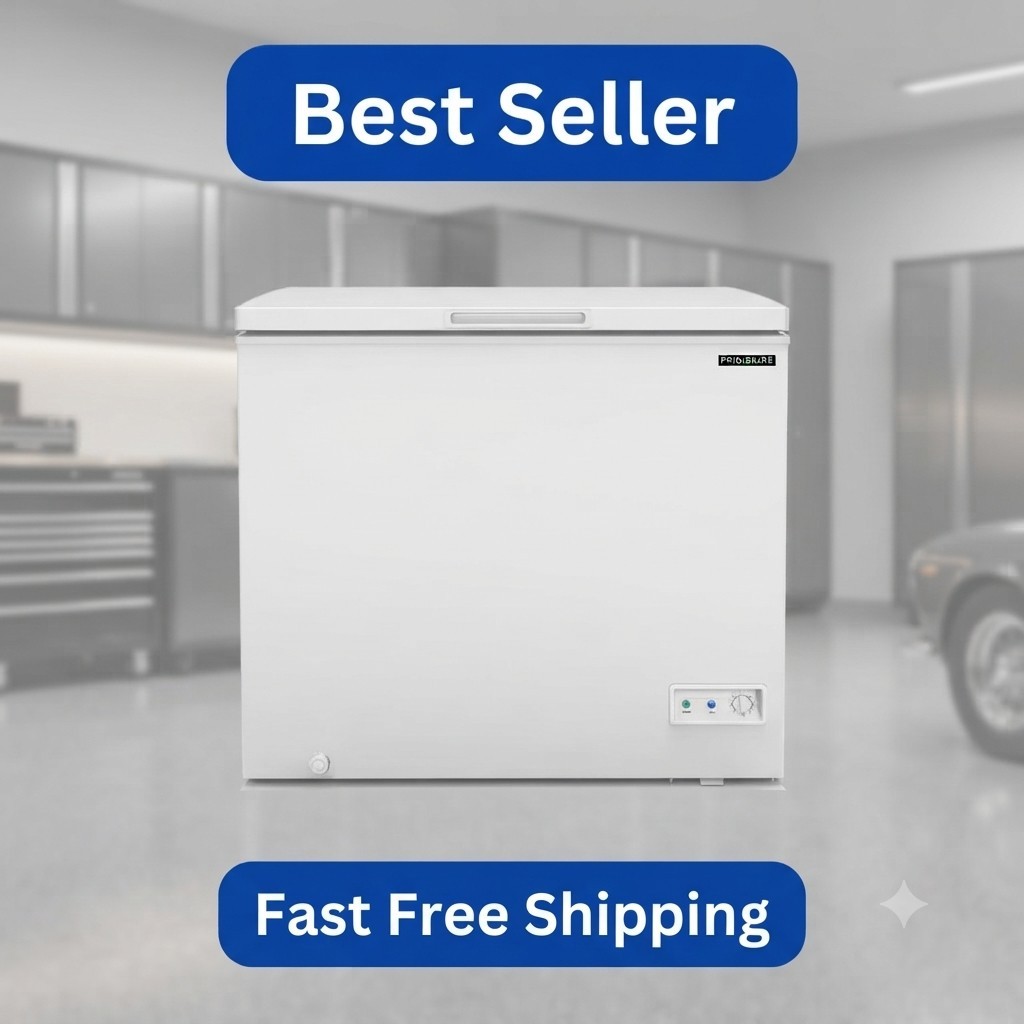 7.0 Cu Ft Chest Freezer White Garage Ready Deep Freezer Frozen Food Storage$279.99Last checked Nov 18, 2026View on eBay
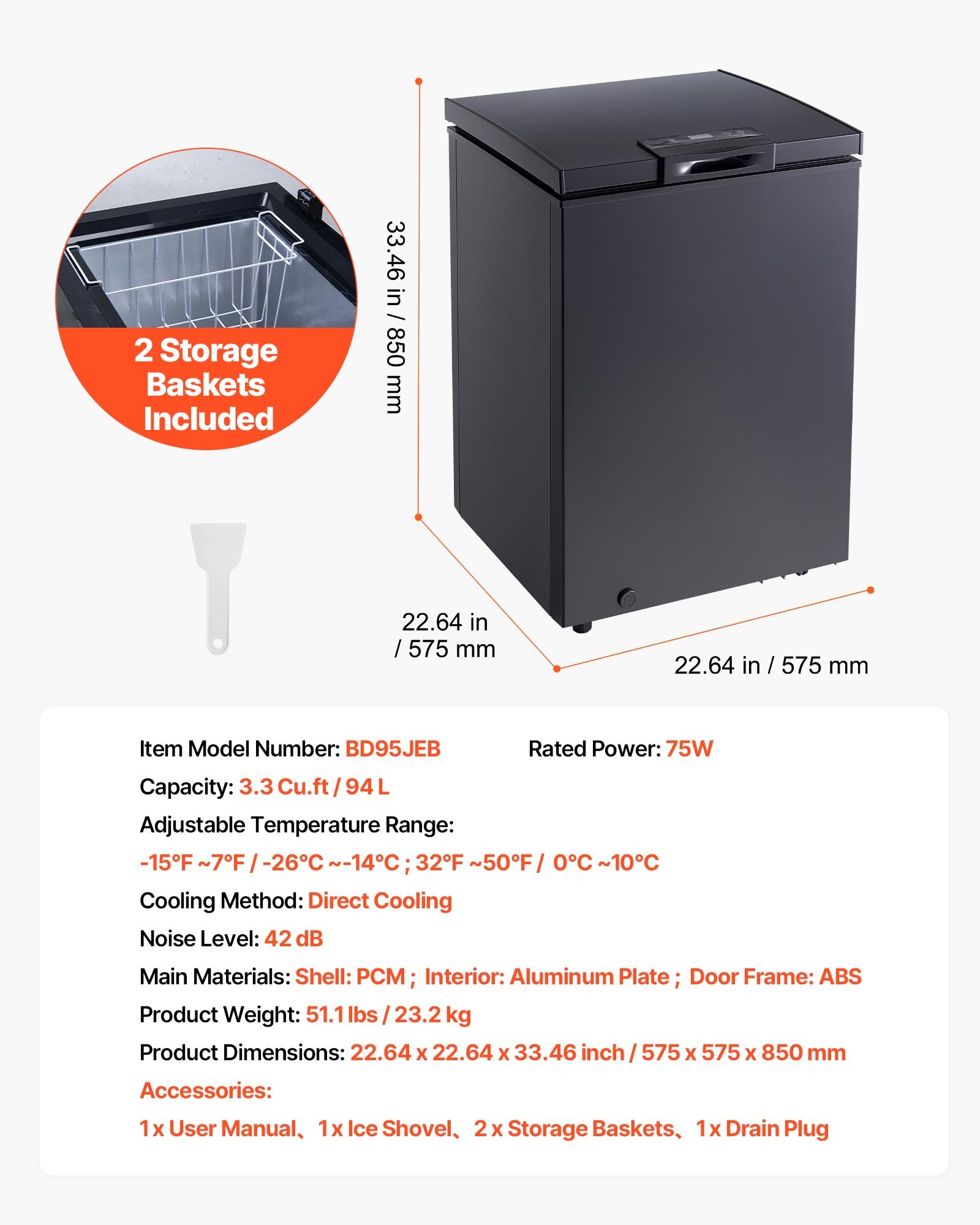 Chest Freezer, 3.3 Cu.ft Compact Deep Free Standing Top Open Door Freezers With 2 Removable Baskets & Adjustable Thermostat - Energy Saving, Low Noise & Garage Ready, Black$238.99View on Mallflare
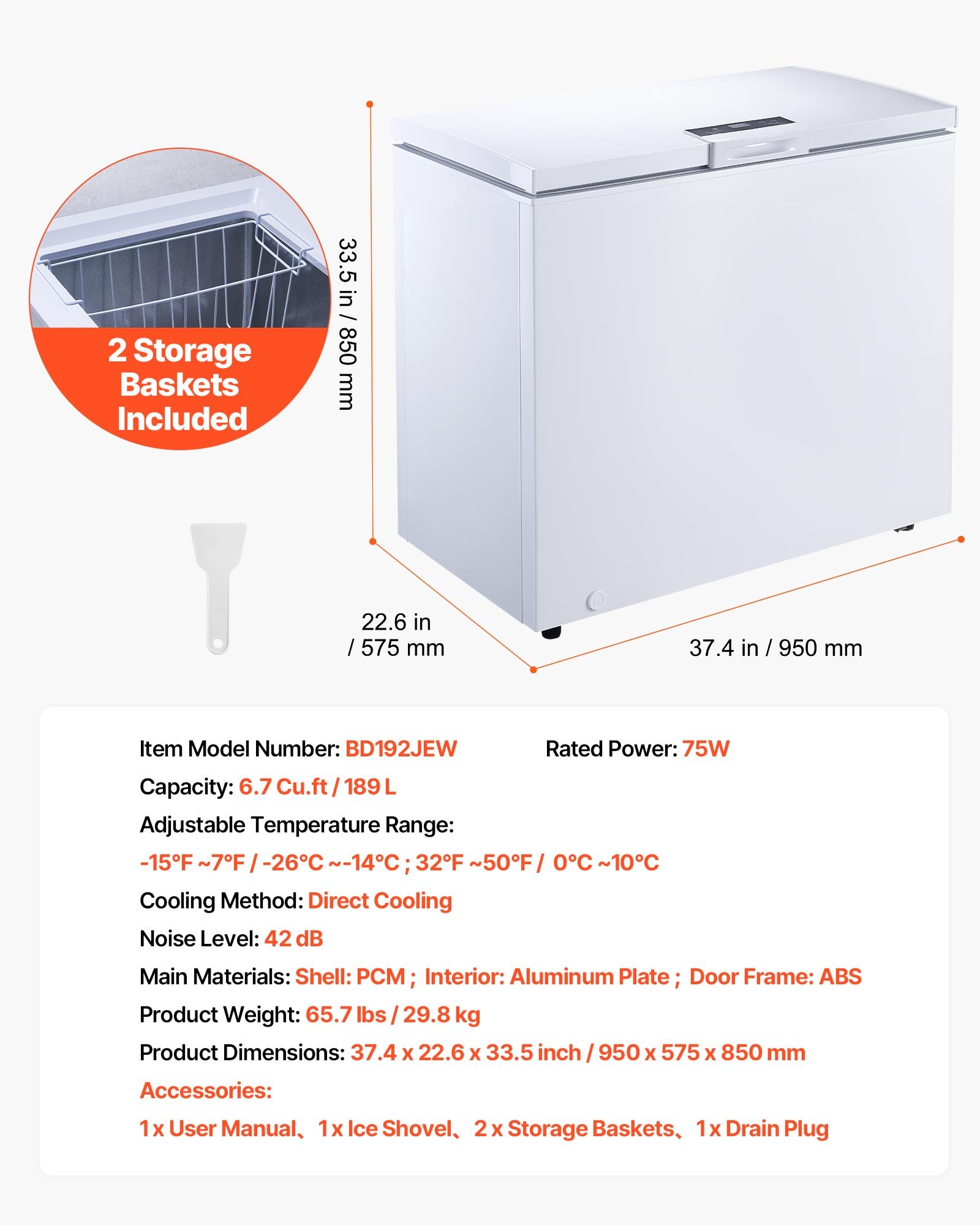 Chest Freezer, 6.7 Cu.ft Compact Deep Free Standing Top Open Door Freezers With 2 Removable Baskets & Adjustable Thermostat - Energy Saving, Low Noise & Garage Ready, White$370.99View on Mallflare
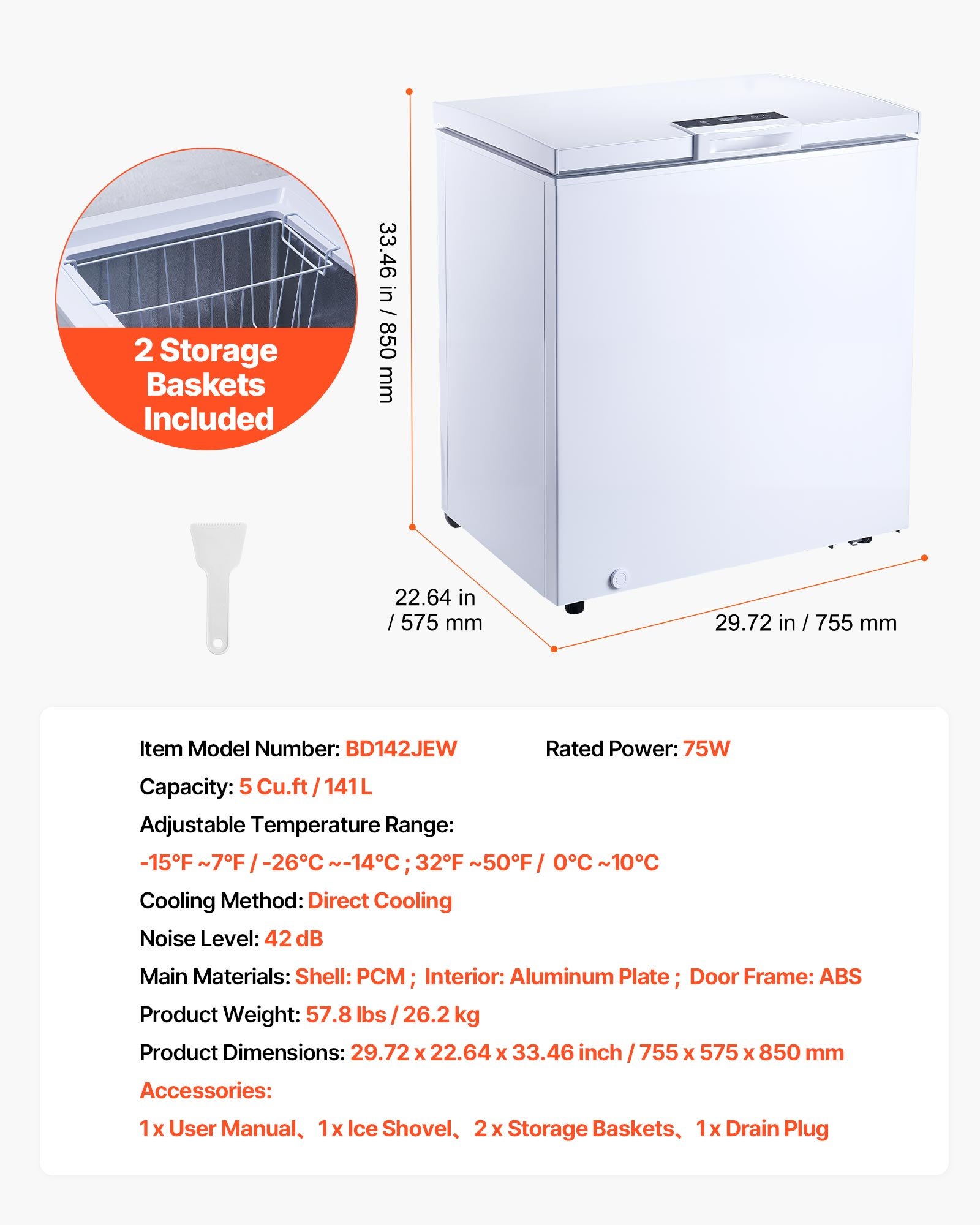 Chest Freezer, 5 Cu.ft Compact Deep Free Standing Top Open Door Freezers With 2 Removable Baskets & Adjustable Thermostat - Energy Saving, Low Noise & Garage Ready, White$400.99View on Mallflare
Highlights
- Manual-defrost chest freezers use static cooling coils; ice builds on walls and must be removed 1–2 times yearly, but cold air stays trapped when the lid opens.
- Frost-free (auto-defrost) chest freezers circulate air and prevent ice buildup, yet the fan and heater cycle add energy use and can dry out unwrapped food.
- Most home chest freezers are 115V/60Hz with a standard 3-prong plug; garage-ready models are rated for ambient temperatures as low as 0°F to 10°F.
- Capacity tiers run small (3–5 cu ft for households of 1–2), mid (6–9 cu ft for 2–4 people), and large (10–15+ cu ft for bulk buying or large families).
Best use cases
- Best fit: a 5–7 cu ft manual-defrost chest freezer for a couple or small family storing weekly groceries; skip 3 cu ft unless you only freeze occasional extras.
- Best fit: a garage-ready 7–10 cu ft model for bulk meat or garden harvest in an unheated outbuilding; skip non-garage-rated units where temperatures drop below 10°F.
- Best fit: a frost-free 10–15 cu ft chest freezer for large families who want no manual defrosting; skip it if you prioritize lowest energy use and don't mind annual defrosting.
- Wrong fit: a chest freezer for a kitchen where you need frequent access to small items; pick an upright freezer for eye-level organization instead.
Buying tips
- Size by 1.5–2.5 cu ft per household member; add 2–3 cu ft if you bulk-buy meat or freeze garden produce, and never exceed the space where the lid can fully open.
- Choose manual-defrost for lowest energy use and longest cold-hold; choose frost-free only if you will not defrost a manual unit at least yearly.
- Look for garage-ready rating (ambient 0°F–110°F) if the freezer goes in a shed, garage, or porch; standard units may fail to hold temperature below 40°F ambient.
- Check the energy label: manual-defrost 7 cu ft models typically use 200–250 kWh/year, while frost-free equivalents run 300–400 kWh/year.
Specs
| Defrost Type | Manual vs Frost-Free |
|---|---|
| Capacity Range | 3–15+ cu ft |
| Garage-Ready Rating | 0°F–110°F ambient |
| Annual Energy Use | 200–400 kWh/year |
Related searches
What to check before buying
- Measure the opening path and final spot: allow 2–3 inches clearance on all sides and above for airflow, and confirm the lid swings fully open without hitting shelves.
- Confirm the floor can support a loaded freezer: a 7 cu ft model weighs roughly 200–250 lb when full, so avoid weak upper floors or soft flooring.
- Verify electrical: a dedicated 115V/60Hz grounded outlet within reach of the cord; avoid extension cords and GFCI-only circuits that nuisance-trip.
- Check ambient temperature where it will sit: unheated garages need a garage-ready rating; humid basements need a model with rust-resistant interior liners.
FAQ
Data sources: eBay / Amazon listings and product attribute feeds. Updated Nov 28, 2026.
Some links on this page are affiliate links. If you buy after clicking one, we may earn a commission at no extra cost to you. This does not change which products appear here or their order. Affiliate disclosure.