
Photos from current listings. Actual item, color, and included accessories may vary.
Bread Box Buying Guide
A bread box is a ventilated countertop container that slows staling by buffering humidity and blocking light, and the segment splits into enclosed wooden boxes with acrylic or slatted doors versus open wire or bamboo tiered stands. The core trade-off is moisture control versus airflow: sealed acrylic-front boxes hold crumb texture for lean artisan loaves, while open baskets dry crusty bread faster and suit produce or snacks. Buy an enclosed box with adjustable vents for sandwich loaves and homemade bread; choose an open tiered stand only for baguettes, rolls, or produce you want to stay dry.
Median $34.99
Key takeaways
- Enclosed wood boxes (bamboo, pine, acacia) with acrylic or slatted doors and adjustable air vents regulate humidity better than open wire; vent sliders are the key feature separating a real bread box from a decorative bin.
- Double-layer and corner configurations add usable volume without extra counter footprint; corner units fit 90-degree wall junctions and typically run narrower front-to-back than rectangular boxes.
- Open-tier metal wire and bamboo stands prioritize airflow and visibility; they dry crusty loaves and hold fruit, but give no light or humidity protection for sliced sandwich bread.
At a glance
- Category
- Kitchen Storage & Organization
- Last updated
- Nov 28, 2026
Current offers
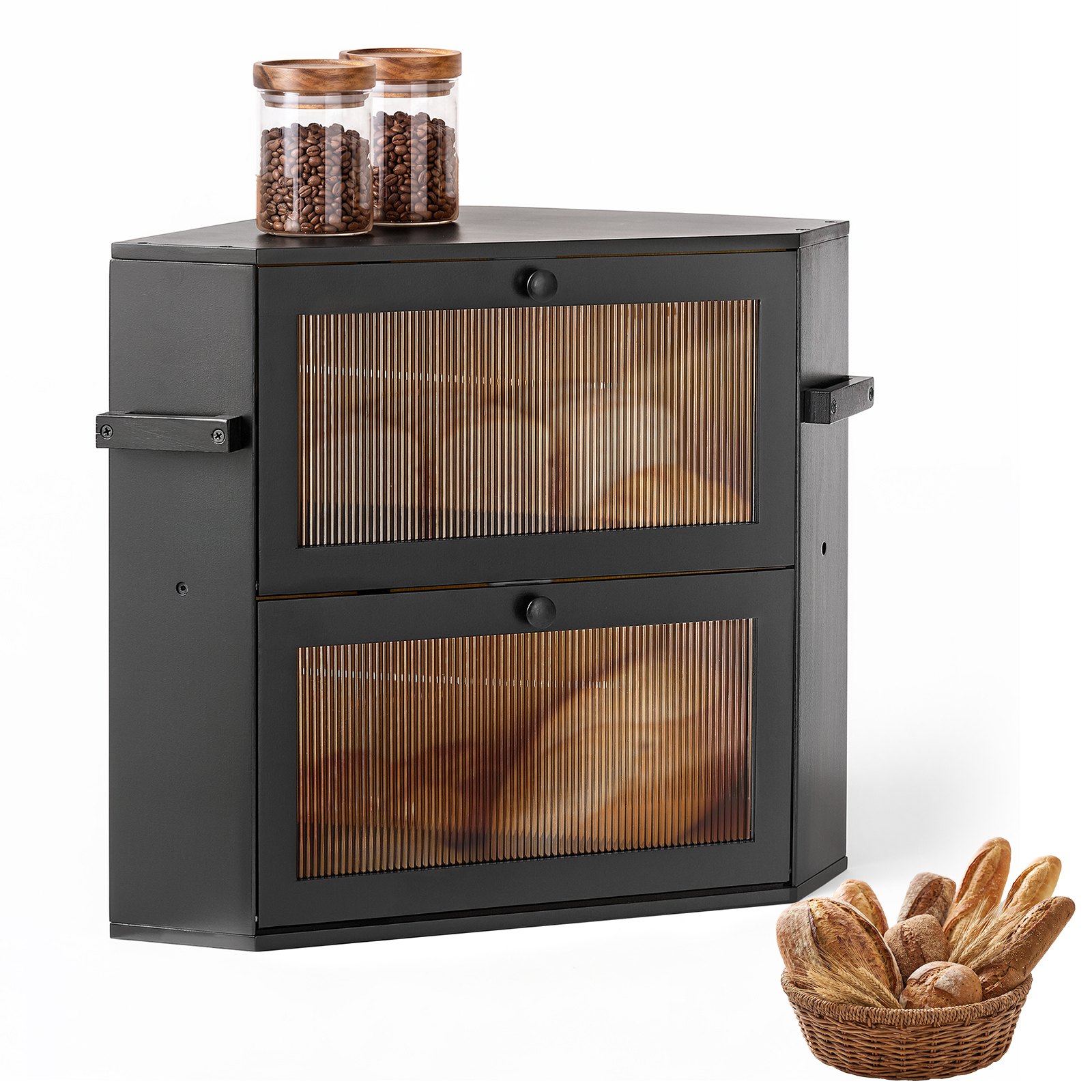 Corner Bread Box for Kitchen Counter Bamboo Wood Container Black, for Homemade Under Cabinet, and Pantry, Double Layer Farmhouse Breadbox Bin, with Acrylic Door Panel and Air Vents$31.99View on Mallflare
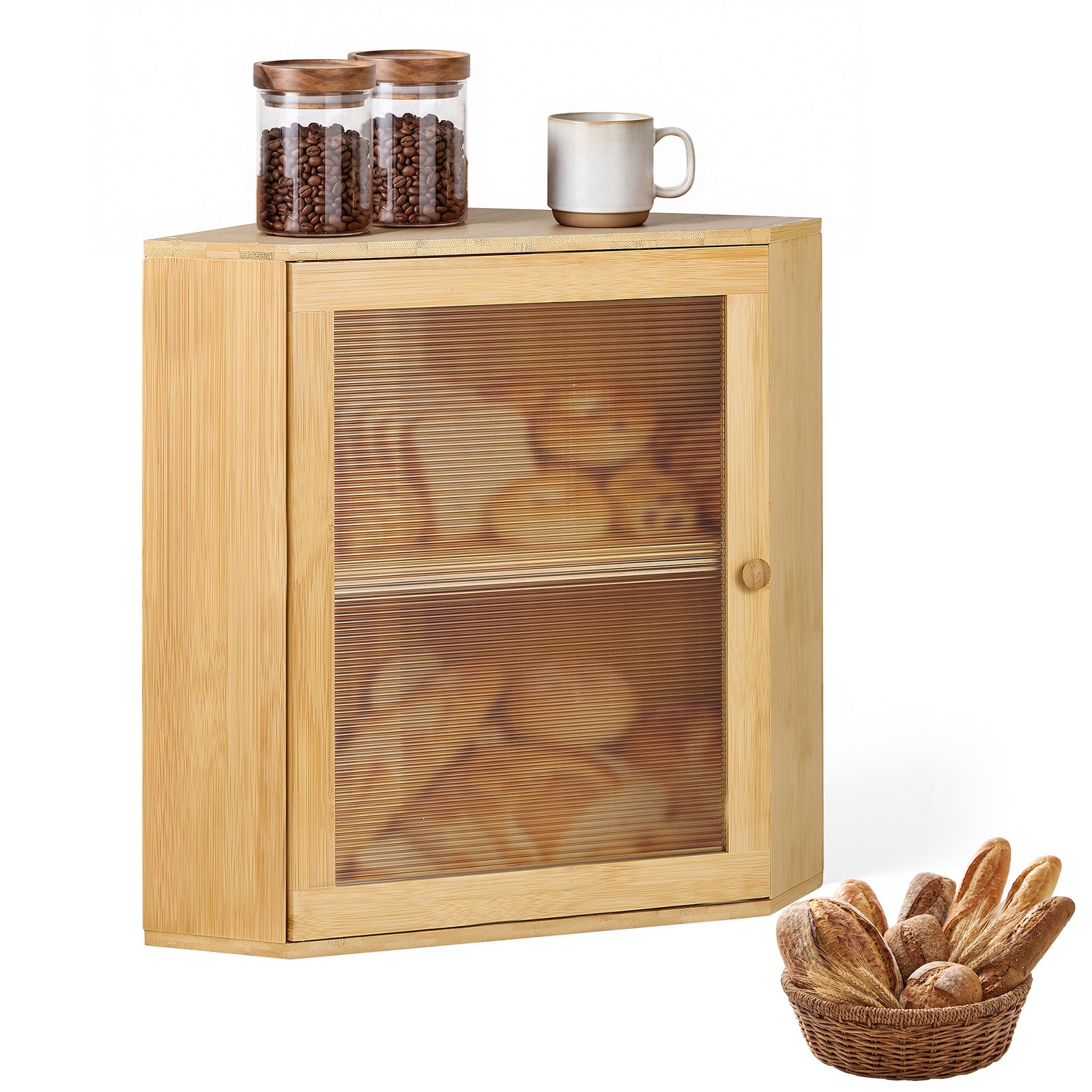 Corner Bread Box for Kitchen Counter Bamboo Wood Container Natural, for Homemade Under Cabinet, and Pantry, Double Layer Farmhouse Breadbox Bin, with Acrylic Door Panel and Air Vents$34.99View on Mallflare
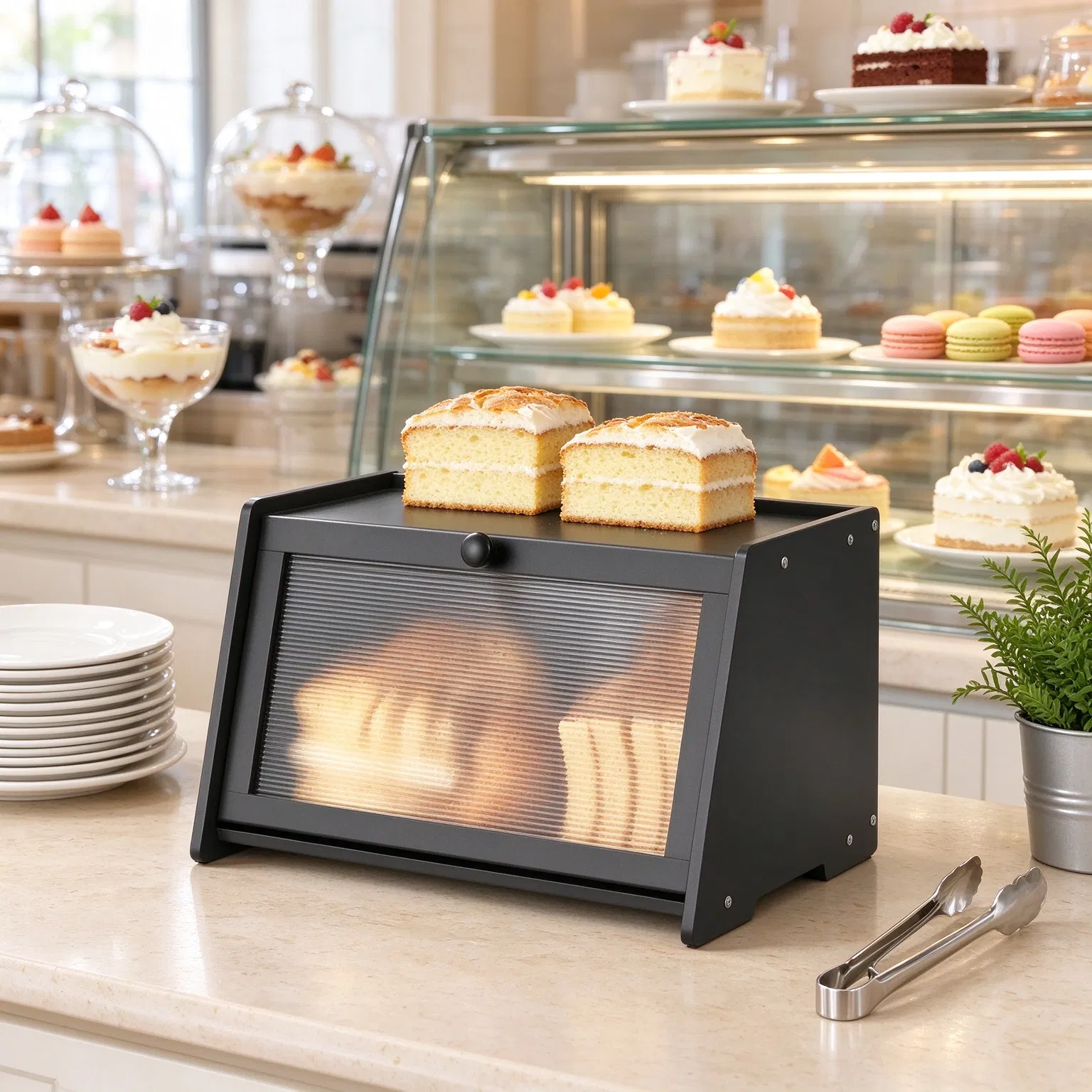 Large capacity bamboo bread box with acrylic wavy door panel, kitchen countertop storage, farmhouse style wooden box, fresh-keeping and dustproof$78.99View on Mallflare
Highlights
- Enclosed wood boxes (bamboo, pine, acacia) with acrylic or slatted doors and adjustable air vents regulate humidity better than open wire; vent sliders are the key feature separating a real bread box from a decorative bin.
- Double-layer and corner configurations add usable volume without extra counter footprint; corner units fit 90-degree wall junctions and typically run narrower front-to-back than rectangular boxes.
- Open-tier metal wire and bamboo stands prioritize airflow and visibility; they dry crusty loaves and hold fruit, but give no light or humidity protection for sliced sandwich bread.
- Acrylic door panels show contents and wipe clean; solid wood or slatted doors hide clutter and block more light but make mold harder to spot.
Best use cases
- Buy an enclosed vented wood box with an acrylic door for homemade sandwich loaves, sliced bread, and buns on a counter that sees indirect light; skip open baskets, which dry sliced bread within a day.
- Pick a corner wood box for an L-shaped counter or a tight wall junction; skip it if your counter run is straight, since the corner cut wastes depth against a flat wall.
- Choose a 2- or 3-tier open metal or bamboo stand for baguettes, rolls, onions, potatoes, and fruit that benefit from airflow and display; skip it for sliced bread or anything needing humidity buffering.
- Select a double-layer enclosed box for households baking weekly and storing two loaf types at once; skip the second tier if you buy one loaf at a time and prefer maximum counter clearance.
Buying tips
- Measure interior depth against your loaf: standard sandwich bread runs about 4.5 in tall and 9-10 in long, so an interior at least 10 in long, 5.5 in tall, and 5 in deep fits most loaves without squashing.
- Under-cabinet buyers need total height (box plus lid swing) below the cabinet underside; confirm lid clearance or choose a front-door box rather than a top-lid one.
- Prioritize solid bamboo or hardwood over MDF or particleboard; wood thickness around 0.4-0.6 in resists warping, and bamboo is denser and more moisture-tolerant than pine.
- Choose adjustable vent sliders over fixed holes: close vents in dry climates to retain moisture, open them in humid kitchens to prevent mold, and wipe the interior monthly.
Specs
| Enclosure Type | Enclosed vented box vs open tiered stand |
|---|---|
| Primary Material | Bamboo/hardwood vs metal wire vs acrylic |
| Door Style | Acrylic panel / slatted wood / open front |
| Configuration | Single / double-layer / corner / 2-3 tier |
Related searches
What to check before buying
- Measure counter depth and under-cabinet height; confirm the box footprint leaves workspace and that a top lid or front door opens without hitting the cabinet or wall.
- Check the loaf: interior length at least 10 in for standard loaves, plus 12-13 in for long artisan loaves or baguettes.
- Assess kitchen humidity and light: direct sun and damp air favor vented wood with adjustable sliders over sealed acrylic.
- For corner models, confirm the wall angle is a true 90 degrees and the unit's front-to-back depth does not block drawers or appliances.
FAQ
Data sources: eBay / Amazon listings and product attribute feeds. Updated Nov 28, 2026.
Some links on this page are affiliate links. If you buy after clicking one, we may earn a commission at no extra cost to you. This does not change which products appear here or their order. Affiliate disclosure.