
Photos from current listings. Actual item, color, and included accessories may vary.
Kitchen Island With Storage Buying Guide
A kitchen island with storage is a freestanding or rolling counter-height unit that adds prep surface plus enclosed drawers, cabinets, or open shelving. The core trade-off is between stationary built-in sturdiness and mobile cart flexibility: fixed islands use thicker tops and toe-kick bases for heavy appliances, while rolling carts rely on locking casters and lighter frames. Choose a fixed island if you need permanent seating or stone/mass-timber prep; choose a locking-caster cart only if you will regularly move it and keep loads under the cart's rated capacity.
Median $309.58 · New listings
Key takeaways
- Rolling carts use 2–3 in casters with at least two locking wheels; fixed islands use leveling feet or toe-kick bases and should be anchored to studs or floor.
- Counter height is standard 36 in for fixed islands and 34–36 in for carts; overhang for seating needs 12–15 in of knee space and 24–30 in per stool.
- Solid wood or butcher-block tops 1.5 in thick resist chopping and moisture better than 0.6–1 in MDF or particleboard with veneer; stainless tops suit wet prep but dent and show scratches.
At a glance
- Category
- Kitchen Storage & Organization
- Last updated
- Nov 28, 2026
Current offers
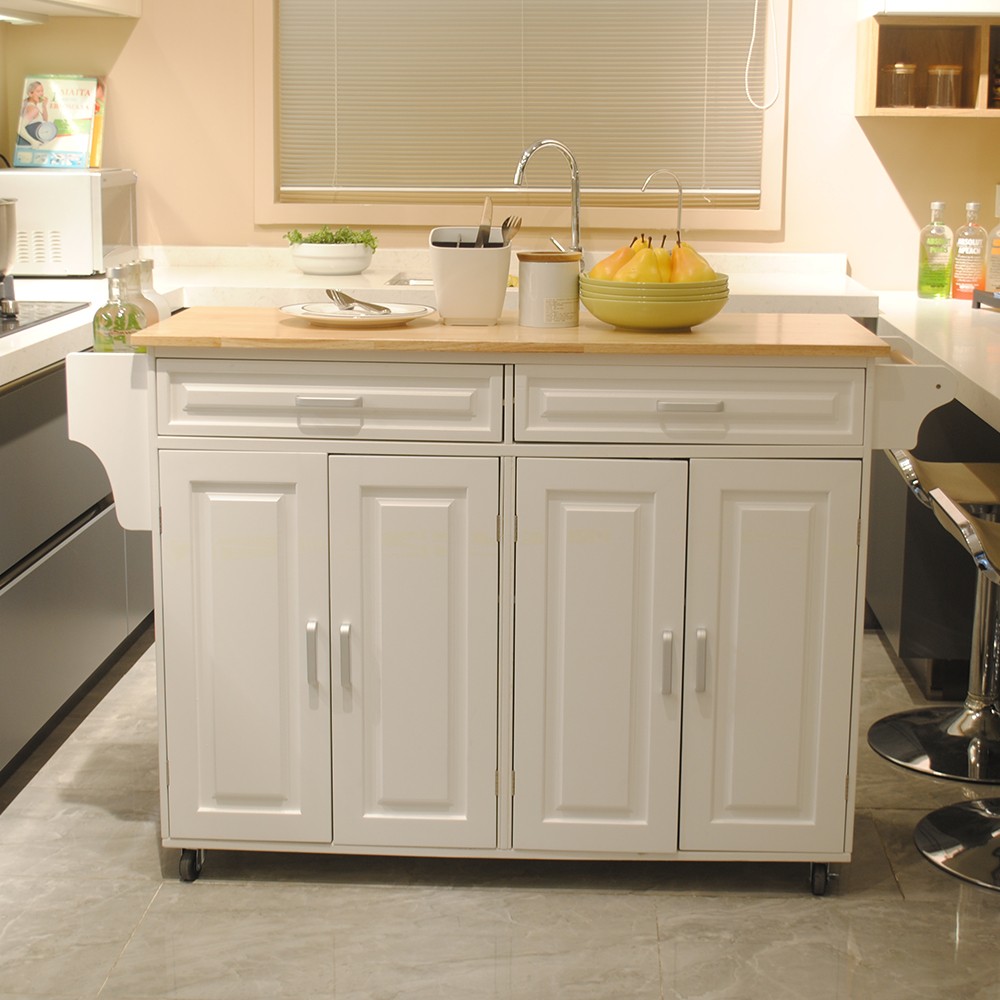 Large Kitchen Island With Storage Rolling Wheel Bar Trolley Cart Utility Cabinet$249.99New · Last checked Nov 16, 2026View on eBay
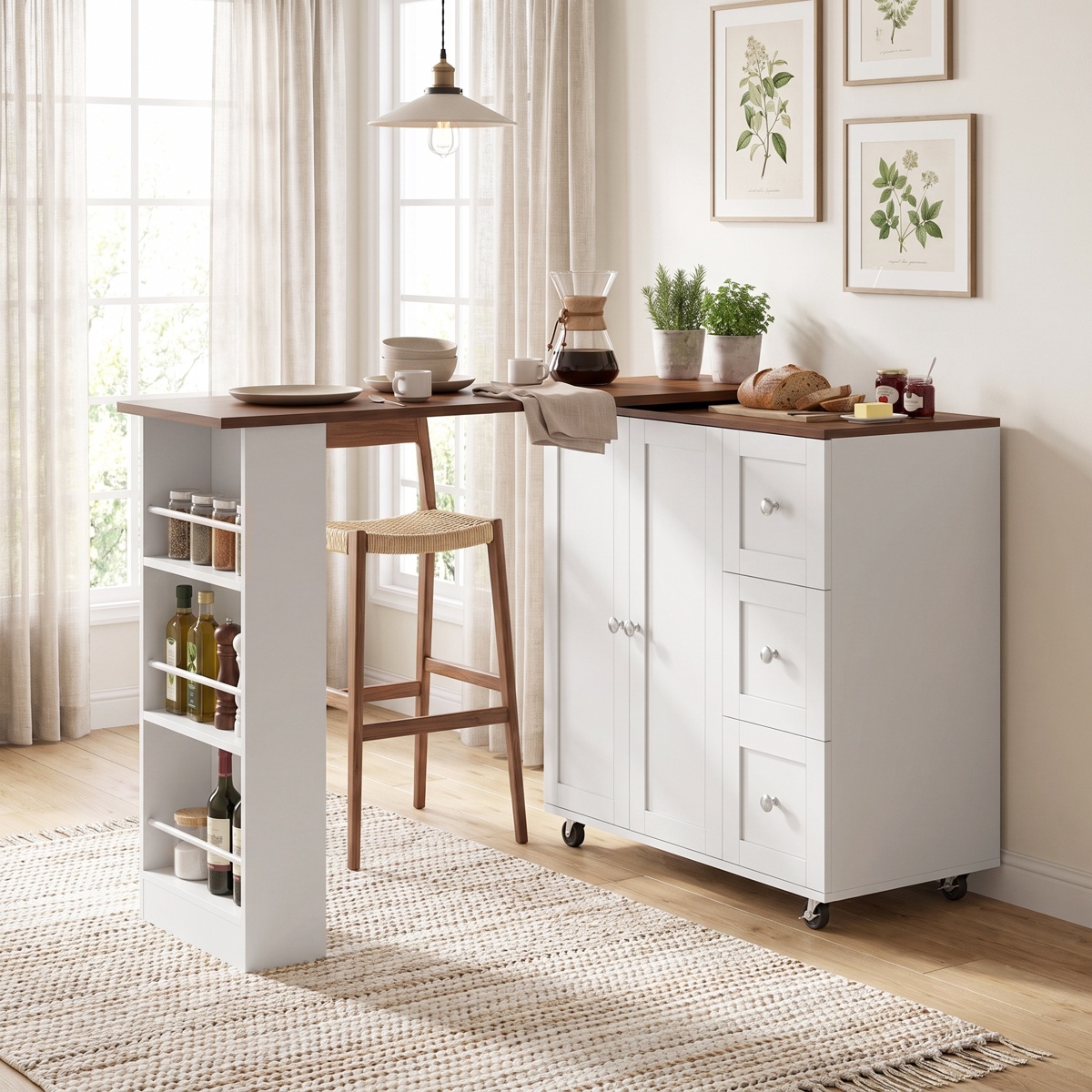 Rolling Kitchen Island with 360° Swivel Table and Storage, Extendable 3 Drawers & Spice Rack, White$185.99View on Mallflare
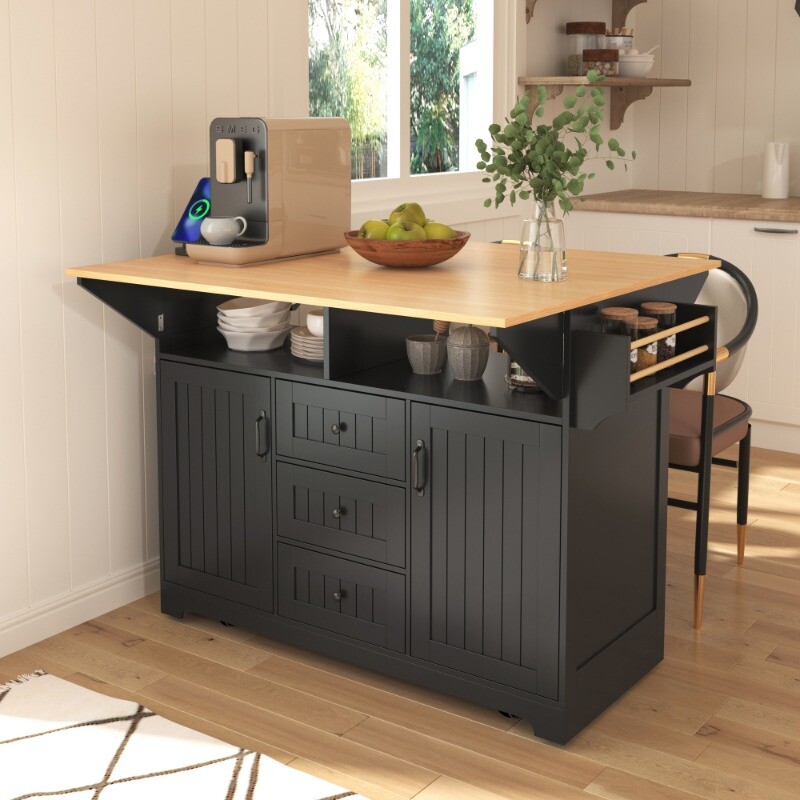 55.7'' Large Kitchen Island with 2 Drop Leaf Rolling Kitchen Cart on 5 Wheels$272.99New · Last checked Nov 16, 2026View on eBay
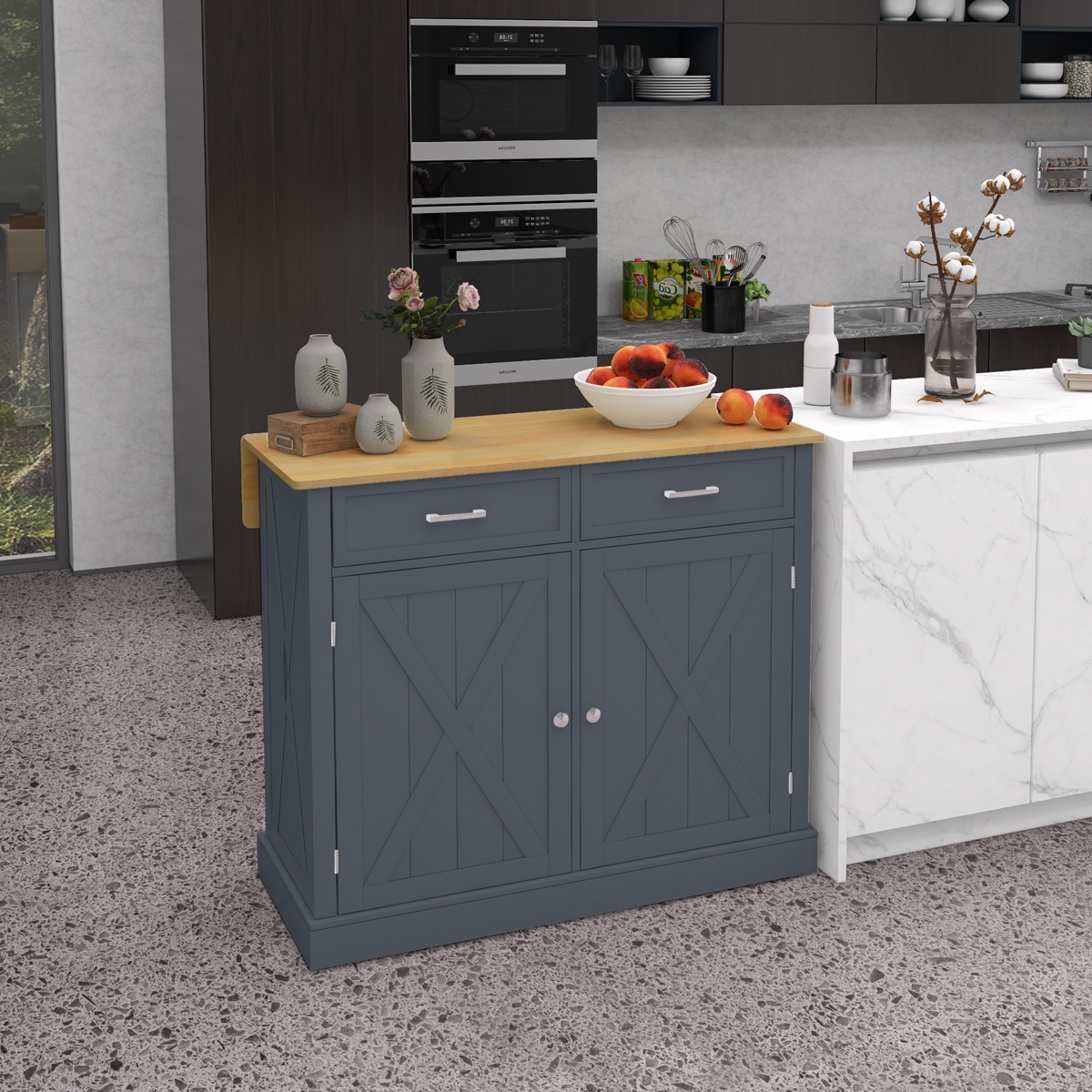 Rolling Kitchen Island with Drop Leaf Wood Breakfast Bar, Farmhouse Cart 2 Drawers, Dark Gray$189.99View on Mallflare
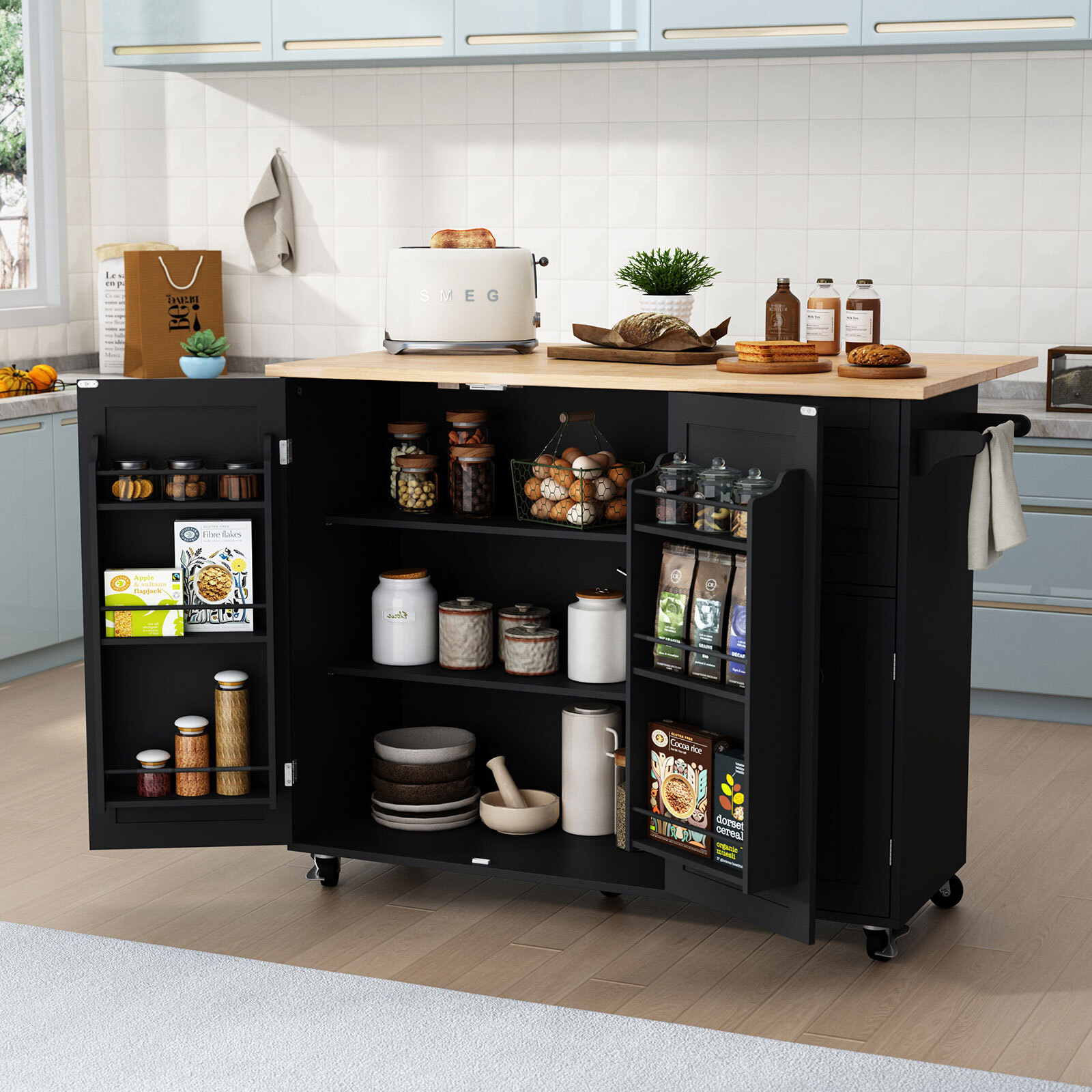 Kitchen Island With Storage Rolling On Wheel With Drop-Leaf Bar Countertop Black$279.99New · Last checked Nov 16, 2026View on eBay
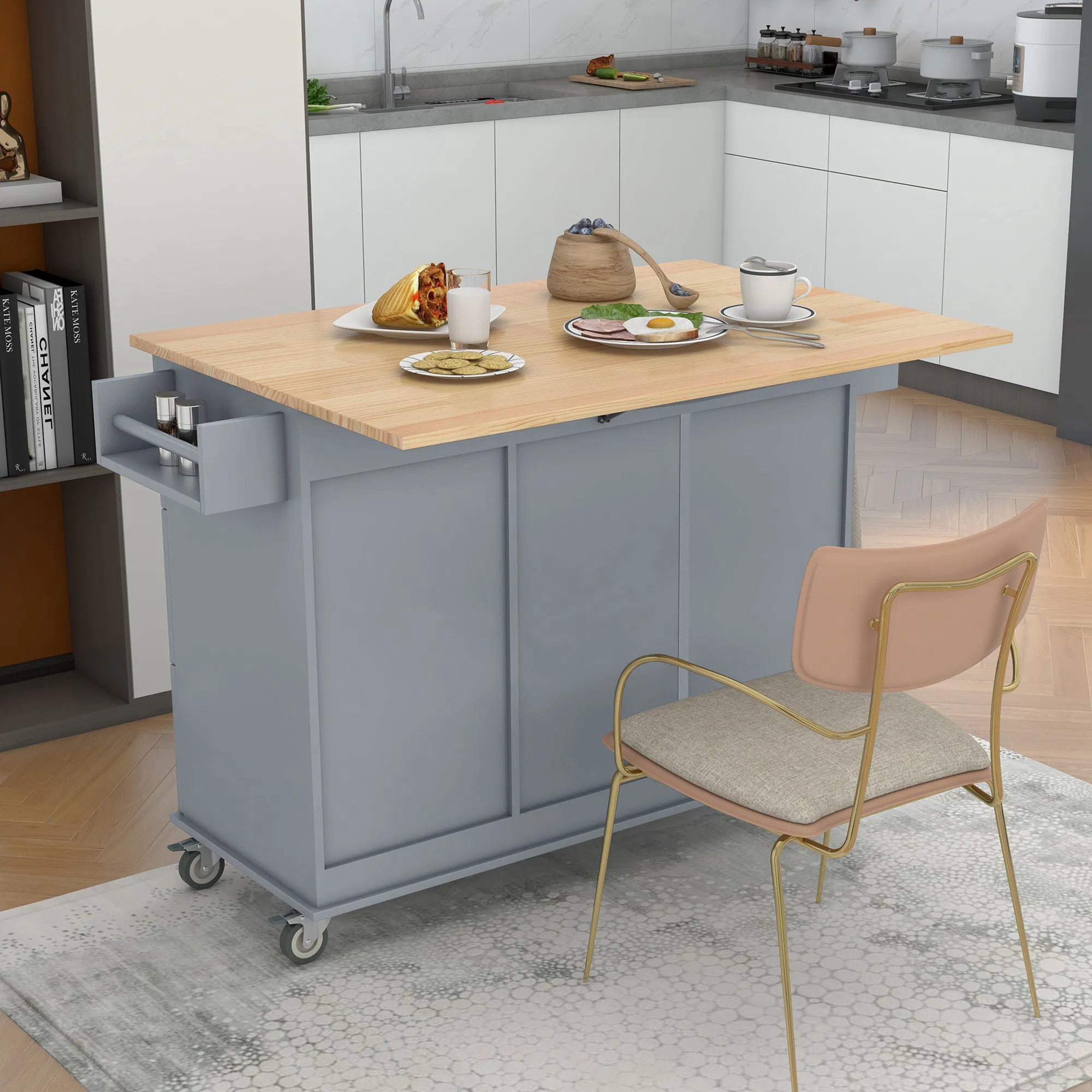 Rolling Mobile Kitchen Island with Solid Wood Top and Locking Wheels,52.7 Inch Width,Storage Cabinet and Drop Leaf Breakfast Bar,Spice Rack, Towel & Drawer (Grey Blue)$346.99View on Mallflare
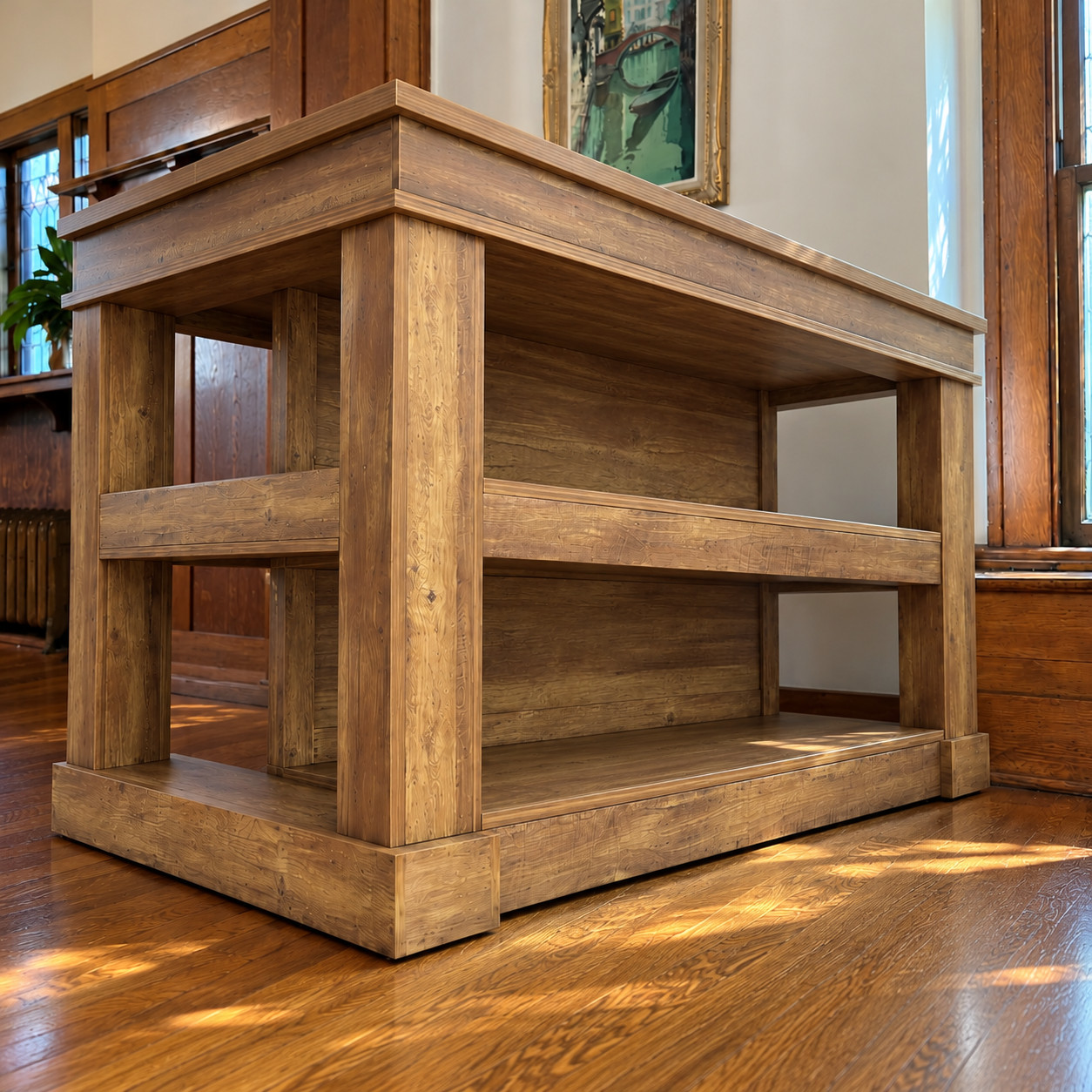 Rustic Farmhouse Kitchen Island Coffee Bar Table with Open Storage Shelves Wood$299.99New · Last checked Nov 16, 2026View on eBay
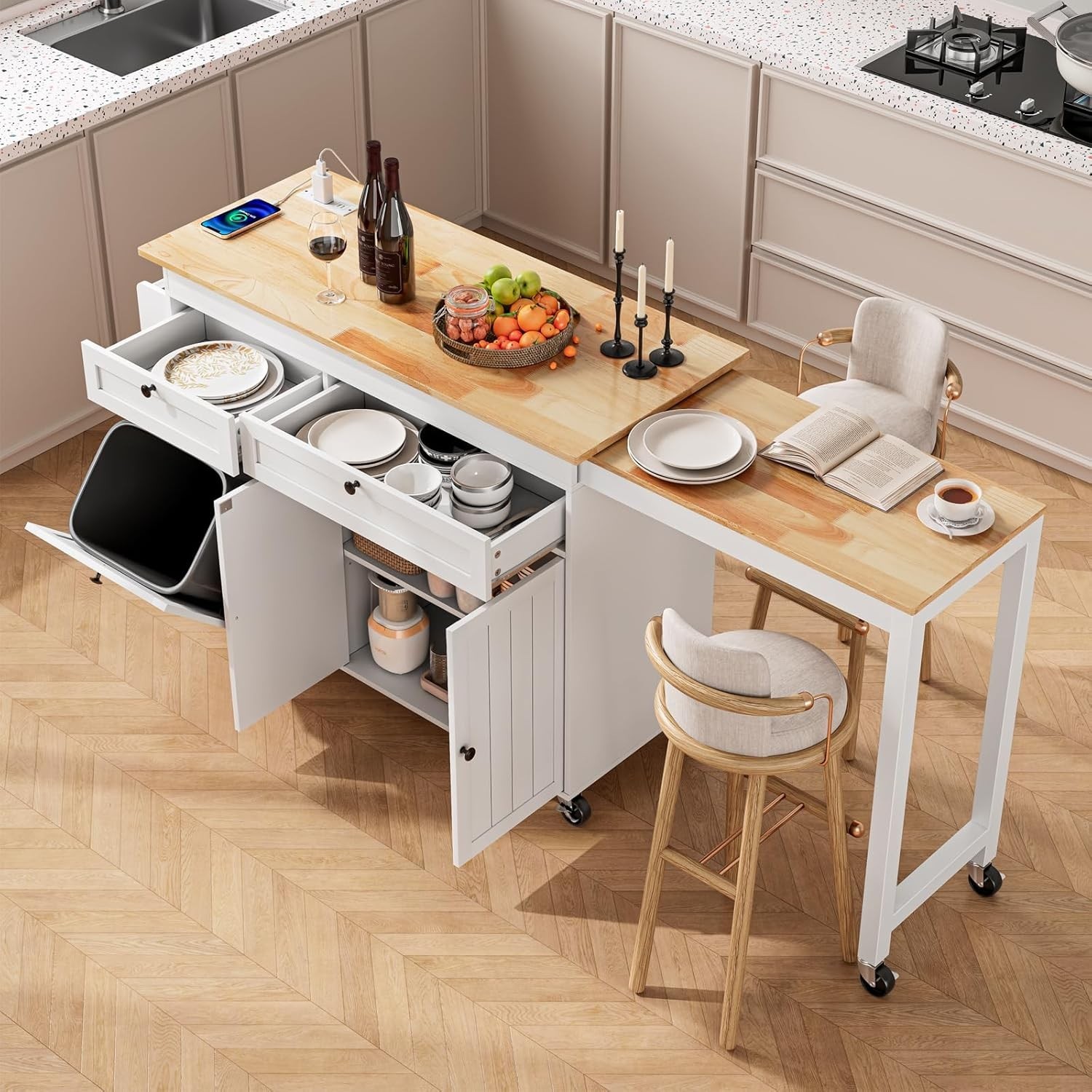 Kitchen Islands with Extendable Dining Table, 81.7" Mobile Kitchen Storage$319.17New · Last checked Nov 16, 2026View on eBay
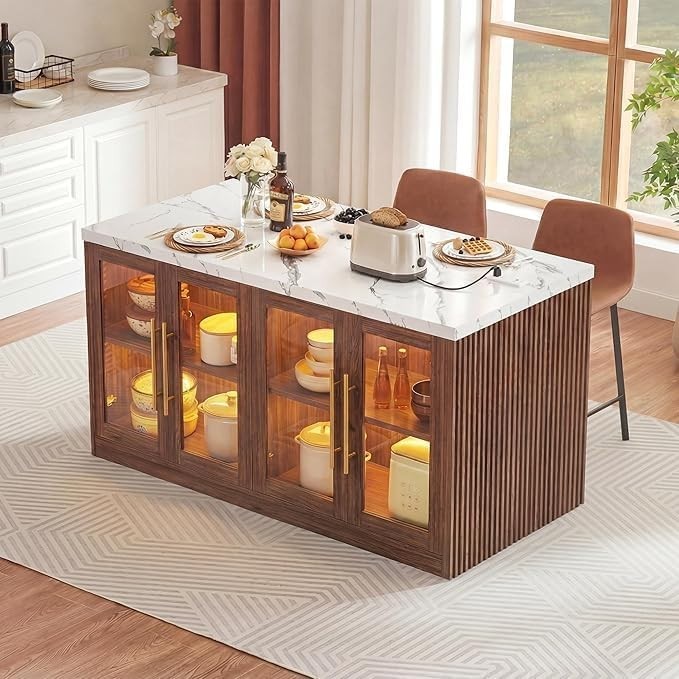 Modern Kitchen Island with Storage & LED Lights - Walnut on Wheels$343.90New · Last checked Nov 16, 2026View on eBay
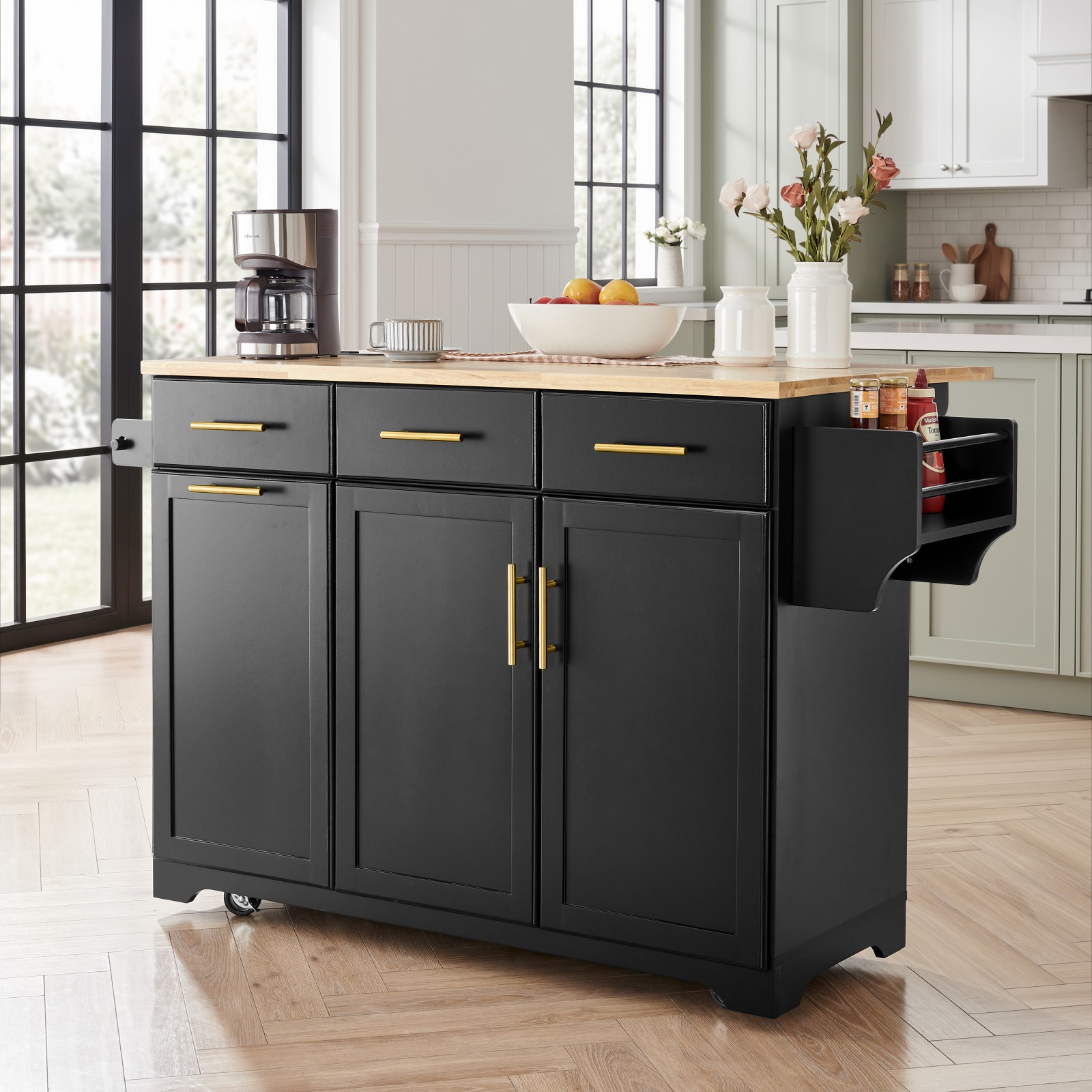 47.2" Kitchen Island with Storage, Drop Leaf, Power Outlet, USB, Black$348.98New · Last checked Nov 16, 2026View on eBay
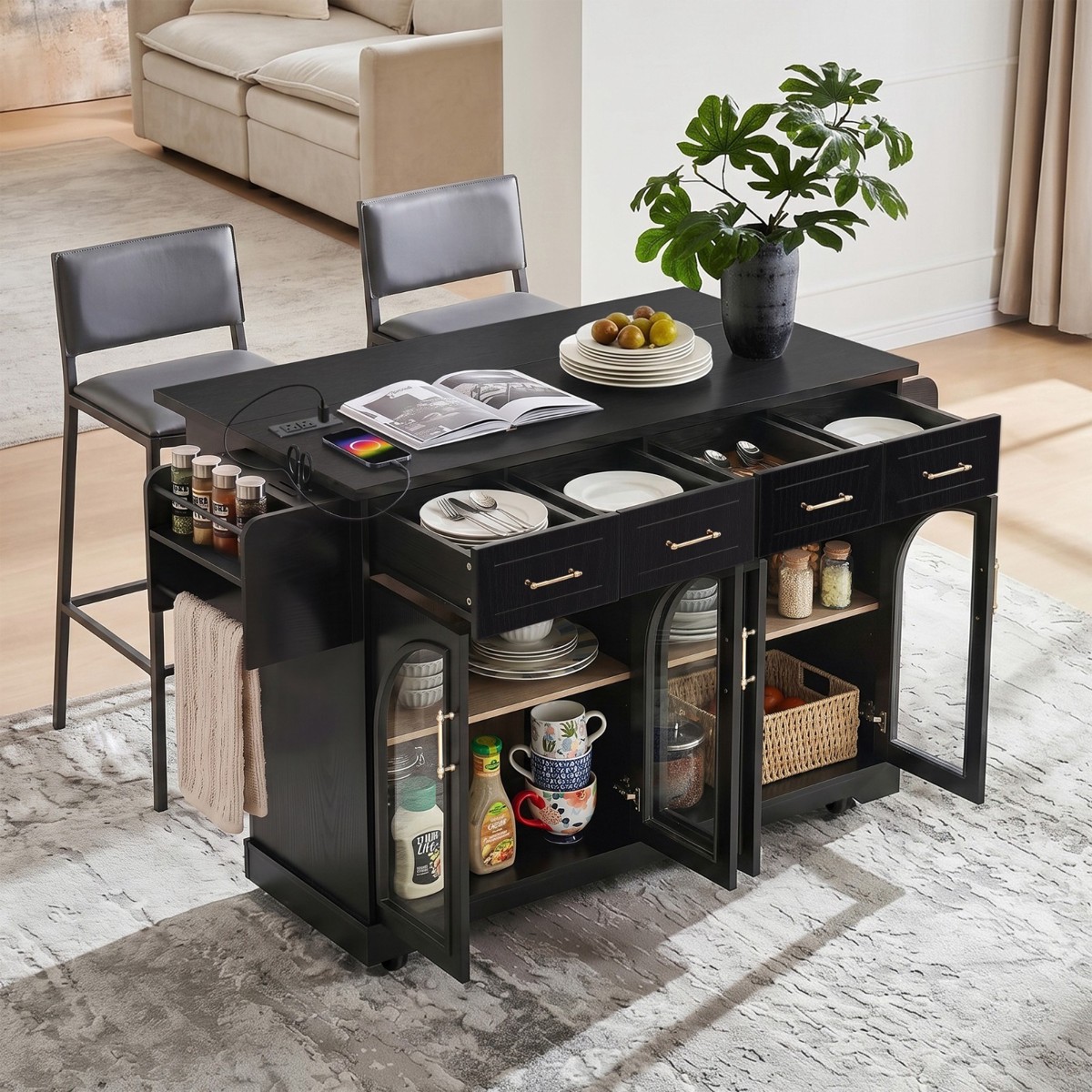 Kitchen Island with Storage,Rolling Island Cart on Wheels with Arched Glass Door$379.99New · Last checked Nov 16, 2026View on eBay
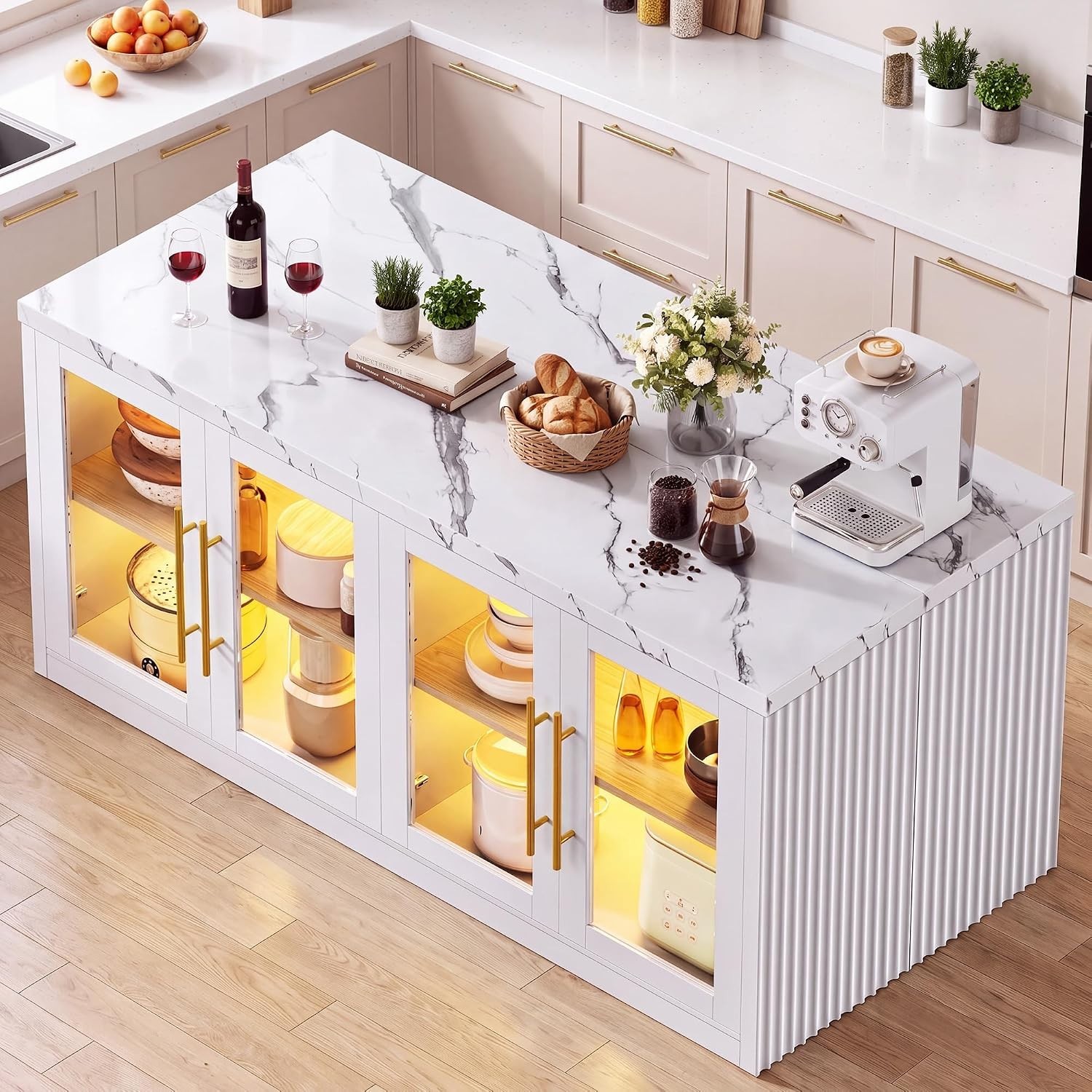 Large Kitchen Island with Storage & LED Light Rolling Breakfast Bar Table$403.95New · Last checked Nov 16, 2026View on eBay
Highlights
- Rolling carts use 2–3 in casters with at least two locking wheels; fixed islands use leveling feet or toe-kick bases and should be anchored to studs or floor.
- Counter height is standard 36 in for fixed islands and 34–36 in for carts; overhang for seating needs 12–15 in of knee space and 24–30 in per stool.
- Solid wood or butcher-block tops 1.5 in thick resist chopping and moisture better than 0.6–1 in MDF or particleboard with veneer; stainless tops suit wet prep but dent and show scratches.
- Cart frames are typically 0.8–1.2 mm steel tube or 15–18 mm engineered wood; rated load capacity ranges from roughly 150 lb for light carts to 600+ lb for heavy-duty steel trolleys.
Best use cases
- Best fit: a fixed island with 1.5 in butcher block and enclosed cabinets for a primary kitchen with 36+ in clearance on all walkways; skip rolling carts if the floor is uneven or you need permanent seating.
- Best fit: a locking-caster cart with drop-leaf, drawers, and towel bar for renters or small galley kitchens that need a movable prep zone; skip oversized 45+ in carts if your aisle is under 36 in.
- Best fit: a slim 12–15 in wide rolling cabinet with spice rack for the gap beside the fridge; skip deep 20+ in carts that block traffic in narrow kitchens.
- Wrong fit: open wire trolleys for exposed kitchen storage of packaged food—dust and grease collect; use them for pots, appliances, or pantry overflow instead.
Buying tips
- Measure walkway clearance first: leave at least 36 in between island and counters/appliances for one cook, 42–48 in for two cooks; subtract cart width from aisle width before buying.
- For seating, plan 24 in of width per stool and 12–15 in of table overhang; a 45 in wide cart seats two at most and only with a drop-leaf or extended top.
- Check caster size and brake count: 3 in wheels roll over thresholds and grout lines; demand at least two locking casters or the cart will drift during prep.
- Match top material to use: butcher block for chopping (oil monthly), stainless for wet/raw prep (accept scratches), and sealed MDF/veneer only for light serving and storage.
Specs
| Mobility | Locking casters vs fixed leveling feet |
|---|---|
| Top Material | Butcher block / stainless / engineered wood |
| Standard Height | 34–36 in counter height |
| Load Capacity | 150–600+ lb rated by frame type |
Related searches
What to check before buying
- Measure the exact footprint and add 2–3 in for caster swivel and handle protrusion; confirm the cart fits through doorways and past drawer pulls.
- Verify aisle clearance of 36–48 in to nearby counters and appliances; mark the floor with tape and walk the path before committing.
- Check floor type and threshold height: hard casters roll on tile and wood; carpet and uneven floors need larger 3–4 in wheels or a fixed island.
- Confirm the top thickness and frame gauge from specs; require at least 1 in solid wood or 1.2 mm steel for daily prep, and check that the cart's rated load covers your microwave or stand mixer.
FAQ
Data sources: eBay / Amazon listings and product attribute feeds. Updated Nov 28, 2026.
Some links on this page are affiliate links. If you buy after clicking one, we may earn a commission at no extra cost to you. This does not change which products appear here or their order. Affiliate disclosure.