
Photos from current listings. Actual item, color, and included accessories may vary.
Compact Kitchen Scale Buying Guide
A compact kitchen scale is a small-footprint digital scale (typically under 6 inches wide) for weighing dry and wet ingredients up to 1–5 kg with 1 g resolution. The primary trade-off is between a thin plastic platform that flexes under load and a rigid metal or reinforced ABS deck that keeps the load cell accurate over time. The decision rule: buy a scale with a stated 1 g resolution, a platform that does not overhang its base, and a tare function; skip any model that only lists 'high precision' without a capacity/resolution pair.
Median $22.24
Key takeaways
- Load cell type is the durability driver: a single-point strain-gauge cell with a metal or reinforced ABS deck resists creep better than an unsupported plastic platform that flexes and drifts.
- Resolution vs capacity: 1 g resolution up to 3–5 kg covers most home baking; 0.1 g resolution usually caps at 500 g–1 kg and is only needed for yeast, spices, and coffee.
- Platform overhang is a stability failure point: a weighing tray or spoon that extends beyond the base tips under off-center loads and produces inconsistent readings.
At a glance
- Category
- Bread Mixers, Scales & Thermometers
- Last updated
- Nov 27, 2026
Current offers
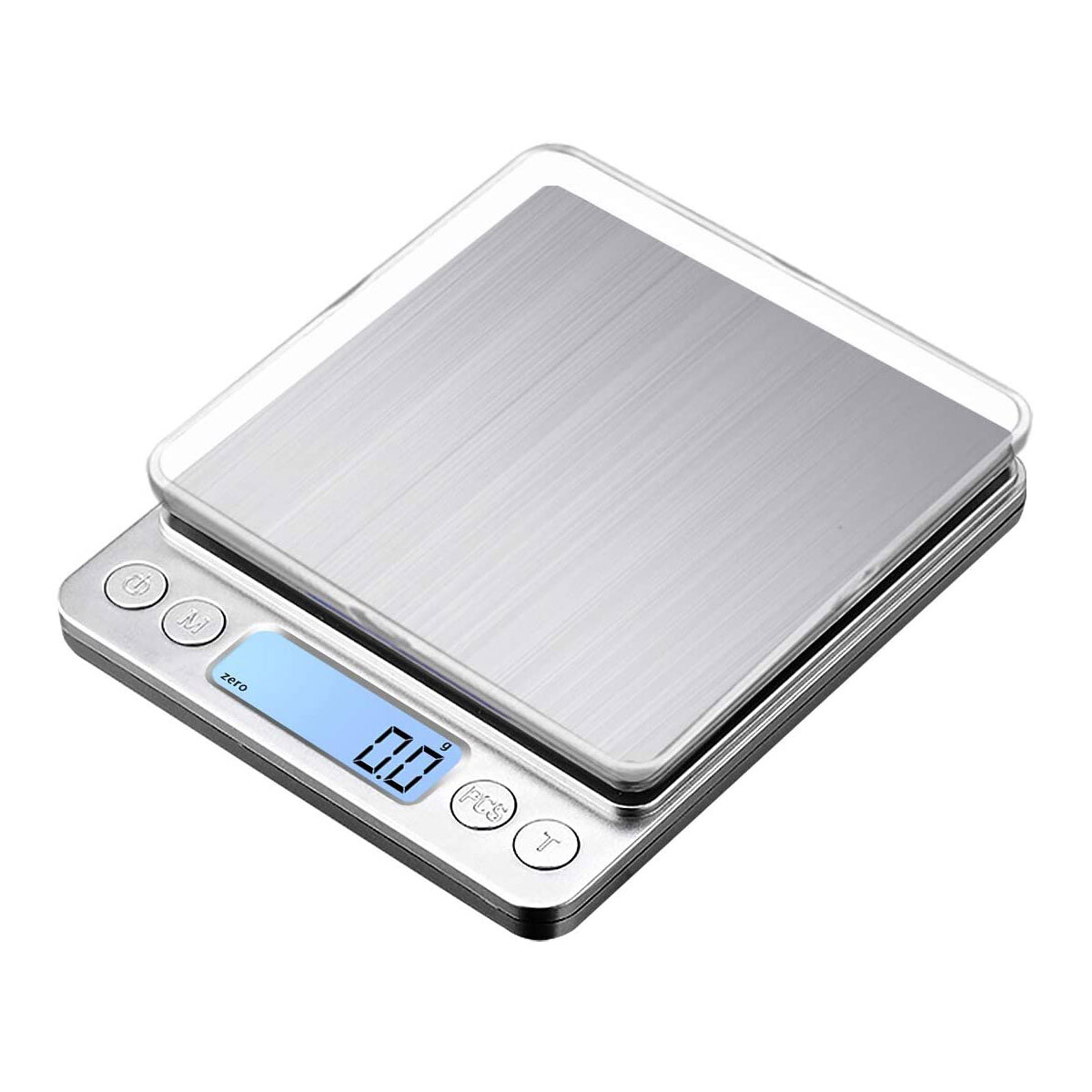 3KG Food Kitchen Scale, Digital Grams & Ounces for Weight Loss, Baking, Cooking$9.57View on eBay
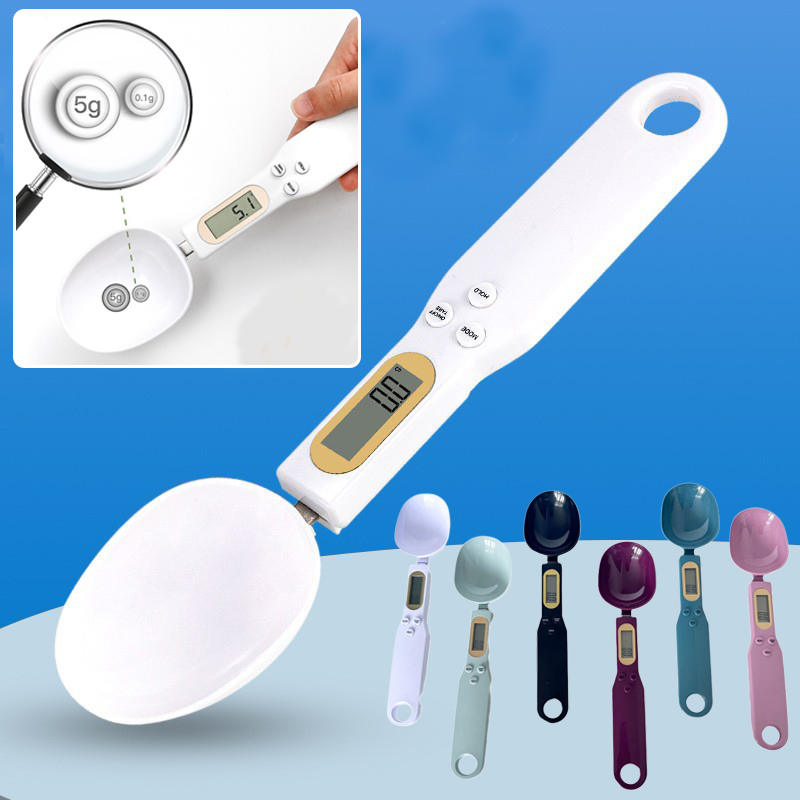 Kitchen Scale Measuring Spoon Compact Food Weighing For Dry And Wet Ingredients$9.99View on Mallflare
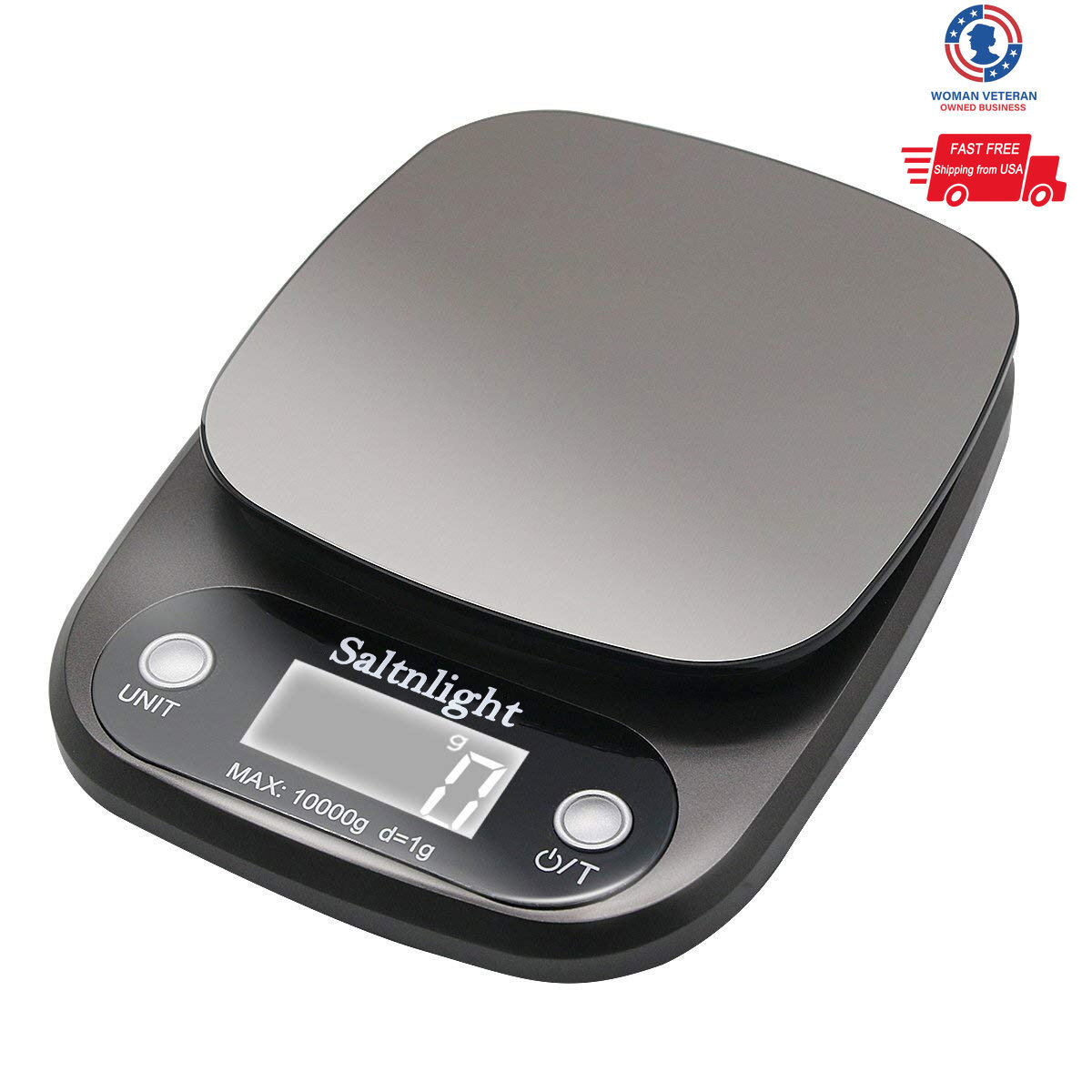 Digital Kitchen Food Scale Stainless Steel Gram Scale Baking Coffee Meal Prep$14.49View on eBay
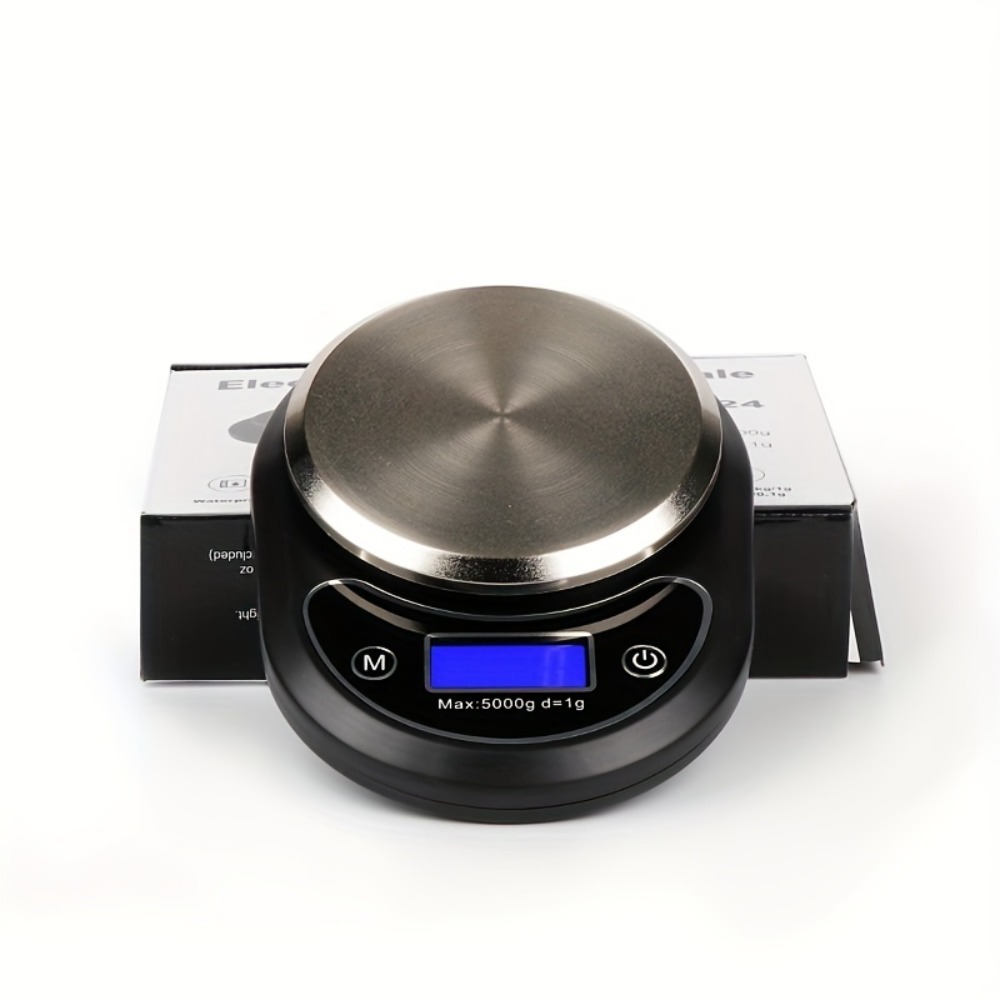 High Precision Household Food Electronic Baking Kitchen Scale Explosion Portable Coffee$29.99View on Mallflare
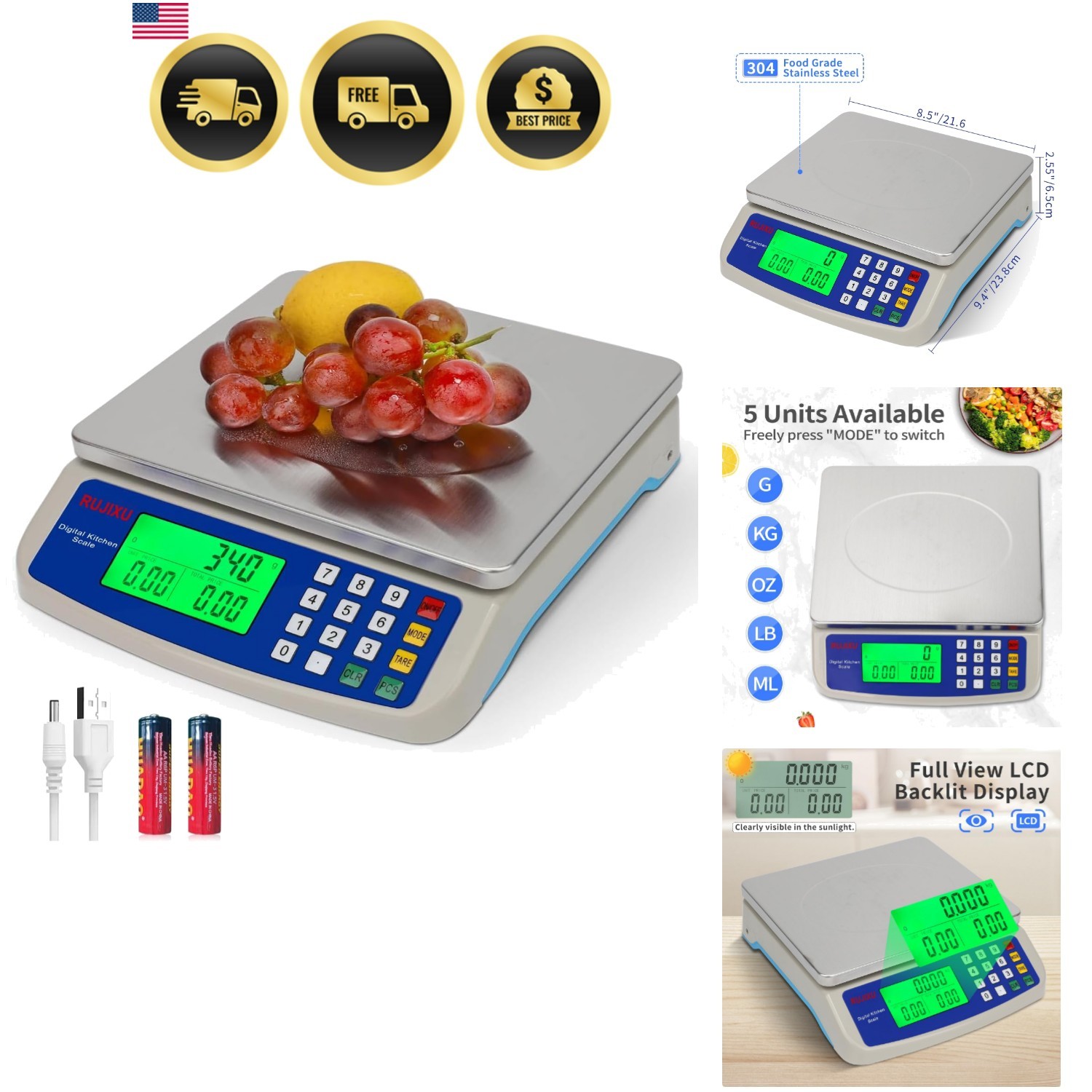 Large Digital Kitchen Scale 30KG Commercial Food Scale 66LB for Baking Bread ...$63.34View on eBay
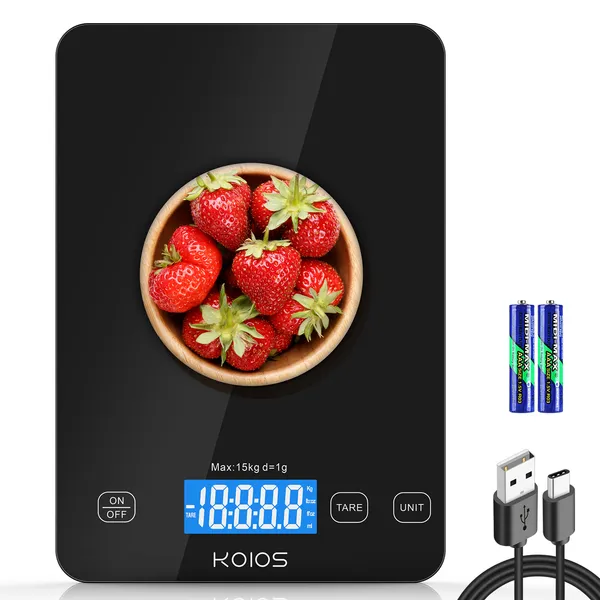 KOIOS Food Scale, 33lb/15kg Digital Kitchen Grams And Ounces For Cooking Baking, 1g/0.1oz Precise Graduation, Type-C Charging, Tare Function, AAA Battery Included(Black)$44.99View on Mallflare
Highlights
- Load cell type is the durability driver: a single-point strain-gauge cell with a metal or reinforced ABS deck resists creep better than an unsupported plastic platform that flexes and drifts.
- Resolution vs capacity: 1 g resolution up to 3–5 kg covers most home baking; 0.1 g resolution usually caps at 500 g–1 kg and is only needed for yeast, spices, and coffee.
- Platform overhang is a stability failure point: a weighing tray or spoon that extends beyond the base tips under off-center loads and produces inconsistent readings.
- Moisture protection separates kitchen-safe from disposable: an IP-rated or sealed button membrane survives wet-ingredient spills; unsealed flat plastic buttons wick liquid into the PCB.
Best use cases
- Best fit: small kitchens and bakeries weighing flour, sugar, and wet ingredients in a bowl — pick a 3–5 kg / 1 g scale with a flat platform and tare button; skip 0.1 g jewelry-style scales that cap at 500 g.
- Best fit: coffee and spice dosing — pick a 0.1 g resolution scale with a small 500 g–1 kg capacity and a removable tray; skip high-capacity 5 kg scales whose 1 g steps are too coarse.
- Best fit: measuring spoons with built-in scales for quick dry/wet additions — useful as a secondary tool; skip as a primary scale because spoon-shaped platforms rarely exceed 500 g capacity or 0.1 g stability.
Buying tips
- Match capacity to your largest bowl-plus-ingredient weight: a 3 kg scale covers a 2 kg dough plus a 500 g bowl; a 1 kg scale forces you to split batches.
- Demand an explicit resolution figure (1 g or 0.1 g) and a capacity figure together; 'high precision' alone is a marketing claim, not a spec.
- Choose a platform at least as wide as your most-used bowl base; overhanging bowls apply torque to the load cell and cause drift and tip-over.
- Prefer sealed membrane buttons and a wipe-clean platform over raised plastic buttons for wet-ingredient kitchens; unsealed buttons are the top cause of scale failure.
Specs
| Resolution | 1 g vs 0.1 g |
|---|---|
| Capacity | 1 kg / 3 kg / 5 kg |
| Platform Material | Reinforced ABS vs thin plastic |
| Power Source | AAA battery vs USB-C rechargeable |
Related searches
What to check before buying
- Measure your counter or shelf slot: compact scales run roughly 4–6 in wide and 0.7–1 in tall; confirm the footprint fits and the display is readable at counter height.
- Weigh your heaviest bowl plus max batch: if it exceeds the scale's stated capacity, step up to the next tier (3 kg or 5 kg) rather than overloading.
- Confirm the power source and standard: AAA batteries are universal; USB-C rechargeable models need a compatible charger and add cable clutter.
- Check platform-to-base ratio and tare button placement: a platform that overhangs the body or a tare button hidden under a bowl slows every recipe step.
FAQ
Data sources: eBay / Amazon listings and product attribute feeds. Updated Nov 27, 2026.
Some links on this page are affiliate links. If you buy after clicking one, we may earn a commission at no extra cost to you. This does not change which products appear here or their order. Affiliate disclosure.