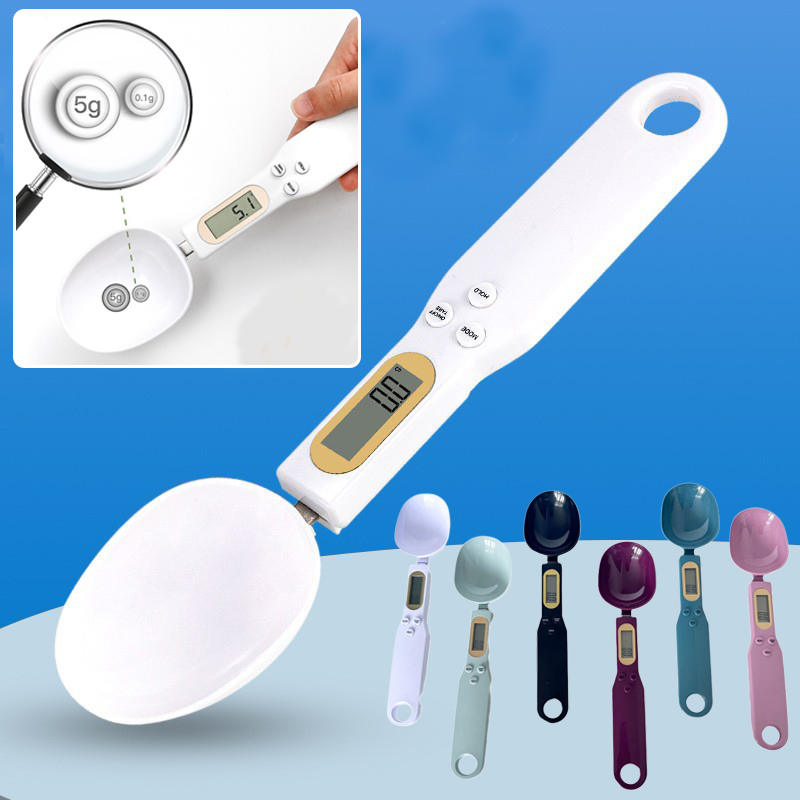

Photos from current listings. Actual item, color, and included accessories may vary.
Food Weighing Machine Buying Guide
A food weighing machine is a kitchen scale for precise gram-level measurement of dry and wet ingredients, where the core trade-off is sensor resolution and platform size versus portability and cost. Durable options use strain-gauge load cells with 1 g resolution and a tare function, while compromises rely on imprecise spring mechanisms or undersized platforms. Choose a true digital load-cell scale if you bake by weight; skip novelty spoon-scales for anything beyond rough portioning.
Key takeaways
- Digital strain-gauge load cells deliver 1 g resolution and 1-5 kg capacity; spring or balance scales drift and cannot tare reliably.
- A true tare (zero) function subtracts container weight, essential for measuring multiple ingredients in one bowl without re-weighing.
- Platform size of at least 15 x 15 cm supports mixing bowls and plates; compact spoon-scales max out around 500 g and are for loose dry goods only.
At a glance
- Category
- Bread Mixers, Scales & Thermometers
- Last updated
- Nov 28, 2026
Current offers
Highlights
- Digital strain-gauge load cells deliver 1 g resolution and 1-5 kg capacity; spring or balance scales drift and cannot tare reliably.
- A true tare (zero) function subtracts container weight, essential for measuring multiple ingredients in one bowl without re-weighing.
- Platform size of at least 15 x 15 cm supports mixing bowls and plates; compact spoon-scales max out around 500 g and are for loose dry goods only.
- Water and dust protection (IPX4 or better) and a sealed keypad determine longevity in wet kitchens; unsealed plastic bodies fail at the buttons first.
Best use cases
- Best fit: home bakers weighing flour, water, and leaven — pick a 1 g resolution scale with 3-5 kg capacity, tare, and a removable stainless platform.
- Best fit: portion-control and meal-prep cooks — choose a slim 1 g scale with 2-3 kg capacity and a flat glass or plastic platform that wipes clean.
- Wrong fit: weighing large stockpots or bulk 10 kg bags — skip compact kitchen scales and use a platform scale rated 10 kg+ with 5 g resolution.
- Wrong fit: measuring tiny spice or yeast amounts under 1 g — skip standard 1 g scales and use a 0.01 g jeweler-style scale for accuracy.
Buying tips
- Match capacity to your heaviest bowl plus ingredients: a 3 kg scale covers most baking; 5 kg+ needed for large batches and stockpots.
- Demand 1 g resolution for baking; 0.1 g or 0.01 g resolution is required for yeast, spices, and coffee dosing under 10 g.
- Prefer a scale with a physical tare button and unit toggle (g/oz/ml); touch-only glass panels can misread with wet or doughy fingers.
- Check the auto-off timer: 60-120 seconds is workable, but 30-second shutoff interrupts multi-ingredient measuring and forces restarts.
Specs
| Sensor Type | Strain-gauge load cell vs spring |
|---|---|
| Resolution | 1 g standard / 0.1 g precision |
| Capacity | 2-5 kg kitchen / 500 g compact |
| Platform Material | Tempered glass / sealed plastic |
Related searches
What to check before buying
- Measure your widest mixing bowl base — the platform must be at least as wide, or the bowl overhangs and reads unstable.
- Confirm counter space and storage: slim 2 cm profiles slide into drawers; thick 4 cm bodies with raised platforms need clearance.
- Verify power source: AAA batteries are universal and replaceable; USB-rechargeable scales need a charged battery and lose use while charging.
- Check the unit set includes grams and milliliters at minimum; ml mode assumes water density and is inaccurate for oils and syrups.
FAQ
Data sources: eBay / Amazon listings and product attribute feeds. Updated Nov 28, 2026.
Some links on this page are affiliate links. If you buy after clicking one, we may earn a commission at no extra cost to you. This does not change which products appear here or their order. Affiliate disclosure.