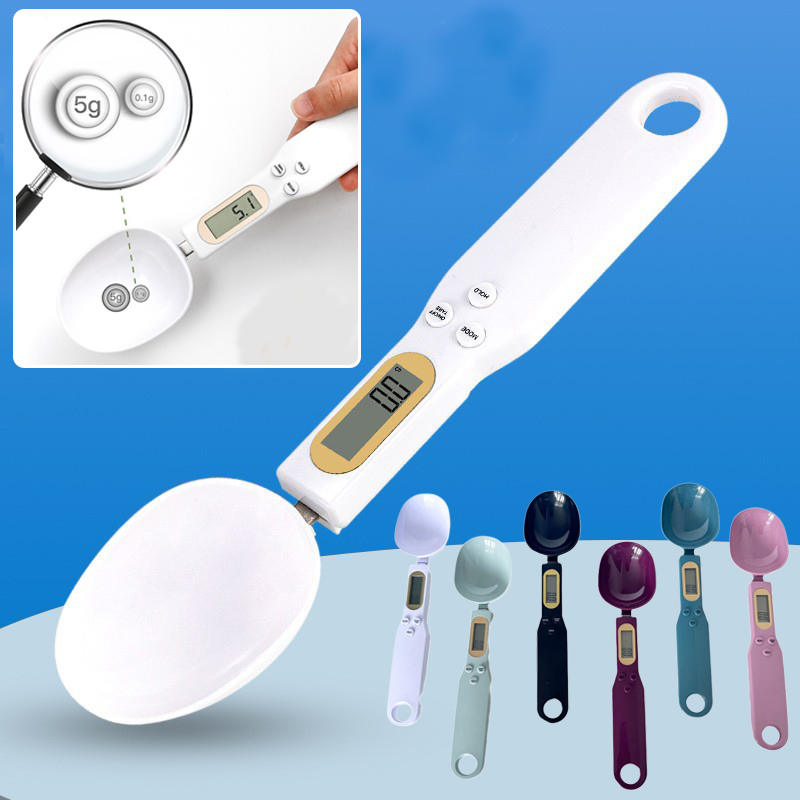

Photos from current listings. Actual item, color, and included accessories may vary.
Food Weighing Scale Buying Guide
A food weighing scale is a kitchen instrument that converts ingredient mass into digital readings for consistent cooking and baking. The core trade-off is between a thin plastic platform with a basic strain-gauge sensor and a sealed stainless-steel platform with a temperature-compensated load cell. Buy the sealed stainless version if you weigh daily or use wet ingredients; choose a compact plastic model only for light, dry-only portioning.
Key takeaways
- Load cell type determines accuracy: a single-point strain-gauge load cell holds ±1 g resolution up to 5 kg, while a compensated dual-sensor module maintains ±0.1 g for micro-ingredient work.
- Platform material drives durability: bare plastic scratches and absorbs dyes, whereas 304 stainless steel resists staining, odor, and knife marks over years of daily use.
- Sealing rating separates washable from wipe-only: IPX4 splash resistance allows rinsing under a tap, while unsealed plastic housings must be kept dry to protect the PCB.
At a glance
- Category
- Bread Mixers, Scales & Thermometers
- Last updated
- Nov 28, 2026
Current offers
Highlights
- Load cell type determines accuracy: a single-point strain-gauge load cell holds ±1 g resolution up to 5 kg, while a compensated dual-sensor module maintains ±0.1 g for micro-ingredient work.
- Platform material drives durability: bare plastic scratches and absorbs dyes, whereas 304 stainless steel resists staining, odor, and knife marks over years of daily use.
- Sealing rating separates washable from wipe-only: IPX4 splash resistance allows rinsing under a tap, while unsealed plastic housings must be kept dry to protect the PCB.
- Display resolution must match capacity: 1 g steps are standard on 5 kg scales; 0.1 g steps require a lower-capacity 1–2 kg platform with a high-resolution sensor.
Best use cases
- Best fit: daily bakers weighing flour and water — pick a 5 kg capacity, 1 g resolution scale with a stainless platform and tare button; skip compact spoon-style scales that max out at 500 g.
- Best fit: coffee and spice dosing — choose a 1–2 kg capacity, 0.1 g resolution scale with a backlit display; skip 5 kg kitchen scales whose 1 g steps are too coarse.
- Best fit: small kitchens with limited drawer space — a compact plastic scale under 20 cm wide works for dry portioning; skip it if you regularly weigh liquids or hot pans directly on the platform.
- Wrong fit: commercial or high-volume prep — consumer plastic scales lack the overload protection and sealed load cells needed for repeated daily cycles; step up to a sealed stainless model rated for continuous use.
Buying tips
- Match capacity to your heaviest bowl-plus-ingredient load: a 5 kg scale covers a 3 kg dough batch with headroom, while a 1 kg scale is only for small doses.
- Require 0.1 g resolution only if you weigh yeast, salt, or espresso doses; otherwise 1 g steps on a 5 kg scale are faster to read and stable.
- Choose a scale with a physical tare button and a hold function — tare lets you zero a bowl, and hold locks the reading when a large bowl blocks the display.
- Prefer a platform at least 15 cm square for stability with mixing bowls; compact spoon-style scales are for direct scooping only, not for balancing a bowl.
Specs
| Platform Material | 304 stainless steel vs ABS plastic |
|---|---|
| Capacity / Resolution | 5 kg at 1 g vs 1 kg at 0.1 g |
| Water Resistance | IPX4 splash-rated vs wipe-only |
| Power Source | AAA batteries vs USB-C rechargeable |
Related searches
What to check before buying
- Measure your counter or drawer space: compact plastic scales run roughly 15–20 cm wide, while full stainless platforms need 20–25 cm of clearance.
- Confirm your heaviest bowl fits the platform footprint — a bowl wider than the platform will tip and give unstable readings.
- Check the battery type and whether the scale uses disposable AAA cells or a rechargeable USB-C battery, and match to your charging habits.
- Verify the scale's unit toggle includes grams and ounces if you follow recipes from both metric and US sources.
FAQ
Data sources: eBay / Amazon listings and product attribute feeds. Updated Nov 28, 2026.
Some links on this page are affiliate links. If you buy after clicking one, we may earn a commission at no extra cost to you. This does not change which products appear here or their order. Affiliate disclosure.