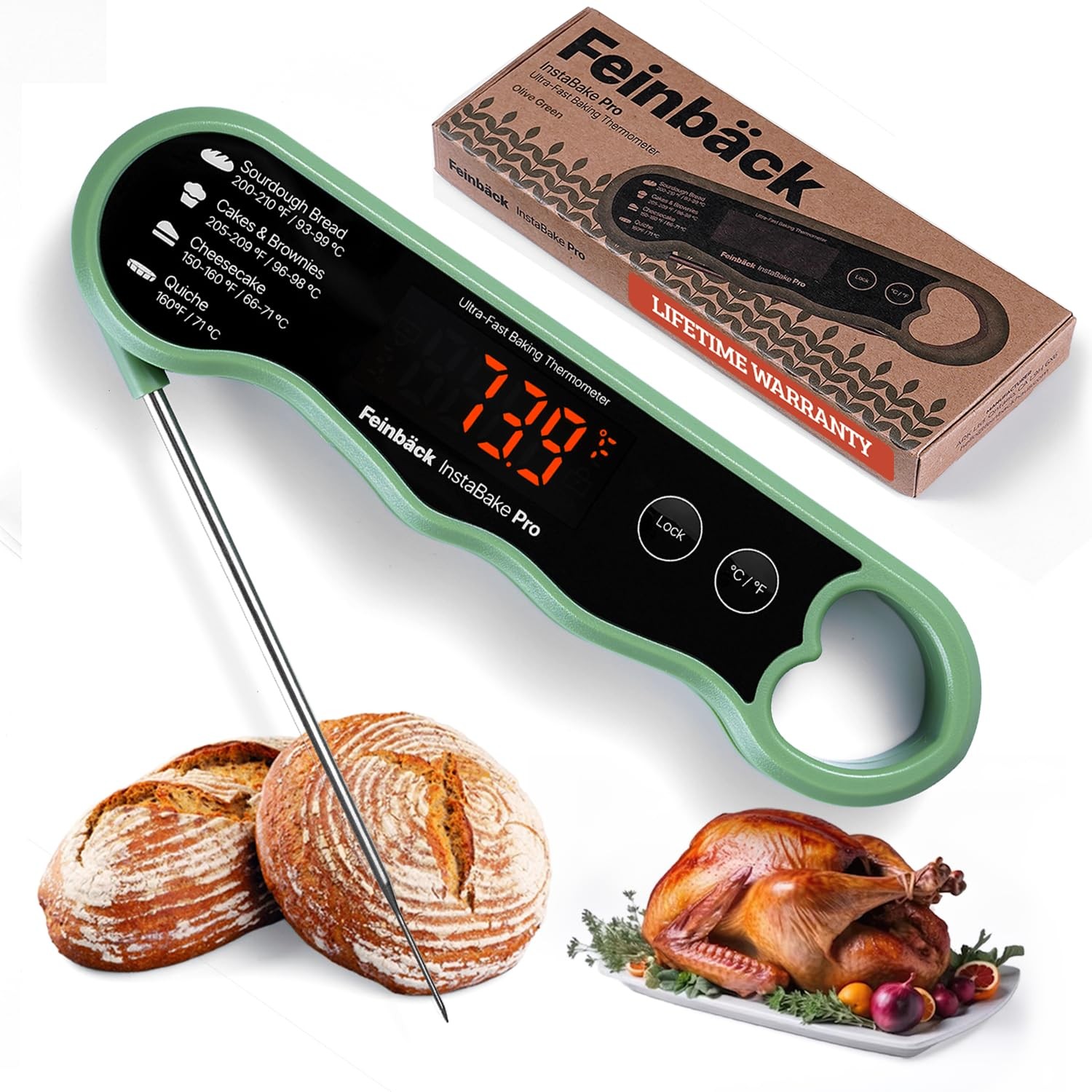

Photos from current listings. Actual item, color, and included accessories may vary.
Instant Read Thermometer Buying Guide
An instant-read thermometer is a precision instrument that measures core temperature in 2–5 seconds, where the key trade-off is between response speed (thin probe tip) and durability/accuracy (sealed, calibrated construction). Choose a thermocouple or high-end thermistor model with a ±0.5–1°F tolerance and a folding probe for durability; skip novelty dial or slow 10-second units for critical cooking.
Key takeaways
- Thermocouple sensors reach final reading in 1–3 seconds with ±0.5°F accuracy, while standard thermistors take 4–6 seconds at ±1–2°F.
- Probe tip diameter under 1.5 mm ensures fast response but is delicate; 2–3 mm tips survive commercial kitchen drops and repeated insertions.
- IP67 or IP66 sealing protects against steam and splashes; unsealed battery compartments fail within months in humid kitchens.
At a glance
- Category
- Bread Mixers, Scales & Thermometers
- Last updated
- Nov 28, 2026
Current offers
Highlights
- Thermocouple sensors reach final reading in 1–3 seconds with ±0.5°F accuracy, while standard thermistors take 4–6 seconds at ±1–2°F.
- Probe tip diameter under 1.5 mm ensures fast response but is delicate; 2–3 mm tips survive commercial kitchen drops and repeated insertions.
- IP67 or IP66 sealing protects against steam and splashes; unsealed battery compartments fail within months in humid kitchens.
- Folding probe models protect the tip and fit in a pocket; fixed-probe units are simpler but risk bent tips and fabric snags.
Best use cases
- Best for high-volume grilling and smoking: pick a thermocouple with a 1–2 second read and backlit display, skip slow 10-second dial thermometers.
- Best for bread baking and sourdough: choose a thin 1.5 mm tip to avoid deflating dough, and a rechargeable USB-C model to avoid battery doors in floury environments.
- Wrong fit for candy and deep-frying: instant-read probes max out at 500–600°F; use a dedicated candy or deep-fry thermometer with a clip.
- Best for oven-roasting with leave-in monitoring: pick a dual-purpose thermometer with a heat-resistant cable rated to 500°F, not a pocket instant-read.
Buying tips
- Response time under 3 seconds is the threshold for 'instant' — anything 5 seconds or longer is a compromise for searing and thin cuts.
- Accuracy spec of ±0.5°F (thermocouple) or ±1°F (thermistor) is required for poultry safety at 165°F; ±2°F units risk undercooking.
- Choose a probe tip of 1.5 mm for delicate bread dough and 2.5–3 mm for rugged BBQ use; thin tips bend permanently if dropped.
- Rechargeable Li-ion via USB-C eliminates coin-cell battery doors that strip or lose water resistance; a full charge lasts 30–50 hours of active use.
Specs
| Sensor Type | Thermocouple vs Thermistor |
|---|---|
| Response Time | 1-3 sec (thermocouple) / 4-6 sec |
| Accuracy | ±0.5°F to ±2°F |
| Waterproof Rating | IP66 / IP67 sealed |
Related searches
What to check before buying
- Measure your oven or grill clearance: folding probes need 1 inch of headroom above the food; fixed probes need 4 inches.
- Confirm IP rating for your environment: IP67 for steam-heavy bread baking or outdoor grilling; IP66 minimum for general kitchen.
- Check probe max temperature: 500°F for oven roasting, 600°F for searing; candy work requires a separate high-temp thermometer.
- Verify display readability: backlit LCD with 0.1° display resolution for precise bread baking and sous-vide, not 1° increments.
FAQ
Data sources: eBay / Amazon listings and product attribute feeds. Updated Nov 28, 2026.
Some links on this page are affiliate links. If you buy after clicking one, we may earn a commission at no extra cost to you. This does not change which products appear here or their order. Affiliate disclosure.