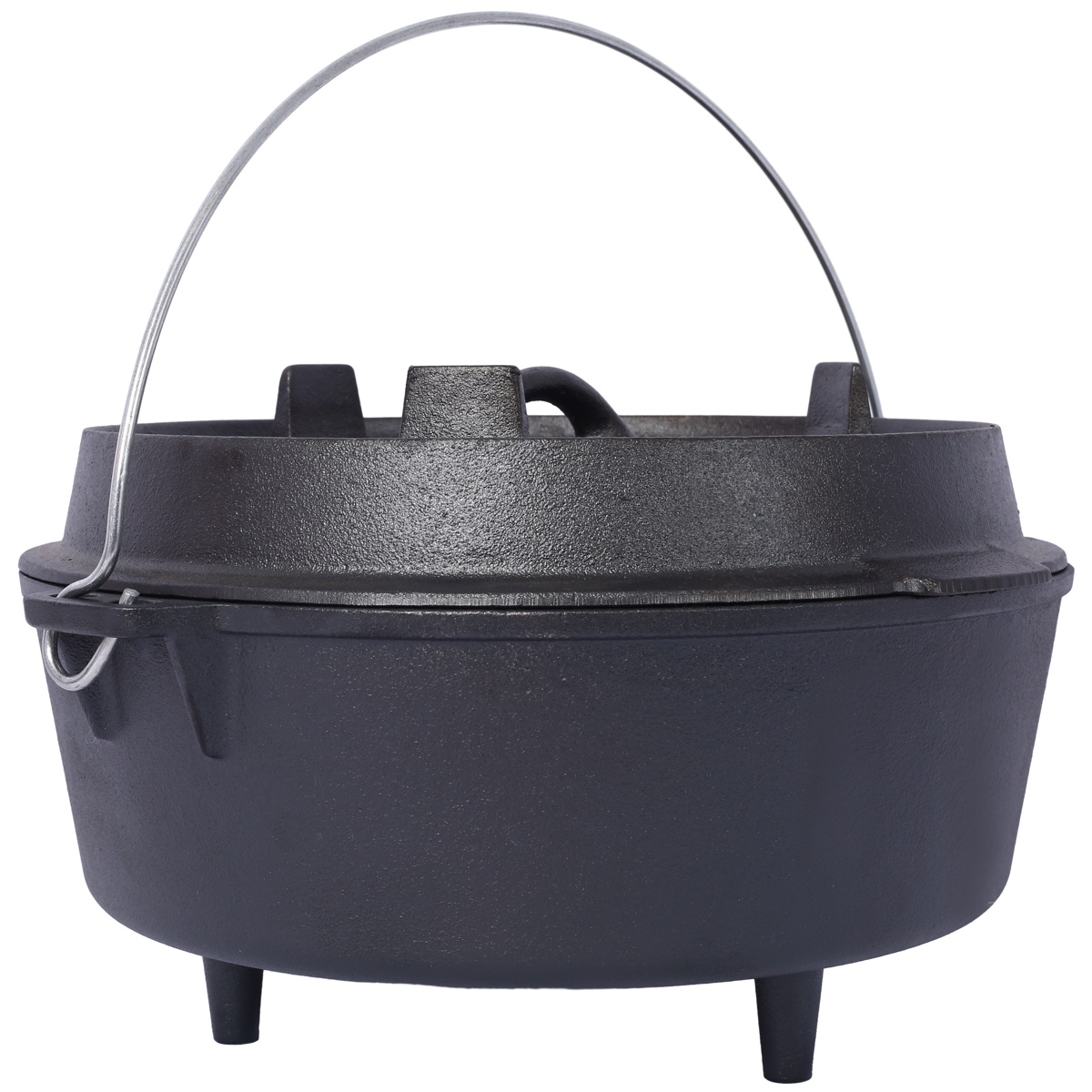

Photos from current listings. Actual item, color, and included accessories may vary.
Dutch Oven With Skillet Lid Buying Guide
A Dutch oven with a skillet lid is a dual-purpose cast-iron vessel where the domed lid doubles as a shallow frying pan, giving you a deep pot for braising and a griddle for searing from one piece of cookware. The defining trade-off is lid-to-pot fit and cast-iron wall thickness: a loose, thin lid leaks steam and warps, while a machined, heavy lid seals and heats evenly. The clear rule: buy only when the lid seats flush with a deep lip and the pot has a leg base or flat bottom matched to your heat source—skip any set where the lid rocks or the iron is under about 3 mm thick.
Key takeaways
- 2-in-1 design: the lid inverts into a skillet, so pan depth typically runs 2-3 in versus the 4-5 in pot body—check both capacities.
- Cast iron mass governs heat retention: pot walls near 4-5 mm and a lid around 3-4 mm hold searing heat without hot spots on coals or gas.
- Legged bases (three feet) are built for campfire and charcoal use and lift the pot above ash; flat-bottom versions suit stove and oven.
At a glance
- Category
- Bread Ovens & Dutch Ovens
- Last updated
- Nov 28, 2026
Current offers
Highlights
- 2-in-1 design: the lid inverts into a skillet, so pan depth typically runs 2-3 in versus the 4-5 in pot body—check both capacities.
- Cast iron mass governs heat retention: pot walls near 4-5 mm and a lid around 3-4 mm hold searing heat without hot spots on coals or gas.
- Legged bases (three feet) are built for campfire and charcoal use and lift the pot above ash; flat-bottom versions suit stove and oven.
- Pre-seasoned iron ships with a baked oil layer; bare or enameled interiors change care—enamel resists acid, raw iron needs re-oiling.
Best use cases
- Best fit: campers and BBQ cooks using coals or fire—pick a legged, pre-seasoned 4.5-5 qt set with a heavy lid that doubles as a sear pan.
- Best fit: kitchen cooks wanting one-pot braise-then-sear—choose a flat-bottom set whose lid skillet is at least 2 in deep for real frying.
- Wrong fit: glass-top or induction ranges—skip legged models and rough-bottom iron that scratches glass; use flat, smooth-base cast iron.
- Wrong fit: high-acid simmering (tomato, wine) in raw iron—pick an enameled Dutch oven instead, since bare seasoning strips with long acid cooks.
Buying tips
- Size by servings: 4.5 qt suits 2-4 people or a whole chicken; 5 qt and up fits family batches and larger roasts—match pot volume, not lid size.
- Measure the lid skillet diameter against your burner: a 10-12 in skillet lid needs a matching 10-12 in heat ring or it overhangs and heats unevenly.
- Check lid seating: a proper lid drops into a recessed lip with no rocking; a flat lid on a flat rim leaks steam and stalls braises.
- For fire use, confirm a three-leg base and a bail or loop handle rated for coals; for oven use, confirm the knob is metal, not plastic.
Specs
| Material | Cast iron (raw or enameled) |
|---|---|
| Capacity | 4.5-7 qt typical |
| Base Type | Flat-bottom or 3-leg campfire |
| Lid Skillet Depth | 2-3 in usable pan depth |
Related searches
What to check before buying
- Measure your burner, oven rack, and grill grate: the skillet lid's diameter must sit fully supported, not overhang the heat source.
- Confirm heat source: legged pots for fire/coals, flat-base for gas, electric coil, or induction—rough iron bottoms scratch glass cooktops.
- Check lid and body weight together: a 4.5-5 qt set typically runs heavy enough that you need two hands and a stable landing spot.
- Verify the interior finish: pre-seasoned or enameled—raw iron requires drying and oiling after every wash to prevent rust.
FAQ
Data sources: eBay / Amazon listings and product attribute feeds. Updated Nov 28, 2026.
Some links on this page are affiliate links. If you buy after clicking one, we may earn a commission at no extra cost to you. This does not change which products appear here or their order. Affiliate disclosure.