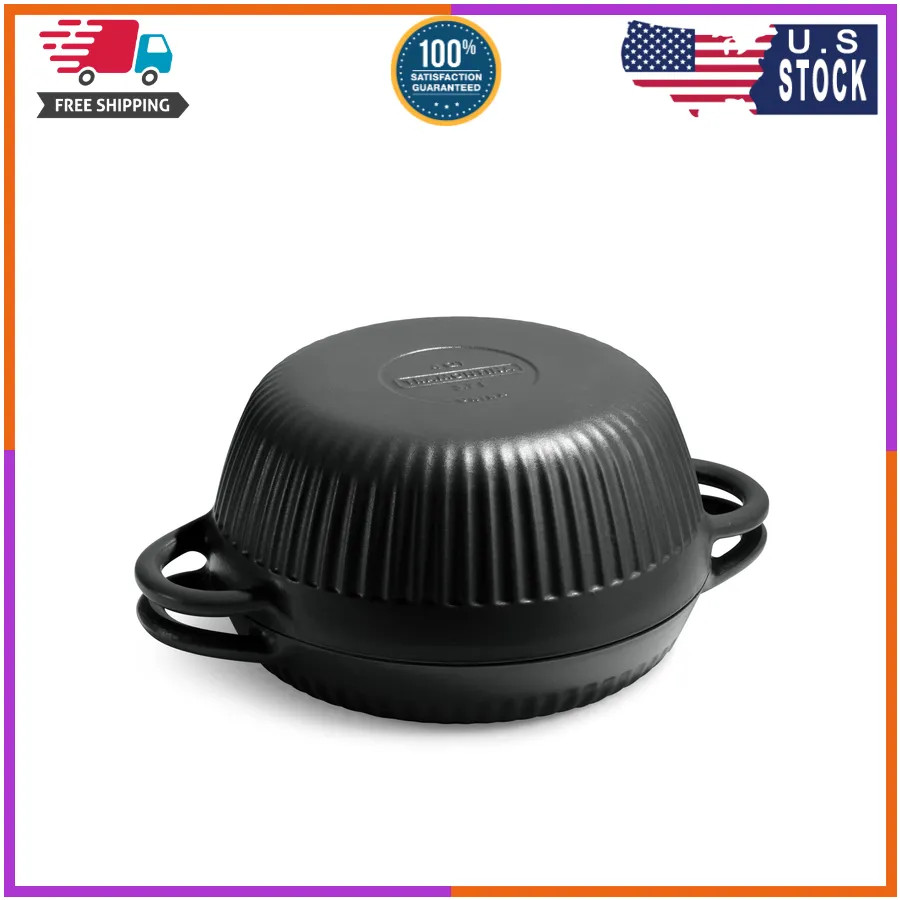

Photos from current listings. Actual item, color, and included accessories may vary.
Enameled Cast Iron Pot Buying Guide
Enameled cast iron pots combine cast iron's heat retention with a glass-derived enamel coating that prevents rust and reactivity. The primary trade-off is enamel quality and thickness versus weight and cost—cheap enamel chips and stains, while quality vitreous enamel lasts decades. The decision rule: buy pots with explicitly vitreous enamel, a tight-fitting lid, and a known foundry; skip lightweight 'enameled' pots with thin walls or unbranded coatings.
Median $48.07
Key takeaways
- Vitreous enamel (powder-glass fired at 750–850°C) is chip-resistant and non-reactive; cheap enamel is thinner, fires lower, and stains or chips within months.
- Wall thickness of 4–6 mm and a heavy tight-fitting lid are what create the thermal mass and steam seal needed for bread baking and braising.
- Enamel color is cosmetic—black interiors hide stains but show scratches; cream interiors show staining but reveal browning; neither affects performance.
At a glance
- Category
- Bread Ovens & Dutch Ovens
- Last updated
- Nov 28, 2026
Current offers
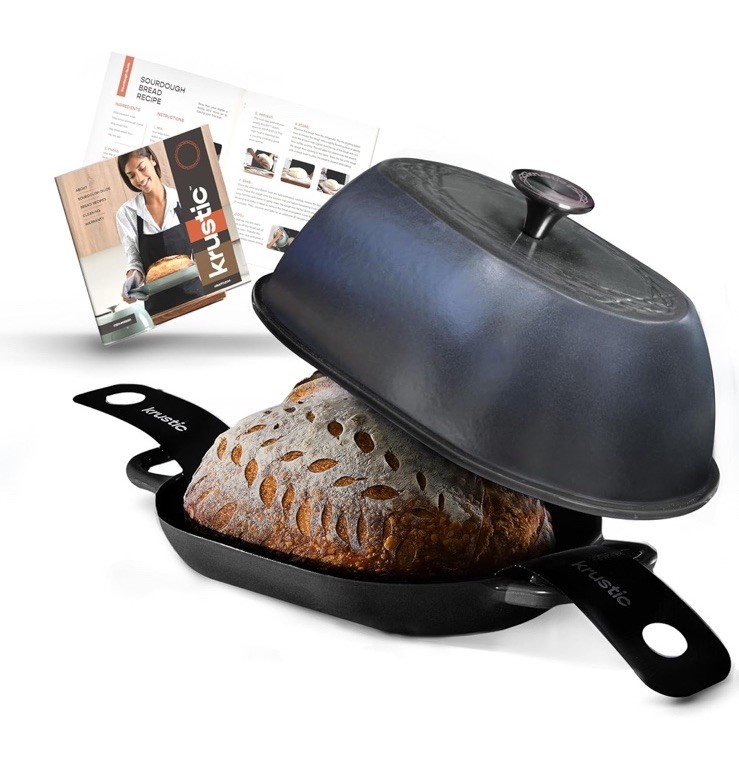
Highlights
- Vitreous enamel (powder-glass fired at 750–850°C) is chip-resistant and non-reactive; cheap enamel is thinner, fires lower, and stains or chips within months.
- Wall thickness of 4–6 mm and a heavy tight-fitting lid are what create the thermal mass and steam seal needed for bread baking and braising.
- Enamel color is cosmetic—black interiors hide stains but show scratches; cream interiors show staining but reveal browning; neither affects performance.
- Oval shapes suit oblong loaves and long braises; round shapes suit boules and even stovetop browning; both work on gas, electric, and induction if the base is magnetic.
Best use cases
- Best fit: small 4–5.5 qt round or oval pots for 1–2 person households, single boules, and small braises—pick oval for batards, round for boules.
- Wrong fit: buying a bare 'enameled' pot with no brand or foundry stated—these chip and stain early; choose known vitreous-enamel brands or verified reviews instead.
- Best fit: induction cooktops—verify a magnetic stainless or cast base; most quality enameled cast iron is induction-compatible, cheap ones often are not.
- Wrong fit: using metal utensils or thermal shock (cold water in a hot pot)—enamel chips; use wood/silicone and let the pot cool before washing.
Buying tips
- Match size to loaf: a 4 qt round fits a 1.5–2 lb boule; 5.5 qt oval fits a 2–2.5 lb batard; a pot should be 2–3x the dough volume.
- Demand 'vitreous enamel' explicitly; brands like Le Creuset, Staub, and Tramontina specify it—unbranded 'enameled' coatings are often thinner and less durable.
- Check lid fit: a heavy lid with self-basting spikes or a tight rim seal traps steam; a loose lid ruins oven spring and braises.
- Verify induction compatibility via a magnetic base; enamel over cast iron is usually fine, but thin enameled steel pots are not.
Specs
| Enamel Type | Vitreous vs cheap low-fire enamel |
|---|---|
| Wall Thickness | 4–6 mm heavy cast iron |
| Common Sizes | 4 qt round / 5.5 qt oval |
| Cooktop Compat | Induction if magnetic base |
Related searches
What to check before buying
- Measure your oven and stovetop burner: a 5.5 qt oval is ~13–14 in long including handles—confirm it fits with the lid on.
- Confirm cooktop type: induction requires a magnetic base; gas and electric work with any quality enameled cast iron.
- Check the pot's interior dimensions (not just quart capacity) against your loaf pan or banneton—dough should fill 2/3 of the pot.
- Plan utensil and cleaning routine: wood/silicone only, no thermal shock, no dishwasher if you want the enamel to last.
FAQ
Data sources: eBay / Amazon listings and product attribute feeds. Updated Nov 28, 2026.
Some links on this page are affiliate links. If you buy after clicking one, we may earn a commission at no extra cost to you. This does not change which products appear here or their order. Affiliate disclosure.