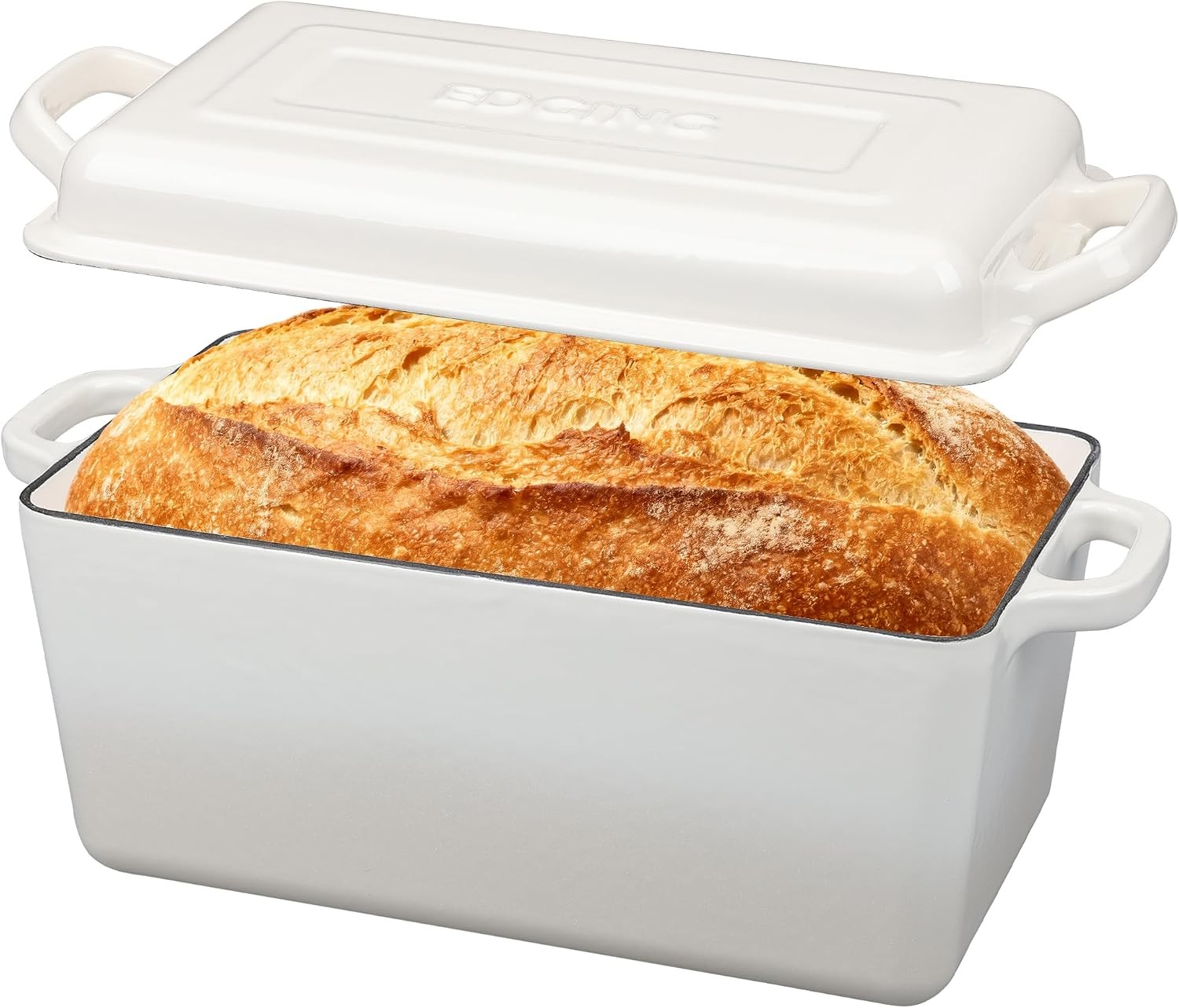

Photos from current listings. Actual item, color, and included accessories may vary.
Oblong Dutch Oven Buying Guide
An oblong Dutch oven is a lidded enameled or bare cast-iron vessel sized to bake batards, boules, and oval loaves with even heat and trapped steam. The core trade-off is enamel over cast iron for easy release and no seasoning versus bare iron for higher searing heat and thermal shock tolerance. Buy enameled for high-hydration sourdough and daily baking; buy bare iron only if you routinely bake at very high heat and accept seasoning upkeep.
Key takeaways
- Enameled cast iron bodies typically run 3-5 mm wall thickness; thinner stamped steel or aluminum pans transfer heat unevenly and scorch loaf bottoms.
- Oblong interiors around 10-11 in long, 7-8 in wide, and 4-5 in deep fit standard 700-1000 g batard doughs without crowding.
- Enameled finishes are oven-safe to about 500°F; bare cast iron handles 600°F+ but requires full seasoning and immediate drying to prevent rust.
At a glance
- Category
- Bread Ovens & Dutch Ovens
- Last updated
- Nov 28, 2026
Current offers
Highlights
- Enameled cast iron bodies typically run 3-5 mm wall thickness; thinner stamped steel or aluminum pans transfer heat unevenly and scorch loaf bottoms.
- Oblong interiors around 10-11 in long, 7-8 in wide, and 4-5 in deep fit standard 700-1000 g batard doughs without crowding.
- Enameled finishes are oven-safe to about 500°F; bare cast iron handles 600°F+ but requires full seasoning and immediate drying to prevent rust.
- Self-basting lids with internal condensation ridges or dimples recirculate steam onto the crust, producing better oven spring than flat lids.
Best use cases
- Best fit: sourdough and yeasted batards — choose an enameled oblong with a domed self-basting lid and side handles for daily 450-475°F baking.
- Wrong fit: stovetop searing and deep-frying — oblong Dutch ovens are shaped for oven bread baking, not high-sided braising or fryer duty; use a round Dutch oven instead.
- Best fit: small-kitchen bakers with narrow ovens — an oblong footprint fits a standard 24-in wall oven rack better than a wide round 5-qt pot; skip oversized round roasters.
- Wrong fit: very large 1.5 kg+ miche loaves — oblong interiors under 11 in long compress large round doughs; choose a 7-qt round or a longer oval roaster instead.
Buying tips
- Match interior length to dough: a 10-11 in oblong suits 700-1000 g batards; below 9.5 in the loaf pushes against the walls and loses oven spring.
- Choose enameled cast iron at 3 mm+ wall thickness for even heat; avoid painted or thin enamel coatings that chip at the rim under thermal shock.
- Confirm the lid is domed with condensation ridges and the base has side handles rated for the full oven temperature you bake at.
- Prefer a light-colored enamel interior so you can see browning and avoid dark interiors that hide scorching on the loaf bottom.
Specs
| Material | Enameled cast iron / bare cast iron |
|---|---|
| Interior Length | 9.5-11 in (batard sizing) |
| Wall Thickness | 3-5 mm cast iron |
| Oven-Safe Max | 450-500°F enameled / 600°F+ bare |
Related searches
What to check before buying
- Measure your oven rack and interior height: an oblong pot plus domed lid typically needs 7-9 in of clearance and 12-13 in of rack depth.
- Check your loaf dimensions: batard doughs 8-10 in long need at least 10 in of interior length to avoid wall contact.
- Verify oven-safe temperature rating on the lid knob and handles — some knobs are rated only to 400°F and must be swapped or removed.
- Confirm your stovetop and oven fuel: enameled cast iron works on gas, electric, and induction; bare iron needs seasoning and dry storage.
FAQ
Data sources: eBay / Amazon listings and product attribute feeds. Updated Nov 28, 2026.
Some links on this page are affiliate links. If you buy after clicking one, we may earn a commission at no extra cost to you. This does not change which products appear here or their order. Affiliate disclosure.