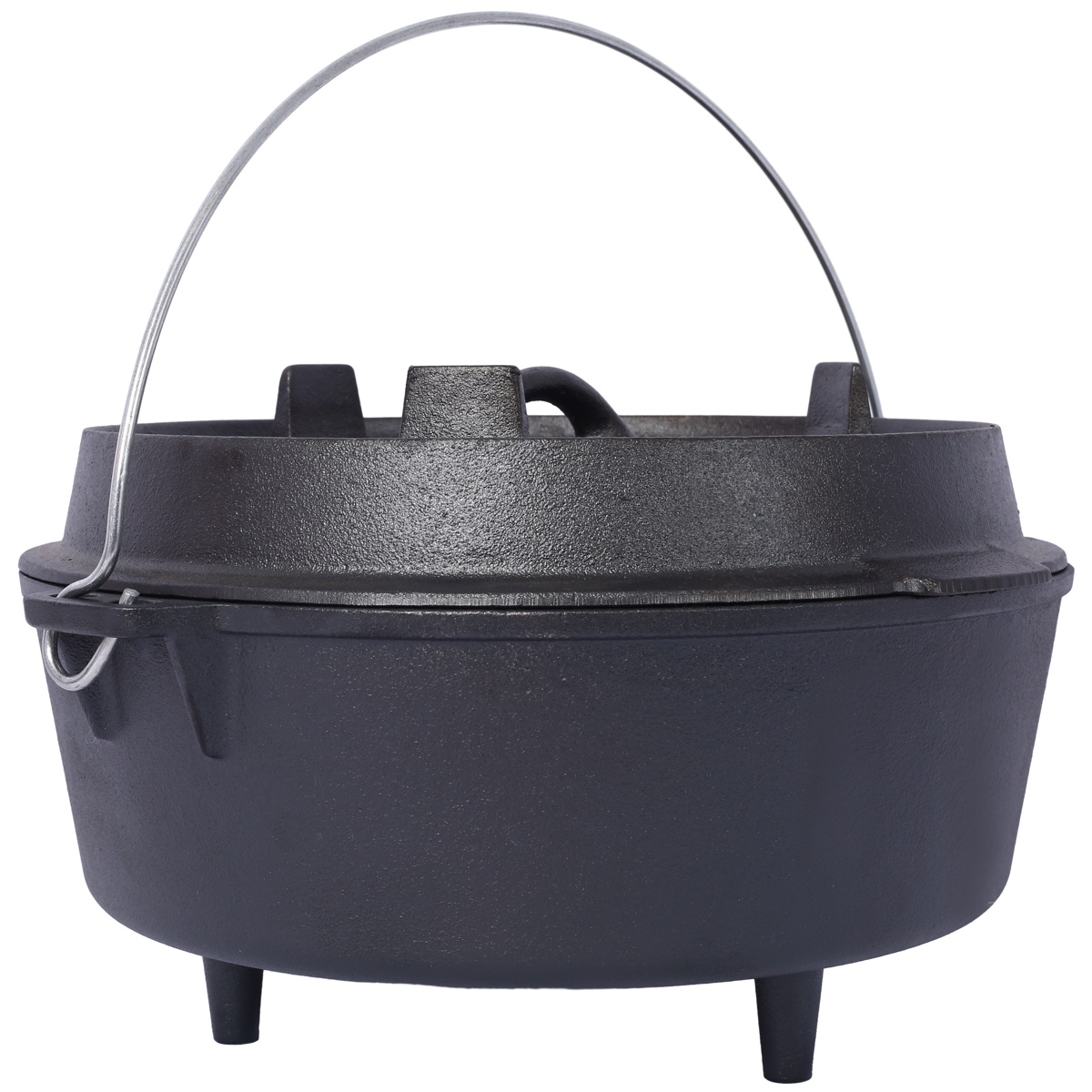

Photos from current listings. Actual item, color, and included accessories may vary.
Outdoor Dutch Oven Buying Guide
An outdoor Dutch oven is a lidded cast-iron pot built for open-fire and campfire cooking, differentiated from kitchen enamelware by its raw or pre-seasoned iron construction and often leg-and-lid-rim design. The core trade-off is bare cast iron's fire-proof durability and heat retention against enameled iron's easier cleaning and rust resistance. Choose bare cast iron with legs and a rimmed lid for actual coals; choose enameled iron for oven-to-table and acidic foods.
Key takeaways
- Bare cast iron is the only finish rated for direct coals and open flame; enamel coatings can chip and craze under concentrated campfire heat.
- Legged bases with a flanged lid rim are the campfire standard, allowing coals underneath and on top for even 360-degree heat.
- Pre-seasoned iron ships ready to cook but factory seasoning is thin; plan on 3-5 home seasoning cycles before relying on it.
At a glance
- Category
- Bread Ovens & Dutch Ovens
- Last updated
- Nov 28, 2026
Current offers
Highlights
- Bare cast iron is the only finish rated for direct coals and open flame; enamel coatings can chip and craze under concentrated campfire heat.
- Legged bases with a flanged lid rim are the campfire standard, allowing coals underneath and on top for even 360-degree heat.
- Pre-seasoned iron ships ready to cook but factory seasoning is thin; plan on 3-5 home seasoning cycles before relying on it.
- Wall thickness and lid weight drive heat retention: heavier lids seal steam and hold temperature longer than thin stamped-steel lids.
Best use cases
- Best fit: car camping, Scout trips, and backyard fire-pit cooking — pick a 4.5-6 qt legless or legged bare-iron pot with a rimmed lid.
- Best fit: indoor-to-outdoor versatility — a 2-in-1 pot with a skillet lid gives you a deep pot and a fry pan from one purchase.
- Wrong fit: frequent acidic dishes (tomato, citrus, wine braises) in bare iron — use enameled iron or a stainless pot instead.
- Wrong fit: ultralight backpacking — cast iron is too heavy; use aluminum or titanium camp cookware.
Buying tips
- Size by servings: 4 qt suits 2-4 people, 6 qt suits 4-6, and 8 qt+ suits groups; a 10-inch lid roughly equals a 4 qt pot.
- For campfire use, insist on a leg base and a lid with a raised rim so coals stay put; flat-bottom pots need a trivet.
- Check the lid doubles as a skillet: a 2-in-1 design saves pack space and adds a fry surface.
- Prefer pre-seasoned or enameled interior if you want less upkeep; raw iron requires oiling after every wash.
Specs
| Material Finish | Bare cast iron vs enameled |
|---|---|
| Base Design | Legged campfire vs flat-bottom |
| Capacity Range | 4-8 qt (2-8+ servings) |
| Lid Type | Rimmed coal lid vs skillet lid |
Related searches
What to check before buying
- Measure your fire pit or grill grate: a 10-inch pot needs at least 12 inches of clear coal bed and a level grate.
- Confirm your stove or campfire setup can support the pot's loaded weight — a 6 qt iron pot runs heavy when full.
- Check whether your campfire ring has a swing grate or tripod; legged pots sit directly in coals, flat pots need a grate.
- Verify lid fit and handle clearance for your oven or grill if you plan dual indoor/outdoor use.
FAQ
Data sources: eBay / Amazon listings and product attribute feeds. Updated Nov 28, 2026.
Some links on this page are affiliate links. If you buy after clicking one, we may earn a commission at no extra cost to you. This does not change which products appear here or their order. Affiliate disclosure.