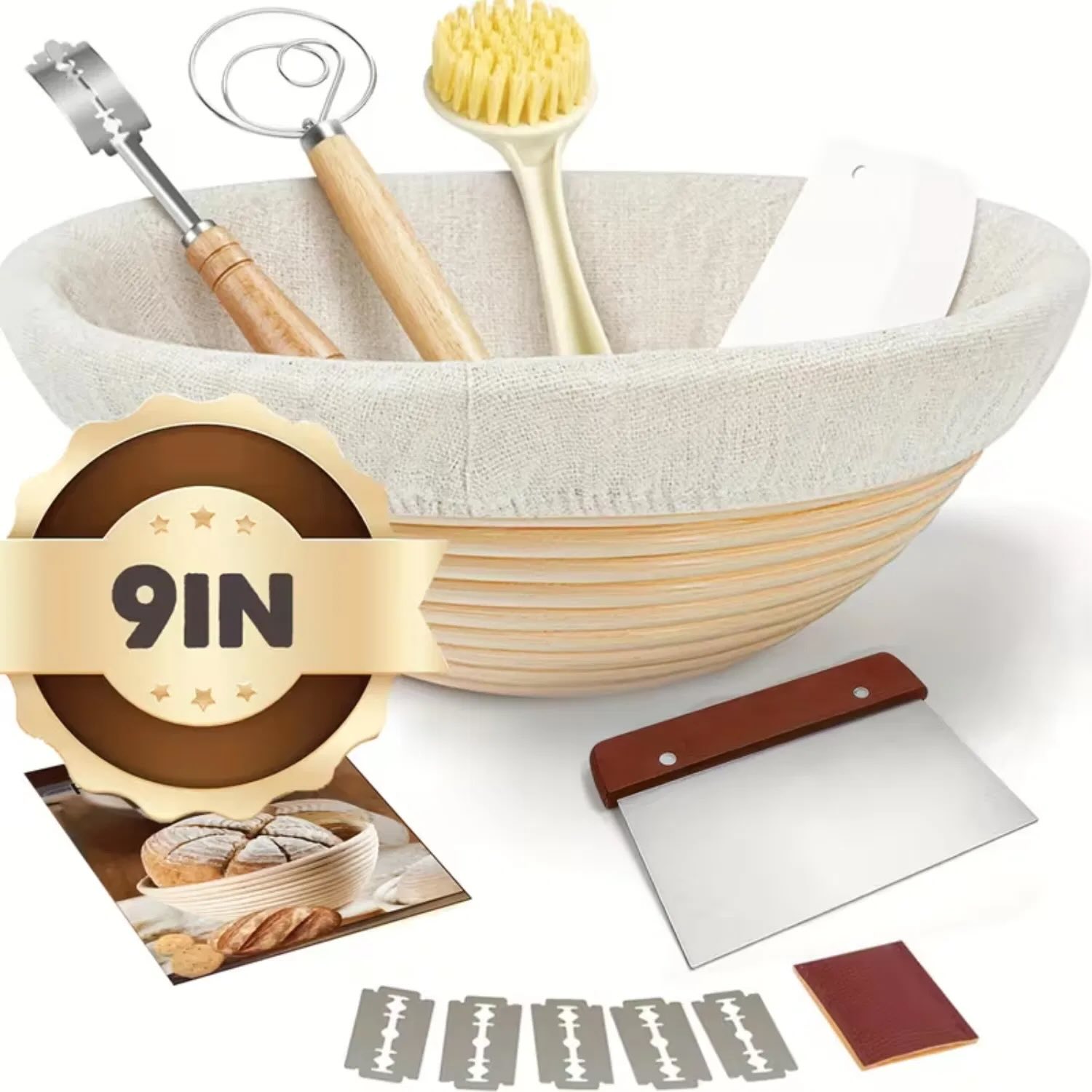

Photos from current listings. Actual item, color, and included accessories may vary.
Bread Baking Proofing Basket Buying Guide
A bread proofing basket (banneton) is a shaped vessel that supports dough during its final rise, wicking surface moisture to hold a crisp skin and imprinting a spiral or ring pattern; lames are the scoring blades that control oven spring. The core trade-off is material and construction: natural cane/rattan with a linen liner breathes and wicks properly, while plastic or fabric-only baskets trap moisture and flatten crust development. Buy natural cane or rattan in the shape that matches your loaf, add a linen liner for high-hydration doughs, and pair it with a curved lame—skip decorative gift-kit baskets made of coated or synthetic fabric.
Key takeaways
- Natural cane/rattan is the standard: uncoated coils wick moisture from the dough surface, while fabric-only or plastic baskets trap condensation and yield pale, soft crusts.
- Shape follows loaf style: round (boule) baskets in 8–10 inch diameters suit 500–1000 g doughs; oval (batard) baskets around 10–11 inches long suit 600–1000 g oblong loaves.
- A linen liner is a functional part, not packaging: it prevents sticking on 70%+ hydration doughs and is removable for washing, while bare cane suits 60–68% hydration.
At a glance
- Category
- Proofing Baskets & Bread Lames
- Last updated
- Nov 28, 2026
Current offers
Highlights
- Natural cane/rattan is the standard: uncoated coils wick moisture from the dough surface, while fabric-only or plastic baskets trap condensation and yield pale, soft crusts.
- Shape follows loaf style: round (boule) baskets in 8–10 inch diameters suit 500–1000 g doughs; oval (batard) baskets around 10–11 inches long suit 600–1000 g oblong loaves.
- A linen liner is a functional part, not packaging: it prevents sticking on 70%+ hydration doughs and is removable for washing, while bare cane suits 60–68% hydration.
- Lames split into straight (clean, shallow cuts for even expansion) and curved (deep, angled cuts for pronounced ears); a thin, replaceable blade is what makes clean scoring possible.
Best use cases
- Best fit: a round 9-inch natural cane basket with linen liner for a first sourdough starter—holds a 500–800 g boule, breathes well, and the liner handles wet dough while you learn shaping.
- Best fit: an oval batard basket plus a curved lame for sandwich and hearth loaves—the elongated shape supports a 700–1000 g dough and the curve produces a defined ear.
- Wrong fit: plastic or fabric-mesh 'proofing baskets' for high-hydration sourdough—they seal in moisture, so dough spreads and the crust stays soft; skip these for any wet dough.
- Wrong fit: oversized decorative gift kits with one small basket and novelty tools—buy the basket size that matches your typical dough weight and add tools individually.
Buying tips
- Match basket volume to dough weight: a round 8-inch basket holds about 500–700 g, a 9-inch about 700–900 g, and a 10-inch about 900–1200 g of proofed dough.
- Choose oval baskets roughly 10–11 inches long and 5–6 inches wide for 700–1000 g batards; anything longer than 12 inches suits only large 1200 g+ loaves.
- Pick natural cane/rattan coils that are tightly woven and unvarnished; coated or painted baskets shed and do not wick moisture.
- For lames, buy a handle that takes standard double-edge razor blades—replaceable stainless blades stay sharp, while fixed thick blades tear high-hydration dough.
Specs
| Basket Material | Natural cane/rattan vs plastic/fabric |
|---|---|
| Shape | Round boule vs oval batard |
| Round Size | 8–10 in dia, 500–1200 g dough |
| Lame Blade Type | Straight vs curved, replaceable |
Related searches
What to check before buying
- Measure your Dutch oven or baking stone first: a 9-inch round basket fits most 10–12 inch Dutch ovens, while a 11-inch oval basket needs an oval or large round vessel.
- Confirm your dough hydration: 70%+ hydration needs a linen liner or a rice-flour dusting routine; 60–68% works on bare cane with light flour.
- Check refrigerator space for cold retarding: baskets must fit on a shelf or in a proofing box without crushing the dough, especially oval shapes.
- Have a scraper and rice flour on hand—baskets require a flour layer or liner to release cleanly, and a bench scraper shapes the dough before it goes in.
FAQ
Data sources: eBay / Amazon listings and product attribute feeds. Updated Nov 28, 2026.
Some links on this page are affiliate links. If you buy after clicking one, we may earn a commission at no extra cost to you. This does not change which products appear here or their order. Affiliate disclosure.