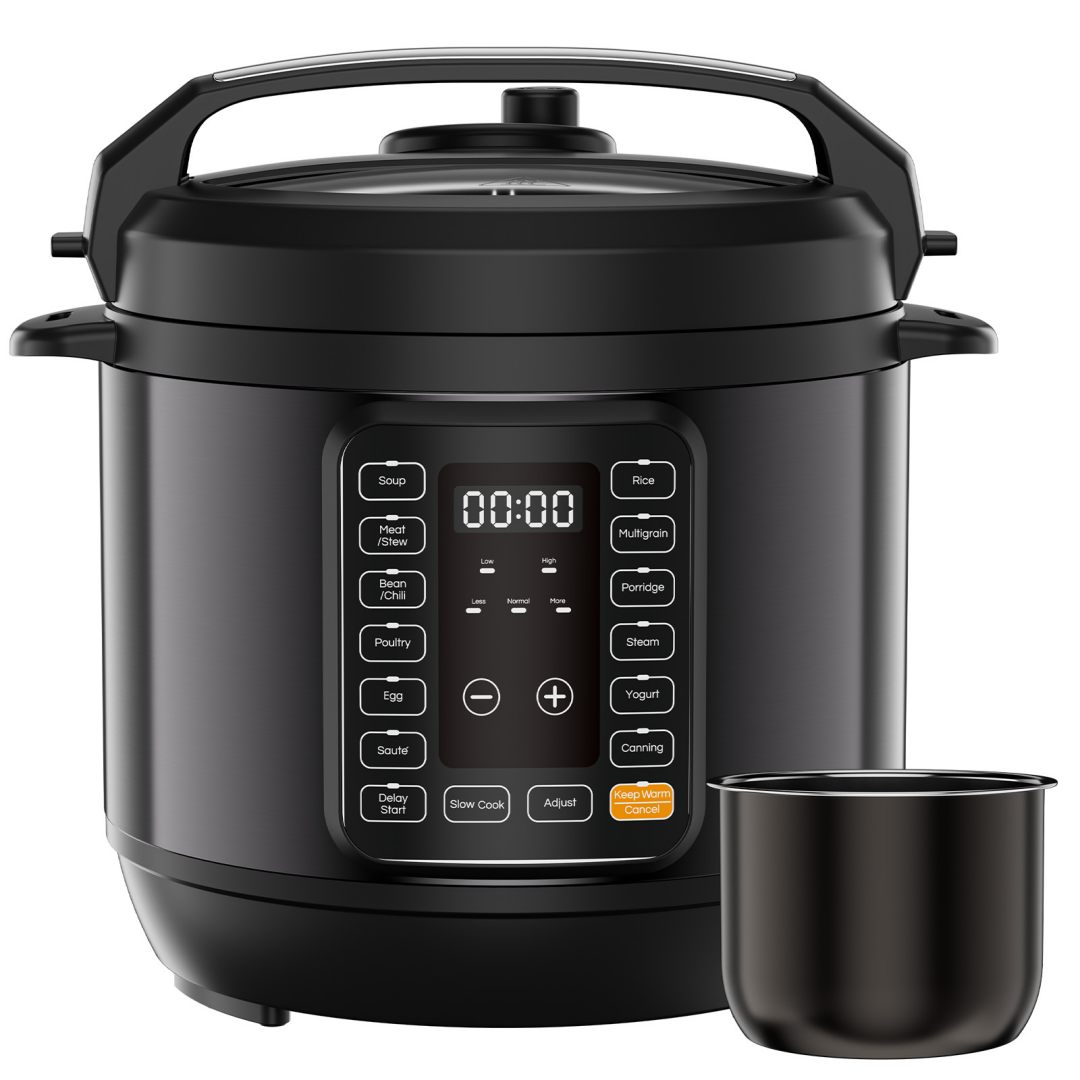

Photos from current listings. Actual item, color, and included accessories may vary.
Electric Pressure Cooker Buying Guide
An electric pressure cooker is a sealed, countertop appliance that uses steam pressure to raise the boiling point of water, cooking foods 2–10x faster than conventional methods while doubling as a slow cooker, rice cooker, steamer, and yogurt maker. The primary trade-off is between stovetop-style pressure authority and countertop convenience—electric units cap at 15 PSI, so build quality and safety certification matter more than nominal wattage. The decision rule: buy a model with a stainless steel inner pot, at least 3 safety interlocks, and a capacity sized to your household (6 qt for 2–4 people, 8 qt for 5+, 12 qt for batch cooking), and skip any unit with an unrated aluminum pot or vague 'pressure cooking' claims.
Median $164.25 · New listings
Key takeaways
- Electric pressure cookers run at 10–15 PSI (roughly 0.7–1.0 bar), versus 15–20 PSI for stovetop cookers—so electric models cook about 20–30% slower but are safer and hands-off.
- Inner pot material is the #1 durability and flavor factor: 304 stainless steel (18/8) resists scratching and scorching, while ceramic nonstick coatings degrade within 1–2 years of high-heat pressure cycles.
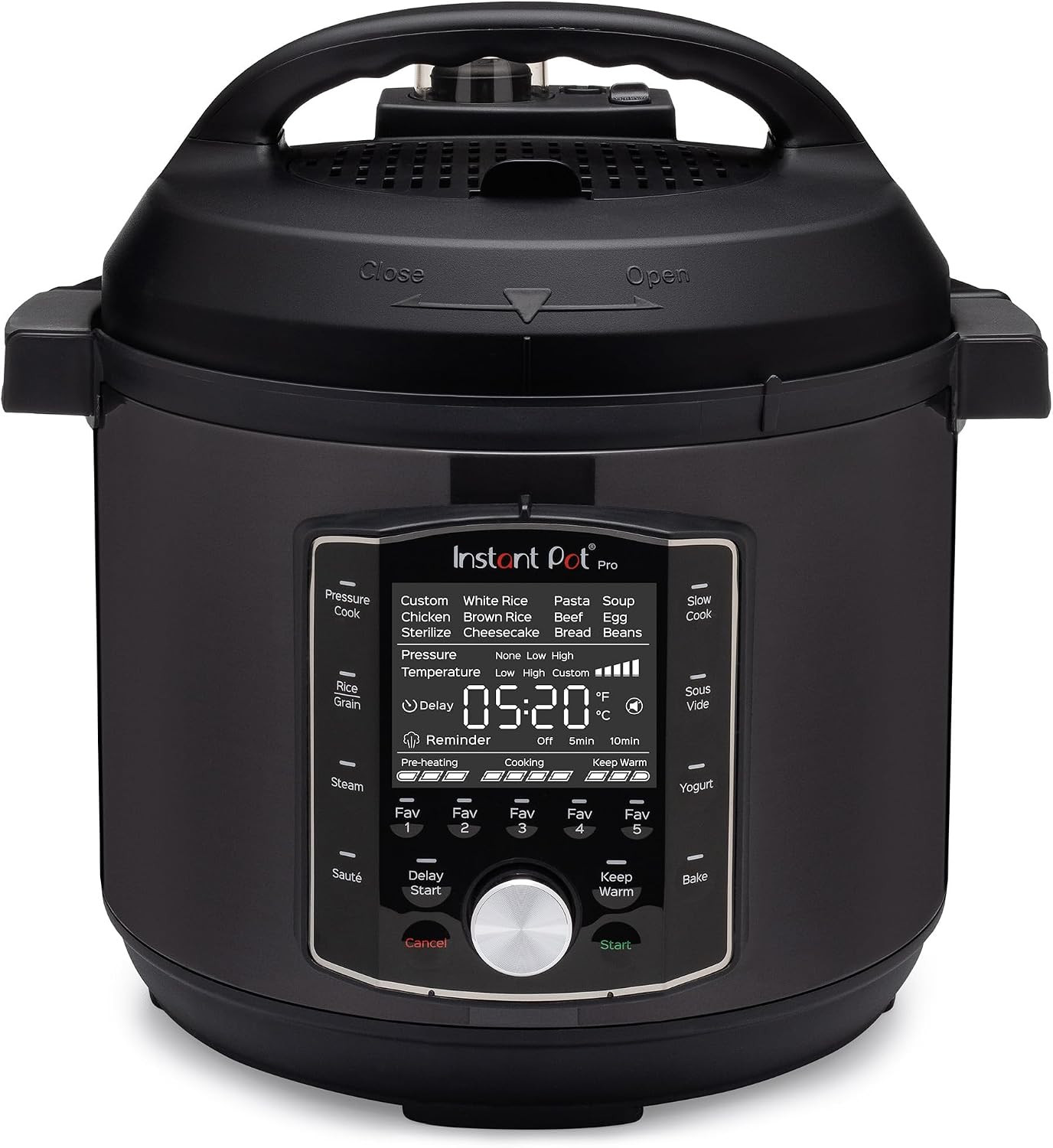
- Instant Pot generations differ meaningfully: Duo (7-in-1, basic LCD), Pro (10-in-1, sous-vide + sterilize, improved steam release), and Ultra (11-in-1, dial interface) share the same 6/8 qt footprint but upgrade programs and lid sensors.
At a glance
- Category
- Slow & Pressure Cookers
- Last updated
- Nov 28, 2026
Current offers
Highlights
- Electric pressure cookers run at 10–15 PSI (roughly 0.7–1.0 bar), versus 15–20 PSI for stovetop cookers—so electric models cook about 20–30% slower but are safer and hands-off.
- Inner pot material is the #1 durability and flavor factor: 304 stainless steel (18/8) resists scratching and scorching, while ceramic nonstick coatings degrade within 1–2 years of high-heat pressure cycles.
- Instant Pot generations differ meaningfully: Duo (7-in-1, basic LCD), Pro (10-in-1, sous-vide + sterilize, improved steam release), and Ultra (11-in-1, dial interface) share the same 6/8 qt footprint but upgrade programs and lid sensors.
- Safety certification separates real appliances from compromises: look for UL/ETL listing and at least three interlocks—lid position, pressure-regulator, and overheat/fuse cutoff—plus a locking lid that cannot open under pressure.
Best use cases
- Best fit: a 6 qt electric pressure cooker for 2–4 person households doing weeknight beans, rice, stews, and yogurt—this is the sweet spot for counter space and recipe availability.
- Best fit: an 8 qt model for families of 5+ or meal-preppers who want to cook a whole chicken or 4–5 lb roast with leftovers; skip 6 qt if you regularly cook more than 4 lb of meat.
- Best fit: a 12 qt electric pressure cooker for canning-adjacent batch cooking, large stockpots of broth, or entertaining—but skip it for everyday rice or small sides, where the oversized pot slows heating.
- Wrong fit: buying a stovetop pressure cooker for hands-off convenience, or an electric unit for high-heat searing—electric cookers' sauté mode tops out lower than a stovetop burner.
Buying tips
- Size by volume, not by 'servings': 6 qt comfortably holds a 5–6 lb chicken or 4 cups dry beans; 8 qt holds a 7–8 lb bird; 12 qt holds 8+ quarts of stock. Rule of thumb: never fill past 2/3 (1/2 for beans and grains).
- Choose 304 stainless steel or a tri-ply (steel-aluminum-steel) inner pot for longevity; ceramic nonstick is acceptable only if you never use metal utensils and replace the pot when coating flakes.
- Confirm the wattage tier matches your kitchen circuit: most 6–8 qt units draw 900–1200 W (about 8–10 A at 120 V), which is fine on a standard 15 A counter circuit but should not share a circuit with a microwave or air fryer.
- Check the pressure release type: a quick-release button or dial is faster, while some entry models require manual valve turning; the Instant Pot Pro line adds a steam-diffusing cover that reduces cabinet moisture.
Specs
| Capacity Tier | 3 qt mini / 6 qt standard / 8 qt family |
|---|---|
| Max Pressure | 10–15 PSI electric; 15–20 PSI stovetop |
| Inner Pot | 304 stainless vs ceramic nonstick vs tri-ply |
| Safety Rating | UL/ETL listed + 3 lid/overheat interlocks |
Related searches
What to check before buying
- Measure your counter depth and cabinet clearance: 6 qt units are roughly 12–13 in wide and 12–14 in tall, while 8 qt and 12 qt units need 14–16 in of width and up to 17 in height with the lid open.
- Verify your kitchen outlet is a grounded 120 V/15 A standard (North America) or 220–240 V (EU/UK) and that the cord reaches without an extension cord under load.
- Check that the inner pot and sealing ring are replaceable and that the lid gasket is silicone (not rubber) for heat and odor resistance.
- Confirm the unit includes a steam rack/trivet and condensate collector—these are required for pot-in-pot cooking and easy cleanup, and are often missing from budget models.
FAQ
Data sources: eBay / Amazon listings and product attribute feeds. Updated Nov 28, 2026.
Some links on this page are affiliate links. If you buy after clicking one, we may earn a commission at no extra cost to you. This does not change which products appear here or their order. Affiliate disclosure.