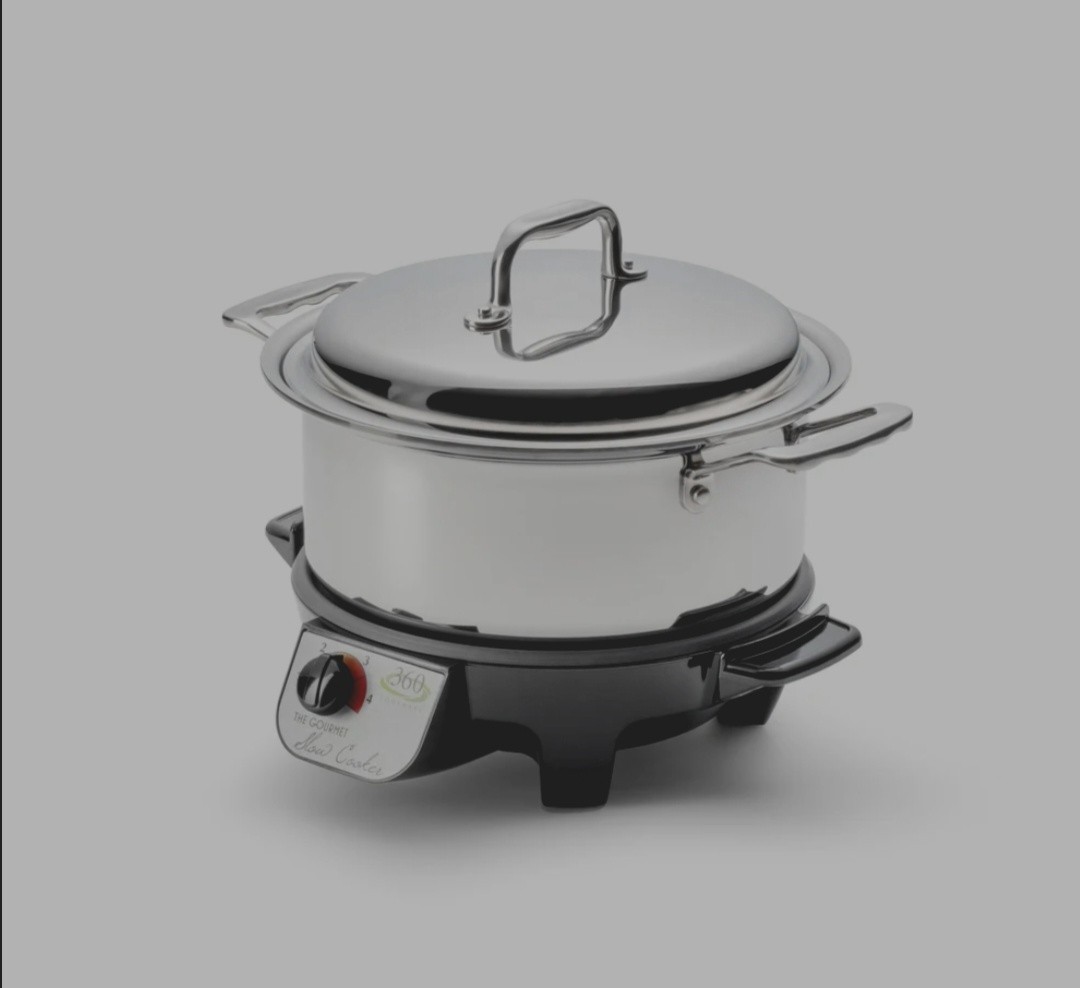

Photos from current listings. Actual item, color, and included accessories may vary.
Electric Slow Cooker Buying Guide
Electric slow cookers are countertop appliances that use a ceramic or aluminum insert and a low-wattage heating element to cook food unattended over 4–10 hours. The core trade-off is between simple dial/analog control with a removable ceramic crock and programmable digital models with timers, searing, and keep-warm logic; build quality hinges on insert material, wattage, and lid seal. The clear decision rule: buy a model with a removable, dishwasher-safe ceramic insert and a minimum 200W element for even low-and-slow heat; skip any unit with a non-removable pot or under 150W.
Key takeaways
- Insert material determines heat retention and cleaning: glazed ceramic stoneware holds steady low heat and is dishwasher-safe; aluminum inserts heat faster but can scorch sauces and are rarely dishwasher-safe.
- Wattage tiers separate performance: 150–200W units suit 2–4 qt small batches; 250–350W units maintain 6–8 qt capacity without long recovery times after lid removal.
- Control architecture: analog dial models offer only Low/High/Warm with no timer; digital programmable models add countdown timers, auto-keep-warm, and in some cases a sear/sauté mode.
At a glance
- Category
- Slow & Pressure Cookers
- Last updated
- Nov 28, 2026
Current offers
Highlights
- Insert material determines heat retention and cleaning: glazed ceramic stoneware holds steady low heat and is dishwasher-safe; aluminum inserts heat faster but can scorch sauces and are rarely dishwasher-safe.
- Wattage tiers separate performance: 150–200W units suit 2–4 qt small batches; 250–350W units maintain 6–8 qt capacity without long recovery times after lid removal.
- Control architecture: analog dial models offer only Low/High/Warm with no timer; digital programmable models add countdown timers, auto-keep-warm, and in some cases a sear/sauté mode.
- Lid and seal design: tempered glass lids with a steam vent are standard; a silicone gasket or locking lid is required for transport and reduces moisture loss during 8+ hour cooks.
Best use cases
- Best fit: a 6–8 qt programmable ceramic-insert cooker for families meal-prepping 4–6 lb roasts or full chickens; skip 2–4 qt analog units if you routinely cook for more than two people.
- Best fit: a 3–4 qt analog dial cooker for small households, dips, and oatmeal where set-and-forget simplicity matters; skip digital models if you never use delayed start and want fewer failure points.
- Best fit: a sear-and-slow model with a removable aluminum or cast-insert pot for one-pan browning before slow cooking; skip it if you only reheat or make soups, where basic ceramic is easier to clean.
- Wrong fit: using any electric slow cooker for pressure cooking or canning—these are not pressure vessels; choose a stovetop or electric pressure cooker for those tasks.
Buying tips
- Size by household: allow 1 qt per person plus 1–2 qt headroom for leftovers; a 6 qt cooker is the practical minimum for a 4–5 lb roast without overflow.
- Match wattage to size: choose at least 200W for 4–6 qt and 300W+ for 7–8 qt; lower wattage in a large pot lengthens preheat and recovery, causing uneven cooking.
- Prioritize a removable ceramic insert rated dishwasher-safe and a tempered glass lid; non-removable pots make cleaning difficult and are a durability weak point at the seam.
- For transport or potlucks, require a locking lid with silicone gasket; standard vented glass lids leak in transit and are not sealed.
Specs
| Insert Material | Ceramic stoneware vs aluminum |
|---|---|
| Wattage Tier | 150–200W (small) / 250–350W (large) |
| Control Type | Analog dial vs digital programmable |
| Capacity Range | 2–8 qt (1 qt per person + headroom) |
Related searches
What to check before buying
- Measure your counter footprint and cabinet clearance: 6–8 qt units typically run 15–17 in wide and 10–12 in tall; confirm the lid hinge or handles do not block upper cabinets.
- Confirm your kitchen outlet is standard 120V/15A (North America) or the local voltage standard; slow cookers draw 0.8–2.5A, so no special circuit is needed.
- Check insert and lid are both dishwasher-safe or fully submersible; hand-wash-only ceramic inserts add daily friction.
- Verify the unit includes a keep-warm mode and, if needed, a delay-start timer; these are the two features most often missing on bargain analog models.
FAQ
Data sources: eBay / Amazon listings and product attribute feeds. Updated Nov 28, 2026.
Some links on this page are affiliate links. If you buy after clicking one, we may earn a commission at no extra cost to you. This does not change which products appear here or their order. Affiliate disclosure.