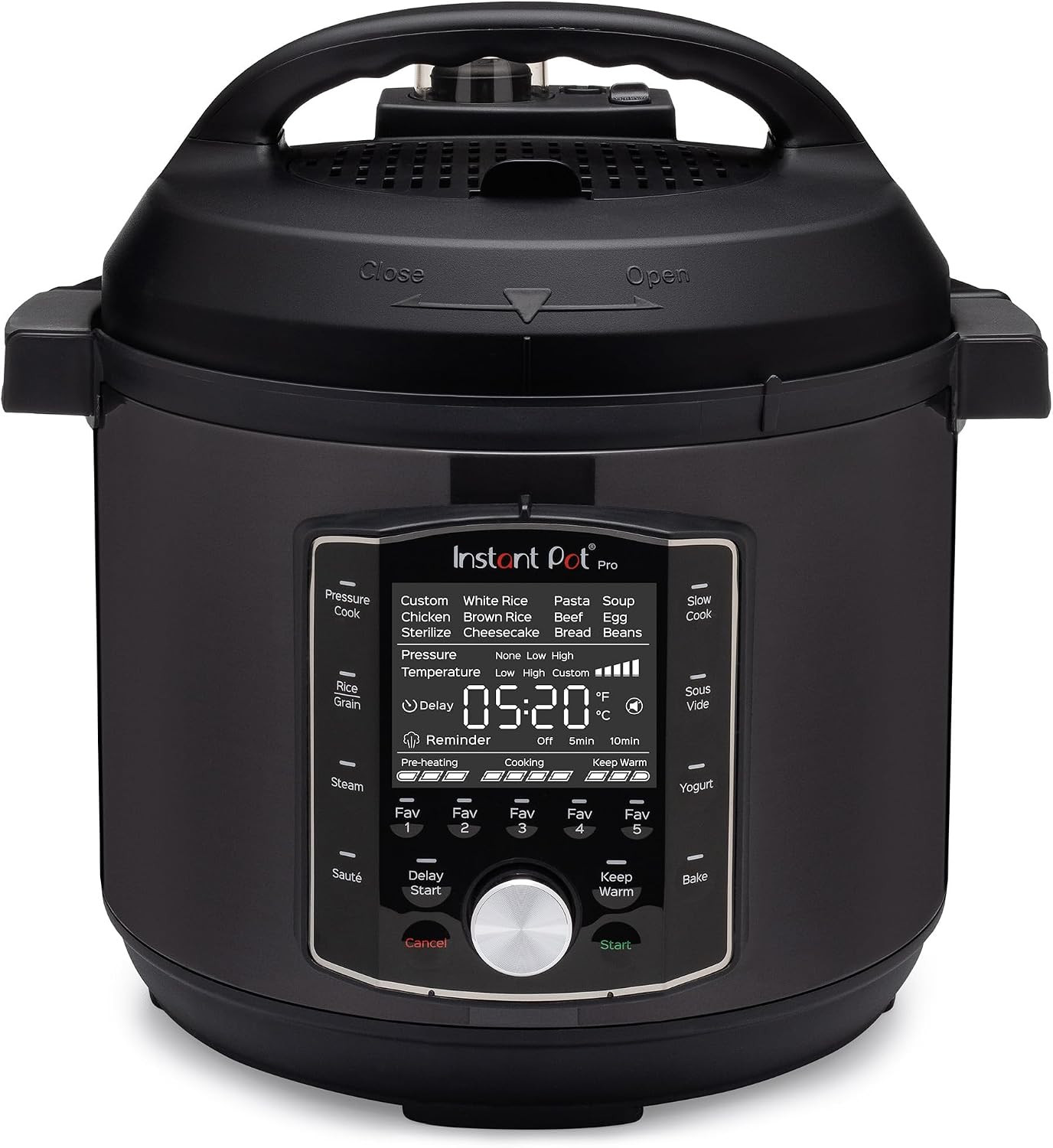

Photos from current listings. Actual item, color, and included accessories may vary.
Instant Pot With Pressure Cooker Buying Guide
Instant Pot with pressure cooker refers to multi-function electric pressure cookers that combine pressure cooking with slow cooking, sautéing, steaming, and more in one appliance. The core trade-off is between true pressure-cooking capability (15 psi with a locking lid and safety systems) and slow-cooker convenience—cheap 'multi-cookers' often lack adequate pressure or use thin aluminum inner pots that warp. The decision rule: buy a model with a stainless-steel inner pot, 15 psi rating, and a dedicated slow-cook function; skip any unit that lists 'pressure cooker' but omits a locking lid or pressure-release valve.
Key takeaways
- Instant Pot Pro models add a removable inner pot with sous-vide and sterilize functions plus a larger LCD, while Duo models are simpler 7-in-1 units with basic button controls.
- True pressure cooking requires 15 psi to reach 250°F; budget 'multi-cookers' often peak at 9-11 psi, which lengthens cook times and fails to safely process low-acid foods.
- Stainless-steel 18/8 inner pots resist warping and retain heat better than nonstick aluminum pots, which scratch and degrade after repeated high-pressure cycles.
At a glance
- Category
- Slow & Pressure Cookers
- Last updated
- Nov 28, 2026
Current offers
Highlights
- Instant Pot Pro models add a removable inner pot with sous-vide and sterilize functions plus a larger LCD, while Duo models are simpler 7-in-1 units with basic button controls.
- True pressure cooking requires 15 psi to reach 250°F; budget 'multi-cookers' often peak at 9-11 psi, which lengthens cook times and fails to safely process low-acid foods.
- Stainless-steel 18/8 inner pots resist warping and retain heat better than nonstick aluminum pots, which scratch and degrade after repeated high-pressure cycles.
- Instant Pot's Duo Plus and Pro lines use a locking lid with dual pressure-release valves; older Viva models use a simpler steam-release dial without a locking indicator.
Best use cases
- Best fit: busy households cooking dried beans, tough meats, and stews—choose a 6-quart Instant Pot Pro or Duo with 15 psi and stainless pot for weeknight pressure cooking.
- Best fit: small kitchens or singles—choose a 3-quart model for portability and faster pressurization; skip 8-quart models unless cooking for 5+ people or batch prepping.
- Wrong fit: buyers wanting only slow cooking—a dedicated slow cooker with a ceramic crock costs less and browns better; pressure cookers excel at speed, not all-day simmering.
- Wrong fit: canning low-acid vegetables or meats—Instant Pots are not USDA-approved pressure canners; choose a stovetop canner with a weighted gauge instead.
Buying tips
- Match quart size to household: 3 qt for 1-2 people, 6 qt for 3-4, 8 qt for 5+ or batch cooking; never fill above the 2/3 mark for pressure safety.
- Confirm 15 psi operating pressure and a stainless-steel inner pot; models listing only 'high/low pressure' without psi often max out below 12 psi.
- Choose a model with at least 10 safety mechanisms (lid lock, pressure release, overheat protection) and a 3-prong grounded plug for 120V US outlets.
- Prefer models with a removable inner pot and dishwasher-safe lid gasket; Pro and Duo Plus lines include sous-vide and yogurt functions that basic Duo models lack.
Specs
| Pressure Level | 15 psi (high) / 7-8 psi (low) |
|---|---|
| Inner Pot Material | 18/8 stainless steel vs nonstick aluminum |
| Capacity Tiers | 3 qt / 6 qt / 8 qt |
| Safety Systems | 10+ mechanisms incl. lid lock |
Related searches
What to check before buying
- Measure counter clearance: 6-quart models need about 13 inches height with lid open and 12 inches width; 8-quart adds 2-3 inches in each dimension.
- Verify your kitchen outlet is 120V/15A grounded; Instant Pots draw 1000-1200W and should not share a circuit with high-draw appliances.
- Check that the inner pot and sealing ring are removable and replaceable; silicone gaskets last 18-24 months and must match model size.
- Confirm the lid locks and the float valve drops before opening; models without a locking indicator require manual vigilance during depressurization.
FAQ
Data sources: eBay / Amazon listings and product attribute feeds. Updated Nov 28, 2026.
Some links on this page are affiliate links. If you buy after clicking one, we may earn a commission at no extra cost to you. This does not change which products appear here or their order. Affiliate disclosure.