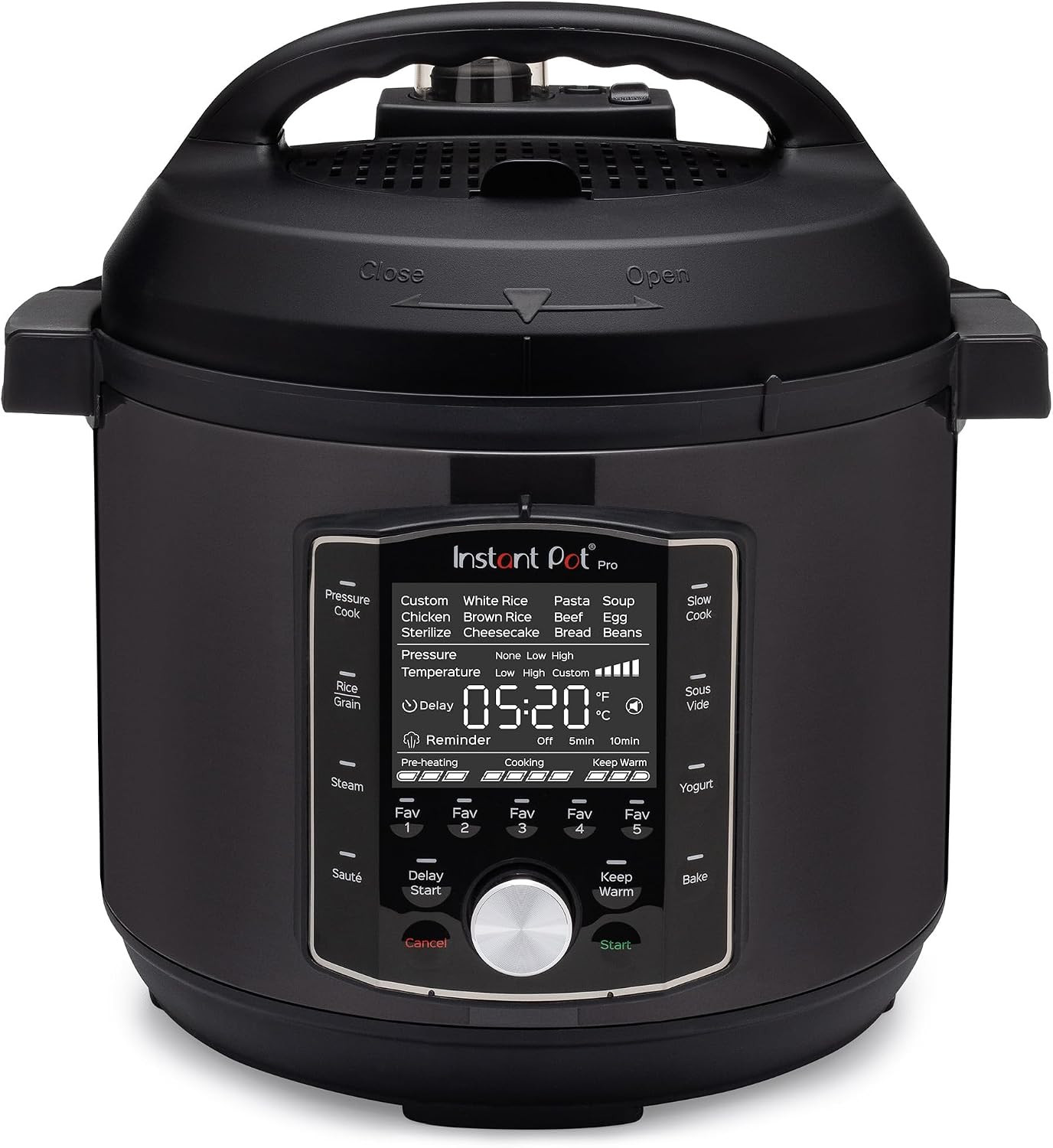

Photos from current listings. Actual item, color, and included accessories may vary.
Pot In Pot Instant Pot Buying Guide
Pot-in-pot (PIP) cooking uses a separate inner vessel suspended on a trivet inside a pressure cooker's main pot, letting you cook rice, grains, or delicate liquids simultaneously with a main dish in the surrounding water—without mixing flavors. The critical trade-off is vessel compatibility: the inner pot must fit the cooker's diameter and be heat-safe under pressure, and the outer cooker must have enough headroom for the trivet plus the inner pot's height. The decision rule is simple: choose a stainless-steel or tempered-glass inner vessel sized 1–2 inches smaller in diameter than your cooker's inner pot, and verify your cooker's minimum liquid requirement is still met in the outer pot.
Key takeaways
- Instant Pot Duo, Duo Plus, and Pro models use a 6-quart inner pot with roughly 8.5–8.7 inch inner diameter; the inner PIP vessel should be 6–7.5 inches in diameter to leave a water gap for steam circulation.
- Tempered-glass PIP inserts (e.g., Pyrex-style) are oven-safe to about 425°F but pressure-cooker steam reaches 240–250°F at 15 psi, so borosilicate glass is required—soda-lime glass risks thermal shock and cracking.
- Stainless-steel 304 (18/8) inner pots are the durable standard for PIP; 201-grade stainless is cheaper but less corrosion-resistant and not recommended for repeated pressure cycles.
At a glance
- Category
- Slow & Pressure Cookers
- Last updated
- Nov 28, 2026
Current offers
Highlights
- Instant Pot Duo, Duo Plus, and Pro models use a 6-quart inner pot with roughly 8.5–8.7 inch inner diameter; the inner PIP vessel should be 6–7.5 inches in diameter to leave a water gap for steam circulation.
- Tempered-glass PIP inserts (e.g., Pyrex-style) are oven-safe to about 425°F but pressure-cooker steam reaches 240–250°F at 15 psi, so borosilicate glass is required—soda-lime glass risks thermal shock and cracking.
- Stainless-steel 304 (18/8) inner pots are the durable standard for PIP; 201-grade stainless is cheaper but less corrosion-resistant and not recommended for repeated pressure cycles.
- The trivet is non-optional: a flat or wire trivet must raise the inner pot at least 0.5–1 inch above the outer pot's base so water can boil and steam can circulate; without it, the inner pot sits in water and cooks by conduction, not steam.
Best use cases
- Best fit: cook rice or quinoa in an inner stainless pot while a curry or stew simmers in the outer pot—choose a 4–6 cup capacity inner vessel for a 6-quart cooker. Skip glass if you frequently move the hot inner pot; stainless is more forgiving.
- Best fit: steam delicate items like custards or fish in a covered glass or stainless inner pot over water—pick tempered borosilicate glass with a vented lid for visibility, and size it 1.5 inches below the cooker's inner pot diameter.
- Wrong fit: using a PIP setup in a 3-quart cooker—headroom is too tight and minimum liquid volume (often 1 cup) may not be met once the inner pot displaces water. Use a 6-quart or larger cooker for PIP.
- Wrong fit: stacking a second inner pot directly on top of a main dish without a rack—uneven steam flow causes undercooked grains. Always use a trivet or rack between layers.
Buying tips
- Measure your cooker's inner pot diameter and depth: the PIP vessel must be at least 1 inch smaller in diameter and its height plus trivet must leave 1–2 inches of headroom below the lid's pressure valve.
- Choose 304 stainless steel for durability and even heating; avoid aluminum inner pots, which react with acidic foods and can pit under repeated pressure cycles.
- For glass inserts, confirm 'borosilicate' or 'tempered glass, oven-safe to 425°F'—soda-lime glass is not pressure-cooker safe and can shatter from steam heat.
- Match inner vessel capacity to your cooker: a 6-quart Instant Pot accommodates a 1.5–2 quart PIP insert; a 2-quart insert is too large for a 3-quart cooker and too small to be efficient in an 8-quart.
Specs
| Insert Material | 304 stainless / borosilicate glass |
|---|---|
| Insert Capacity | 1.5–2 qt (6-qt cooker) |
| Max Diameter | 6–7.5 in for 6-qt cooker |
| Heat Safety | Oven-safe to 425°F (glass) |
Related searches
What to check before buying
- Inner pot diameter: measure across the top inside edge of your cooker's pot; subtract 1–1.5 inches for the PIP vessel's maximum diameter.
- Headroom: measure from the trivet's top to the underside of the cooker lid (including the pressure valve and float); the inner pot plus lid must fit with 1 inch to spare.
- Minimum liquid: confirm your cooker's manual requires at least 1 cup of water in the outer pot; the inner pot displaces volume, so add water around it until the level is visible below the trivet.
- Trivet compatibility: verify you own or buy a trivet that fits flat in your cooker's base and raises the inner pot at least 0.5 inch; wire or silicone trivets with handles are easiest to lift out.
FAQ
Data sources: eBay / Amazon listings and product attribute feeds. Updated Nov 28, 2026.
Some links on this page are affiliate links. If you buy after clicking one, we may earn a commission at no extra cost to you. This does not change which products appear here or their order. Affiliate disclosure.