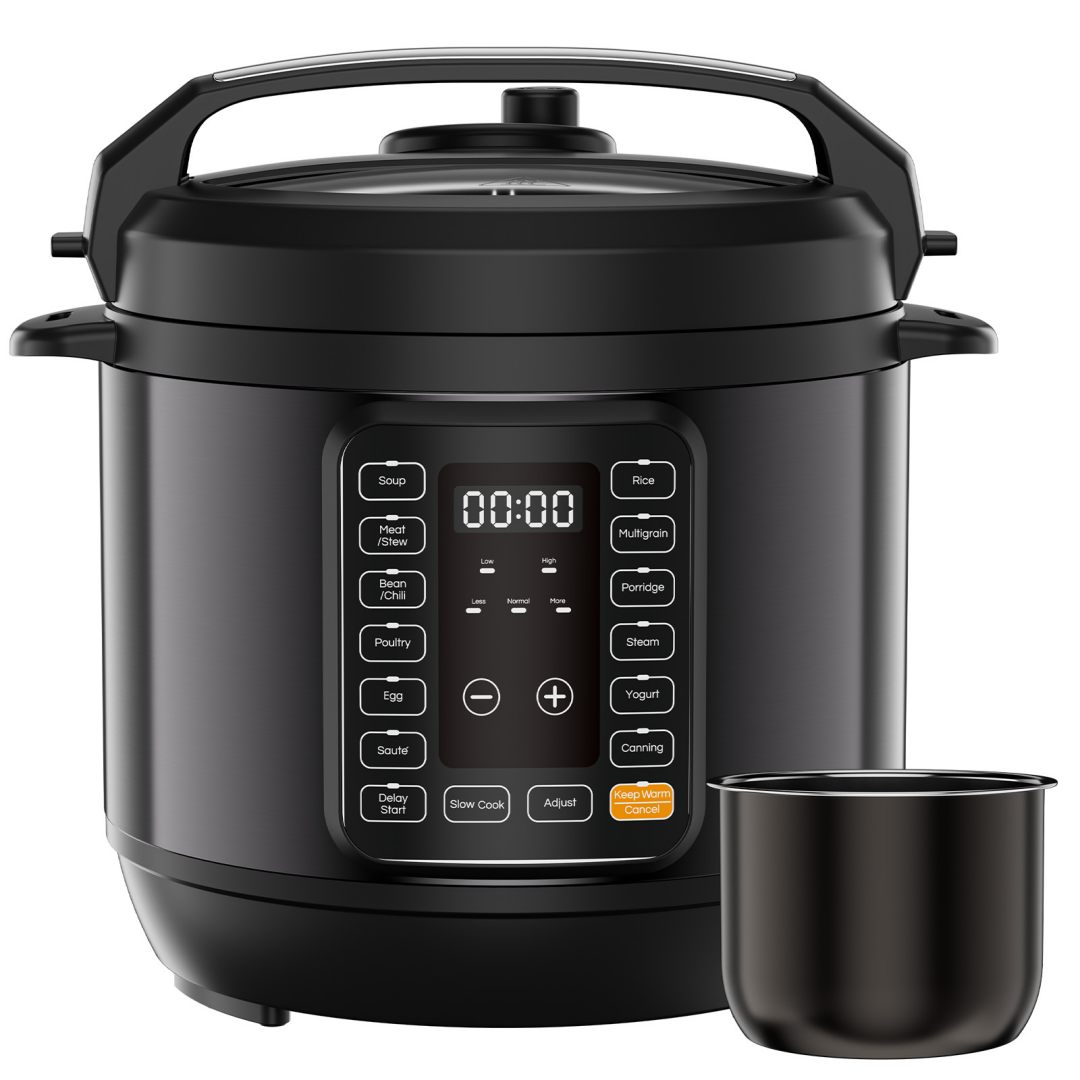

Photos from current listings. Actual item, color, and included accessories may vary.
Stainless Steel Electric Pressure Cooker Buying Guide
Stainless steel electric pressure cookers combine a 304-grade inner pot with electric pressure and slow-cook modes, trading nonstick convenience for scratch resistance and no coating wear. The key decision is pot grade (304 vs 316) and safety architecture (mechanical lid lock plus redundant pressure relief), which separate durable units from disposable ones. Choose a stainless model if you sear, use metal utensils, and want a pot that outlasts the appliance; skip it if you demand effortless nonstick release for rice and sticky sauces.
Key takeaways
- Food-contact pots are 304 (18/8) stainless; 316L adds molybdenum for salt and acid resistance, relevant for brines and tomato-heavy cooking.
- Safety stack: lid must lock before pressurization and stay locked until pressure drops; redundant valves (operating plus over-pressure) are the baseline standard.
- Tri-ply bases (stainless–aluminum core–stainless) spread heat for searing; thin single-ply pots scorch on sauté and warp over time.
At a glance
- Category
- Slow & Pressure Cookers
- Last updated
- Nov 28, 2026
Current offers
Highlights
- Food-contact pots are 304 (18/8) stainless; 316L adds molybdenum for salt and acid resistance, relevant for brines and tomato-heavy cooking.
- Safety stack: lid must lock before pressurization and stay locked until pressure drops; redundant valves (operating plus over-pressure) are the baseline standard.
- Tri-ply bases (stainless–aluminum core–stainless) spread heat for searing; thin single-ply pots scorch on sauté and warp over time.
- Electric pressure models run 6–8 qt at 1000–1200 W; slow-cook mode is a low-watt element cycle, not a true 12-hour simmer element.
Best use cases
- Best fit: weekly beans, stews, and bone broth in a 6 qt 304 pot with tri-ply base — metal whisks and searing are safe.
- Best fit: large families or batch cooking in 8 qt; confirm the base footprint clears your hob or counter and the lid hinge clears upper cabinets.
- Wrong fit: daily sticky rice and custards — stainless releases poorly; choose a coated pot or dedicated rice cooker instead.
- Skip: bare single-ply stainless pots for high-heat sauté; they scorch and warp, negating the durability advantage.
Buying tips
- Sizing math: 6 qt suits 2–4 people; 8 qt for 5+ or batch freezing. Leave 1/3 headroom — never fill past the max line for expansion.
- Grade check: 304 is standard and sufficient; 316L only if you cook salt-heavy brines or acidic sauces often.
- Base check: tri-ply or clad base with visible aluminum core for searing; single-ply is slow-cook only.
- Generation check: newer units add sous-vide and yogurt at 40–45°C low thresholds; older mechanical models lack precise low-temp control.
Specs
| Pot Grade | 304 (18/8) vs 316L stainless |
|---|---|
| Base Construction | Tri-ply clad vs single-ply |
| Capacity Tier | 6 qt family / 8 qt batch |
| Safety Stack | Lid lock + dual pressure relief |
Related searches
What to check before buying
- Measure cabinet clearance above the lid: hinged lids need 10–12 in of vertical swing; removable lids need counter space.
- Confirm your counter can take the loaded weight: an 8 qt full pot runs roughly 15–18 lb; check shelf or slide-out rating.
- Verify 120 V / 60 Hz plug standard and a dedicated 15 A circuit; do not share with a high-draw kettle on the same strip.
- Check the sealing ring is a replaceable standard size and that a steamer rack and spare ring are available as companion parts.
FAQ
Data sources: eBay / Amazon listings and product attribute feeds. Updated Nov 28, 2026.
Some links on this page are affiliate links. If you buy after clicking one, we may earn a commission at no extra cost to you. This does not change which products appear here or their order. Affiliate disclosure.