
Photos from current listings. Actual item, color, and included accessories may vary.
Stainless Steel Slow Cooker Buying Guide
A stainless steel slow cooker uses an uncoated, food-grade steel or clad-steel insert instead of ceramic or nonstick, eliminating coating chipping and flaking while allowing stovetop browning on induction-capable models. The core trade-off is heat retention and weight: thin 0.5 mm steel heats fast but scorches on low; 1.0 mm+ clad or tri-ply steel spreads heat evenly and resists warping. The decision rule: buy only when the insert is labeled 304 (18/8) stainless with a clad base or full tri-ply construction; skip single-wall 0.4 mm steel and any “stainless-look” aluminum insert.
Median $379.99 · New & pre-owned listings
Key takeaways
- Insert grade: 304 (18/8) stainless is the corrosion-resistant standard; 201 or 430 grades are cheaper but prone to pitting and staining under acidic foods.
- Base construction: clad/tri-ply bases (steel-aluminum-steel) prevent hot spots and warping; single-wall steel requires stirring and scorches on Low.
- Stovetop compatibility: only inserts rated for induction or direct flame let you sear before slow cooking; non-removable steel housings cannot be used on any cooktop.
At a glance
- Category
- Slow & Pressure Cookers
- Last updated
- Nov 27, 2026
Current offers
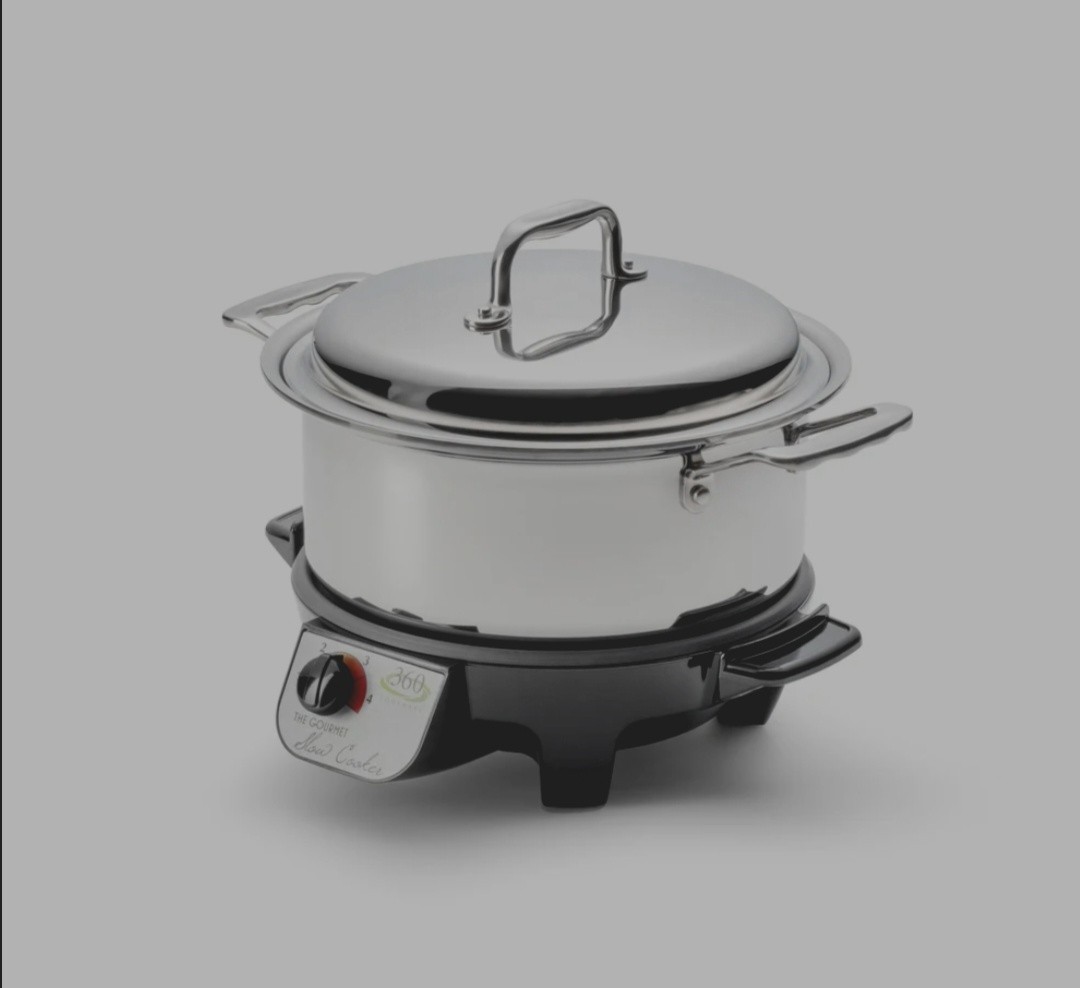 360 Cookware 4 Qt Electric Slow Cooker Set Base Pot Lid Stainless Steel$350.00Used · Last checked Nov 26, 2026View on eBay
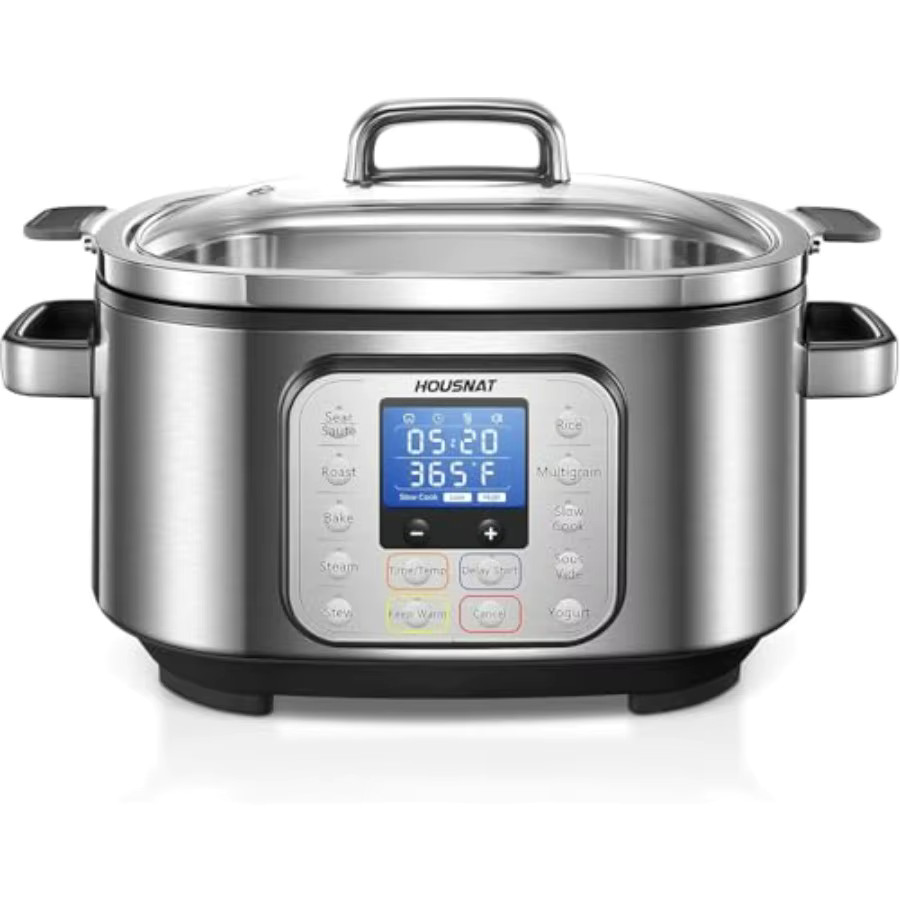 10 in 1 Programmable Slow Cooker 6QT 304 Stainless Steel Inner Pot, Multi-Cooker$379.99New · Last checked Nov 16, 2026View on eBay
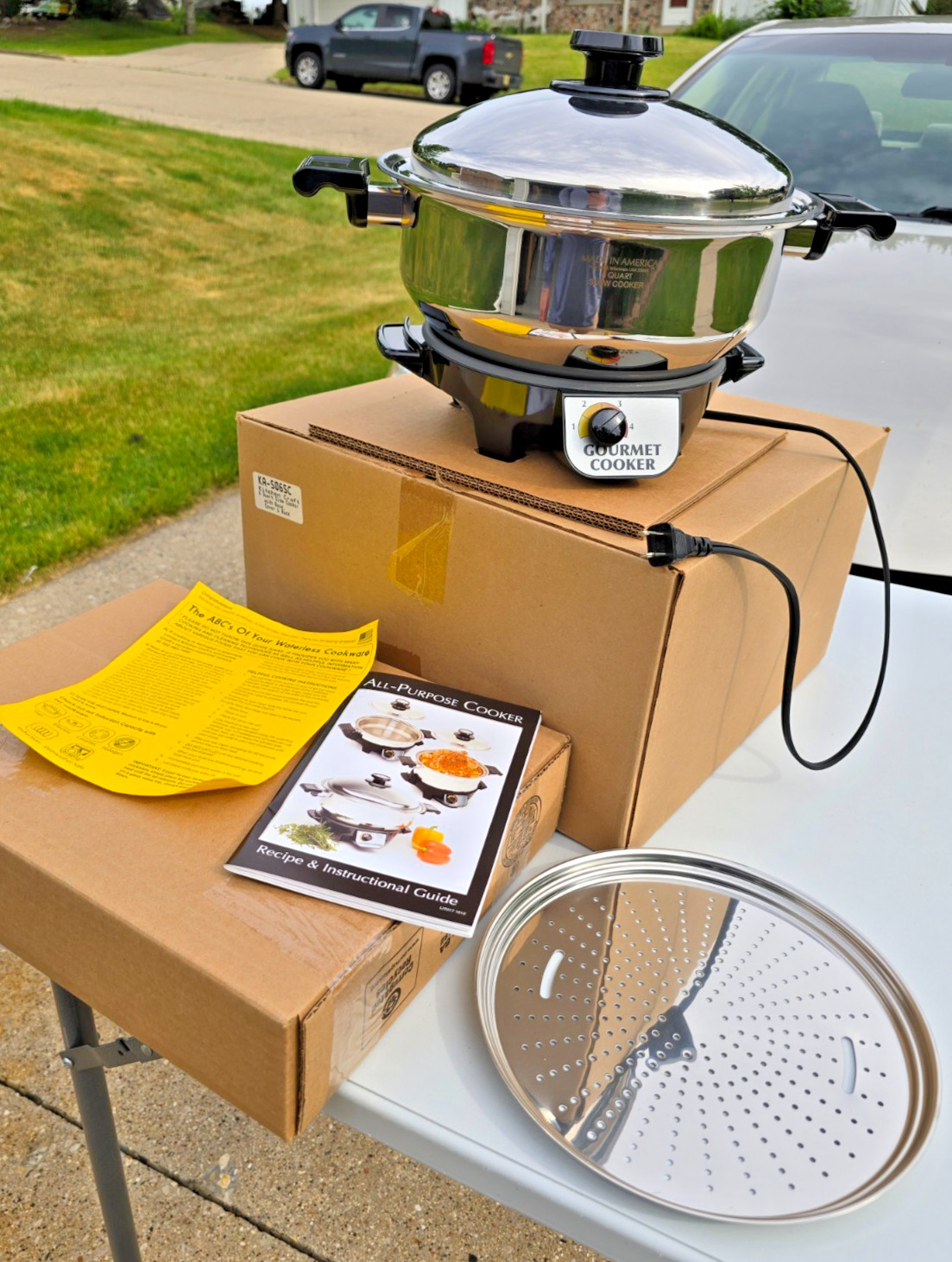 NEW Kitchen Craft 6 Quart Slow Cooker With Lid & Base in Box Stainless Steel USA$459.99Open box · Last checked Nov 26, 2026View on eBay
Highlights
- Insert grade: 304 (18/8) stainless is the corrosion-resistant standard; 201 or 430 grades are cheaper but prone to pitting and staining under acidic foods.
- Base construction: clad/tri-ply bases (steel-aluminum-steel) prevent hot spots and warping; single-wall steel requires stirring and scorches on Low.
- Stovetop compatibility: only inserts rated for induction or direct flame let you sear before slow cooking; non-removable steel housings cannot be used on any cooktop.
- Lid and seal: tempered glass lids vent moisture and slow heat loss; stainless lids retain more heat but hide doneness; silicone gaskets on locking lids are needed only for transport, not slow cooking.
Best use cases
- Best fit: buy a 6–7 qt removable 304 stainless insert with a clad base if you brown meat on the stovetop and want one pot from sear to slow cook; skip ceramic inserts that cannot take direct heat.
- Best fit: choose a 3–4 qt stainless slow cooker for 1–2 person households or small kitchens where a 6 qt insert is too heavy to lift; skip 8 qt+ unless batch cooking for 5+ people.
- Wrong fit: skip stainless if you mainly cook sticky, starchy dishes (rice pudding, thick beans) that stick to uncoated steel; ceramic nonstick or enameled cast iron releases easier.
- Wrong fit: skip non-removable stainless housings if you need to refrigerate leftovers in the insert or clean it in a dishwasher; only removable inserts are dishwasher-safe.
Buying tips
- Sizing rule: allow 1 qt per person for main dishes; a 6 qt round insert fits a 5–6 lb chicken or 4 lb roast, while a 7 qt oval fits a 6–7 lb roast or a 5 lb brisket.
- Steel thickness: choose 0.8–1.0 mm minimum for the insert wall; below 0.6 mm the base warps and Low heat cycles scorch starches within 2 hours.
- Lid and controls: pick a programmable model with a keep-warm mode and a timer that switches automatically; manual dial models require presence and risk overcooking.
- Compatibility check: confirm the insert is rated for induction and oven-safe to 400°F if you plan to sear or finish in the oven; the housing and handles are never oven-safe.
Specs
| Insert Material | 304 (18/8) stainless vs ceramic |
|---|---|
| Base Construction | Clad/tri-ply vs single-wall steel |
| Stovetop Safe | Induction/gas-rated insert vs housing-only |
| Capacity Range | 3–8 qt (6–7 qt most common) |
Related searches
What to check before buying
- Measure your counter and cabinet clearance: 6–7 qt oval units run about 16–18 in wide and 10–12 in tall; confirm the lid and handles fit under upper cabinets.
- Confirm your cooktop type: induction or gas searing requires an insert explicitly rated for that surface; ceramic-glass radiant works with any flat clad base.
- Check your outlet and voltage: U.S. models draw 200–350 W at 120 V; a 20 A kitchen circuit is not required, but avoid daisy-chaining on a shared 15 A circuit.
- Verify companion parts: replacement silicone gaskets, glass lids, and ceramic crocks are model-specific; buy a model whose inserts and lids are sold separately for long-term service.
FAQ
Data sources: eBay / Amazon listings and product attribute feeds. Updated Nov 27, 2026.
Some links on this page are affiliate links. If you buy after clicking one, we may earn a commission at no extra cost to you. This does not change which products appear here or their order. Affiliate disclosure.