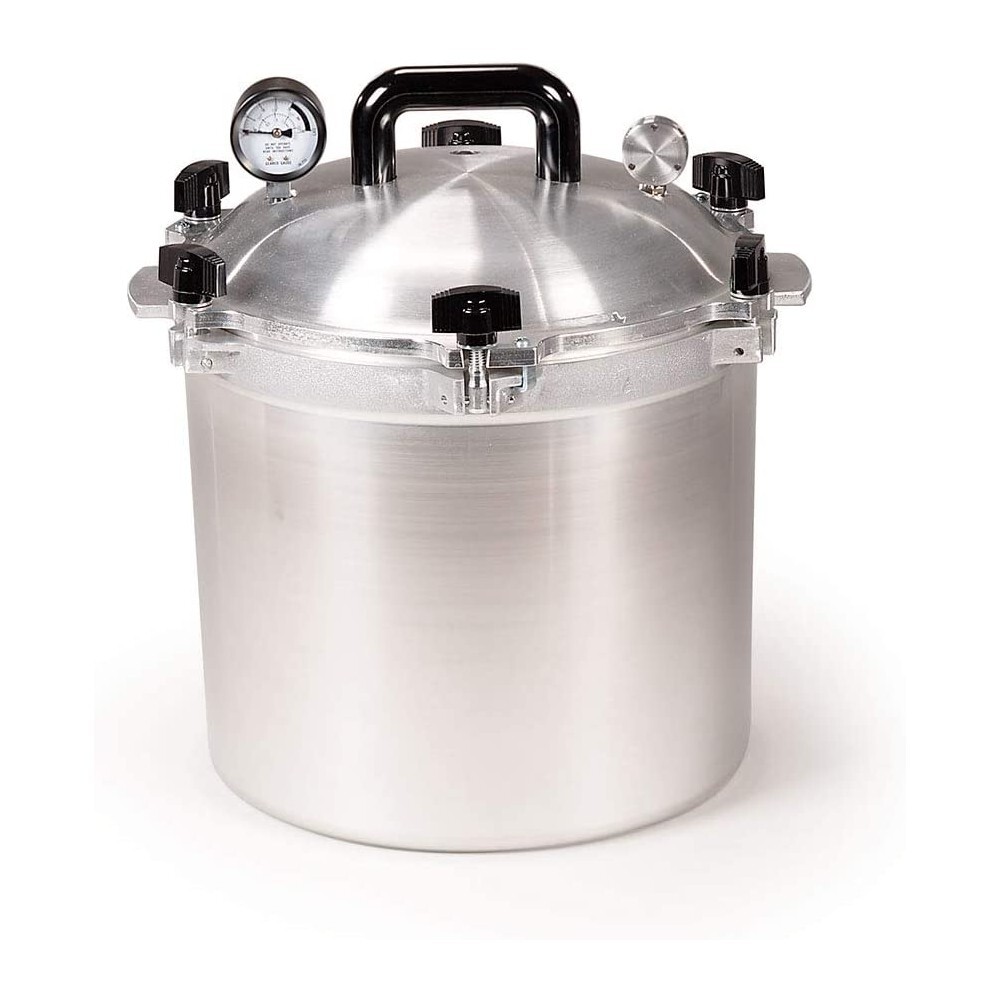

Photos from current listings. Actual item, color, and included accessories may vary.
Stovetop Pressure Cooker Buying Guide
A stovetop pressure cooker is a heavy-gauge pot with a locking lid and pressure-regulating weight that uses any heat source to reach 15 PSI, the threshold for safe low-acid canning and fast braising. The decisive trade-off is between aluminum and clad stainless steel: aluminum heats fast but reacts with acidic foods and cannot be used on induction, while clad stainless steel is non-reactive, induction-compatible, and more durable but heavier and slower to respond. Buy a stovetop cooker only if you need true 15 PSI for canning or high-altitude cooking; otherwise a electric multi-cooker is simpler and safer for everyday meals.
Key takeaways
- True 15 PSI operation (vs 11.6 PSI in most electric multi-cookers) is required for USDA-safe pressure canning of low-acid foods like meats and vegetables.
- Clad stainless steel with an aluminum or copper core distributes heat evenly and works on induction; bare aluminum is lighter and cheaper but pits with acidic ingredients.
- A spring-loaded or weighted pressure regulator with a visual pressure indicator and a backup overpressure plug is the minimum safety architecture; avoid models with only a single vent tube.
At a glance
- Category
- Slow & Pressure Cookers
- Last updated
- Nov 28, 2026
Current offers
Highlights
- True 15 PSI operation (vs 11.6 PSI in most electric multi-cookers) is required for USDA-safe pressure canning of low-acid foods like meats and vegetables.
- Clad stainless steel with an aluminum or copper core distributes heat evenly and works on induction; bare aluminum is lighter and cheaper but pits with acidic ingredients.
- A spring-loaded or weighted pressure regulator with a visual pressure indicator and a backup overpressure plug is the minimum safety architecture; avoid models with only a single vent tube.
- Capacity tiers matter: 4–6 qt suits 2–4 people for beans and stews; 8–10 qt handles family batches and small canning loads; 16–22 qt is canning-only territory for quart jars.
Best use cases
- Best fit: home canners processing low-acid foods in quart jars need a 15 PSI weighted-regulator cooker of 16–22 qt with a flat bottom wide enough for a jar rack — skip any electric model for this job.
- Best fit: induction-cooktop owners should buy only clad stainless steel or a magnetic-base aluminum cooker; bare aluminum will not heat on induction and is a wrong fit.
- Wrong fit: households cooking only rice, oatmeal, and quick stews should skip stovetop pressure cookers entirely — an electric multi-cooker offers timed, walk-away convenience without burner monitoring.
- Best fit: high-altitude cooks (above 3,000 ft) need a cooker that holds 15 PSI and a regulator chart; skip any model whose manual lacks altitude pressure-correction tables.
Buying tips
- Match cooker diameter to your largest burner: a 10-inch base fits standard 8-inch burners; oversized 12-inch canning pots need a burner ring or they overhang and waste heat.
- Choose clad stainless steel (18/10 interior) for acidic tomatoes and braises; choose hard-anodized aluminum only for neutral foods and gas or electric coil stoves.
- For canning, buy a cooker whose manual explicitly states USDA pressure-canning approval and includes a jar rack; models sold only as 'pressure cookers' may lack the flat floor and depth for quart jars.
- Replace the gasket and overpressure plug at the interval the manual specifies (typically every 1–2 years of frequent use); a hardened or cracked gasket prevents pressurization and is the most common failure point.
Specs
| Body Material | Clad stainless / Hard-anodized aluminum |
|---|---|
| Max Pressure | 15 PSI (weighted regulator) |
| Cooktop Compatibility | Gas / Electric coil / Induction (clad only) |
| Capacity Tiers | 4-6 qt / 8-10 qt / 16-22 qt canning |
Related searches
What to check before buying
- Measure your stovetop burner and overhead clearance: a 21-qt canner stands roughly 15–16 inches tall with the lid and weight, which can exceed the space under a microwave or range hood.
- Confirm your cooktop type: induction requires a magnetic stainless base; glass-top electric requires a flat, heavy base to avoid cracking; gas works with any base.
- Check that the cooker's base diameter does not exceed your largest burner by more than 2 inches — overhang directs heat up the sides and wastes fuel.
- Verify the package includes a jar rack or steamer insert if you plan to can or steam; these are often sold separately on large canners.
FAQ
Data sources: eBay / Amazon listings and product attribute feeds. Updated Nov 28, 2026.
Some links on this page are affiliate links. If you buy after clicking one, we may earn a commission at no extra cost to you. This does not change which products appear here or their order. Affiliate disclosure.