
Photos from current listings. Actual item, color, and included accessories may vary.
Glass Jar Buying Guide
Glass jars for sourdough starters and fermentation range from simple wide-mouth mason-style vessels to complete kits with airlocks, latch lids, and measurement markings. The core trade-off is between airtight simplicity (a lid that seals for starter maintenance) and active gas exchange (airlocks for vegetable ferments like sauerkraut), so the jar's closure system and headspace determine whether it suits yeast cultivation or anaerobic pickling. Choose a straight-sided, borosilicate or thick soda-lime jar with volume graduations and a lid that vents or seals on demand; skip thin decorative glass and narrow-neck jars that make stirring and scraping impractical.
Median $45.99
Key takeaways
- Borosilicate glass resists thermal shock and is dishwasher-safe; thick soda-lime jars are tougher to impact but can crack under sudden temperature changes above roughly 150°F.
- Wide-mouth openings of 3 inches or more allow a spoon or spatula to reach the bottom for feeding and scraping, while narrow-neck jars trap dough and complicate cleaning.
- Silicone-gasketed latch lids and drilled airlock lids serve different functions: gasketed latches seal for starter storage, while airlock lids vent CO2 during vegetable fermentation.
At a glance
- Category
- Sourdough Starters & Fermentation
- Last updated
- Nov 24, 2026
Current offers
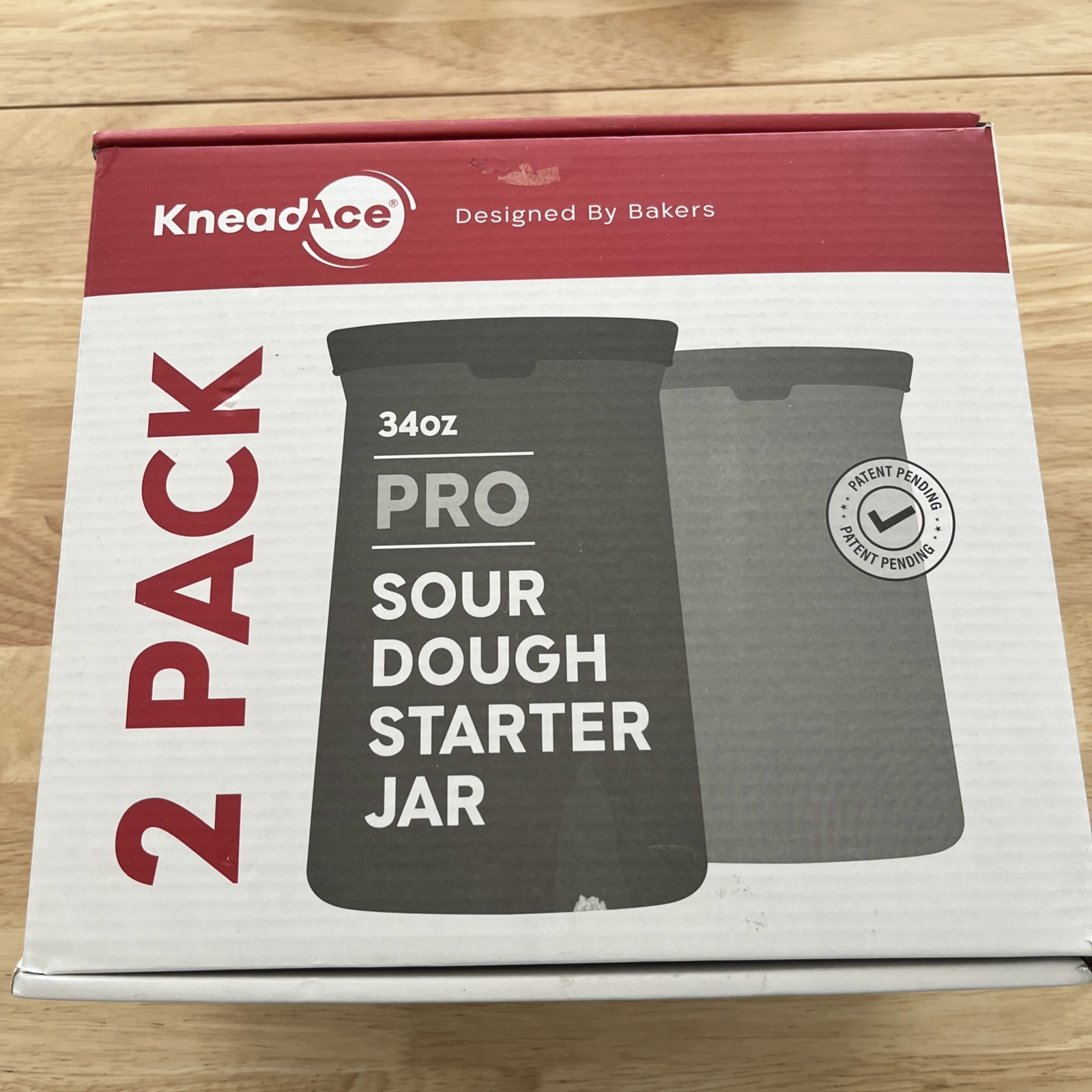 KNEADACE Pro Sourdough Starter Kit 34oz Glass Fermentation Jar 2 Pack with Lids$25.00View on eBay
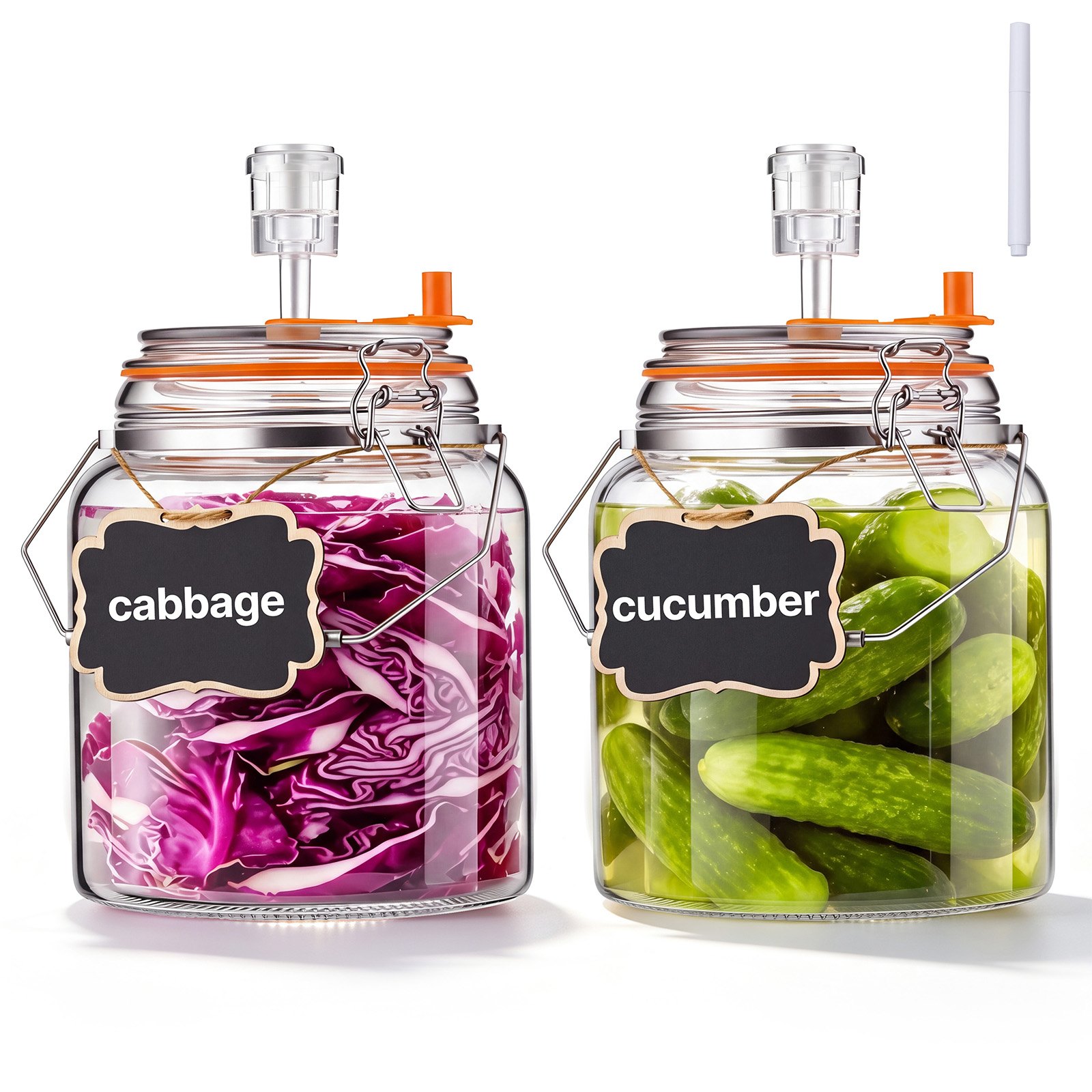 0.66 Gallon Glass Fermentation Jar, Wide Mouth Container Kit, 2-Pack, for Making Sauerkraut, Kimchi, Pickles, Vegetables, Jars for Beginners with Airlocks, Latch Lids, and Silicone Rings$35.99View on Mallflare
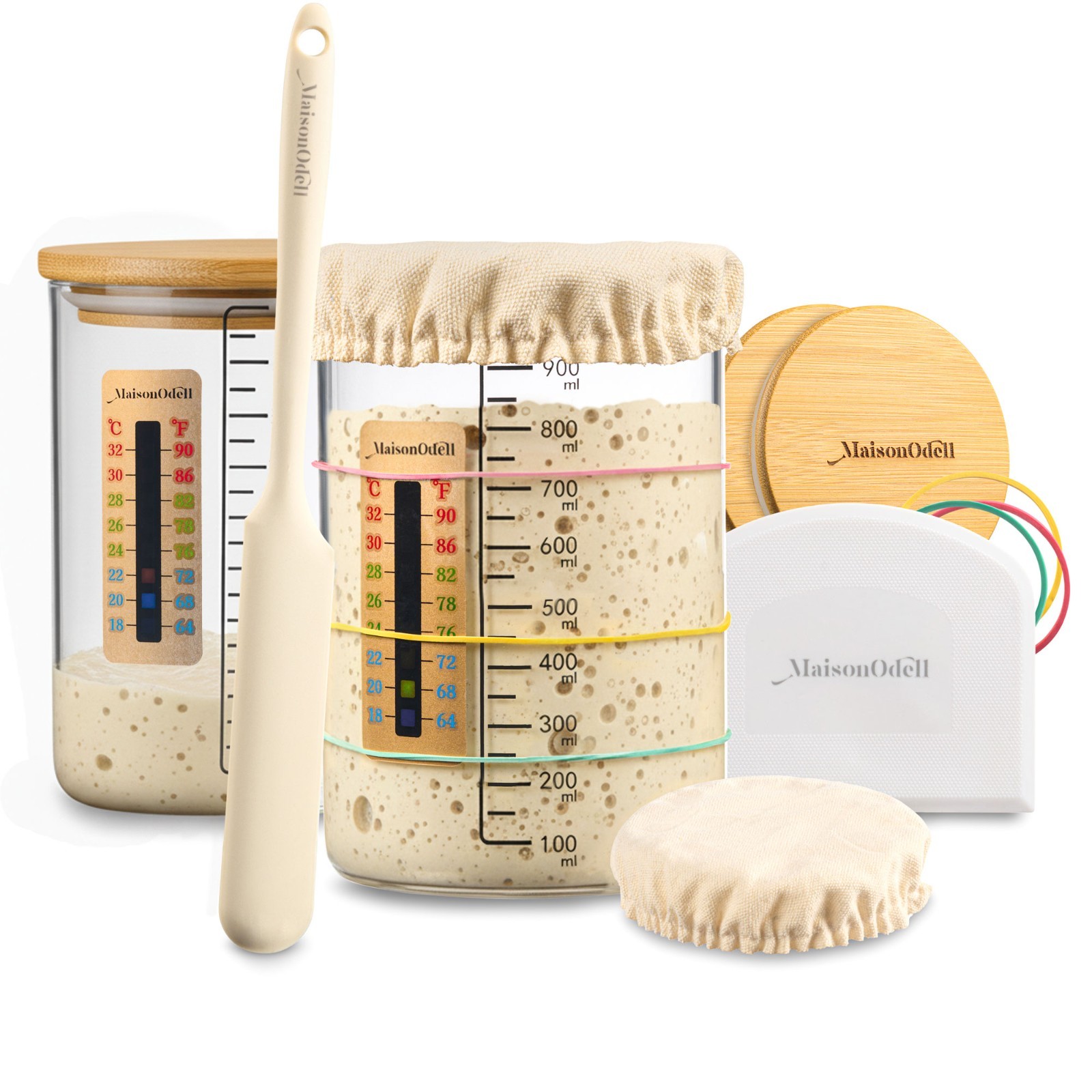 Sourdough Starter Jar Kit – 2 x 1000ml Glass Fermentation Jars | MaisonOdell$60.99View on eBay
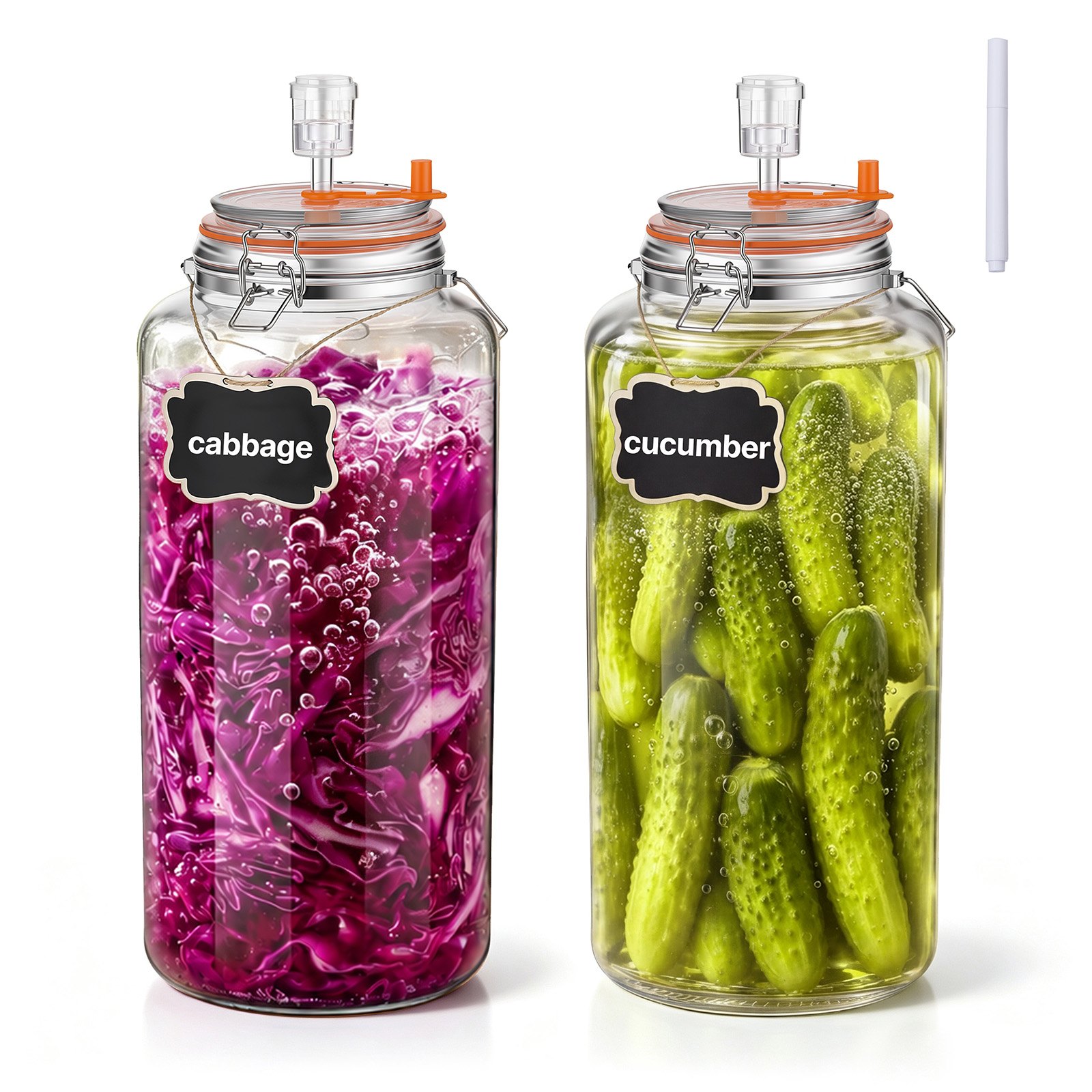 2 Gallon Glass Fermentation Jar, Wide Mouth Container Kit, 2-Pack, for Making Sauerkraut, Kimchi, Pickles and Vegetables, Jars for Beginners with Airlocks, Latch Lids, and Silicone Rings$55.99View on Mallflare
Highlights
- Borosilicate glass resists thermal shock and is dishwasher-safe; thick soda-lime jars are tougher to impact but can crack under sudden temperature changes above roughly 150°F.
- Wide-mouth openings of 3 inches or more allow a spoon or spatula to reach the bottom for feeding and scraping, while narrow-neck jars trap dough and complicate cleaning.
- Silicone-gasketed latch lids and drilled airlock lids serve different functions: gasketed latches seal for starter storage, while airlock lids vent CO2 during vegetable fermentation.
- Printed or embossed volume markings in ounces and milliliters let you track rise doubling at a glance; unmarked jars force external measuring and slow down feeding routines.
Best use cases
- Best fit for daily sourdough maintenance: a 1-quart (1000 ml) wide-mouth glass jar with a screw or gasketed lid and clear graduations; skip airlock kits for starter-only use since the airlock adds cleaning steps without benefit.
- Best fit for sauerkraut, kimchi, and pickles: a latch-lid or airlock jar with a silicone ring and weights to keep vegetables submerged; skip plain screw-top jars that cannot vent gas and risk overflow.
- Best fit for large-batch vegetable fermentation: a 2-gallon wide-mouth jar with airlock and batch weights; skip it for starter cultivation because the headspace is excessive and rise measurement becomes imprecise.
- Pair a 1000 ml jar for starter with a separate 0.66-gallon (2.5 L) airlock jar for vegetable ferments; skip single-purpose decorative jars that lack both a sealing lid and venting option.
Buying tips
- Match jar volume to feeding ratio: a 1000 ml jar holds a starter that doubles from 100 g flour plus 100 g water with headspace to spare; going below 500 ml limits feeding size and accelerates overflow.
- Choose borosilicate if you sanitize with boiling water or move jars between fridge and warm kitchen; choose thick soda-lime for impact resistance at a lower cost.
- Confirm the lid thread or latch style before buying accessories: wide-mouth jars accept standard airlock grommets and fermentation weights, while narrow-mouth jars need proprietary inserts.
- For vegetable ferments, select a kit that includes airlocks, silicone rings, and weights; for starter-only use, prioritize a gasketed screw lid and clear volume markings over airlock hardware.
Specs
| Glass Type | Borosilicate vs soda-lime |
|---|---|
| Capacity Tier | 500 ml / 1000 ml / 2-2.5 gal |
| Closure System | Screw lid / latch / airlock |
| Mouth Style | Wide-mouth (3 in+) vs narrow |
Related searches
What to check before buying
- Measure your fridge shelf clearance and counter space: a 1000 ml jar stands roughly 6-7 inches tall, while 2-gallon jars exceed 12 inches and may not fit under cabinets.
- Verify the lid and gasket are food-grade silicone and that the jar mouth diameter matches your fermentation weights and airlock grommets.
- Check that volume markings are printed in both milliliters and ounces if you follow recipes from different regions.
- Confirm the glass is dishwasher-safe and thermal-shock rated if you plan to sanitize with hot water or move jars between cold and warm environments.
FAQ
Data sources: eBay / Amazon listings and product attribute feeds. Updated Nov 24, 2026.
Some links on this page are affiliate links. If you buy after clicking one, we may earn a commission at no extra cost to you. This does not change which products appear here or their order. Affiliate disclosure.