
Photos from current listings. Actual item, color, and included accessories may vary.
Sourdough Starter Jar Buying Guide
A sourdough starter jar is a clear glass fermentation vessel sized to culture wild yeast and bacteria, and the primary trade-off is between an airtight seal for anaerobic flavor development and a breathable cover that prevents mold during early establishment. The clear decision rule: for a dedicated starter, choose a straight-walled 1-quart (1000 ml) borosilicate or thick soda-lime jar with a removable lid and measurement graduations; skip narrow-mouth decorative jars and any vessel under 500 ml that cannot accommodate a 2x rise.
Median $60.99 · New listings
Key takeaways
- Straight-walled cylindrical jars with vertical graduation marks let you track a 2x to 3x rise by volume; tapered or curved jars distort the reading and hide the true doubling point.
- Borosilicate glass (low thermal expansion, ~3.3 x 10^-6/°C) resists thermal shock from warm water rinses up to about 120°C, while standard soda-lime jars can crack above 60-70°C.
- A 1000 ml jar holds roughly 300-500 g of starter with enough headspace for a 2x rise; 34 oz (about 1000 ml) is the common single-starter size, and 2-packs suit maintaining two starters or one active plus one backup.
At a glance
- Category
- Sourdough Starters & Fermentation
- Last updated
- Nov 24, 2026
Current offers
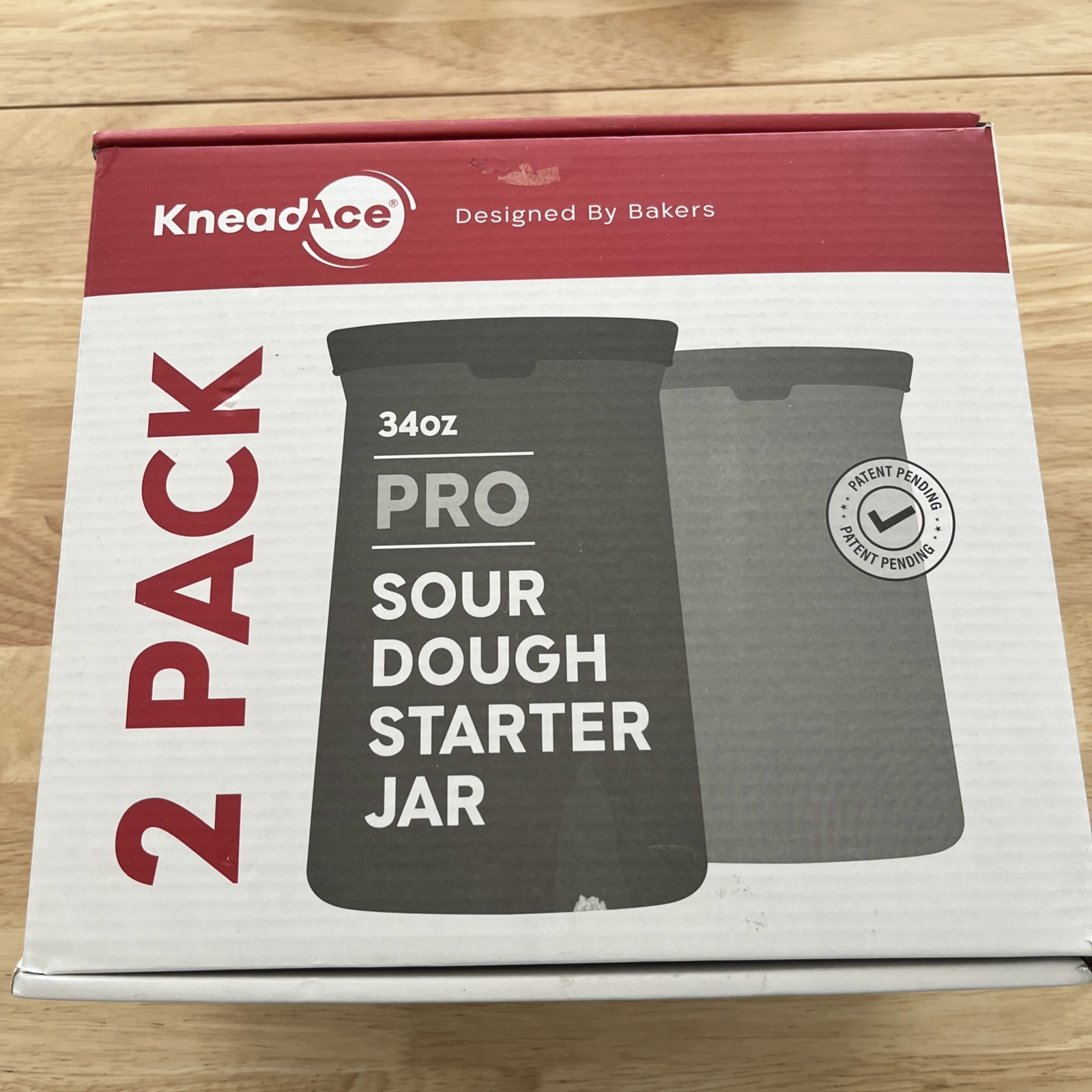 KNEADACE Pro Sourdough Starter Kit 34oz Glass Fermentation Jar 2 Pack with Lids$25.00View on eBay
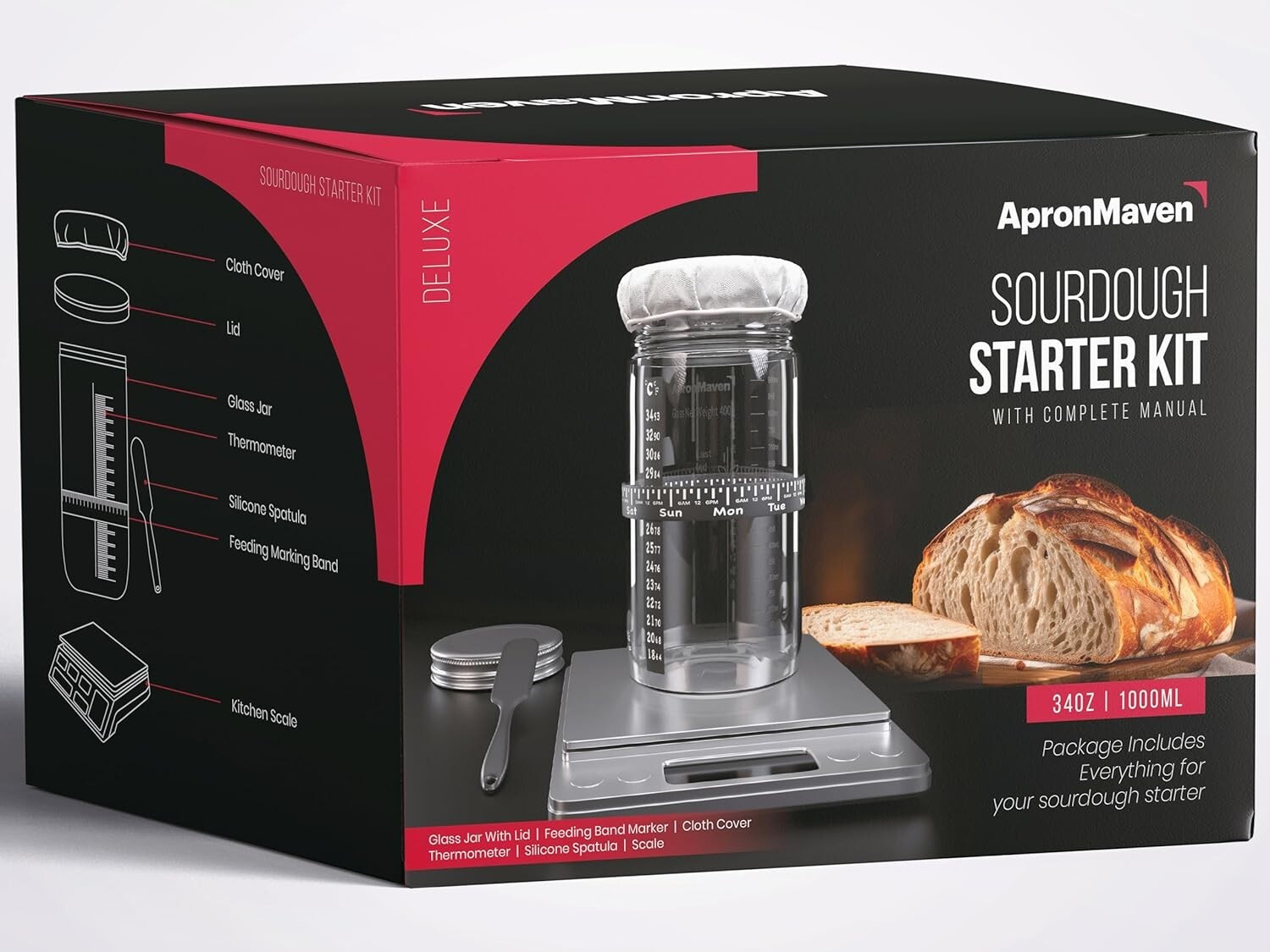 Sourdough Starter Kit Kitchen Scale jar & more For Easy Sourdough Bread Baking!$31.71View on eBay
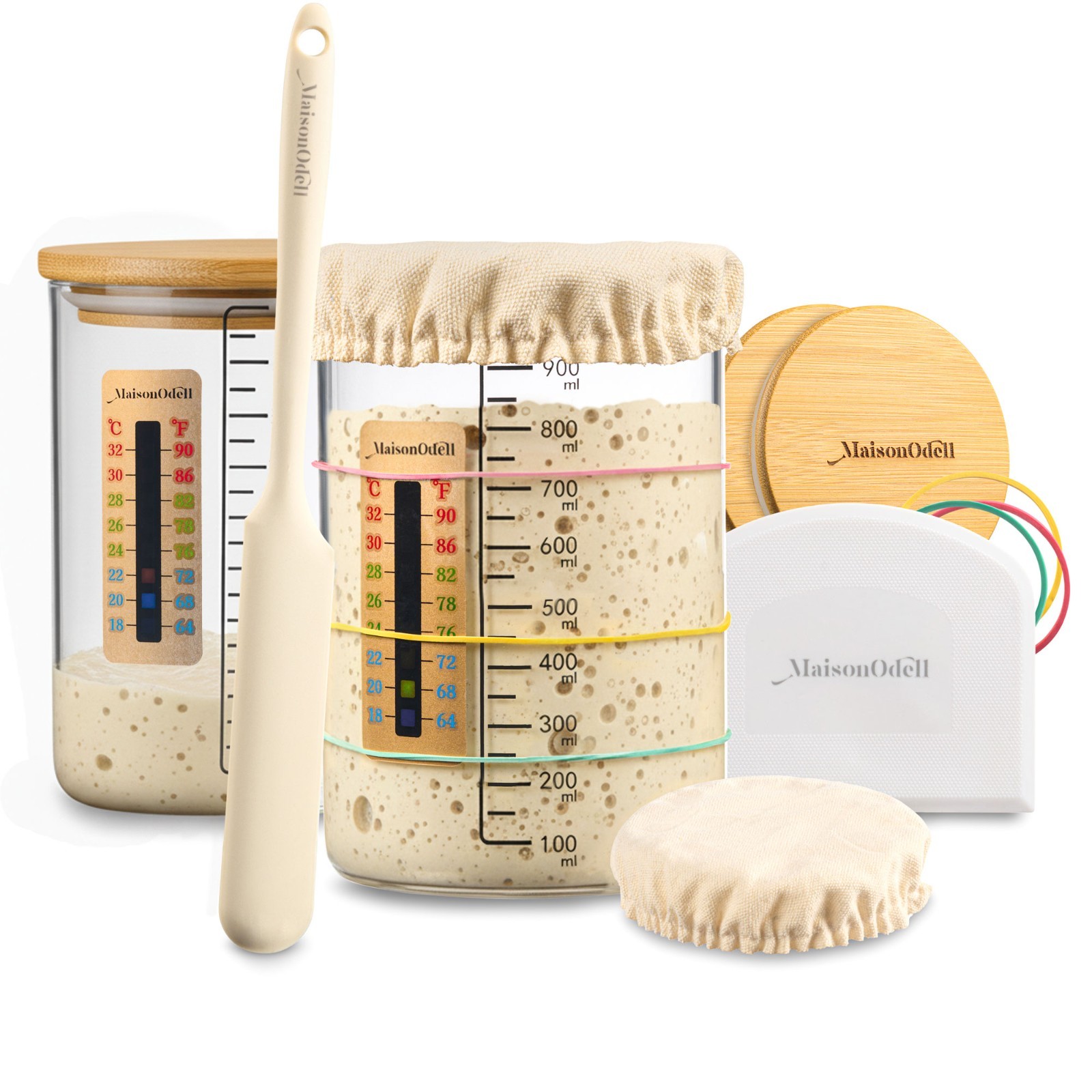 Sourdough Starter Jar Kit – 2 x 1000ml Glass Fermentation Jars | MaisonOdell$60.99View on eBay
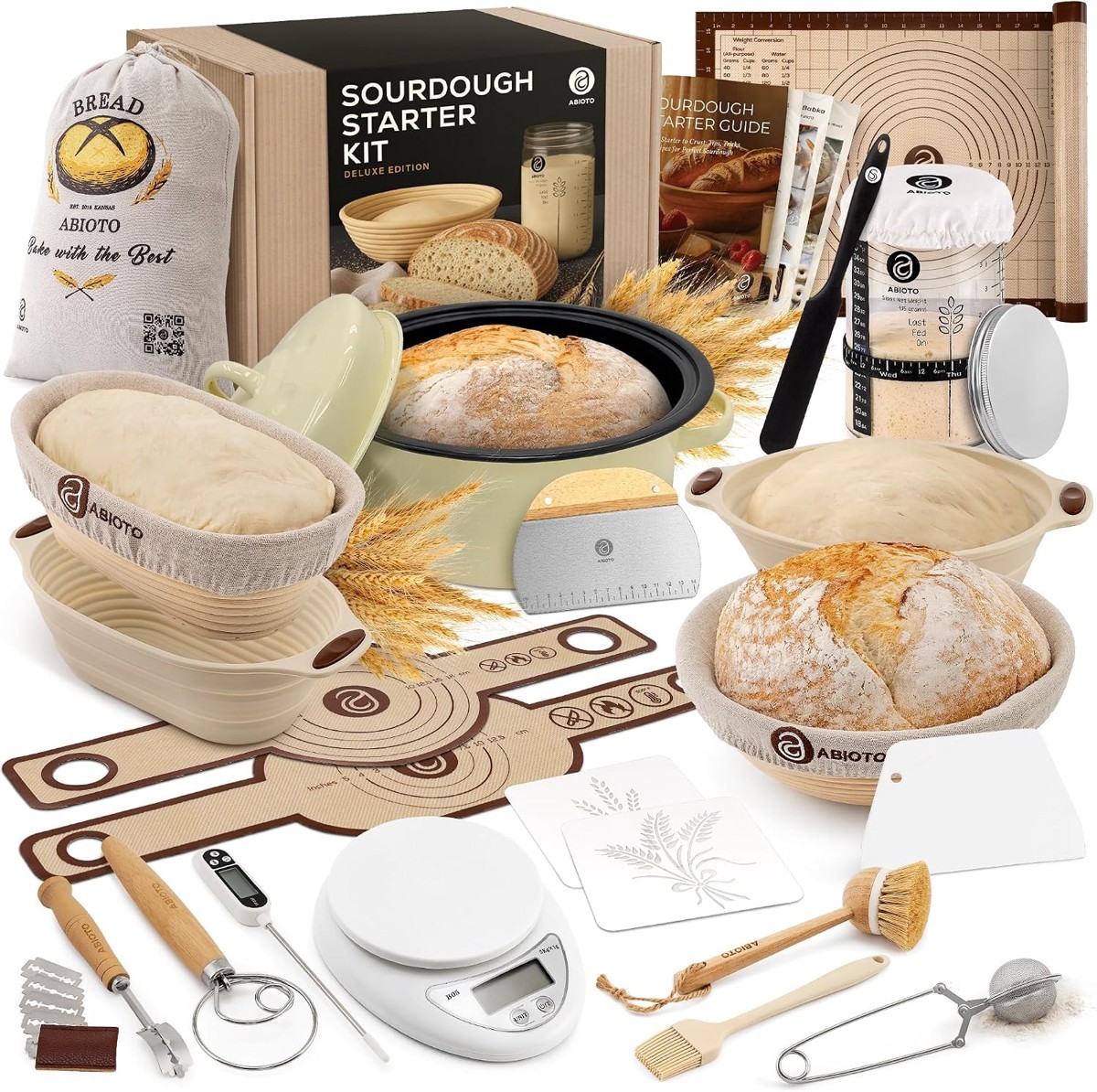 Sourdough Starter Kit w Dutch Oven Scale Proofing Baskets Jar Slings Tools$227.98New · Last checked Nov 16, 2026View on eBay
- Sourdough Starter Kit w Dutch Oven Scale Proofing Baskets Jar Slings Tools$227.98New · Last checked Nov 16, 2026View on eBay
Highlights
- Straight-walled cylindrical jars with vertical graduation marks let you track a 2x to 3x rise by volume; tapered or curved jars distort the reading and hide the true doubling point.
- Borosilicate glass (low thermal expansion, ~3.3 x 10^-6/°C) resists thermal shock from warm water rinses up to about 120°C, while standard soda-lime jars can crack above 60-70°C.
- A 1000 ml jar holds roughly 300-500 g of starter with enough headspace for a 2x rise; 34 oz (about 1000 ml) is the common single-starter size, and 2-packs suit maintaining two starters or one active plus one backup.
- For the first 7-14 days of establishing a starter, a breathable cloth or loose lid prevents condensation-driven mold; switch to an airtight lid once the culture rises reliably in 4-6 hours.
Best use cases
- Best fit: a home baker maintaining one starter at 1:1:1 or 1:5:5 feeds should pick a single 1000 ml straight-walled glass jar with a lid and graduations; skip 2-packs unless you bake more than twice a week.
- Best fit: a beginner establishing a starter from flour and water should choose a wide-mouth 500-1000 ml jar for easy stirring and a cloth cover; skip narrow-neck jars that trap dough and make discard removal difficult.
- Wrong fit: buying a full kit with banneton, Dutch oven, and scale when you only need a jar adds cost and storage; buy the jar alone if you already own a kitchen scale and proofing basket.
- Best fit: maintaining two starters (e.g., white flour and whole wheat) justifies a 2 x 1000 ml pack; skip it if you bake once a week and can revive a single refrigerated starter.
Buying tips
- Capacity math: choose 1000 ml for a starter fed at 100-150 g flour per feed; a 500 ml jar overflows on a 1:1:1 feed of 100 g each because total mass reaches about 300 g and doubles past the rim.
- Glass grade: borosilicate handles hot water and dishwasher cycles without stress cracking; soda-lime glass is acceptable but must be warmed gradually and hand-washed to avoid thermal shock.
- Lid type: a screw-band or clamp lid with a silicone gasket gives an airtight seal for anaerobic flavor; a glass or plastic lid with a small vent hole suits early establishment. Avoid corks that swell and stick.
- Graduations: printed or etched milliliter marks at 100 ml intervals let you feed by volume; unmarked jars force you to weigh the jar empty and track tare, adding error.
Specs
| Capacity | 500-1000 ml (1 qt) per starter |
|---|---|
| Glass Type | Borosilicate vs soda-lime |
| Lid Style | Airtight clamp/screw vs breathable cloth |
| Graduations | Etched ml marks vs unmarked |
Related searches
What to check before buying
- Measure your fridge shelf and counter space: a 1000 ml straight jar is typically about 10-12 cm diameter and 18-22 cm tall; confirm it fits under a shelf and on the fridge door.
- Confirm your feed volume: if you routinely build 200 g+ of starter per bake, choose 1000 ml or larger; a 500 ml jar is only sufficient for 50-80 g feeds.
- Check lid compatibility with your workflow: a jar that needs a separate cloth cover must have a wide mouth (at least 7 cm) to fit a rubber band and cloth securely.
- Verify the glass is dishwasher-safe and thermal-shock rated if you plan to rinse with hot water; hand-wash only if the jar has printed (not etched) graduations that fade.
FAQ
Data sources: eBay / Amazon listings and product attribute feeds. Updated Nov 24, 2026.
Some links on this page are affiliate links. If you buy after clicking one, we may earn a commission at no extra cost to you. This does not change which products appear here or their order. Affiliate disclosure.