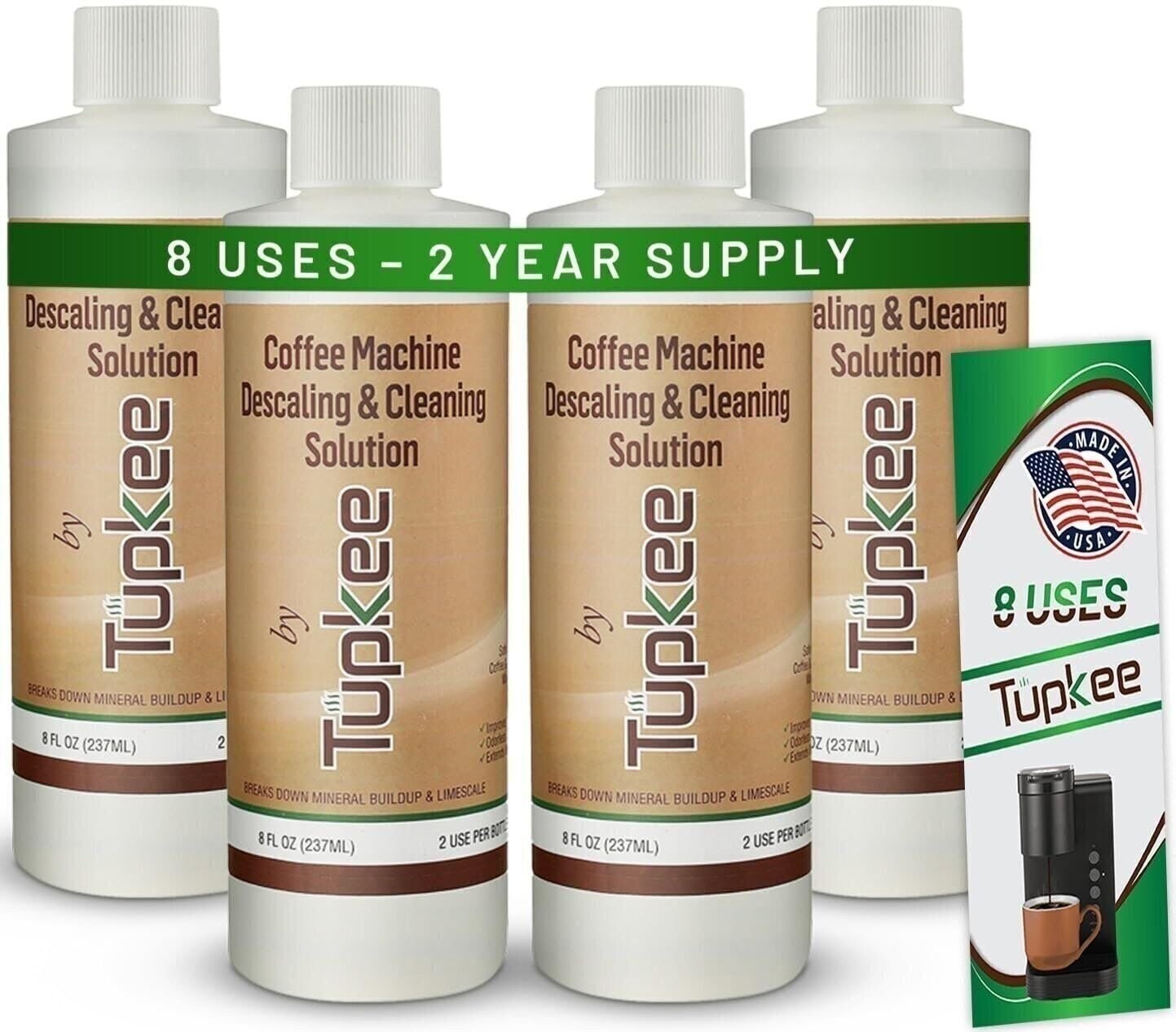

Photos from current listings. Actual item, color, and included accessories may vary.
Coffee Cleaning Solution Buying Guide
Coffee cleaning solutions are formulated liquids or powders that remove mineral scale and organic residue from espresso machines, drip brewers, and grinders. The primary trade-off is between acid strength for descaling and material compatibility—strong acids can corrode aluminum and brass, while mild formulas may not fully dissolve hard scale. The decision rule: match the active ingredient to your machine's metal components and water hardness, and choose dedicated descaling vs. cleaning formulas rather than all-in-one products.
Key takeaways
- Citric-acid descalers are safe for aluminum and brass but require 30–45 minute soak cycles; phosphoric-acid formulas work faster on heavy scale but are incompatible with aluminum boilers.
- Descaling solutions are designed for mineral scale (calcium/magnesium carbonate) while cleaning solutions target coffee oils and tannins—using the wrong type leaves either scale or rancid residue.
- Concentrated liquid descalers typically dose 1–2 uses per bottle; powder formulas offer more cycles per container but require precise dilution to avoid over-acidifying the boiler.
At a glance
- Category
- Coffee Cleaning & Accessories
- Last updated
- Nov 28, 2026
Current offers
Highlights
- Citric-acid descalers are safe for aluminum and brass but require 30–45 minute soak cycles; phosphoric-acid formulas work faster on heavy scale but are incompatible with aluminum boilers.
- Descaling solutions are designed for mineral scale (calcium/magnesium carbonate) while cleaning solutions target coffee oils and tannins—using the wrong type leaves either scale or rancid residue.
- Concentrated liquid descalers typically dose 1–2 uses per bottle; powder formulas offer more cycles per container but require precise dilution to avoid over-acidifying the boiler.
- Machine manufacturers specify descaling frequency by water hardness: soft water (<60 ppm) every 3–6 months, hard water (>180 ppm) every 4–8 weeks.
Best use cases
- Best fit: espresso machines with aluminum or brass boilers (e.g., most home single-boilers) — choose citric-acid-based descalers labeled 'aluminum-safe' and avoid phosphoric acid.
- Best fit: drip coffee makers and kettles with stainless steel or glass reservoirs — standard citric or sulfamic acid descalers are effective and economical in multi-use bottles.
- Wrong fit: super-automatic espresso machines with integrated milk systems — descaling solution alone won't clean milk lines; you need a separate milk-circuit cleaner and follow the machine's programmed cycle.
- Wrong fit: using descaling solution on group heads or portafilters as a daily cleaner — use a dedicated espresso detergent (e.g., cafiza-style powder) for backflushing; descaler is for water-path scale only.
Buying tips
- Check your machine manual for approved active ingredients: citric acid is universally safe for aluminum, brass, and stainless; phosphoric acid is only for stainless/copper boilers.
- Match bottle concentration to your water hardness: hard water (above 180 ppm) needs a stronger or more frequent dose, so choose a concentrated formula with clear dilution ratios.
- Buy descaling and cleaning products separately—all-in-one formulas often underperform on both scale and oil removal, and may leave residues that affect taste.
- For multi-use bottles, verify the shelf life and storage requirements; opened liquid descalers typically remain effective for 12–24 months when kept sealed and cool.
Specs
| Active Ingredient | Citric acid vs phosphoric acid |
|---|---|
| Boiler Compatibility | Aluminum-safe / Stainless-only |
| Form Factor | Liquid concentrate / Powder |
| Uses Per Container | 1–2 (liquid) / 4–8 (powder) |
Related searches
What to check before buying
- Confirm your machine's boiler material (aluminum, brass, stainless, copper) — this determines which acid types are safe and which will void the warranty.
- Test your water hardness with a strip or your utility's report: above 180 ppm means you need a stronger descaler and more frequent descaling (every 4–8 weeks).
- Check whether your machine has a built-in descaling program that requires a specific volume or cycle time — match the solution dose to that program.
- Verify you have a separate espresso cleaning detergent for group heads and portafilters; descaling solution is not a substitute for backflushing detergent.
FAQ
Data sources: eBay / Amazon listings and product attribute feeds. Updated Nov 28, 2026.
Some links on this page are affiliate links. If you buy after clicking one, we may earn a commission at no extra cost to you. This does not change which products appear here or their order. Affiliate disclosure.