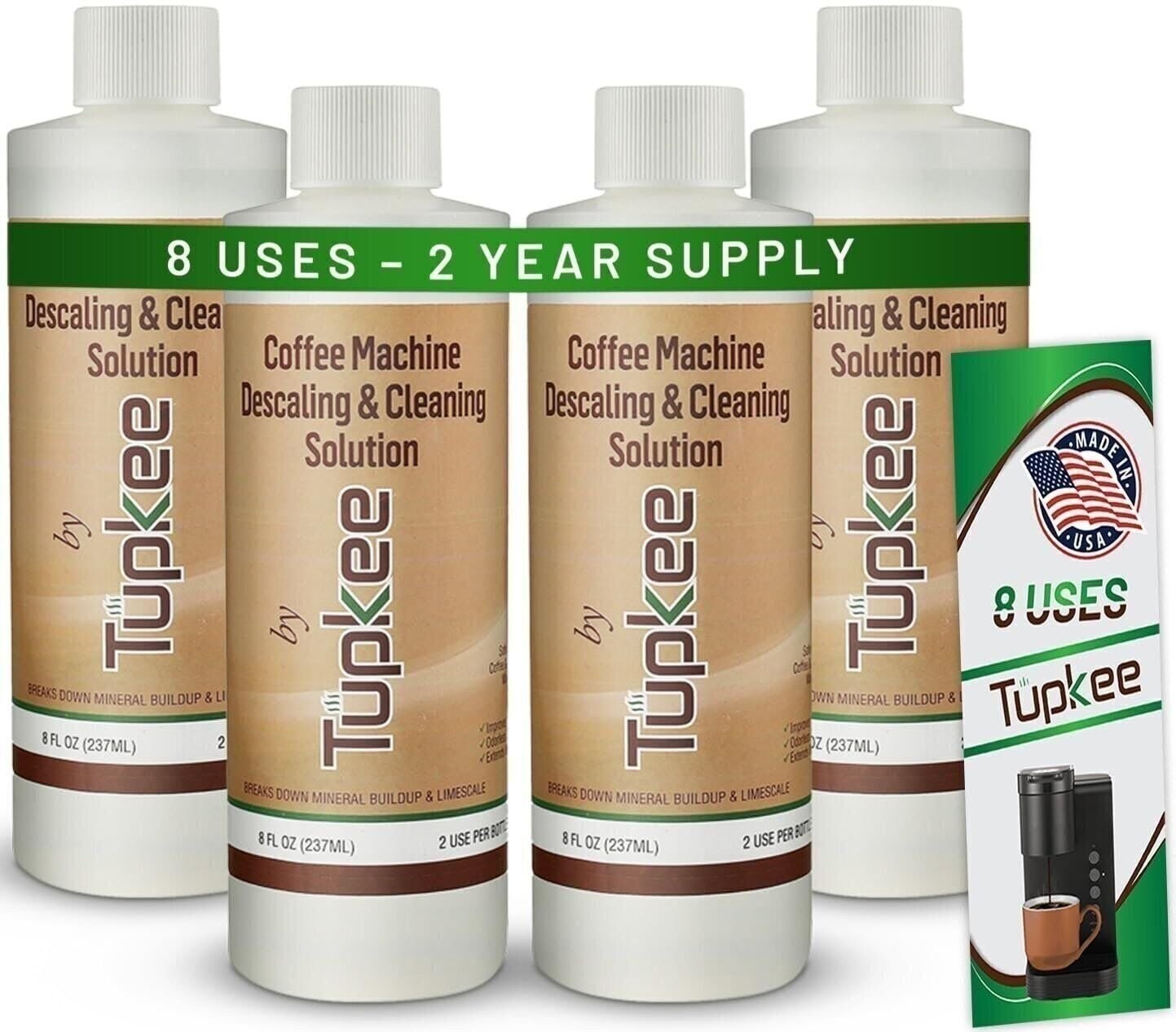

Photos from current listings. Actual item, color, and included accessories may vary.
Coffee Descaling Solution Buying Guide
Coffee descaling solution is a food-safe acid concentrate or powder that dissolves limescale (calcium carbonate) from espresso machines, drip brewers, and kettles. The primary trade-off is acid strength versus material compatibility: citric and sulfamic acids clean aggressively but can attack aluminum and brass if left too long, while milder lactic or proprietary blends protect seals but need longer dwell times. Buy a dedicated coffee descaler with a documented acid type and a clear dilution ratio; skip generic vinegar or unlabeled 'cleaning' fluids for any machine with aluminum or brass internals.
Key takeaways
- Citric-acid descalers at 10-20% concentration are the standard for stainless-steel boilers and drip brewers; they are effective but require thorough rinsing to avoid taste carryover.
- Sulfamic-acid formulas cut scale faster in hard-water regions but must be avoided on aluminum and brass—use only on stainless steel and copper boilers.
- Lactic-acid and proprietary-blend descalers are the safest for machines with aluminum thermoblocks and rubber seals, such as many automatic espresso units.
At a glance
- Category
- Coffee Cleaning & Accessories
- Last updated
- Nov 28, 2026
Current offers
Highlights
- Citric-acid descalers at 10-20% concentration are the standard for stainless-steel boilers and drip brewers; they are effective but require thorough rinsing to avoid taste carryover.
- Sulfamic-acid formulas cut scale faster in hard-water regions but must be avoided on aluminum and brass—use only on stainless steel and copper boilers.
- Lactic-acid and proprietary-blend descalers are the safest for machines with aluminum thermoblocks and rubber seals, such as many automatic espresso units.
- Liquid concentrates typically dose at 1:10 to 1:20 with water; powdered sachets are pre-measured for a single tank and remove guesswork on dilution.
Best use cases
- Best fit: a liquid citric-acid concentrate for a stainless-steel drip brewer or kettle in a hard-water area—dose 1:10, run a full cycle, and rinse twice.
- Best fit: a pre-measured sulfamic-acid sachet for a stainless-steel espresso boiler when scale is heavy and fast action is needed; skip it entirely for aluminum thermoblocks.
- Wrong fit: white vinegar for any machine under warranty—its 5% acetic acid is too weak for heavy scale and can degrade rubber gaskets over repeated use.
- Wrong fit: a generic 'descaler' without a listed acid type for a super-automatic espresso machine with aluminum and brass parts—choose a lactic-acid or manufacturer-approved blend instead.
Buying tips
- Match the acid to the boiler metal: citric or sulfamic for stainless steel and copper; lactic or proprietary blends for aluminum thermoblocks and brass fittings.
- Calculate doses from tank size: a 1 L tank at 1:10 dilution needs 100 mL of concentrate—buy a concentrate whose label states the dilution ratio, not just 'one capful'.
- For hard water above 180 ppm, descale every 4-8 weeks with a stronger sulfamic or citric formula; for soft water under 60 ppm, every 3-6 months with a mild lactic blend.
- Prefer food-grade or NSF-listed descalers; industrial acids without a food-contact certification can leave residues that affect flavor and seals.
Specs
| Acid Type | Citric / Sulfamic / Lactic / Proprietary |
|---|---|
| Form | Liquid concentrate / Powder sachet |
| Dilution Ratio | 1:10 to 1:20 with water |
| Boiler Compatibility | Stainless/copper vs aluminum/brass |
Related searches
What to check before buying
- Confirm your machine's boiler and thermoblock materials from the manual—aluminum and brass rule out sulfamic and strong citric acids.
- Measure your water tank capacity in liters to calculate the correct concentrate volume at the label's dilution ratio.
- Check water hardness with a test strip; above 180 ppm needs a stronger acid and a shorter descaling interval.
- Verify the descaler is food-grade or NSF-listed and that the bottle states the acid type and concentration on the label.
FAQ
Data sources: eBay / Amazon listings and product attribute feeds. Updated Nov 28, 2026.
Some links on this page are affiliate links. If you buy after clicking one, we may earn a commission at no extra cost to you. This does not change which products appear here or their order. Affiliate disclosure.