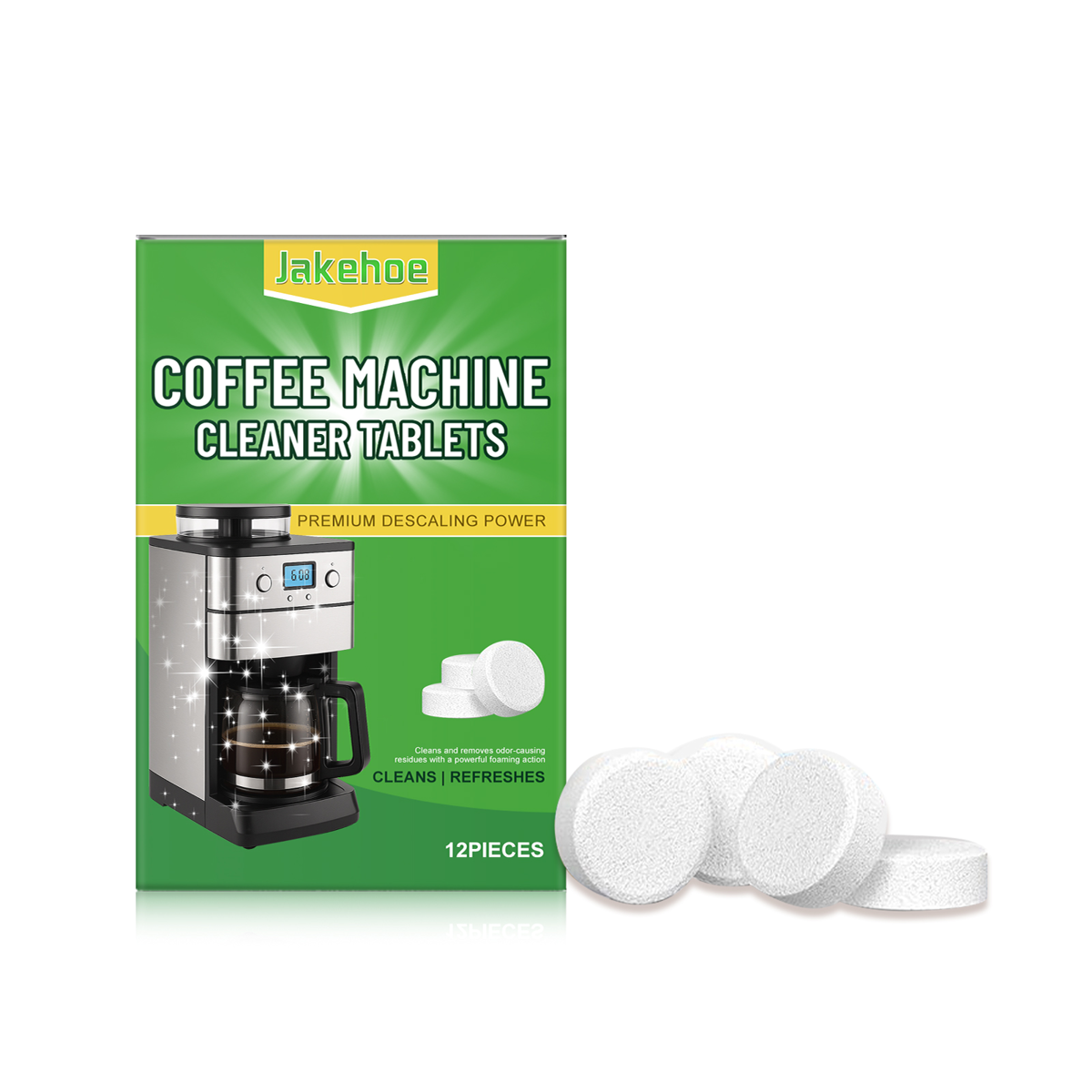

Photos from current listings. Actual item, color, and included accessories may vary.
Coffee Machine Cleaning Tablet Buying Guide
Coffee machine cleaning tablets are effervescent or pressed tablets formulated to dissolve coffee oils, tannins, and scale from brew paths, group heads, and filter screens. The critical trade-off is between fast-dissolving cleaning agents and material compatibility: tablets with strong chelating or alkaline agents clean deeply but can degrade aluminum or non-stainless components, while gentler formulas protect seals but may leave residue. The decisive rule is to match the tablet's active chemistry to your machine's wetted materials and to use a backflush routine only on machines designed for it.
Key takeaways
- Effervescent tablets rely on citric or sulfamic acid plus sodium bicarbonate for mechanical agitation; they clean light oil films but are not true descalers for heavy limescale.
- Alkaline detergent tablets (sodium percarbonate or metasilicate based) are the standard for backflushing espresso group heads and removing coffee oils from solenoid valves and shower screens.
- Tablet compatibility hinges on wetted materials: aluminum boilers and brass fittings require non-corrosive neutral formulas, while stainless steel and ceramic groups tolerate alkaline cleaners.
At a glance
- Category
- Coffee Cleaning & Accessories
- Last updated
- Nov 28, 2026
Current offers
Highlights
- Effervescent tablets rely on citric or sulfamic acid plus sodium bicarbonate for mechanical agitation; they clean light oil films but are not true descalers for heavy limescale.
- Alkaline detergent tablets (sodium percarbonate or metasilicate based) are the standard for backflushing espresso group heads and removing coffee oils from solenoid valves and shower screens.
- Tablet compatibility hinges on wetted materials: aluminum boilers and brass fittings require non-corrosive neutral formulas, while stainless steel and ceramic groups tolerate alkaline cleaners.
- Auto-drip and pod machines with plastic internal tubing need tablets labeled for plastic-safe, low-foam use; high-foam effervescents can trigger flow sensors and overflow reservoirs.
Best use cases
- Choose alkaline backflush tablets if you own a semi-automatic or dual-boiler espresso machine with a three-way solenoid and stainless group head; skip effervescent denture-style tabs that lack detergent strength.
- Choose plastic-safe effervescent tablets for pod and auto-drip machines with nylon or silicone tubing; skip alkaline backflush tablets that can leave detergent residue in non-rinsed reservoirs.
- Choose citric-acid-based tablets for light weekly maintenance on filter screens and carafes; skip them for heavy scale removal in boilers, where a dedicated liquid descaler is required.
- Choose single-ingredient tablets if you have a nickel-plated or aluminum thermoblock; skip multi-agent tablets with unknown chelators that can pit non-stainless metals.
Buying tips
- Match tablet count to your backflush frequency: one tablet per group head per backflush, and weekly cleaning means roughly 50 tablets per year for a single-group machine.
- Check the active ingredient list: sodium percarbonate or sodium metasilicate indicates a true coffee-oil detergent; citric acid alone indicates a light descaler, not a backflush cleaner.
- Confirm the tablet dissolves fully in 200-300 ml of water at 40-60 C; undissolved grit can scratch group gaskets and clog solenoid valves.
- For pod machines, select tablets explicitly labeled low-foam and plastic-safe; high-foam effervescents can foam through the pod piercer and trip the water-level sensor.
Specs
| Active Chemistry | Alkaline percarbonate vs citric acid |
|---|---|
| Machine Compatibility | Espresso backflush / pod / drip |
| Dissolve Time | 3-5 min in 40-60 C water |
| Tablet Form | Effervescent disc / pressed tab |
Related searches
What to check before buying
- Verify your machine has a backflush-capable group head (three-way solenoid or blind filter basket); drip and pod machines need reservoir-safe tablets instead.
- Confirm wetted materials: stainless steel and ceramic tolerate alkaline tablets, while aluminum, brass, and nickel-plated parts need neutral or citric-acid formulas.
- Measure your water hardness: above 150 mg/L calcium carbonate, use a separate descaler alongside cleaning tablets, since tablets do not remove scale.
- Check tablet dimensions against your group head or filter basket: standard 15-20 mm effervescent discs fit most blind baskets, but oversized tabs may not seat.
FAQ
Data sources: eBay / Amazon listings and product attribute feeds. Updated Nov 28, 2026.
Some links on this page are affiliate links. If you buy after clicking one, we may earn a commission at no extra cost to you. This does not change which products appear here or their order. Affiliate disclosure.